Rare Disease Spotlight: Living With Cushing's Disease Before Diagnosis
Interview By Brandi Fleck
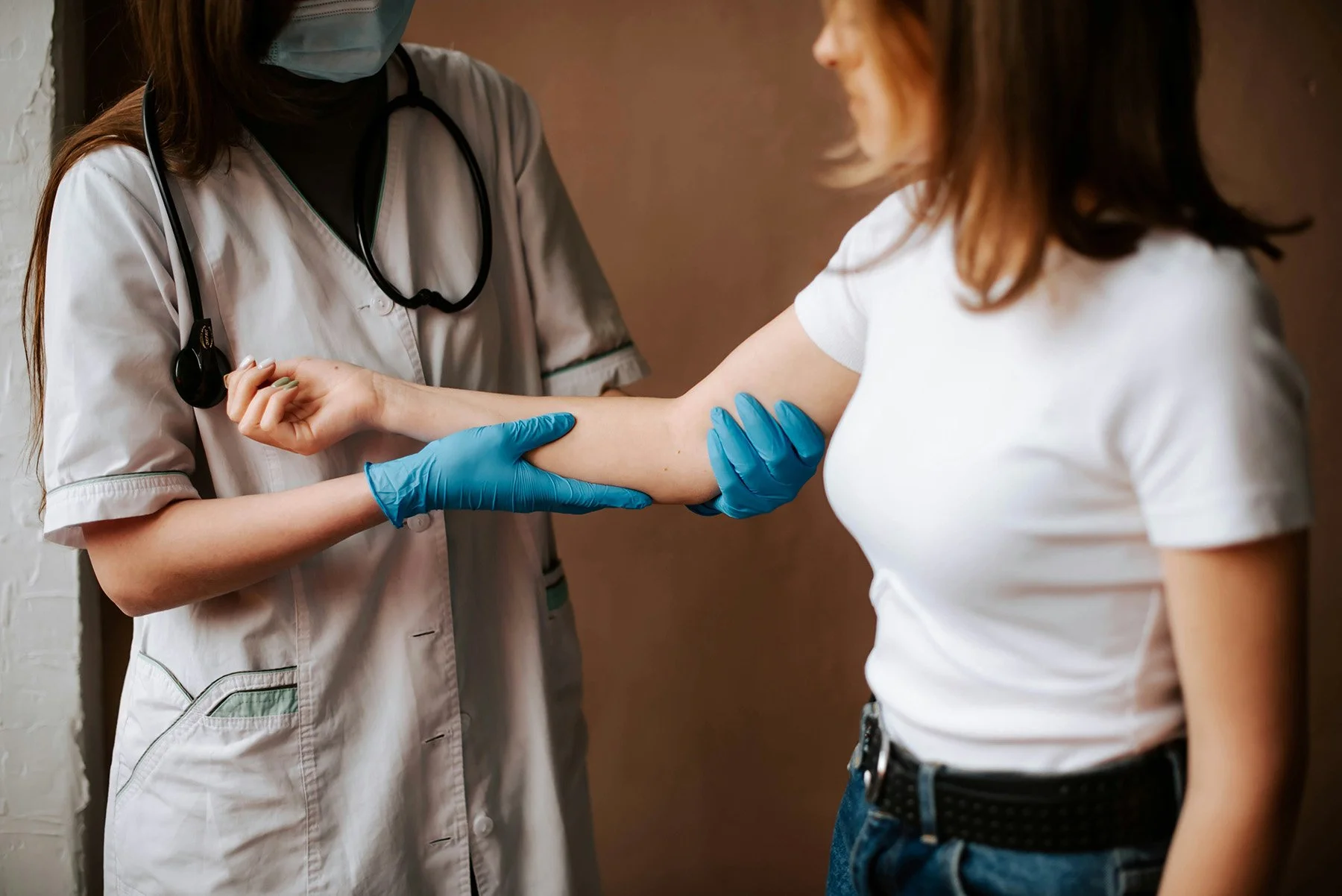
Tiffanny and Josh Thomason share the early symptoms of Cushing's disease, the long road to diagnosis, pituitary brain surgery, and what recovery taught them about resilience.
What if years of unexplained weight gain, muscle weakness, exhaustion, mood changes, and hormonal issues were all connected?
For nearly a decade, Tiffany Thomason searched for answers. As new symptoms appeared, many were dismissed or explained away. It wasn't until doctors discovered two pituitary tumors causing Cushing's disease that everything finally started to make sense.
In Part 1 of their story, Tiffany and her husband, Josh, share what it was like to live with a rare disease for years without answers. They open up about the road to diagnosis, pituitary surgery, and the emotional and physical toll of finally finding out what had been happening to her body.
Listen to Tiffanny and Josh Thomason’s Interview
Watch Tiffanny and Josh Thomason’s Interview
Living With Cushing's Disease Before Diagnosis
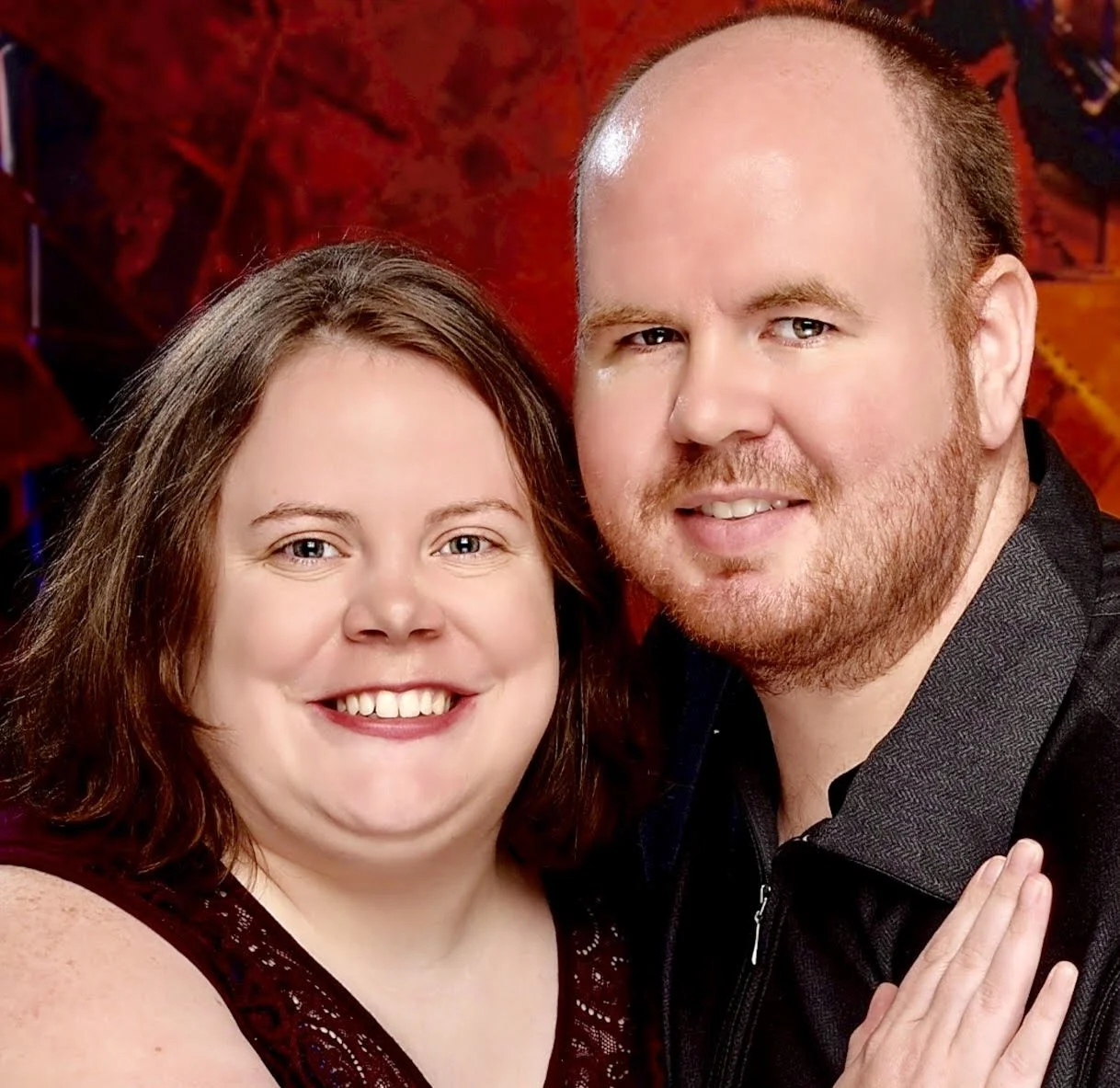
Brandi Fleck: This is Part 1 of a two-part series on a journey with Cushing's disease. Guest Tiffany Thomason appears with her husband, Josh Thomason, to talk about what she's been through personally and what they've been through as a couple due to Cushing's.
In Part 1, Tiffany focuses on describing the physical symptoms, detailing the importance of looking at the bigger picture with seemingly unrelated small symptoms adding up as a whole. Her symptoms started in 2008 and came to a head in 2018. She recently went through brain surgery, where doctors removed two tumors from her pituitary gland.
Tiffany opens up about having muted emotions due to elevated levels of cortisol as a result of Cushing's, and how after surgery she had to adjust to having normal levels of cortisol.
Tiffany has a master's in educational psychology, plus does medical billing and coding, and Josh is a software engineer. They met while living in Nashville and both love to travel. They decided to follow quality healthcare and have relocated to the Atlanta area.
So let's dive in to get to know these two as a couple and get a glimpse of how they balance each other out while supporting each other, having a positive outlook, and rolling with the punches.
Brandi Fleck: All right. Today we have with us Josh and Tiffany Thomason. How are you guys doing?
Josh Thomason: I'm doing well.
Tiffany Thomason: I'm doing great. How about yourself?
Brandi Fleck: Very good. I am so glad to have you guys on the show and can't wait for you guys to sort of share with our listeners who you are as a couple and what you've been through in your lives together, and some individually as well.
So let's just get started with getting to know you two. Can you tell us a little bit about your interests, and tell us about some of your recent travels and adventures together?
Tiffany Thomason: We both, together as a couple, really enjoy traveling. That's one thing. We lived in Nashville for a period of time and really took advantage of the music scene and that kind of lifestyle.
We also host for Airbnb, so that's another one of our interests. But travel's probably the top thing that we really enjoy.
Josh Thomason: Some of the travel we've done is not all for pleasure. Some of it has been for other reasons, which we can get into later.
Recently, we took a cruise starting in Denmark and visited some other areas within the European Union, then crossed the Atlantic into New York City. So we were away from home for about three weeks.
Tiffany Thomason: Yeah. We stopped by Iceland on the way through, and some of the other countries we visited were Sweden, England, Ireland, the Azores, which are part of Portugal, and we've got another European vacation planned for next year, barring any sort of setback.
Brandi Fleck: That's awesome. Was there any rhyme or reason to which countries you picked, or did you just want to see those?
Josh Thomason: It was just part of the cruise itinerary that we picked. We found a very reasonable deal for a transatlantic cruise, and based on the time of year, we wanted to see the Northern Lights.
That was a pretty incredible experience. It took us a couple of nights to actually get to see them, but the weather worked out in such a way that we managed to see them one night, so that was incredible.
Brandi Fleck: That is definitely on my bucket list. I cannot wait to see the Northern Lights. Very cool.
So, what is your favorite thing about each other?
Josh Thomason: I'll go ahead and answer that first.
My wife is easily the bravest person I know. She's had to face extraordinary challenges throughout her lifetime, and no matter what sort of adversity she's faced, she always manages to go at it straight on without flinching.
She'll tackle anything. She knows that no matter what the situation is, even if there's not an easy answer, she can still solve the problem in some way, shape, or form.
So that's probably the thing I admire most about her.
Brandi Fleck: Aw, aren't you so sweet?
Tiffany Thomason: I don't want to just repeat everything he said, so to keep it short and simple, I would say the thing that I admire most about Josh is that he knows how to take something sour, like a sour situation, and make it either sweet or funny.
Even when we frustrate each other and get on each other's nerves, he finds a way to come back 10 minutes later and make me laugh.
Josh Thomason: I thought you were going to say that my favorite thing was my ass.
Tiffany Thomason: I was going to make the joke.
Back when Josh and I first started dating, he asked me if I found him attractive early on in our relationship, and the answer I gave was, "Looks aren't everything."
Josh Thomason: It sounds terrible now in hindsight, but that was not at all my intention. I was just trying to say that wasn't the only thing I thought of when I got into the relationship, or where I put my emphasis.
Tiffany Thomason: But yeah, five years later, he still likes to crack that joke and tell people.
Josh Thomason: I've still got a paper bag too, just in case I need it.
Brandi Fleck: Oh no. You guys are cracking me up. That's funny.
Okay, so you've hinted a little bit that there have been some setbacks and things like that. We're definitely going to dive into those, but before we do, let's go ahead and ask: What do both of you believe the most important thing in life is now versus, say, 15 years ago or before you met?
Tiffany Thomason: It's my turn.
Just kidding.
I would say 15 years ago I was still in high school. My focus was always about success and finding a career. I wasn't the super social butterfly. It was always very academia-driven, and making a future for myself was probably the most important thing.
I didn't really think about a lot of life things, like how to handle adversity or build relationships. Obviously, I had an understanding, but I didn't really have the skills to apply them in my life.
Now that 15 years later life has happened, I would say the difference would be that what's important to me, and to us within our relationship, is transitioning from success to being able to face adversity with a positive attitude and have this overall appreciation and understanding of acceptance, whether that be accepting your success, accepting your failures, accepting differences, or whatever it is.
So that's my take.
Brandi Fleck: Gotcha. That's really interesting.
Josh, we'll ask you that same question in just a second, but I do want to say I feel like accepting life as it comes with a positive attitude and facing adversity with a positive attitude, whether you're succeeding or failing, in some ways sort of seems like success in and of itself. At least I think so.
So Josh, what do you think? What's the most important thing in life?
Josh Thomason: Probably 15 years ago, a little-known fact about me, at least to most people in my life, is that I was very religious and very into faith, being a good Southern boy who was raised in a Southern Baptist background.
I grew up very religious. I grew up kind of judgy in a way too, which, again, all of you that know Southern Baptists know how judgy that can be at times.
So I really thought that religion and living your life a certain way and trying to follow a pattern that was good was the best thing about life and the most important thing in life. I strived to be as perfect as I could be, to the point where I didn't have a lot of friends, and a lot of people kind of thought that I had my nose up in the air.
In the transition over time, life has taught me that, one, I'm not very religious anymore. Sorry, Mom and Dad, if you ever listen to this.
I kind of believe that everybody should strive to be the best person that they can be and do right by other people. That's kind of the most important thing. Do right by yourself and do right by others.
I mean, it's a simple Golden Rule kind of thing that you learn as a child. Don't be a dick to other people. Just try to be good and accept other people for whatever they believe. If it makes them good, no matter how crazy it sounds to you, if it makes your life better, then do it the hardest you can do it.
Brandi Fleck: That's really great. I like that.
It seems like these were just lessons that both of you have learned after some things have happened.
Brain Surgery for Pituitary Tumors
So I know that your recent travels that you just described were after brain surgery recovery for Tiffany. Tiffany and Josh, can you tell us about what you went through with that?
Tiffany Thomason: You're right. I had a transsphenoidal brain operation, where they go through the nose. It's actually less invasive than open brain surgery, obviously.
That surgery took place in July. I had that done in California because they used technology, like flight simulator technology, and translated it to be part of an augmented reality system that allows them to use that kind of technology in the OR. They get a better picture, and they're able to rehearse the surgery electronically before they actually perform it so they can guarantee that they'll get all the tumor.
Brandi Fleck: Oh wow.
Josh Thomason: Nerds. They get to use an Oculus Rift headset and kind of do a fly-through of the cranium and everything. It was pretty cool looking.
Brandi Fleck: Yeah, I bet.
Tiffany Thomason: So the surgery was to remove... I can get more into detail about this, but I was diagnosed with Cushing's disease.
Generally, there are several causes for Cushing's disease, but one of them is a tumor in the pituitary gland, which sits at the base of your skull.
In my case, I actually had two tumors. It was unclear to know, even though they sampled both tumors, because my levels were not a clear picture to tell which side was creating more of the problem. So they took both tumors, although it was likely that only one of them was the culprit.
I have about 70% of my pituitary gland left. Your pituitary gland is your master gland, and that's what helps regulate all your body's hormones and functions.
Again, I had that in July, so we were not at all sure how recovery was going to go or how everything was going to wash out. But we already had this trip planned, and we were just very hopeful that everything was going to have a positive outcome and didn't get too worried about not being able to make it happen.
I already had it in my mind that I was going to make this happen. Even if I had to miss out on or do a reduced schedule and not do half the itinerary, I was going to go regardless.
If anything, it kind of gave me something to look forward to after going through the surgery and knowing, "This is what I have to look forward to." It was something fun and not anything to do with medical stuff.
By the time that trip came, Josh and I were really in need of that time together, to just be with each other and be present and not have to be talking about medical doctors, appointments, finances, and all the other crap that comes with life.
We were able to just kind of be and enjoy each other, so that was great.
Brandi Fleck: Gotcha. So you're referring to the fact that you had already had the trip planned for your European cruise, even though you didn't know how recovery was going to go or how long it would take, really.
Tiffany Thomason: That's because I didn't know.
I was diagnosed with Cushing's... Well, it was suspected that I had it in 2013, but I didn't actually get clinical, biochemical evidence through blood work until 2015.
For several years, they thought the cause of my excess hormones was coming from a different source, not the pituitary, because I had other lesions throughout my body.
It wasn't until March of 2018 that I had another set of testing done that prompted them to do another test in April. They sampled the veins that drain from the pituitary through your sinuses.
They were able to tell at that point, "Hey, the source hasn't been outside of the pituitary. The source is the pituitary."
We got that diagnosed and confirmed in April, so it wasn't like we had a lot of time. We didn't know this was going to happen. It just sort of happened.
Between April and May, we got surgery scheduled, and we tried to get it scheduled as soon as we could so that I would have at least six to eight weeks to try to recover.
We had planned the trip probably in October of 2017, so we had planned it nearly a year out before we knew.
It wasn't like we had the surgery and then planned the trip just weeks after as a celebration or anything like that.
Brandi Fleck: Right, but it ended up sort of being a blessing, I guess, that you had it there.

Recovering From Pituitary Surgery
So I have two questions for you guys that just came up from what you said. I want to know, how did the recovery go? And then the other question is, what was it like living with Cushing's without having evidence of it or without having a formal diagnosis for so long?
Josh Thomason: I can answer the recovery part.
Brandi Fleck: Sure.
Josh Thomason: Her surgery was in Southern California. We ended up staying in California for almost a month. Actually, it was just over a month. It was about five or six weeks. Correct me if I'm wrong on that, honey, but I think that's accurate.
We stayed kind of all over California. The first two or three weeks, we were in Southern California, right around the hospital area.
Primarily, we were there because she was in and out of the hospital a few times just to do some follow-up testing.
Then we kind of made our way north through... We stayed in central...
Josh Thomason: California, around Bakersfield, for not quite a week, maybe five days or something. Then we were in the San Jose and San Francisco area for about another 10 days after that.
That part of the time was a lot of resting. She was pretty much in bed most of that time. We would go out occasionally and walk around a park or a mall or something, just so she could get out and not be cooped up all day.
Tiffany Thomason: We did that, but from a symptomatic standpoint, it was hard.
I wasn't sleeping that well because you're not supposed to lean your head forward or back. You have to kind of sleep sitting up. I had headaches, a little nausea, and I was also withdrawing because my body was so used to having such a high amount of cortisol, which is your body's stress hormone that helps maintain its regulatory function for all your systems. It tells your body the whole fight-or-flight kind of thing.
I had an excess for so long. Granted, it was intermittent. I wasn't having an excess every day. It was kind of a cyclical pattern that these tumors were creating.
The ups and downs of that... Josh can talk more about it. It affected my mood. I was pretty miserable and didn't realize how miserable I was until I was already on the other side of recovery.
I was irritable. I would go from zero to ten over the littlest thing that set me off.
I also went through a stage where I was just crying for no reason. All of a sudden, I had feelings that I guess had been muted from all the hormone garbage. I was like, "Oh my gosh, what are these tears?"
It was hard. I was often apologetic because I felt bad. It's hard for Josh to be so supportive and also take care of himself.
Recovery was great in terms of nothing bottomed out. Nothing went chaotic. Nothing was an emergency situation. Everything went as planned, but the physical side of it and the emotional side of it were a little rough.
Brandi Fleck: Okay. Josh, I'll let you add to that if there was anything.
Josh Thomason: You definitely had a hard time transitioning back into things.
There were plenty of nights where she would just start weeping for no known reason. I'd ask, "What's the matter?"
She'd say, "I don't know."
It was really kind of sad, but also kind of sweet because, like she said, she hadn't really been experiencing a lot of emotion. She had been very flat for a long time in terms of just affect.
I would sometimes do something nice, but nothing too outlandishly grand, and she'd just say, "Oh, thanks."
After surgery, I'd do even the slightest thing and she'd start crying and say, "I'm so grateful for you. You do so much for me."
I'm like, "Look, I just grabbed you a bagel or something. Why are you weeping?"
Brandi Fleck: Oh wow.
High Cortisol Symptoms and Mood Changes
I mean, that means it was a success, right?
Josh Thomason: Yes.
Like she was saying, her body was essentially producing too much stress hormone. If you've ever taken prednisone, that's probably the closest comparison I can make.
I've not had a lot of experience with steroids, but I was a mess whenever I took that recently. I was the biggest bastard I've ever met in my life. I hated myself.
I realized, "Oh, that's kind of what you went through nearly every day." You'd be fine in the morning, then something small would happen and you'd snap and be furious. Then you'd be sad about snapping.
It's a roller coaster. It's a little bit like bipolar. You're all over the place. At least I was all over the place whenever I was dealing with that.
Brandi Fleck: And you said that was sort of similar to...
Tiffany Thomason: He had been on a round of steroids. He was on prednisone for a swollen uvula, which is that little thing in the back of your throat. He had a little incident.
When he was on prednisone, not that I wanted him to be on it, but I was like, "Oh, now you get to see what it's like for me when you have no control over your emotions and what your body is doing."
It's kind of strange how you go from happy to being like, "Oh my gosh, get me out of here."
I was glad, in the sense, that he was able to get kind of a secret lesson on what it was like for me. I think he's had a lot more understanding and a lot more empathy for that part of what I go through now than he did then.
Josh Thomason: Absolutely. I wanted to shoot myself on that stuff. It was terrible. God.
Brandi Fleck: Gotcha.
Early Symptoms of Cushing's Disease
So that flatness and inability to control your emotions, is that what you went through for years before you actually got that formal diagnosis?
Tiffany Thomason: When I first started out, I started with symptoms of Cushing's back in 2008.
I'll get into this a little more later in the episode, but at that time it was mainly uncontrollable weight gain. It would happen overnight. I would literally go to sleep, wake up the next day, try to put on the same pair of pants, and not be able to fit into them.
I started working with a personal trainer and trying to change my eating habits. I really hit the ground running trying to figure out what was happening to my body.
I kept getting passed off with, "Oh, you're in college. Take these anxiety meds. Take this. Take that."
Then in 2009, I started to have some female changes with my menstrual cycle. Again, weight gain was a big thing.
By 2012, it started to affect me in a way where my muscles were just fatiguing, especially my upper body muscles, like my biceps, and my quadriceps in my legs. Your biggest muscles that help you go from sitting to standing, blow-dry your hair, brush your teeth, they were all fatiguing.
I was getting these weird symptoms, and then I started having more neurological symptoms, like numbness in my hands. Just really random things that you don't necessarily associate with a big issue.
At that time, I was diagnosed with polycystic ovarian syndrome, which most females listening would know. I think even This Is Us... Kate had disclosed her difficulties with PCOS.
That's a typical diagnosis for any female who has some sort of hormonal imbalance, so it kind of got passed off as that.
"Oh, you just finished grad school, so your life is chaotic and stressful. That must be it."
The mood stuff didn't really start to peak until probably between 2015 and 2018.
Brandi Fleck: Would you say, Josh?
Josh Thomason: I'd say mostly 2017 was probably the worst of it.
Tiffany Thomason: Yeah, okay.
I think toward the end is when it really escalated because that's when it really started affecting my sleep.
I'd be raring and ready to go at three or four in the afternoon, then I'd be up all night but sleepy all day.
That's typical of somebody who has what's called a reversed diurnal pattern. Cortisol helps regulate when you're awake and when you're asleep.
You're supposed to have cortisol gradually rise in the morning, then it bottoms out again at night, and that's how you get sleepy.
For me, it was the opposite. It was low in the morning, then it didn't peak until the afternoon into the evening.
That's why some of my mood stuff...
Tiffany Thomason: ...really came into play when I wasn't sleeping right or wasn't sleeping well.
I think that's what kind of exaggerated it a little bit and made it more and more of a problem.
Brandi Fleck: Gotcha.
Finding Hope During a Rare Disease Journey
Sort of an example of you keeping a positive attitude through all of these things is I know that the two tumors you mentioned, you guys named them. I think that's a great way to go about it.
Can you tell us why you decided to do that and what that did for you?
Tiffany Thomason: After getting the confirmed diagnosis that the Cushing's was coming from the pituitary and knowing I was going to be having pituitary surgery, Josh and I were both part of support groups online that are about Cushing's, but they're also about neuroendocrine tumors, which is the kind of tumor that I have.
We're very active in these groups. A lot of times, patients will write documents for other patients to learn from, like, "You're about to go through surgery. Here's some Q&A. Here's some of this. Here's some of that."
I had been reading from other patients that naming your tumor helps you associate it with victory. It's no longer part of you. It helps with the association that now that I'm on the other side of this, I'm not going to fixate on it anymore. It helps bring closure.
They also say, "Don't get on the scale and weigh yourself. Measure yourself." Success isn't always something you can visualize on a scale.
For me, it was symbolic to say, "You had me, but now you don't anymore."
I don't really know. I think I had another neuroendocrine tumor removed in 2013 before I met Josh. They initially thought my Cushing's-type symptoms were the result of that tumor, and it turned out not to be.
I think I named that tumor too. For so long, when you're going through a diagnosis like this, it becomes such a part of your life. The illness becomes part of your life, and the tumors are what's creating the illness.
Once you give them a name, it's like, "They're gone. They're out of my life."
I don't really know. I'm kind of rambling at this point, but it was one of those things where I could associate it with being done and being behind me.
Brandi Fleck: Gotcha. So y'all, Tiffany is done with the tumors, but her story and Josh's story are far from over.
Themes of acceptance and support carry over into Part 2, which you won't want to miss because we delve into the emotional and transitional aspects of the journey, how a rare disease impacts career, attitudes surrounding success, how diagnosis was a relief, and accepting your life path even if it's not what you planned. That can be a tough one, you guys.
The couple also gives advice from both the patient and caregiver perspective in Part 2. If you have questions about Cushing's, want to offer words of encouragement, or have a similar story you'd like to share, absolutely feel free to leave a comment.
I know Josh and Tiffany would love to hear from you, and me too.
Join the conversation!
Feel free to share your own experience and let me know if you have any questions in the comments.
Related Posts






Hi, I’m the founder of Human Amplified. I’m Brandi Fleck, a recognized communications and interviewing expert, a writer, an artist, and a private practice, certified trauma-informed life coach and Reiki healer. No matter how you interact with me, I help you tell and change your story so you can feel more like yourself. So welcome!
Find More on the Blog
Topic
- ADHD
- AI
- Atlanta
- Black and BIPOC
- DIY
- FAQ
- LGBTQIA plus
- Los Angeles
- Nashville
- Seattle
- St Louis
- St. Louis
- UFOS/UAPs/ETs
- abuse
- accountability
- addiction and recovery
- adoption
- affirmations
- afterlife
- altered state
- angels
- animals
- anxiety management
- art
- astrology
- atlanta
- attachment
- awakening
- beauty
- behind the scenes
- being human
- body image
- body work
- boundaries
- brandi fleck
- breathwork
- bullying
- burn out
- burnout
- cancer
- career
- caretaking
- chakras
- channeled
- clarity-dive
- clarity-practice
- clarity-primer
- clean products
- coach
- codependency
Recent Blog Posts
Visit the Full Podcast Audio Archive

Affiliate