
Healing From Lyme Disease and Learning to Trust Yourself
Interview By Brandi Fleck
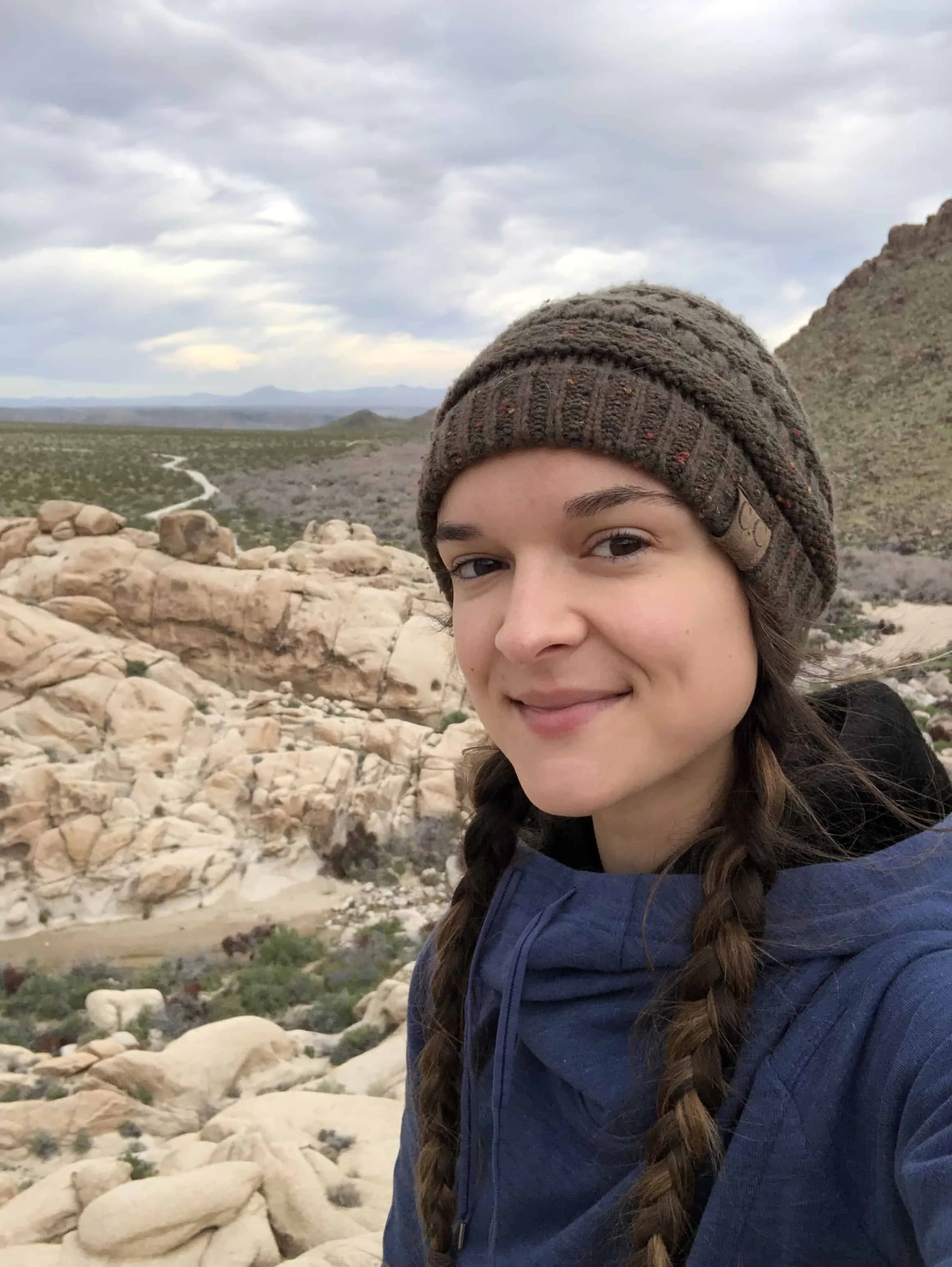
Hannah Bethel shares how chronic illness, holistic healing, intuition, and body awareness transformed both her health and her creative life.
Chronic illness forced Hannah Bethel to slow down long enough to reconnect with her body.
In this episode, the Nashville singer-songwriter, hypnotherapist, and reiki master shares her experience navigating Lyme disease, medical dismissal, holistic healing, and the long process of rebuilding her health through intuition, body awareness, grounding practices, and radical self-trust.
We explore the realities of chronic illness, why learning to listen to the body can completely change the healing process, and how experiences like yoga, solo hiking, and creative vulnerability reshaped both Hannah’s life and her music career.
If you’ve ever struggled to trust yourself, felt disconnected from your body, or wondered how physical healing and emotional healing influence each other, this conversation offers an honest look at what it means to reconnect with yourself from the inside out.
Listen to Hannah Bethel’s Interview
Watch Hannah Bethel’s Interview
Nashville Singer-Songwriter Hannah Bethel Shares Her Healing Journey
Hannah Bethel: Hi, my name is Hannah Bethel, and I'm based in Nashville, Tennessee. Every moment that we've lived compiles to the now moment. As humans, we can get into cyclical thought patterns that we spend all of our time in our head. Then I heard a voice in my ear, like an angel, that said, "Lyme disease." It kind of set the stage for the rest of my life. It taught me to check in with the body.
Brandi Fleck: This week we're continuing with our focus on the human body by talking to Nashville singer-songwriter, reiki master, and hypnotherapist Hannah Bethel about her journey with Lyme disease, adventures in nature, and her latest music. It is all related.
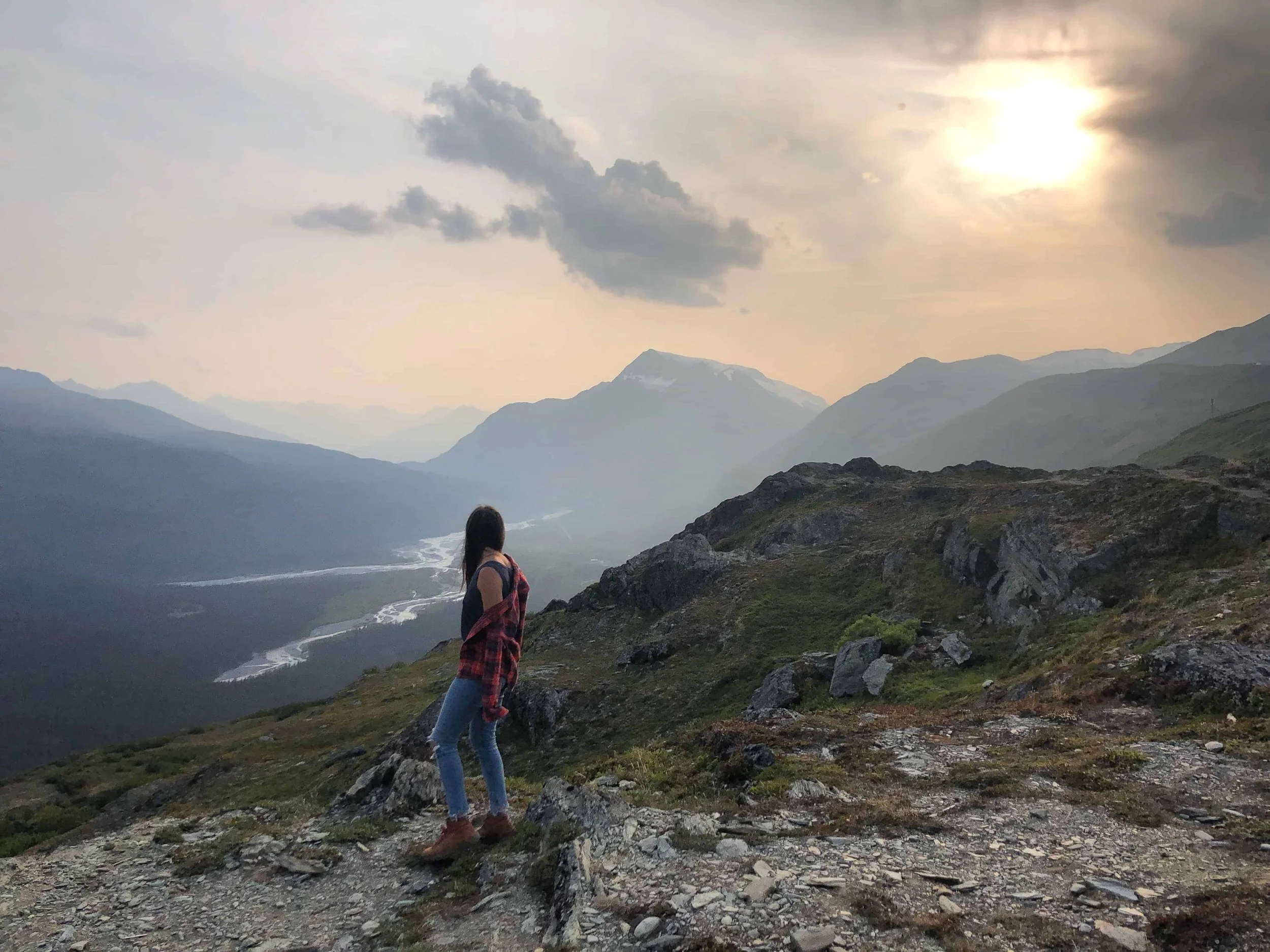
First, we dig deep into Hannah's adventurous spirit, specifics of solo hikes she took in Alaska and Sedona, Arizona, how she challenged limiting beliefs, and later we circle back around to how that love for adventure carries over into what she loves about touring.
In between, we learn how Lyme disease set the stage for Hannah's current music career, which was just taking off when she first became unwell. After a couple years of healing, Hannah was able to get back into making music, coupled with her passion to help others come into health holistically.
I've oftentimes said music has healed me and held me together in some of the hardest times in my life, so it's really interesting to look at how music and healing have intertwined in Hannah's life.
Yes, we discuss the specifics of getting a Lyme diagnosis, from what test to take, what practitioners Hannah went to, and also, and most importantly, how she learned to listen to her body. But the bigger lessons here are all about how every part of being human impacts every other part, and that mindset and attitude are, no pun intended, instrumental in making progress.
So relax for the next hour as Hannah makes the connection for us between listening to your own body in healing and in making music, using the subtle cues to navigate decision-making and the joys of vulnerability.
At the end of the episode, we also jump in with some details about Hannah's newly released EP, a particularly vulnerable album, Until the Sun Comes Back Around, which you'll definitely want to check out.
Brandi Fleck: Hannah, welcome to Human Amplified. I am so excited to have you here today, and I just can't wait to dive into your story. How are you doing?
Hannah Bethel: I'm doing great. I'm super excited to be here chatting with you and also really excited to share some parts of my story that I don't usually talk about much, so very excited about that.
Brandi Fleck: Okay, awesome, awesome. Before we talk about the music that you do, we are going to talk about a lot of things you've been through, and I feel like that's got to influence all of your creativity and the music that you make. Would you say that's accurate?
Hannah Bethel: Absolutely, yeah. I mean, all of us, every moment that we've lived compiles to the now moment where we are, so none of us would be who we are without every single step we've taken. Yeah, so yeah, absolutely.
Brandi Fleck: Yeah. Okay, well great. So before we dive into all of that, will you please introduce yourself to our listeners? Tell them a little bit about who you are and what you do.
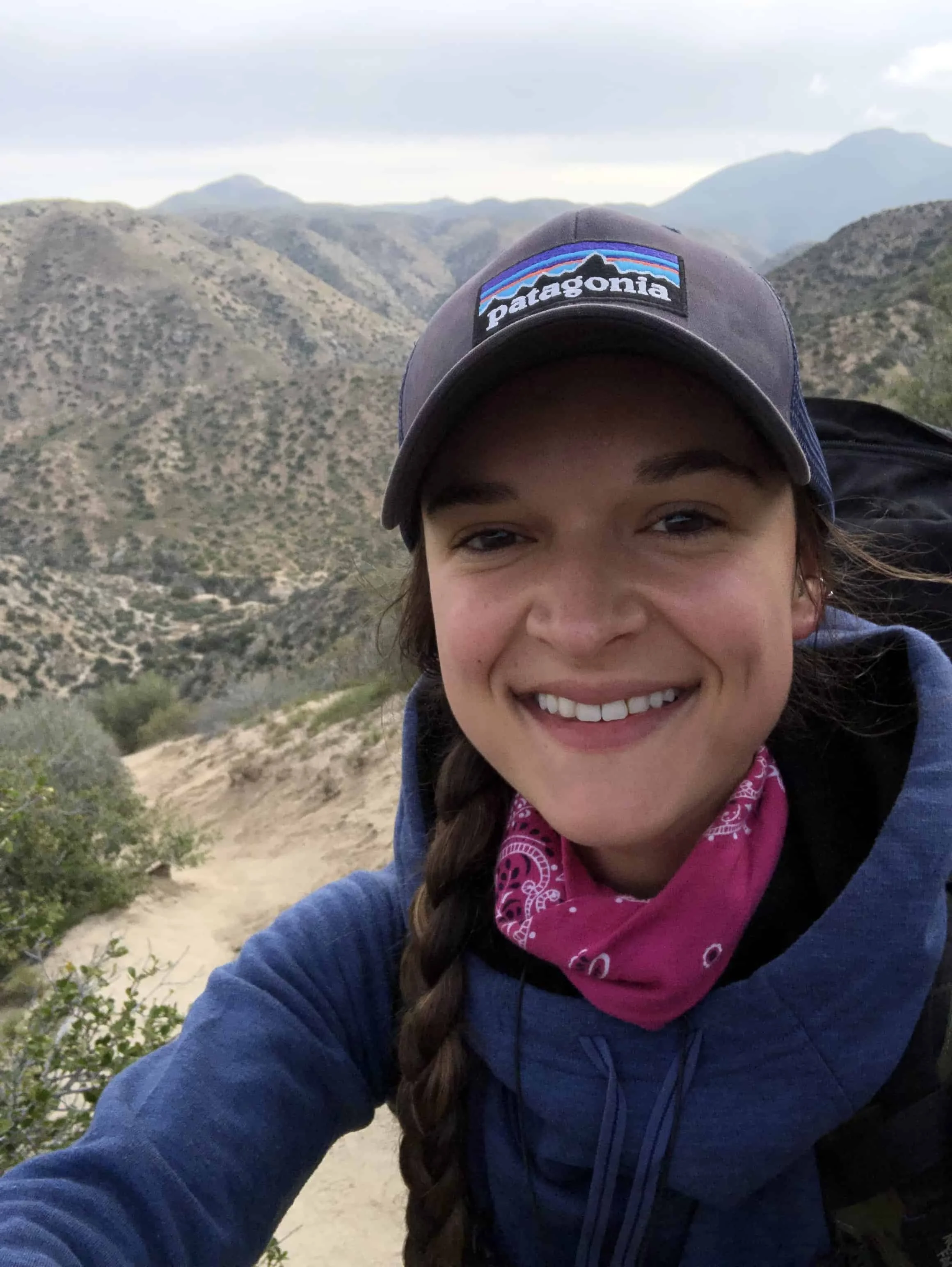
Hannah Bethel: Sure. Well, my name's Hannah Bethel. I'm a singer-songwriter. I'm also a reiki master and integrative hypnotherapist. I live here in Nashville, Tennessee. I moved here when I was 18 years old, moved from Michigan, and just kind of moved here for music, hit the ground running, and it's been absolutely nonstop fun and madness ever since.
Brandi Fleck: Gotcha. That's awesome. And so often we hear stories of people moving to Nashville to pursue their music career. Has it been hard? What was it like when you first came?
Hannah Bethel: Gosh, I mean, yeah, it's been hard, but it's also been wonderful and magical and exciting and confusing and pretty much all the emotions you can have. Infuriating.
When I moved to Nashville, I was, I guess, very green, you could say. I was like, "Okay, I'm moving to Nashville. I'm gonna have a record deal within a year or two and be on my way with life as I kind of envisioned it."
Turns out I had a lot of learning to do once I got here and kind of fell into the Nashville ecosystem of how things are done here in the music industry, and spent a little bit of time getting stuck in that and trying to play by the rules and do all the things and appease all the gods of the music bro, etc.
Then came to the point where I realized that that didn't really serve me creatively. It just wasn't working for me. And then when I decided to just do things my own way, that's when everything kind of blossomed.
Hiking in Sedona and Alaska Changed Hannah Bethel’s Life
Brandi Fleck: I love that. I really do. And speaking of doing things your own way, I know I feel like you're a very adventurous person and you've done some really cool things aside from just moving to Nashville to start your career. So can you tell us a little bit about your solo hiking, and where's the most beautiful place you've ever been?
Hannah Bethel: Sure, yes. I'd love to talk about this. Well, the most beautiful place, that's a hard question because I've been blessed to see some really, really extraordinary places.
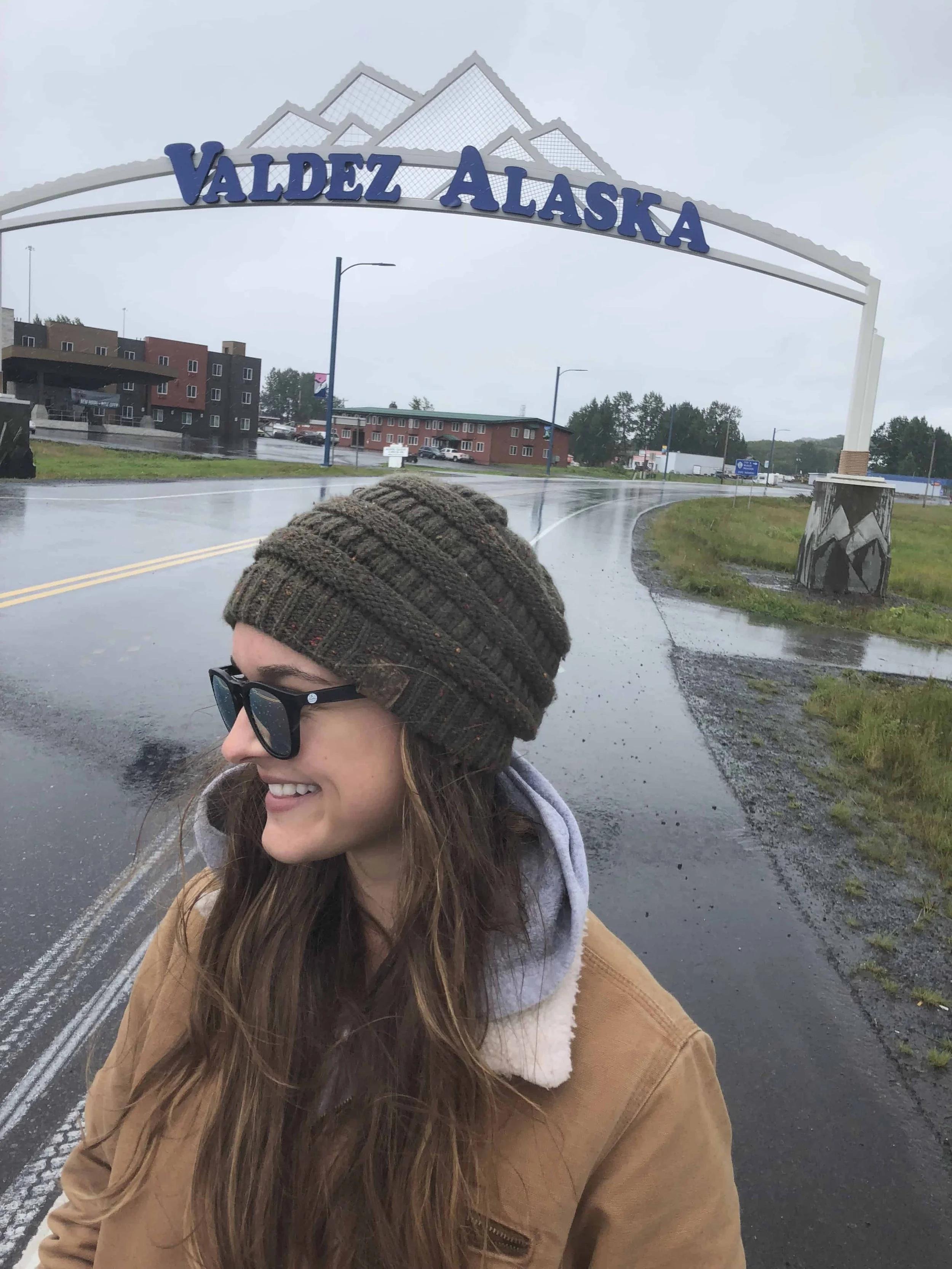
I think one of the most beautiful places, well, driving from Anchorage, Alaska to Valdez, Alaska is just the craziest thing I've ever seen. It looks like Lord of the Rings, and there's just mountains and glaciers and wildlife and rivers and waterfalls. It's, oh my God, it's amazing there.
And Sedona, I would say, are the most beautiful I've seen.
Brandi Fleck: Okay. Can you give us a little context around your solo hiking and what made you decide to do those kinds of things?
Hannah Bethel: Yeah, well, I've always loved adventure. I always have loved a little adrenaline rush, and I've also always been very deeply connected with the earth.
When I was a kid, that was my time to kind of ground and refuel. I would spend hours in the woods alone and didn't really recognize it at the time, but now looking back, I'm like, "Oh, I was regulating myself," because I felt kind of intuitively that being in nature is what balanced me out.
So I carried that love of the earth with me into adulthood, and I always wanted to do some kind of solo trip, but I also carried these beliefs as to why I couldn't, like, "I don't have the experience or the knowledge," or "I shouldn't do it because I'm a woman and it's not safe to do it alone."
And then I just decided that I was gonna do it anyways because I just wanted to. So then I just did it.
Brandi Fleck: That's awesome. Okay, so I would love for you to describe a detailed memory of the most beautiful place you've ever been in. I know that you've been to Joshua Tree and you mentioned Sedona, which, gosh, Sedona was amazing. I went for the first time this past summer, and I was like, "I've never seen anything so beautiful in my life." So if you could just describe a detailed memory and what emotions you felt when you were in that beautiful place, that would be awesome.
Hannah Bethel: Sure. I'll tell a story about Sedona because that is also just such a—I don't know, I must have lived there before or in another life or something because the first time I drove through it, my whole body was vibrating and I'm crying, and I was just driving through Sedona once on tour like a decade ago, and I'm like, "I gotta get back here."
I've been back several times, but one time I was doing a backpacking trip there, and I went out to this place called Shaman's Cave, which is a kind of cave up on the cliffside, kind of out in the backcountry of Sedona.
I hike up in there intending to sleep in the cave, and it's gorgeous. You're way up high. You're looking out over the whole valley, and then there's red rocks all around the valley, and it's just like, man, it's just extraordinary.
So I make it up to the cave. It's kind of hard to find. Then when I get there, there was a Native American man and woman in there doing some kind of ceremony. So I just kind of waited, and then after a little bit they came out and were talking to me.
"Oh, what are you doing?" And they saw my pack and they're like, "You're gonna camp out here?" And I was like, "Yeah."
They're like, "Oh my God, that's awesome. So many people have vision quested here." And they were super stoked for me, and then they said a prayer over me, and then they were gone really, really fast. Almost that I was like, "Did that just happen, or am I just dazed out because it's so beautiful?"
So just really synchronous. Then I go into the cave and was just overwhelmed by this feeling of homecoming like I've never experienced before in my earthly life. It's hard to put into words, but I just felt so wrapped in love, and I was hearing the voice of my intuition. It felt like a crowd of people that were just so excited that I was there, and I kept hearing, "You made it. You made it. You're finally here."
It was just incredible. It was quite mystical and unlike anything I'd ever experienced before. I just kind of sat on the floor and cried for about an hour and then camped there, and it was amazing. I slept so well.
A lot of times when I'm out backpacking, I'll wake up a lot in the night. Every sound, I'm like, "What's that?"
But there, I just slept so soundly. The temperature was perfect, everything. I just felt so safe and so held.
Then in the morning, I climbed up on top of the cave and watched the sun come up. I had this little hummingbird come and sit right next to me for minutes, and it was really cool. Since then, every time that I've done a camping or backpacking trip, I've had a hummingbird come and sit with me for a little while. It's amazing. So yeah, really cool.
Brandi Fleck: Okay, were you actually in a tent or were you sleeping under the stars? Where was your camp?
Hannah Bethel: I was in a tent. The tent that I had then, I could kind of take the top off though, so it was just a screen and I could look out because I'm a little bit scared of scorpions or snakes falling in my pack, so I'm like, "I'm gonna be in a tent."
Brandi Fleck: Yeah. Oh, that's really nice. And you mentioned in other places that you sort of wake up at every little sound, and I feel like I would be that way too. When you were in Alaska, or maybe any other place that you want to talk about, did you ever come up against any hardship or dangerous situation that you had to navigate quickly?
Hannah Bethel: Yeah, but it involved people, not nature. I'm a pretty good prepper. I'm pretty good about kind of measuring out how much water I need to be drinking per day, how many calories, how far I'm going, checking the weather. So I've never been in a situation where I've been unprepared in that regard.
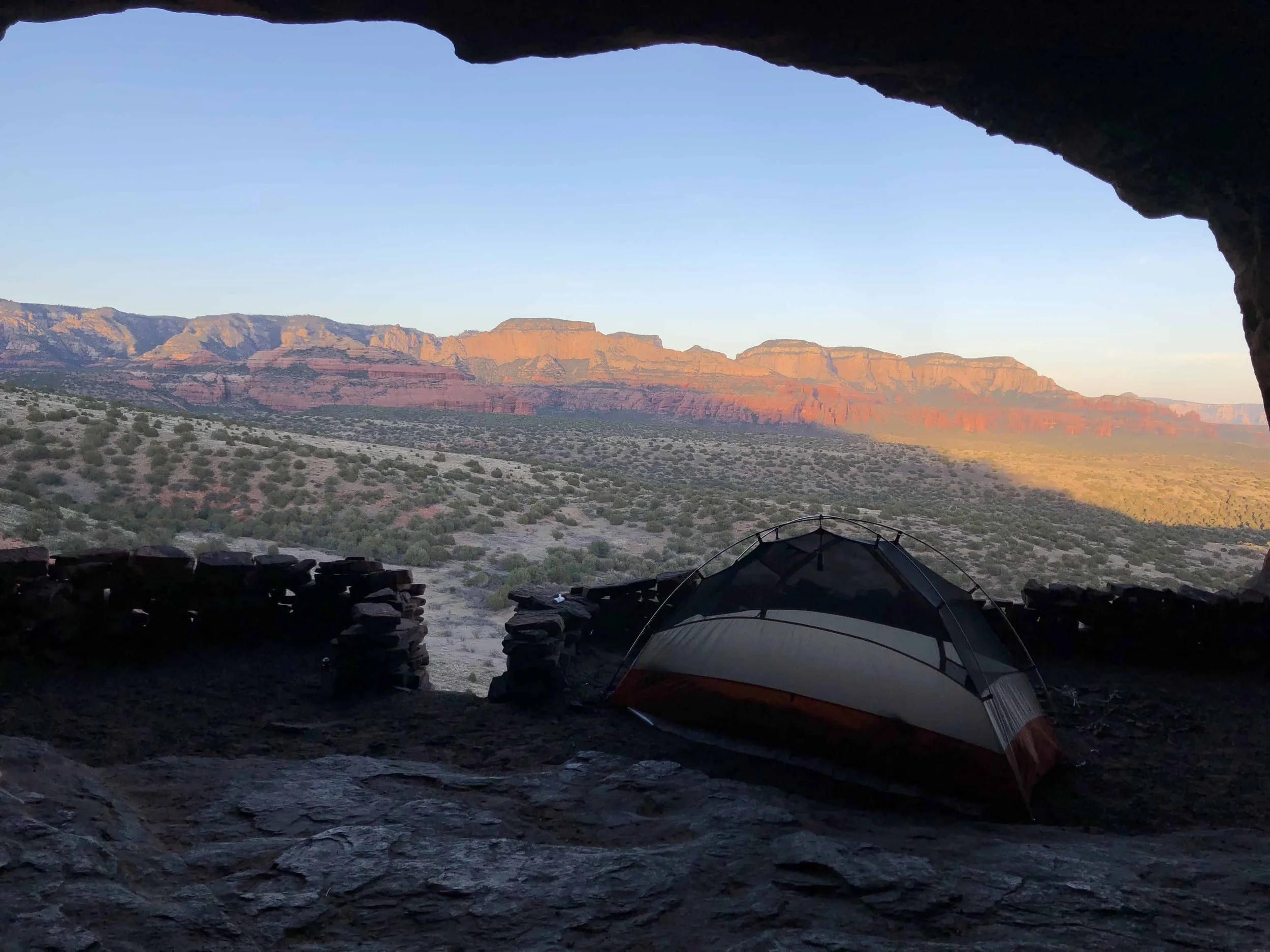
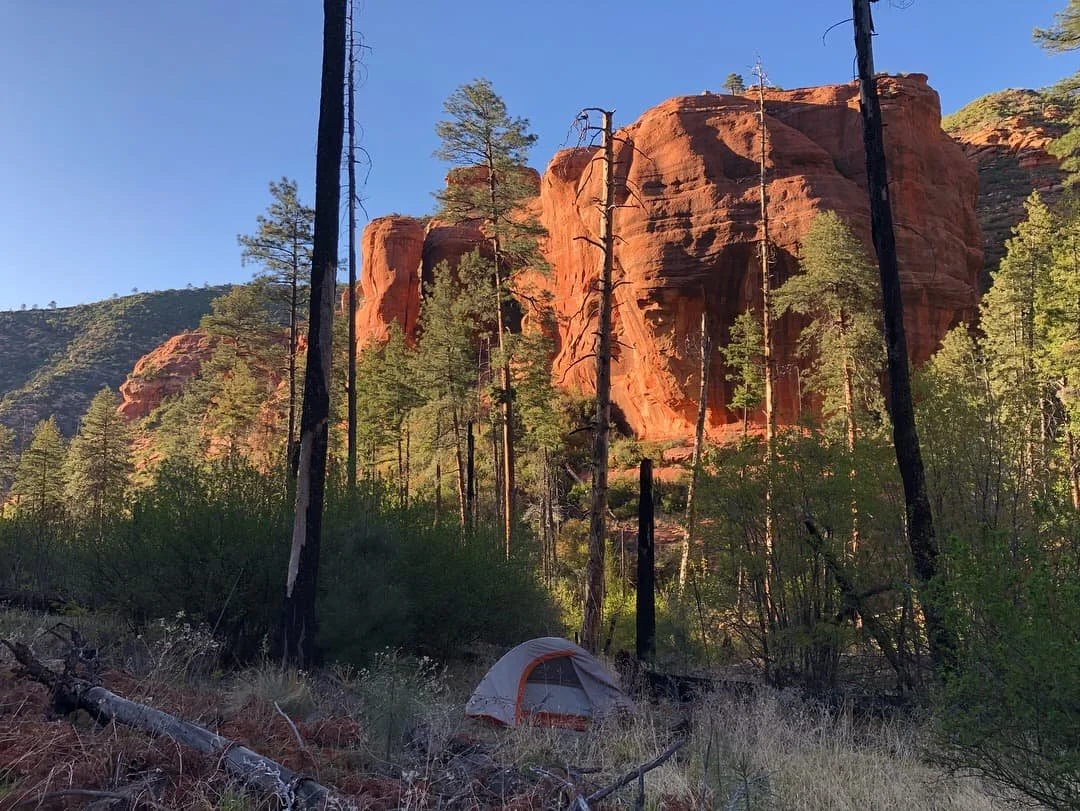
But when I was in Sedona, the last couple nights I was there, I was camping out in this maybe seven- or eight-mile radius of backcountry land that was all wide open.
My second-to-last night, I'm setting up camp. It's almost dark, and I'm just sitting outside the tent reading or something, and this black Jeep goes by. There's not really a road out there, but there's kind of a road you could drive if you had a Jeep or four-wheeler or something.
This Jeep drives by and they kind of slow down as they're driving by me, and they whistle at me, and I'm like, "Oh great. Awesome."
But then they continue on their way and I don't see them again, so I'm like, "Okay, fine." I know there's other people out camping or whatever. I just can't really see anyone else.
Then the next night was my last night there, and I was probably, I don't know, a few miles from where I'd been the night before. I set up camp. It's about the same time, almost dark, and this time I had my car nearby because I was gonna be leaving the next morning. But almost dark, and this car comes by again with these two guys, and they're hollering, blaring Top 20 country. What is going on?
So they kind of go back and forth by me a couple times, and one of the times they pass me, they get a little ways away and I hear this banging noise, and I'm thinking maybe their car is backfiring or something.
Then they come back by me, and they were shooting off a gun over my head, and I'm like, "What is going on?" Because at the time all I had was bear spray. I wasn't carrying or anything.
So I basically just threw my tent in my car and drove away and called 911.
Brandi Fleck: Yeah. Oh my gosh.
Hannah Bethel: Yeah, it was pretty weird.
Brandi Fleck: What made them think that was okay to do?
Hannah Bethel: Girl, I don't know. They were showing off. They're like, "We can shoot a gun." I don't know. I'm not sure.
So that was the scariest moment, but then I went—and I was really mad because I'm like, "Oh, it's my last night here and I just got scared off by these weird guys." But then I ended up finding this—I drove for a few miles and I found this little kind of clearing where several other people were camping, so I just pulled in and camped there where there was other people and actually ended up meeting some really cool kind of hippie gypsy people who were traveling across the country. So it ended up being a cool experience anyways.
Brandi Fleck: That's good, good. It's really interesting that the most danger you were in involved people instead of nature, so I think there's a lesson in that.
Hannah Bethel: Yeah, for sure.
How Nature Helps With Grounding and Mental Clarity
Brandi Fleck: Whether it's through that experience or just being in nature, if you could sum it up, what have you gotten out of those experiences where you have gone on these adventures?
Hannah Bethel: I've gotten so much. It's really a time for me to kind of regroup and spend time alone with my thoughts, which I think is very important, especially in Western culture where it's so go, go, go. Many of us don't hardly spend any time alone or not being stimulated in some way by TV or internet or whatever.
Brandi Fleck: Yeah.
Hannah Bethel: So it's a good time for me to just check in, be honest with myself, kind of take that time to get in alignment. It's also really empowering for me. Every time I come back from one of these trips, I just feel brave and I feel strong and I feel independent and self-sufficient, and I think it's another important thing for us to build that part of us that knows it can take care of us because we all can, but we don't often get time to connect with that.
Brandi Fleck: Yeah, I really love that, and those are really good points. That actually brings me back to a follow-up question that sort of came up when you were talking earlier.
In the beginning when we started talking about these trips, you talked about being in nature has always helped you ground and refuel, even as a child. Can you describe for us a little bit what it means to ground? Because I know we talk about that all the time, but I don't necessarily know if it's been described. You know what I mean?
Hannah Bethel: Yeah, yeah. That's a great question because it definitely is kind of ambiguous.
For me, I think so often as humans we can kind of get into cyclical thought patterns, and sometimes they get spinning so fast that we spend all of our time in our head, and many of us are oftentimes very checked out of the body.
Brandi Fleck: Yes.
Hannah Bethel: So not only are we not fully in this human experience that we're here to have, but when we're tuned out of the body, we're also not able to notice if something feels different or if something feels off because we're not grounded. We're in the head. We're checked out of the body.
For me, like many people, it is something that I have to do kind of all day long, every single day. I check myself back into my body, and just a simple practice of that is just kind of feeling into your feet, like feeling into the soles of your feet and the toes on the ground, and then kind of doing a body scan up, working through the ankles, the legs, just kind of slowly tuning into the whole body.
Then you can go even deeper into organs. You can go, "Okay, how is my heart feeling? How do my lungs feel?" And just kind of getting in the experience.
Breathwork is awesome too for this. That really gets you in the body. Or even if you find yourself mulling over whatever it is that you always mull over in your head—we've all got our little stories and inner dialogues—I'll touch myself on the arm when I catch myself doing it and be like, "Come back. Okay, come back, Hannah."
Brandi Fleck: That is the best description I have heard of what it means to ground. I love that. I think it's really helpful, just what you said about living in your head means you're not fully experiencing this human experience and you have to check back into your body. So thank you for that. That's really great.
Hannah Bethel’s Lyme Disease Story and Early Symptoms
This season we are really focusing on providing healing support to our listeners, and I know that you contracted Lyme disease a while back. So can you just tell us the story, the full story, of how you got it, what happened, how you got diagnosed, and all of those details?
Hannah Bethel: Sure, yeah. I'd be happy to.
This was a huge part of my early adult life and really kind of set the stage for the rest of my life in a really big way. In many ways, I look at it as it was given to me at that time for that specific purpose.
So I got, I'm 99% sure that I got it from a tick bite. I was camping in East Tennessee, and I was, let's see, I think I was 22. I had spent a long weekend out in the woods there, and I was sleeping in my car.

The last morning I woke up and there was a little teeny tiny tick on my forearm, right attached to a vein that I could see, and it was so small that I thought it was a fleck of dirt. So I kind of went to brush it off and saw that it was attached, and I was like, "Oh, it's a tick," and got my tweezers and removed it.
I didn't really think much of it at the time because I grew up in the woods. I had a lot of ticks, but I grew up in Michigan where it's different kinds of ticks and Lyme is not as prevalent up there, so I didn't really think much of it.
I left the trip. I remember calling my mom on the way home, just letting her know that I had survived and telling her about my weekend, and then told her that I had gotten a tick on me.
She's like, "Oh great, I hope you don't get Lyme disease."
And I was like, "I'm sure I won't, Mom." I didn't know anything about Lyme disease, but I was like, "Whatever, Mom." Just kind of ironic.
Fortunately, I started becoming symptomatic rather quickly, so within a couple months.
Brandi Fleck: Okay, because sometimes people don't become symptomatic for years or decades even.
Hannah Bethel: Because the Lyme bacteria is a spirochete, so it kind of burrows into your DNA and can evade detection while it's building up in the body.
So first I just started getting neck aches and joint aches, which was kind of weird. I was only 22. Then I started experiencing really strong thirst, and I remember saying to my friends, "Gosh, I've just been so thirsty the last couple weeks."
And they're like, "Drink water."
Like, okay. So I started drinking more water, and I was kind of starting to have the thought that this seems weird.
Brandi Fleck: Yeah.
Hannah Bethel: But it wasn't anything severe, so I just kept going along. Then I had one weekend where I came down with something kind of flu-like, sort of a cold, headache, tummy was not super happy kind of situation. But again, not very severe. It was pretty mild.
But again, I was struck with the thought of, "This feels weird. Something feels not quite right in my body."
Then the following week I was in a meeting, and I was thinking about it again. I'm like, "Gosh, something just feels kind of weird. What's going on?"
Then I heard a voice in my ear, like an angel, that said, "Lyme disease."
And I was like, "Lyme disease?" I mean, I don't really know anything about Lyme disease.
So I go home and start researching, and I had a lot of the early symptoms. Then I had a friend I knew who had it, so I called her and she kind of gave me some pointers in the right direction.
She told me I needed to get a Western blot test and that I needed to get my test results in hand after I got the test.
So I went to I think two different clinics and requested this Western blot test, and I was told that I didn't need it because no one has Lyme disease here and I'd just be wasting my money.
Then I went to a third clinic and kind of got the same spiel. It's like, "I'm sure you don't have Lyme. You really don't need that test." It was like a hundred bucks or something. "You'd be wasting your money. You don't need it."
And I was like, "I want it anyways. I just want to take this test."
Doctors kind of roll their eyes at me like, "Okay, fine, little girl."
Brandi Fleck: Yeah.
Hannah Bethel: So I take the test. A few days later they call me. They're like, "Okay, your test came back negative."
And I was like, "Okay, well can you send me my test results?" And they wouldn't. I had a hell of a time getting my test results, and I finally had to go into the clinic and I was like, "Give me my test results."
So finally I go in and I'm just like, "Please just give me my test results. This is weird."
So they give them to me and kind of have a little attitude about it, and I'm like, "This is freaking weird."
Brandi Fleck: Yeah.
Hannah Bethel: That's when I started going, "Why is this feeling weird?"
So I get my test results, and then I ended up finding a doctor who was a Lyme specialist. I took those results to him. He looked at the same results and said, "Yeah, you definitely have Lyme."
Brandi Fleck: That's interesting.
Why Lyme Disease Is Often Misdiagnosed
Hannah Bethel: Because according to the CDC, so many of the antibodies need to be present for them to give you a positive test. So if you have less than the required amount of antibodies, they'll give you a negative test.
So I go to this Lyme specialist doctor who put me on antibiotics for I think a month or two, kind of an extended period of time, and that kind of helped tamper it down a little bit.
I think I got bit in March. I think I started getting sick around May or June. I think I found this doctor in June or July, and I had actually had to quit my job at the time because meanwhile my symptoms are just getting more and more severe.
I started experiencing a lot of the cognitive symptoms of just not being able to think clearly and really freaking myself out.
I had a job at the time where I was working at an antique mall type of situation, and I was the manager. My job every month was to mail checks to all the vendors, and I sign them, write the addresses, stamp them, blah blah blah. There's like 200 of them.
And I sent all the checks out without signing any of them.
Brandi Fleck: Oops.
Hannah Bethel: Right? Yeah, oops. I got in trouble, but then the next week people started calling. They're like, "Hey, my check's not signed."
And I'm like, "Wow, that's weird."
Then it wasn't until I'd gotten like 10 of those calls that it hit me, and then I remembered, "Oh, I didn't sign any of them."
Then I started getting really scared because I was like, "That's super unlike me."
Brandi Fleck: Yeah. To space case like that 200 times.
Hannah Bethel: Yeah. So then I put in my two weeks at that job, and I just really started going downhill.
The second week of my last two weeks, I started working from home, and then I made it a couple days into that week and I couldn't even finish it because I just couldn't get out of bed. It was really, really scary.
I watched an excellent film. If anyone has Lyme or is curious about this, there's a film called Beneath Our Skin that's excellent, and I think there's a sequel to it too. But I would highly recommend watching that. Terrifying, but good information to have.
I started feeling a little better with the antibiotics, and then I think I started my job again in September, but then I just started going downhill again when I started trying to work.
Then I eventually ended up connecting with a holistic detox practitioner and ended up working with her for two years on a weekly basis, and that was what eventually cured me of Lyme.
Brandi Fleck: Wow. Okay. See, I feel like this is such an important conversation because I known people who have gone for years, have lost years of their life without even having a diagnosis because of the attitude, "We don't have Lyme here. No, you don't have Lyme." So yeah, I'm so glad that you were able to be an advocate for yourself.
Holistic Healing Approaches for Lyme Disease Recovery
Can you take us through some of the healing that you went through with your holistic detox practitioner and what you specifically did to be cured?
Hannah Bethel: Yeah, totally. So it's important to remember that each of our bodies are going to react to different illnesses in extremely different ways depending on what's going on in our bodies, and I think that's a place where Western medicine really kind of misses the boat.
So with this holistic practitioner, they tested my DNA and they were able to see that I did have Lyme. I also had a co-infection, which is really common. When you have something that makes you super sick, your immune system gets run down and you get sick with something else.
I also had Epstein-Barr, which is mono, and then they were also able to detect that I was getting formaldehyde poisoning from a job that I was working.
Brandi Fleck: Oh wow.
Hannah Bethel: At that time I was working a job where I was printing T-shirts, so the hot press with the ink and I'm breathing it all day was giving me formaldehyde poisoning, and the formaldehyde was attaching to the Epstein-Barr, and that was kind of creating this concoction that was messing up my health system at the time.
So it wasn't just about detoxing out the Lyme. It was getting me out of the environment where I was getting exposed to formaldehyde every day. It was also detoxing out the Epstein-Barr. There's just so many variables that come into bringing someone into health. It's not just about one presenting issue. It's about how everything is working together.
So first of all, I completely changed my diet and I cut out everything inflammatory: wheat, dairy, sugar, alcohol, basically just eating organic vegetables and fruits and meat.
I was juicing every single day. I was eating fermented foods, and that was a huge part of it. If I had not been willing to change my diet, I don't know if it would have been as successful.
Brandi Fleck: Okay.
Hannah Bethel: Because you have to support the body, and if you're putting in food with pesticides or inflammatory sugars while you're trying to heal the body, you're just kind of inhibiting that natural healing process.
Brandi Fleck: Yeah.
Hannah Bethel: So then with the practitioner that I worked with, I did a combination of so many different herbal supplements and vitamins, intravenous vitamins, oxygen therapy, hyperbaric chambers, which is like a pressurized kind of bed that you lay in. A lot of people with Lyme will use this.
I did ionic foot baths and hand baths, just different kinds of laser therapy. Prayer, girl. Prayer.
Brandi Fleck: First of all, thank you for giving us those tangible steps that you took because I think that that could be really helpful for someone going through this.
But you said that you thought this was given to you at this time for a reason. Does that have anything to do with the journey you were on with your music at the time, or what was that reason?
Learning to Trust Your Intuition and Listen to Your Body
Hannah Bethel: Yeah, I mean, I think it does have to do with music just because it all has to do with everything.
But yeah, it was definitely for me to have that learning experience of showing me how to take radical responsibility for myself and my situation and to listen to the voice of my intuition, even when people who were supposed to know better than me were telling me something different.
That was a really hard thing to do when I was 22 years old and there's all these doctors that are like, "You don't have Lyme. There's nothing wrong with you."
And I'm like, "Well, I can't get out of bed, so something weird is going on, and I want to figure out what it is."
Lyme is often misdiagnosed as other things or goes undiagnosed or is told, "There's nothing you can do. You can't cure it. You'll always have it. All you can do is take this medicine to alleviate symptoms."
And I just don't think that that's the case, and my life is an example of that.
Now, if you want to find healing, it takes a lot of work and it takes a lot of initiative and dedication to doing it. I think all those things that this experience showed me—that I was capable of that level of dedication, of advocating for myself, of trusting my intuition, of doing my own research when I wasn't getting the answers I needed from the people that were supposed to be helping me.
At that time, I actually had just finished a music project. I'd made this music video. The video actually got picked up by CMT online, and I had a lot of different things kind of lined up to take off, and everything got put on hold. Everything got sidelined because I had to spend two years getting healthy again.
I'm very glad that I did because if my music career had taken off at that point, it would look very different than it does now, and so I'm grateful for that divine redirection.
Brandi Fleck: Divine redirection. I like it.
Okay, so you said it takes dedication to heal and it's a lot of work, and so you spent two years. You even, like you said, redirected your career. What would you say to people—and to your point that our culture, our Western culture, is so much about the grind and the hustle and things like that—a lot of people don't feel like they have time to be that dedicated to their health. What would you say to that? How did you make the time?
Hannah Bethel: I was in a situation where I really didn't have a choice because I literally couldn't get out of bed. I would sleep for like 14 hours, get up, take a shower, go back to bed.
So it was either figure out what you're gonna do or potentially spend the rest of your life like this. A lot of Lyme situations are a degenerative disease, and it can act kind of like MS or lupus. It can really inhibit your bodily abilities, your cognitive abilities.
I was just like, "No, I'm not doing this. I'm gonna get better."
I would say to people, you do have the time. For me, it's important to have a healthy, strong body that feels good for as long as I can feel good in this body. We're all gonna grow old and we're all gonna transition out of this plane, but for me personally, it's extremely important to be as physically able to do what I want to do for as long as I can.
I don't ever want to be like, "Oh, I can't go on that hike," or "I can't go to that yoga class," or "I can't go out dancing because I'm sore."
Brandi Fleck: Yeah.
Hannah Bethel: I want to keep my body well and keep my mind well and sharp.
We as a society do the same thing with our mental and emotional health as well. In my work as a hypnotherapist, I work with people a lot in kind of unlocking these patterns and beliefs that we live our lives by that we never question or look at.
If we don't ever question or look at that, we never change, and we keep doing the same things over and over again with different people in different situations.
Brandi Fleck: Yeah.
Hannah Bethel: So it's just, yeah, take a look. What's not working? Change it.
Brandi Fleck: Yeah, absolutely. I really like that.
How Chronic Illness Changed Hannah Bethel’s Music Career
So you do all these things, but also your music career has sort of taken off.
Hannah Bethel: Yeah. So after I got physically well, I then was given some opportunities to look at my mental and emotional health and kind of check in and see the trajectory I'm on.
I had the opportunity to look honestly at some patterns I'd been recreating, at some beliefs that I was carrying, limiting beliefs surrounding what I could and couldn't do in music and in life, and I continue on that journey of working with those beliefs, as we all will have the opportunity to do.
So toward the tail end of my Lyme experience, I started touring pretty heavily, doing a combination of original stuff and some rough-and-tumble cover gigs all over the country, and got to travel to some really cool places, meet all the wonderful, weird, interesting people you meet on the road, which I love.
Honestly, that's gotta be close to my favorite thing about touring, is just the people you meet. So often as well, people will come up to you after a show and share something deeply personal, whether it's a relationship thing or a dream that they've carried. People feel safe to be vulnerable with you because you're standing up on stage being vulnerable.
Brandi Fleck: Yeah.
Hannah Bethel: So that's really a beautiful part of this life that I love so much. I really love being in that space with people, which is probably why I love my therapy work that I do because I love just creating space for people to get tender and go in, go deep, and like, "What's actually happening in here?"
But yeah, so I spent a long time touring and then I recorded a few songs and then went through a pretty sad breakup. Also parted ways with the manager I was working with at the time and was just feeling kind of lost and kind of like, "Where the heck do I go from here?"
Around that time is when I did my Sedona trip, which was wonderful, and it was kind of like I began to listen to the voice of my intuition again on that trip and in that time. Instead of trying to calculate out my moves, I started kind of going by, "How do they feel?" and "How does this person feel to work with? Good? Not good? Not good. No, I don't care if they have all these whatever credentials."
I just started checking in with the body with every decision that I made, and then things just started boom, boom, boom, boom manifesting and getting really magical.
I had this song called "Train," and I wrote it about the demise of that relationship as it was going down. I had this vision for a video. I wanted it to be in the desert, but I had not much of a budget.
I'm like, "Okay, I gotta do it. I gotta figure out how to make this happen."
So I was talking with different video producers for probably like seven months trying to find the right person, and it was kind of awesome because I wasn't in a hurry. I was totally independent. I didn't have management. I didn't have anybody to keep me on the timeline.
So I was like, "I'm just gonna wait until this feels right."
Brandi Fleck: Yeah.
Hannah Bethel: Then I finally met this guy named Dawson Waters and told him about my vision, and he was like, "Yeah, let's do it."
So then a few weeks later, me and him and his girlfriend at the time, we drove my car to West Texas. We drove like 18 hours straight and then got there at sunset, started filming, slept in this little motel, got up real early, shot all the next day and morning, and then drove 18 hours back and just filmed the video that I'd been envisioning.
Then shortly after that is when I met my current manager, Clif Doyal, and that was very synchronous.
I don't know why I can't think of what the heck—
Brandi Fleck: It's a hard word. I think you got it.
Hannah Bethel: Yeah. We met and we were just immediately connected, and I was like, "Well, I've got this song. I've got this video. I think it's pretty good."
And he's like, "Wow, yeah, that's great."
Then we released that, and then that video went on to get picked up by CMT, and that kind of began the journey again after it had been kind of incubating for a couple years.
Vulnerability in Songwriting and Emotional Healing Through Music
Brandi Fleck: Yeah, yeah. Okay. That vulnerability that you mentioned that you love when you're up on stage and then people can come share with you. How vulnerable would you say you are when you are songwriting and in these singles that you've had out over the last couple years? Like you mentioned "Train," and you went on to release "Rhinestone Rodeo,” "The House Is on Fire," and then your latest one is "Memphis." How vulnerable are you in each of those, and how does your personal emotion come out in your songwriting?
Hannah Bethel: Yeah, I try to be as transparent as possible, and "The House Is on Fire" is probably the most vulnerable of that set of four. "Memphis" is just kind of a fun song, and "Rhinestone Rodeo" is honest too, but "The House Is on Fire.”
Well actually, I'll backtrack a little bit. I wrote a song that's going to be on the new record called "On the Way Down," and I wrote it the same day as another song on the new record called "Watertown."
I was just really going through a difficult, difficult season, and I couldn't sleep. I woke up at like five o'clock, made a pot of coffee, and just started writing that day. I wrote both "On the Way Down" and "Watertown" in the same day, and it was like I gave myself permission to write just for me.
I had kind of been phasing out of co-writing for a while because I just felt like I was making compromises that I didn't really want to make anymore, and writing those two songs really changed me and changed my whole relationship with writing and where I can go with my writing.
Then I wrote "The House Is on Fire" actually after those two songs, and then the new record, I kind of followed that same pattern of just laying it all out and not really worrying about it being too much or if this person's gonna like it or whatever, if it's weird.
I was just like, "You know, this is it. I'm just gonna do what I feel." Again, following that process of instead of thinking about the lyric like, "Well, would this make sense or that rhyme, blah blah blah," I just let it be an intuitive process of checking in with the body. Like, "Does this feel like what this lyric should be? Yeah? No? Okay, we'll let it sit for six months until it comes out."
Oftentimes what happens is the lyrics will come out right away, and then I'll get in my head and then I'll go, "Well, I don't know if that's good enough," and then I'll let it marinate for a while, and then oftentimes I come back to the first lyrics that came out.
Brandi Fleck: Yeah. Did your experience with Lyme help you sort of hone this intuitive creative process?
Hannah Bethel: Yeah, I would say in a way, definitely, as it kind of taught me to check in with the body.
As well, around the time that I was sick with Lyme, I started practicing yoga because I couldn't really work out. I was very active. I was running and kickboxing at the time, and I couldn't do hardly anything active when I was sick.
So I would just go to restorative yoga classes, and sometimes I couldn't even do those and I would just lay on the mat for like half the class. But just being in that space also taught such an awareness and connection to the body, which I think is so, so important.
The body carries so much wisdom, and it's telling us what we need if we just listen to it.
Brandi Fleck: Yeah. Oh, okay. And speaking of listening to it, you do have a new project coming up.
Hannah Bethel: Yes. Thank you.
Brandi Fleck: So please tell us what's next for you and where we can find all of these amazing things that you have coming out.
Hannah Bethel: Yeah. So, well, I think by the time this comes out, I think the project will be here. It's called Until the Sun Comes Back Around, and you can find it on all of the places you listen to music.
The first single is "Bad News Baby," and the second single is "Godspeed Los Angeles."
Yeah, I'm so excited about this project. It has been such a long time coming. Clif and I started dreaming of this project back in—I mean really back in 2018 when we started working together.
We had some singles, but we knew that we wanted to make a record, and we met with many different producers, some of whom are literally my dream producers. We've had many adventures seeking a producer for this record, and for various reasons it either didn't work out or just didn't quite feel right.
We ended up working with someone named Tim Craven on this record, who's amazing. He did such a beautiful job and just brought so much, just a different perspective on the songs and was so generous with his time and his energy and what he brought to it.
I'm just so glad to finally have these songs be brought to life and finally get them out. We started recording in 2020 and kind of finished in early 2021, and yeah, I'm just so ready to birth this baby.
Brandi Fleck: Awesome. Yeah. Well guys, check the show notes for this episode to get the links to Hannah's new project. And what's your website?
Hannah Bethel: It is hannahbethel.com.
Brandi Fleck: Okay, and then do you have socials people can follow you on?
Hannah Bethel: I do, yeah. I'm most active on Instagram, but also on Facebook. Go to YouTube if you want to check out any of the music videos. There's the one for "Train" and "Rhinestone Rodeo," "House Is on Fire." You can check all those out there too.
Brandi Fleck: Great. And then one more thing, if people want to get in touch with you for hypnotherapy or that kind of work, where do they go?
Hannah Bethel: You can go to hifihealing.com. That's H-I-F-I healing dot com.
Brandi Fleck: Awesome. Well Hannah, thank you so much for coming on the show and just being so open about your story and your experience. It's been an absolute pleasure.
Hannah Bethel: Yes, thank you, Brandi. I really appreciate you having me and asking such great questions and making space for me to talk about all the totality of my journey.
Join the conversation!
Feel free to share your own experience and let me know if you have any questions in the comments.
Related Posts





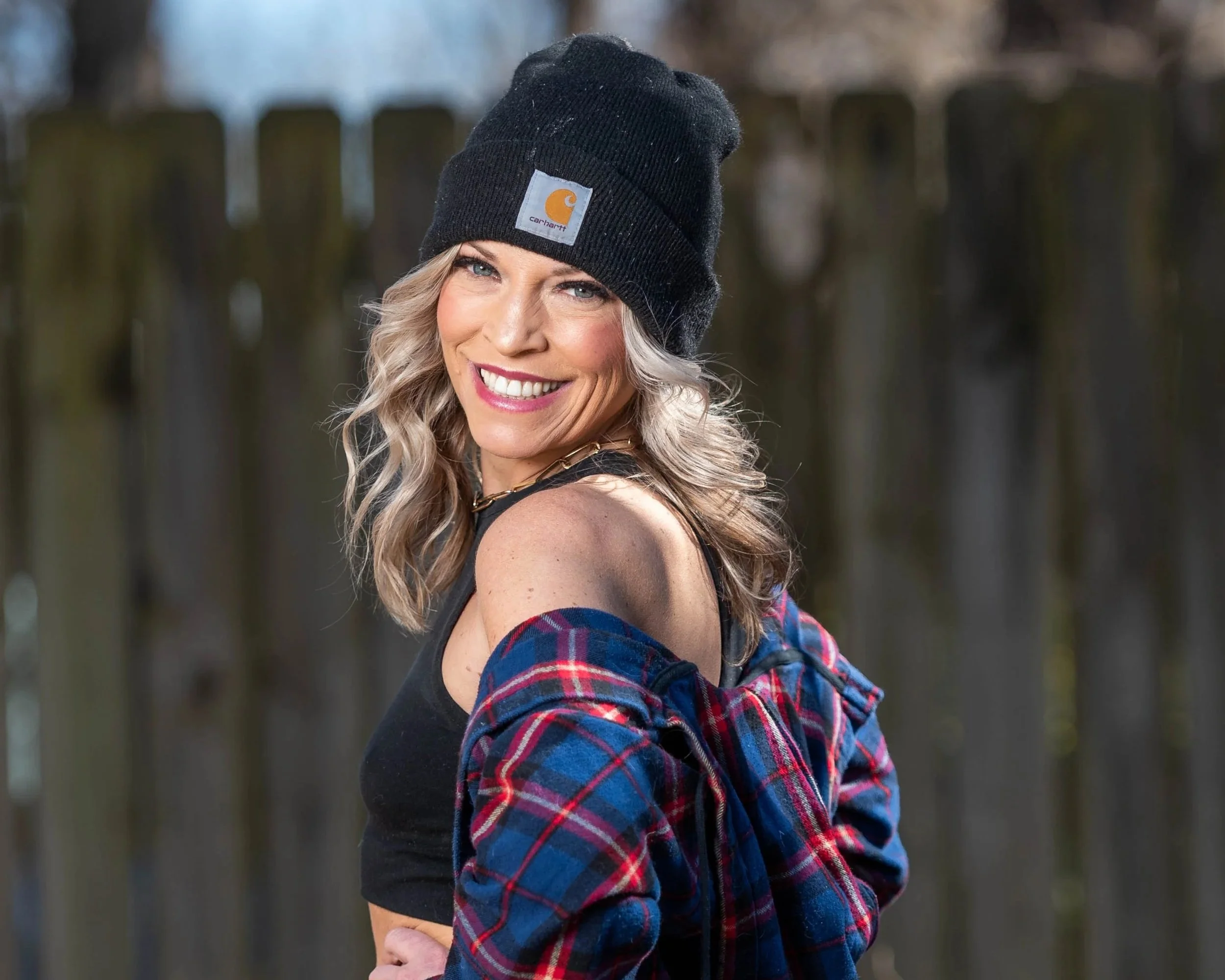

Hi, I’m the founder of Human Amplified. I’m Brandi Fleck, a recognized communications and interviewing expert, a writer, an artist, and a private practice, certified trauma-informed life coach and Reiki healer. No matter how you interact with me, I help you tell and change your story so you can feel more like yourself. So welcome!
Find More on the Blog
Topic
- ADHD
- AI
- Atlanta
- Black and BIPOC
- DIY
- FAQ
- LGBTQIA plus
- Los Angeles
- Nashville
- Seattle
- St Louis
- St. Louis
- UFOS/UAPs/ETs
- abuse
- accountability
- addiction and recovery
- adoption
- affirmations
- afterlife
- altered state
- angels
- animals
- anxiety management
- art
- astrology
- atlanta
- attachment
- awakening
- beauty
- behind the scenes
- being human
- body image
- body work
- boundaries
- brandi fleck
- breathwork
- bullying
- burn out
- burnout
- cancer
- career
- caretaking
- chakras
- channeled
- clarity-dive
- clarity-practice
- clarity-primer
- clean products
- coach
- codependency
Recent Blog Posts
Visit the Full Podcast Audio Archive

Affiliate


Spiritual practice can bring calm, clarity, and self-awareness, but it can also become a polished way to avoid what still hurts. In this guest article, Pat Crilley explores spiritual bypassing, emotional suppression, and how to tell the difference between true healing and performing peace.