Interview By Brandi Fleck

After years of medical uncertainty, Tiffanny and Josh Thomason share how a Cushing's disease diagnosis changed their lives and what it taught them about self-advocacy, acceptance, and hope.
When you know something is wrong with your body, but no one can tell you why, it's easy to start questioning yourself.
For years, Tiffanny Thomason searched for answers before finally receiving a Cushing's disease diagnosis. Along the way, she learned how to advocate for herself, trust her instincts, and keep moving forward when the medical system couldn't provide answers.
Together, she and her husband, Josh, reflect on how chronic illness reshaped their marriage, careers, and perspective on life.
Listen to Tiffanny and Josh Thomason’s Interview
Watch Tiffanny and Josh Thomason’s Interview
Living With Cushing's Disease and Rebuilding Your Life
Brandi Fleck: Heads up, this episode contains explicit language.
This is Part 2 of a two-part series on a journey with Cushing's disease.
Guest Tiffanny Thomason appears with her husband, Josh Thomason, to talk about what she's been through personally and what they've been through as a couple due to Cushing's.
Last week, Tiffanny detailed brain surgery, recovery, and physical symptoms of the disease from the beginning until present, and Josh discussed having empathy. Check out that popular episode at humanamplified.com/blog/living-with-cushings-disease-before-diagnosis.
This week, Tiffanny and Josh focus more on the emotional transitions throughout the journey involving career impact, rolling with the punches when your life plan changes, and focusing on persistence to get to the bottom of what's going on medically, even if it takes a while.
Plus, Josh describes his feelings surrounding the transition to caretaking and support.
So let's dive in to get to know these two as a couple and hear about navigating the emotions and impact a rare disease has externally. Plus, Tiffanny and Josh give some awesome tactical steps you can take to be your own advocate if you're on a similar health journey.
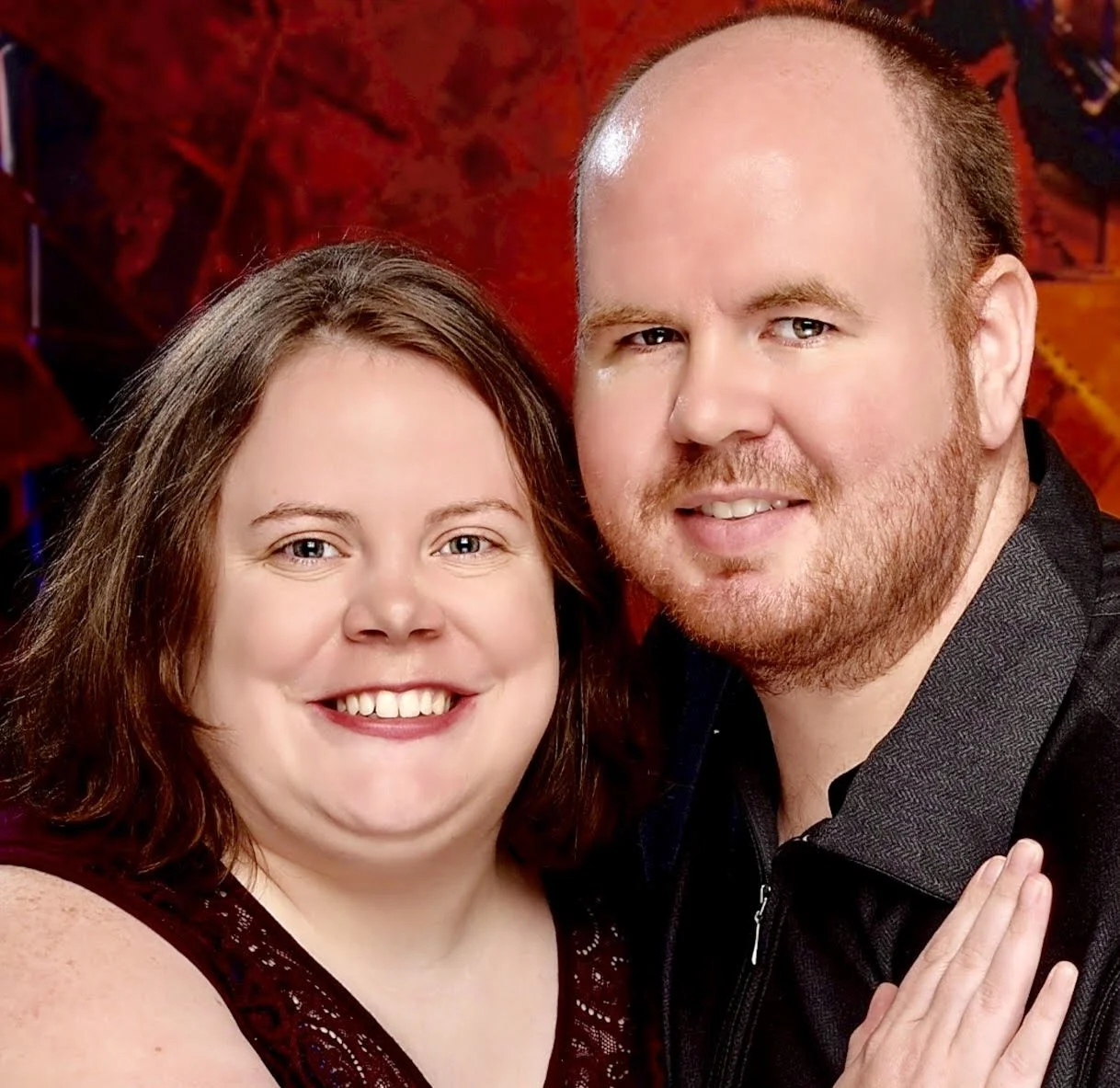
Tiffanny Thomason: For any listeners or people who maybe know us already, I have a master's in school counseling. That's what I went to grad school for. I transitioned from a human service field and decided to go more specialized into school counseling.
I have a master's in educational psychology, and I graduated in May of 2012 and got sick, to the point where I was not able to walk and my muscles were really weak, six months later. Well, I think it was six months. I graduated in May and got sick in October of 2012.
Talk about watching everything you worked for kind of crumble, right?
In that moment, I didn't really know that this was going to be lifelong. I had no idea. It was kind of a mystery diagnosis at that point. Nobody really knew what was going on.
They were just kind of throwing things at me, like a lot of psychiatric diagnoses. Like, "Oh, you can't walk because you have a urinary tract infection. Like, that's really bad," and this, that, and the other. A bunch of really random things.
Nobody was really looking at the whole picture, the whole history that started essentially right at the end of high school, when puberty would have really been taking its peak. That's kind of when it all started, but nobody really even thought of any of that at the time.
I watched my career, or any aspiration I had to be a school counselor, kind of become, "Well, I guess that's not happening right now."
But I always kind of kept it in the back of my mind like, "Oh, I'll get better. I'll get better. I'll get better, and I'll get back to it."
I didn't know, that was in 2012, so I didn't know six years later that I would be where I am, obviously.
For several years, I was doing things that I knew my body could handle. One of those was accommodating myself by taking care of children within our community, within our home, after school, because I knew, "Okay, that's only a couple hours a day. I can handle that."
So I did that, but I still was like, "Oh, I'll get back to working in a school."
Last school year, or it might even have been the school year before, I think I even applied for some local positions, and I hadn't gotten a position. Every time I would not get a position, I would say, "Well, I guess it's not the time. There must be a reason why I've not gotten a position."
I kind of validated it by saying, "Oh, I guess my body's not ready," or, "There's got to be a reason why I've not received a position."
For a while, I kind of went through a little bit of a depression because it was like, Josh is working really hard and providing.
Between spring of 2017, I hadn't had any income. It was like I felt like I was kind of a failure because I'm like, "I'm just here. I'm in existence."
I used to tell Josh, "I feel like I'm just a dependent. I don't feel like I contribute."
It was really hard to come to terms with where my life was at that point because it went from being fully active to having everything lined up, to having to just make do with something, to find something to do, to not being able to function and do anything at all.
It wasn't until I kind of had this conversation with Josh. Josh and I are very fortunate that we're able to have a lot of meaningful conversations where it's like, "Hey, this is kind of where I'm feeling. Can you help me? This is where I'm at. What do we do about it?" kind of thing.
He always kind of pokes and prods and tries to help me see things differently and always look at things from a different perspective.
I'm very blessed in that sense, and I really think that he's what helped me kind of see the light at the end of this tunnel because it was like, "Hey, Tiffanny, you've got to stop judging yourself based on who you were six years ago. You've got to start focusing on who you are..."
Tiffanny Thomason: ...you are now and what you're capable of, and what can you do with what you've got, pretty much. Step back and stop trying to fit my life into some sort of mold that existed before I got sick.
Within that conversation, we started thinking about maybe I need to go back to school. Not necessarily to get another degree. That did not interest me at all, but just to learn a different trade, learn something different that would allow me to work at my own pace, where I didn't have to worry about, "Oh, I feel sick today. I don't really feel like going to class."
We looked into some online things, and I ended up getting enrolled actually at the beginning of this year. New Year's Eve was actually this conversation we had about trying to reevaluate where my life was at.
The next day, I had enrolled in a professional and continuing education program at Kennesaw State University here in Georgia. I decided to do a medical billing and coding course.
My interest for that kind of came about because, as you can imagine, when you're dealing with a rare disease, or two rare diseases, and I've had over a decade of experience in the health profession dealing with my own stuff and knowing how insurance companies work, how things get denied if they're not coded properly, and all these things, I kind of developed an interest in that.
I also knew that it didn't involve me being physically present all the time and that I could probably work part-time from home or something, so some of that appealed to me also.
I enlisted in that program in January, and then I was still doing some more testing. Like I said, we found out that the source of my Cushing's was in the pituitary in April. Then I had the surgery in July.
It was like, "Oh my gosh, thank God I'm in this program and that I was kind of ahead and can pace myself and kind of work at my own leisure." I didn't have to worry about, "Oh, I'm going to have surgery, so I'm going to be gone from class." It was just, "I'll do it when I do it." I had a year to complete it.
I finished that in August, and then I took my certification exam the week that we were leaving to go out of the country on our trip. I took it the day before we left, actually.
I recently just became certified, or just did the first-step certification, for medical billing and coding.
I guess the big picture here is just that things don't always go according to plan. Sometimes it may take years. It took me years to finally come to accept, "Hey, that may never happen. It may not be what's best for me."
I think for a while I saw that as failure because it was like, "Man, I spent all this money to go get a graduate degree, and now I'm not even in the field. That's crazy."
It was a real acceptance. This is kind of one of the things that I think about. Just accepting this is where I am right now, and this is what's fulfilling me right now.
It doesn't mean that I'll never have an interest in working in schools or working with children. It's just right now this is where my life is at, and coming to grips with what my body is able to do and what I'm able to contribute.
Brandi Fleck: That's really powerful. I'm really glad you shared that.
Even based on my own experiences and trying to relate to you, I know that sometimes we are in situations where it's not what we've planned, and you can still find happiness. Do you agree with that? You can still find fulfillment?
Tiffanny Thomason: Oh, absolutely. I feel like that's why I constantly felt stuck and why I felt like I wasn't contributing because I was focused on the life pre-illness instead of where I am now.
Think about what you've gone through, Tiffanny. Your body is not the same. It was kind of like I had to be realistic. I had to stop. I think I was just stuck, really.
It was this conversation that Josh and I had about me not feeling like I was contributing and feeling like I wasn't pulling my weight. That's kind of what got this all bubbling up. Like, "Hey, you really have to rethink this."
Yeah, I definitely believe happiness is possible regardless of the situation. You just have to be willing to kind of reach for it and reach outside of your comfort zone a little bit.
It may not come to you overnight, but as long as you have vision for it, I think anything is attainable.
Brandi Fleck: Gotcha.
You've talked a little bit about the emotions that you've gone through with your career and your life path in regards to your health and being diagnosed in different ways over the years.
Josh, as you came into the picture, you sort of joined this ride, I guess, of different diagnoses and symptoms and not knowing, and learning more things as time went on.
Can you both tell me a little bit about what you went through mentally and emotionally as part of what you've called the roller coaster?
Tiffanny Thomason: Do you mind if I take this first?
Josh Thomason: Go for it.
Tiffanny Thomason: Okay.
I kind of look at this part, the process of diagnosis and how I dealt with it.
Like I said before, it was kind of a mystery diagnosis initially. I had gone several years with symptoms before I was even diagnosed or before a doctor would listen and entertain the idea.
As I told you, I had gotten a lot of psychiatric diagnoses and misdiagnoses.
When you're in that kind of situation, and it's such a struggle and a fight, we've been to probably... I've lost count, but I know we've traveled to at least eight states, and I've seen specialists from all over the world. This is even after diagnosis.
Even with a diagnosis, there's still so much misunderstood in a disease that's not very well understood at all.
Most people think of a diagnosis as sometimes being a good thing and a bad thing. A good thing in the sense that, "Yay, we know what to do from here. We're good."
Some people take it as, "Oh, this is awful. Terrible."
One of the things I kind of think about is because it took me so long to get to the point where I was even starting to get diagnosed, it was more of a relief rather than a state of shock or sadness than the typical person would have if they were given some sort of scary health news.
In a way, it's like a reason to rejoice because it's like, "Yay, we don't have to fight with these doctors to prove to them that X, Y, and Z are happening."
Josh had videos of me with symptoms and things that were going on. He videotaped and documented everything.
We travel with a binder that literally tells doctors, point for point, what year, what happened, this, that, and the other.
We've become less reliant because I think we're raised, and a lot of people are under the assumption that doctors know everything. Doctors are supposed to be able to cure you. Doctors are supposed to be able to make you feel better.
In my case, that's not true. Not every doctor knows. Not every doctor understands. They're human too.
For me, a diagnosis was like, "Hey, yay! Oh my gosh, finally."
It literally was almost the same excitement as when you graduate and earn an award because it's something I fought for. I fought hard for it.
I uprooted my life from Massachusetts to Nashville, to Vanderbilt, where I initially started getting diagnosed because in Massachusetts they were like, "Nope, you're crazy. There's nothing wrong with you."
For me, diagnosis equals victory rather than, "Oh my gosh, this happened to me."
Brandi Fleck: Well, that's a really great point of view.

Caregiver Support and Coping With Chronic Illness
Josh Thomason: Sure. For me, you're talking about the roller coaster of everything.
To begin with, before Tiffanny and I had ever met, I'd honestly never really had a relationship. Most of the time, I would date a person a few times, if that, and then we'd go separate ways.
So to go from being single my entire life, essentially, to dating someone, to becoming married, to having to be a caretaker has been one of the hardest challenges of my entire lifetime.
I was a smart kid growing up. I had a good life. My parents loved each other, loved me. I have a sister who was good at the time. Well, she's still good, but she treated me well.
Then coming into this sort of adversity, having to deal with not only the physical aspects of, "Hey, my wife is having this challenge and can't get out of bed today," or, "Okay, you've got to work, then you've got to do everything around the house and take care of the dogs, and then next week we're going to need to go from Georgia to Virginia, and then three weeks later go down to Florida."
There was a lot of this that was totally new and foreign to me. It is very tough being a caretaker, especially if you don't know what you're getting into completely. Not saying that Tiffanny had any idea what we were getting into either, but it was just a huge transition.
To every caretaker out there who may be listening, I feel you more than you ever know. That was kind of the most overwhelming thing to me at first.
I feel like we've got a pretty good grip on everything. Like Tiffanny was saying, I try to be her rock as much as I can and give her positive encouragement. But it's sometimes as hard on her as it is on me, or me and her. You get what I'm trying to say.
Brandi Fleck: Sure, sure.
How to Stay Positive During Chronic Illness
Despite what may seem like setbacks and not really knowing what the future held, as many of us don't, it seems that you've both still grown in love as a couple and in strength as people.
How do you both stay strong? What are your tactics?
Josh Thomason: I think we just are completely open and honest with each other as much as we can.
Tiffanny Thomason: I would say, because she said "stay strong," I think truth be told, we don't actually always stay strong.
I think that's the big thing. For a lot of people it's like, "Oh, you have to be tough. You have to be strong. You can get through it. God doesn't give you anything you can't handle."
When you've gone through things like this, those things are not helpful.
At the end of the day, it's okay to be the very opposite of strong and feel weak and feel defeated.
There are times where we just sit and hold each other and cry because we don't really know. There isn't always an answer. There isn't always an immediate plan.
We just kind of have to allow ourselves to feel, deal, and heal through whatever it is we face.
It's not always something that's like, "Oh, you have to be strong today."
I think knowing that we have each other and coming together is really what helps us. We face something knowing, "Hey, we're not alone in this."
For us, those support groups that I've mentioned are really helpful. Josh just recently joined as a caretaker, and I have to say, pre-surgery it was really helpful for him because that was probably the time where he was the most stressed out because of the fear of the unknown.
Plus, I was kind of miserable. There were a lot of things happening. We rely heavily on a lot of support groups where people know what it is we're going through.
I would say that's how we stay positive, and that's how we stay connected and don't just absolutely lose our minds and go crazy, for real.
Often, I think Josh is probably going to laugh when I say this, but I'm often the one to remind us, "Hey, this isn't permanent. Hey, this isn't forever. We'll get through this. Let's look at the glass half full versus half empty."
A lot of things recently, I say in conversation with him that a lot of times it's perspective.
We can sit here and feel sorry for ourselves and be like, "Oh, this is a really shitty situation. Oh my gosh, we're just going to melt."
Or we can kind of grab ourselves by the britches and just keep moving.
That's just kind of my attitude, and I think that attitude I carry helps Josh in a lot of instances.
For him, it's a lot of the humor and just being able to be there and be present and know, "Hey, I've got you. I'm not going to let you go," kind of thing.
I'm more like, "Quit your whining and keep moving," kind of thing.
Josh Thomason: I either add the humor or I try to be sweet whenever she's feeling down.
I try to help spin it in a way that she's like, "Well, this really sucks. I don't know what to do."
I'm like, "Well, you've gotten through all this before. You've faced so many challenges before. The answer may not be apparent right now, but there is a way to get through this. We just need to think about it. It takes some time."
Tiffanny Thomason: I think that's the other thing for other people, realizing that it's okay to not have an immediate solution.
We've had to get really comfortable with not having immediate answers, not having immediate solutions, and kind of fighting our way through things.
It's not always black and white. That's really something to tell people. It's okay if you don't have an answer. It could be a week before you have an answer. It could be years before you have an answer.
Brandi Fleck: What I'm hearing you guys say is that there are ups and downs.
Sometimes, Tiffanny, when you have an up, Josh might have a down, and vice versa. It sounds like you really balance each other out emotionally.
I also want to repeat, I think it was really powerful what you said. Basically, we don't always actually stay strong. It's okay to be weak.
Again, you just sort of reinforced that with, you're not always going to have an immediate answer. I think that's a really good takeaway.
Finding Love While Living With a Chronic Illness
Now I want to jump into how long have you guys been married, and how long have you been together? I think it's really important to sort of transition into this and keep getting to know you guys in that way.
Josh Thomason: Tiffanny and I have been married for not quite three years. We got married in February of 2016.
We had actually met through an online dating site that she had signed up for right after she had her first surgery in Nashville.
I'd been on the site for a while. The legend goes I was the first and only person that she talked to on this service. Honestly, she was the one who contacted me.
I had seen her picture pop up a couple of times, and I literally was about to send her a message whenever she contacted me.
Tiffanny Thomason: I was only on the site for less than 24 hours.
I had already paid for six months or a year because it was like, "Hey..." I was going to sign up for six months, and it sends you a message that's like, "Why do that when you can pay this much and sign up for 12 months?"
So I was like, "Sure. Sure. I'm not going to meet somebody..."
Tiffanny Thomason: ...overnight.
Well, little did I know, I did meet somebody overnight. Josh was the first and last person that I ever made contact with on Match. I had this profile for a whole year that I didn't even use.
Brandi Fleck: Well, you met your husband.
Tiffanny Thomason: Yeah.
Brandi Fleck: That's funny. That's awesome.
Tiffanny Thomason: I joke and tell people that he was like the best $150 investment I ever made.
Brandi Fleck: That's awesome.
Did you know when you first met him that he would be the kind of spouse that he is and be supportive and help you through this?
Tiffanny Thomason: Oh, absolutely not.
I don't think I was thinking, "Oh, he's going to stick around."
Honestly, even in the dating scene, it was like, "Why would anybody want to date me?"
I didn't really have anything to show because my career had fallen apart. I was sick. I didn't let on all the details, obviously, early on because even at that time I wasn't very sure. I didn't know that I had tumors in a million places and that my life was going to be this way.
I think I'll tell you one of the first times that I kind of knew that, hey, he's in this for the long haul. It was when my care got interrupted from Vanderbilt. We started dating in November of 2013, and my care got interrupted in August of 2014.
Josh Thomason: Right.
Tiffanny Thomason: One day I called him while he was at work. I had just gone for an appointment at Vanderbilt, and they sat me down and were like, "Oh, your doctor's leaving. He's got like two more weeks of clinic, and then he's gone."
I was like, "What?"
It was one of those things that just knocks you off your feet. I called him panicked while he was at work.
I was like, "Dr. Someone is leaving, and I don't know what I'm going to do. He's really the only one that's helped me. He's gotten me diagnosed," this, that, and the other. "What are we going to do?"
I could sense the panic from him. After he got home from work and after weeks of us trying to figure things out, it was like, "You know, I think the best thing for us to do at this point is to move where there's another neuroendocrine clinic that specializes in neuroendocrine tumors," which would be Emory.
I knew this doctor was leaving, and the doctor who took his place was still trying to diagnose me with something psychological.
I was like, "Well, if Vanderbilt's not going to support me, I'm not staying here since my other doctor was leaving."
I was like, "Well, what am I going to do?"
Granted, we actually fought. We had a fight about a lot of things around this. I think it's because, A, it was high stress, and B, we were fairly new in a relationship. The whole idea of moving somewhere and making that kind of commitment was scary.
We eventually came to a level head and were like, "If this is what we're going to do, then let's do it."
Knowing that Josh was willing and able to commit to something like that, not knowing how our relationship was going to withstand all this stress and not really knowing how things were going to shape up, he was like, "Even though this scares the shit out of me, I'm willing to do this."
I think that's kind of what told me, he doesn't just care about you, he loves you, and you're his partner. I just knew he was really invested.
Brandi Fleck: Josh, do you have anything to add to that?
Josh Thomason: Pretty immediately on, I knew that she was different than most anybody else I'd ever met and tried to be romantically involved with.
She seemed genuine and sincere and actually showed a real interest in me beyond just what I knew and what I could do for her.
Previously, to that point, people would just kind of think, "Oh, you go to concerts, so I'll take you," or, "Hey, that's a free ticket and a free drink," or whatever.
That had been most of my previous experience. Whenever I would walk in the room, her eyes lit up, and I could tell that she sincerely and genuinely cared for me.
I had a pretty good feeling early on that even if it didn't last until us getting married, I had a feeling that it could really be something and mean something.
Brandi Fleck: That's great.
Josh Thomason: I had kind of an inkling that way. What she's talking about with having to accommodate when her doctor left, that was, to that point in my life, the single most frightening moment of my life.
She called at work nearly in hysterics and made it to where I couldn't focus on work the rest of the day. Not through any fault of her own, but the situation freaked me out completely.
We had talked about moving, which scared me because we'd been dating a year. My first real relationship, a year into it, and I'm going to have to move away from everything I know in my entire life to accommodate someone else.
It took a lot of growing up and evaluating on my part. Do I be selfish and just want to stay with the life and the lifestyle I currently have, or is this more than me? Do I want it to be more than just what it currently is?
That probably was the point where I knew I had to make a real decision and either step up in a huge way and make this become something more or go about it another way. I'm glad I did.
Brandi Fleck: That's awesome. I thought you would say that, so that's good.
That was your fork in the road. You chose this path, and now that you're on it, what advice would you give, Josh, to other spouses to be supportive and to take those steps to really hang in there, even when things get tough?
Josh Thomason: Know that you're going to be wrong frequently. Know that you're not going to have the answers frequently.
There are plenty of times all you need to do is just shut up and listen. There are many times where I try to do more for my wife than she actually needs or even wants from me.
Tiffanny, even if it takes her some time, can do most anything, even in the sickest times that she is.
Sometimes all she needs is for me to just be there to support her, just be her cheerleader. I don't have to be a miracle worker, and caretakers, you don't have to be a miracle worker either. Sometimes the best thing you can do is just be there.
How to Advocate for Yourself With Doctors
Brandi Fleck: Tiffanny, what advice would you give for someone who's just received a similar diagnosis or has similar symptoms?
Tiffanny Thomason: Let me think about this a little bit. Here's kind of the tricky thing.
In my situation, I'm not the only one that was kind of a mystery for a lot of people. As I've said, it takes a lot of work to get to a point where you're diagnosed.
A lot of people that I know who have been on this journey, or are about to be on this journey, have a similar feeling to when I talked to you about feeling victorious when you finally get a diagnosis.
I feel like you're asking me about after they receive it, but I feel like by the time they get to a diagnosis, you become so much of your own advocate.
You learn, you're educating yourself, you're educating others, you're talking with doctors over and over. I even have a doctor who says to me, "Hey, Tiffanny, you know more than most of my medical students."
I feel like really the message needs to go to anybody that is seeking a diagnosis and not really having received it.
Brandi Fleck: Gotcha.
Tiffanny Thomason: If you've got symptoms that you're not sure of, that you're feeling are becoming more and more of a pattern.
The biggest thing that kind of grinds my gears is when people are saying, "Oh, you are what you eat," and fat shaming.
Everything is about, "Oh, that person must overeat," or people become judgmental just because somebody is overweight.
A lot of people don't understand that there are so many hormonal conditions that affect people's weight and their appearance.
I really wish there was a lot more talk about that because a lot of people do think, "Oh, I'm just gaining weight," or, "Oh, I'm overeating," or, "Oh, I'm fat."
Especially since it's common in females, it becomes a self-image thing. Circling back to giving some advice to somebody who's seeking a diagnosis, it would be:
Track your symptoms, write them down. Take videos, take pictures. Don't be afraid to question your doctors and what they're doing.
I can't tell you how many times I've had to backtrack because tests get the wrong codes, don't get ordered correctly, orders get written incorrectly altogether, the wrong scans are done.
There are a lot of times where it's simply the medical office staff or somebody who just isn't paying attention, and the littlest things fall through the cracks.
Stay on top of it. Like I said, question your doctor. Ask, "Why are you doing this?”
Don't be afraid to offer a suggestion that you might have researched. Don't just always go to Google. Find research articles, peer-reviewed things that have been studied and published. Those have a lot more weight than just, "Hey Google, what's wrong with me?" because then they'll think you're really crazy.
Have some facts to back it up and just say, "Hey, Doc, do you think this might be a test that's worthwhile?"
There have been times where I'll go in and say, "Hey, I think I need my B12 checked," or, "Hey, I need this," and they do it, and lo and behold, yeah, there's an issue.
Really learn how to speak up for yourself. Don't think that just because they're an MD or in the medical and health profession that they know better than you.
Why Self-Advocacy Matters in Healthcare
I think a lot of times people have this vision for themselves that they don't know as much as somebody who is in the science field, and that's not always the case.
Being confident in your ability to articulate and formulate what it is you need, and talk with your doctor. Have a conversation instead of it being me versus you.
If you don't get answers, and your doctor's not receptive to what you're asking and not really caring, walk out. Find another one.
Josh Thomason: How many doctors have we been to?
Tiffanny Thomason: We've been to a number of doctors.
Josh Thomason: There have been two or three where I've wanted to walk out immediately.
As he's gone through this process, he realizes you're right. Not every doctor does understand.
He'll hear certain things from physicians, and you can clearly tell just by their response that they don't know anything about your condition.
At that point, if they're not being receptive, then chances are they're not going to help you, so go somewhere else.
I don't care if it takes 20 opinions. Do it. There are a lot of things that are silent killers, and a lot of that is because people are like, "Oh, I've got a sore throat."
I'm not saying become a hypochondriac and analyze every ache and pain, but just be mindful.
If it's one thing after another kind of piling up, write it down. Track it. Take your vital signs. A lot of these hospitals and clinics have patient logins where you can log in and take a look at your labs.
There are simple values that the lab represents, and you can tell whether your stuff is out of range or in range.
For example, Josh went for his physical in August, and he had some things that came back wonky.
The doctor never called to report it to us and never said, "Oh, these things came back abnormal."
It wasn't until three or four weeks later that I was calling about my own stuff, and I said, "By the way, my husband had labs done at the same time as me, and he's had some abnormal things pop up."
She said, "Oh, I'll have the doctor look at it."
It took forever for the doctor to even look at those results. Fortunately, in his case, he just needed some supplementation and things. It wasn't anything emergent.
Just think of the things that fall through the cracks. Doctors are overworked and I don't know about underpaid, but definitely overworked, trying to see many patients.
A lot of times it's not exactly their fault, but you really have to stay on top of things.
Brandi Fleck: Is there anything else you can add, Josh?
Josh Thomason: Just for your situation, if you really feel like something's wrong, you know your body better than anybody else.
There were plenty of times where, just being on the outside looking at Tiffanny and her experience with doctors, they would say, "Oh, there's nothing wrong. You should be fine."
Had she not been persistent about, "No, there's still something wrong here. We need to get to the bottom of this," she wouldn't be anywhere near where she is now if she hadn't been persistent and kept trying to find a solution because she knew that there was a problem even when people were telling her there wasn't one.
Brandi Fleck: Gotcha. What I'm hearing you tell our listeners is be your own advocate.
Tiffanny Thomason: That is absolutely the most important thing that you can do for your own health.
Finding Happiness Through Life's Biggest Challenge
Brandi Fleck: On that note, you guys, I want to ask you the last question of the episode, which is, what does being human mean to both of you?
Josh Thomason: For me, at some points I think it has a lot to do with failure and what you do to overcome it. In the pure sense of beings or machines or anything, failure happens. Failure is part of life.
There are things that I fail to do as a husband daily, weekly, whether it's I don't pick up after myself sometimes and it drives Tiffanny crazy, or I miss a deadline at work.
Being human is your response to that failure, what you do in order to improve things and learn from that failure.
How can I take this event and make it into something good?
To me, that's kind of what being human is all about, learning from mistakes, becoming a better person, becoming a better version of yourself through experience.
Brandi Fleck: Awesome, Josh. That was pretty awesome.
Tiffanny Thomason: How am I supposed to beat that?
Kind of piggybacking, I think the themes have been kind of present throughout this whole episode for us.
What we're talking about is facing adversity, sometimes with a smile on your face.
Also recognizing that it's okay to not be strong all the time and acknowledging your weakness or your weak points.
Being human is also what we talked about in terms of accepting change, accepting bad things, good things, whatever it is in your life that is present.
Learning to... you don't have to accept everything, but accept it for its good and accept it for its bad. Loss, gain, whatever it is, however you want to associate yourself and your reality with acceptance.
I think those are some really big themes that we've touched upon that are all part of being human.
Josh, what you said about failure, I just wanted to make a point that it doesn't always have to have a negative connotation.
Brandi, you talked about happiness. Being able to recognize that happiness is something you can attain in spite of whatever it is that shakes your life up a little bit. Lastly, for me, being human is also about opening your perspective on things.
You don't have to have that same perspective. As Josh talked about when he was younger and being involved in some of the things that he was part of, it's okay to have a changed perspective.
It's okay to have an open perspective. It's okay to start a conversation with somebody and challenge them and talk about things that are uncomfortable or that may cause some friction, and not always just be passive like, "Oh, I'm afraid this might offend somebody or hurt somebody's feelings."
Really just talk with one another, communicate, and understand that we all have to kind of get along and not be so angry.
"Oh, well, that person has a different opinion than I do."
Well, that's okay. They're entitled to it. I think all those things are important about being human.
Brandi Fleck: Well, you guys, that was such a great discussion.
Thank you so much for coming on the show today and sharing your story with us.
Tiffanny Thomason: Thank you so much for having us.
Josh Thomason: Happy to talk anytime.
Tiffanny Thomason: It's been a real pleasure.
Brandi Fleck: Aren't the Thomasons just so amazing? They've been through so much, and talk about examples of resilience, support, and love.
I hope they've truly inspired you and given you hope if you need it.
Join the conversation!
Feel free to share your own experience and let me know if you have any questions in the comments.
Related Posts








Hi, I’m the founder of Human Amplified. I’m Brandi Fleck, a recognized communications and interviewing expert, a writer, an artist, and a private practice, certified trauma-informed life coach and Reiki healer. No matter how you interact with me, I help you tell and change your story so you can feel more like yourself. So welcome!
Find More on the Blog
Topic
- ADHD
- AI
- Atlanta
- Black and BIPOC
- DIY
- FAQ
- LGBTQIA plus
- Los Angeles
- Nashville
- Seattle
- St Louis
- St. Louis
- UFOS/UAPs/ETs
- abuse
- accountability
- addiction and recovery
- adoption
- affirmations
- afterlife
- altered state
- angels
- animals
- anxiety management
- art
- astrology
- atlanta
- attachment
- awakening
- beauty
- behind the scenes
- being human
- body image
- body work
- boundaries
- brandi fleck
- breathwork
- bullying
- burn out
- burnout
- cancer
- career
- caretaking
- chakras
- channeled
- clarity-dive
- clarity-practice
- clarity-primer
- clean products
- coach
- codependency
Recent Blog Posts
Visit the Full Podcast Audio Archive

Affiliate