
Creating a Healthy Relationship With Food Changed Everything
Interview By Brandi Fleck
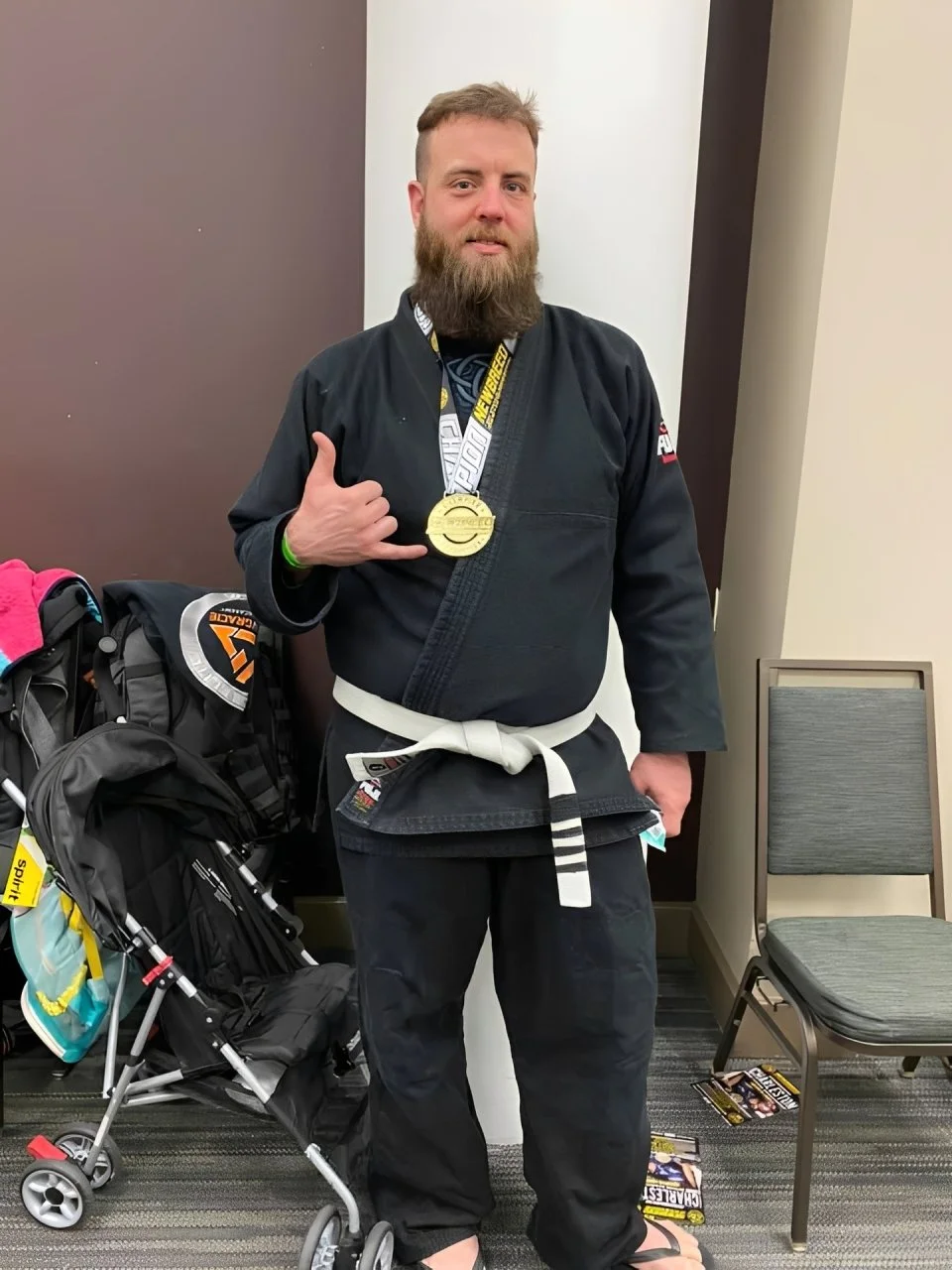
After years of emotional eating and declining health, Dustin Rochester shares how building a healthy relationship with food became the foundation for lasting physical and personal transformation.
At 370 pounds, Dustin Rochester knew his health was headed in the wrong direction. What he didn't realize was that food wasn't the real problem.
Like many people, he had learned to use food for comfort, stress relief, and escape. The temporary relief was followed by frustration, guilt, and a cycle that felt impossible to break. A frightening doctor's appointment eventually forced him to confront the reality of where those habits were leading.
Dustin shares how creating a healthy relationship with food became the foundation for losing 130 pounds and transforming his life. We get into emotional eating, self-worth, accountability, habit formation, and the mindset shifts that made lasting change possible.
Listen to Dustin Rochester’s Interview
Watch Dustin Rochester’s Interview
Losing 130 Pounds and Facing a Health Wake-Up Call
Dustin Rochester: I always knew that the weight was a barrier. It's usually what's hiding in the dark that is what's going to really drive any change. I had to confront a lot of demons. The stress of me not being aligned with the things that I had an underlying passion for. But I found out that I was able to do a lot more than I thought I could. The value of myself to me. There's always more gas in the tank.
Brandi Fleck: This episode is about turning mental and physical challenges into not only a full-body transformation, but a whole human transformation, and what made that transformation possible from the ground up.
Guest Dustin Rochester, a dad and healthcare IT consultant from Williamston, South Carolina, opens up about losing 130 pounds in a year from 2019 to 2020. He tells us what it was like at his heaviest and what his wake-up calls were. One was personal and one professional, and those sparked his motivation to change.
Dustin tells us about how he had to get tough on himself and also gives us the exact tangible steps he took to lose the weight, start getting more physically active, and find and embrace an activity, Brazilian jiu-jitsu, that is aligned with his passion.
Specifically, we talk about the keto diet, adapting a diet as physical needs change, and learning lessons about success through momentum, goals, and a healthy relationship with food and yourself.
We compare Dustin's old self-care routine to his new one that he's grown into now and dive into how clear self-worth has translated into a healthier lifestyle and better relationships.
This wasn't an easy or fast journey for Dustin, which he's still on in many ways. It took a lot of hard work, determination, and even soul-searching.
A key takeaway is that losing physical weight isn't just about losing physical weight. For Dustin, it was also about managing stress, changing habits, and finding parts of himself and befriending those parts so what was on the inside could surface.
Dustin Rochester: I'm Dustin Rochester. What I do professionally is I'm a healthcare IT consultant. I've been in IT now since 2005. I've done many jobs in IT along the way, from desktop support to engineering IT support to remote managed services, eventually getting into the healthcare side of it.
I support the Epic EMR software. I did that at GHS, Greenville Health System, which is now Prisma Health. I worked with them for six years and then just this last year, early 2020, I moved into doing IT as a consultant. I now work with an organization as an independent contractor.
Awesome, and I really enjoy that line of work. I really enjoy being the support behind the scenes to provide healthcare workers with the tools they need.
As for me personally, I'm the father of two girls, both 16 and 14. Teenagers, yay.
I recently separated after a 13-year marriage. It's been a bit of a tumultuous change there for a bit, but it's really kind of helped me find the path and direction that I'm heading down now and just doing great overall as a result.
Brandi Fleck: Good, good. So do you like the path that you're on now?
Dustin Rochester: I do. I was unsure about it at first, but it's become a bit clearer the more that I've walked on it and just really been able to sort of solidify some joy that I didn't know that I was capable of.
Brandi Fleck: Very cool. Okay, let's jump into some rapid-fire questions just real quick to get to know you a little bit better.
Dustin Rochester: All right.
Brandi Fleck: Favorite movie?
Dustin Rochester: Favorite movie? Huge Star Wars fan, so if I had to pick one out of that, it would have to be The Empire Strikes Back.
Brandi Fleck: Okay. Favorite song?
Dustin Rochester: "Somebody to Love" by Queen.
Brandi Fleck: Awesome, awesome. How tall are you?
Dustin Rochester: Six foot two.
Brandi Fleck: Do you drive fast or slow?
Dustin Rochester: Depends.
Brandi Fleck: Okay.
Dustin Rochester: If I'm on the highway, fairly fast. It just depends.
Brandi Fleck: Favorite place you've traveled to?
Dustin Rochester: Probably have to be Grand Cayman. I stopped there on a cruise one time. Absolutely beautiful place. Beautiful clear waters. You can see the coral reefs down there. Really, really nice people. Just an awesome place to visit.
Brandi Fleck: Awesome. Are you ocean or mountains?
Dustin Rochester: Ocean.
Brandi Fleck: I figured based on your last answer, but thought I'd go there.
Dustin Rochester: I was gonna say, I do love the mountains, but there's just something about the ocean that calls to me.
Brandi Fleck: Yeah. Okay, dogs or cats?
Dustin Rochester: Probably dogs.
Brandi Fleck: Okay.
Dustin Rochester: I appreciate the warmth and the friendship from them. Cats are okay. They can be a little finicky.
Brandi Fleck: All right, well let's jump in. You've alluded a little bit to the path that you're on now and what you've been through, so let's dive into the weight loss journey part of it.
You've definitely been on a weight loss journey, so can you give us sort of a before and after? Where did you start and where are you now with weight?
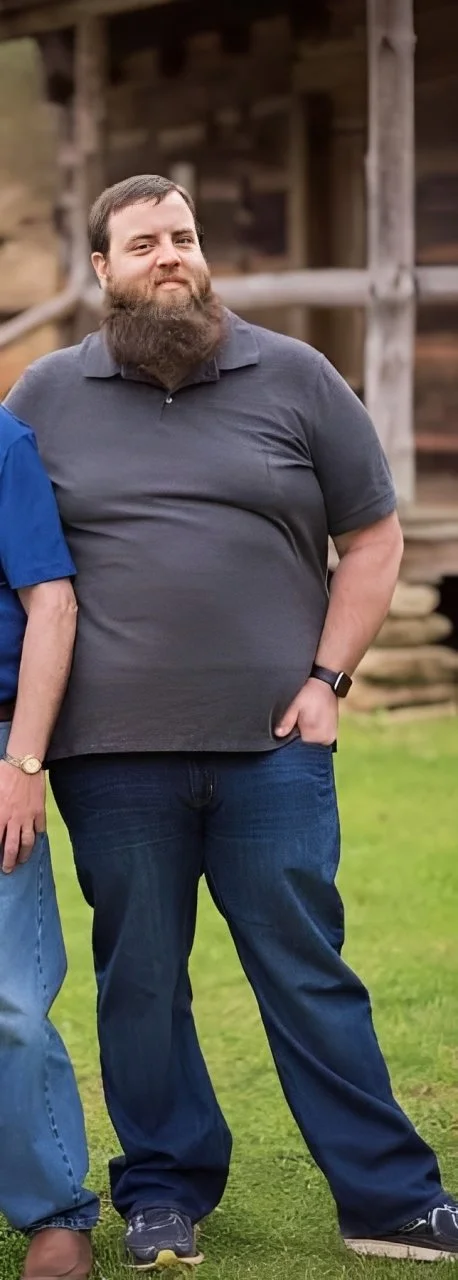
Dustin Rochester: At my heaviest, I was 370 pounds.
At 370, I was absolutely miserable. I had problems doing just even the basics of things. Leaning down to tie my shoes. Couldn't walk to the mailbox without getting winded. Had some problems with pressure on nerves. If I sat for a while, the sides of my legs would start to go numb. It was just a terrible, miserable place to be.
That was May 2019, when I got to my heaviest.
At my lowest, around May or June of 2020, I was down to around 240. That's about 130 pounds there in about a year's time.
Now I have gained back some weight. I'm at 270 right now. A good portion of that is muscle. Since I've started doing the level of activity that I have, I've certainly put on some muscle.
Some of it is not muscle. Some of it's a little water weight. Some of it's maybe a little bit of fat. I've had to adapt my diet simply from all the activity that I do now.
What I was doing before was great for weight loss, but not sustainable for athlete-level nutrition.
Brandi Fleck: Yeah, and you are definitely an athlete at this point, I would say, especially if you're taking home gold.
Dustin Rochester: Exactly. It's been a lot of hard work getting into this, and you definitely have to have the right type of nutrition to sustain it.
Brandi Fleck: Okay. Can you give us some details on how you got to the point where you were at your heaviest and what factors played into that?
The Connection Between Long-Term Stress and Weight Gain
Dustin Rochester: At the most basic level, stress.
As we know, stress is probably the number one killer in the world at some point, whether it leads to or exacerbates mental disease, whether it causes us to slip into unhealthy habits. It can cause so much damage to the body, so much damage to the mind.
For me, while I do love what I do, my job does come with a lot of stress. It is a very high-stress job, which I have now learned to manage better than what I had before.
But there was also financial stress. There was the stress of my relationship. Another kind of stress that was more hidden to me at the time was the stress of me not being aligned with the things that I had an underlying passion for.
Brandi Fleck: Wow. Okay, that's some big stuff.
Dustin Rochester: Yeah, it adds up.
Brandi Fleck: Absolutely adds up.
Dustin Rochester: But from there, the stress exacerbated some of my underlying ADHD issues. To manage that, I ended up going the route of talking to my doctor. I couldn't manage it at the time.
So I went on a combination of Adderall and antidepressants to help me kind of manage my mental state. While that gave me some temporary relief, it was really only masking the issues. It wasn't really helping me with anything.
Now, don't get me wrong. I am totally an advocate for getting the right mental care. If somebody does need assistance via medication, they should absolutely seek that.
It should also be coupled with working the underlying issues, though.
Brandi Fleck: Agreed. Totally agreed.
When you realized that the medication was just masking the issues, what did you do to address the underlying root of the problem?
Dustin Rochester: The wake-up call for me was I went to my doctor for a routine checkup. I had already known that masking the issues caused my weight to balloon. I started having some blood pressure issues. My mental state was a little better, but it was causing so many other trickle-down effects.
So I went to my doctor. This was May of 2019, and I was having kind of a bad day at the time.
The wake-up call was when they took my blood pressure that day and I was 170 over 110.
Brandi Fleck: Okay.
Dustin Rochester: They had to absolutely intervene that day with blood pressure medication and begin talking about what we needed to do, next steps to help me correct this.
Brandi Fleck: At that point, when you were going to your doctor, or even right before you decided to go to the doctor to ask for help, did you have a self-care routine of any kind?
I know you said you weren't quite aligned with the things that you're passionate about, but did you do anything for self-care?
Dustin Rochester: I had a very skewed perception at that time of what self-care was that really added into my issues.
Brandi Fleck: Okay.
Dustin Rochester: One of the biggest things was I tried to align food with self-care and was eating for comfort.
As a lot of people know, when you get to that point where you're eating for comfort, it ends badly. It ends up creating a cycle that's really hard to manage.
When I would eat that way, I would immediately feel shame and frustration after that. But of course, being in the cycle that I was in, how would I cope with that?
Eating more. It just creates a terrible negative cycle.
Also, I dressed very slouchy. Didn't take care of myself beyond kind of the minimum effort I needed to get by.
Brandi Fleck: What I heard you say was that when you went to the doctor and your blood pressure was that high, that's what made you decide to change, correct? Or was there anything else that led to you deciding to change?
Dustin Rochester: There was always a feeling that something wasn't right. I wasn't doing something in my life that I needed to do to find joy, to find happiness. I just could never place my finger on it.
I always knew that the weight was a barrier, but I never had the drive to break down that barrier. I knew I was just kind of in a rut of, "This is my life. This is what it is. These are the cards I've been dealt, and that's what I've got to roll with."
But I also began, even before that appointment, thinking of my family, my kids, and wondering, will I still be around to see them have kids one day? To see those kids grow up?
I still felt so much shame, but not enough at that point to turn it into a drive. Not until I got the wake-up call.
Brandi Fleck: Okay. I don't know if this is an easy transition, but let's see if we can make this connection.
I want to talk about self-love for a minute.
I just want to put out there that just because we're talking about weight loss as a way you started to care for yourself and take care of yourself and put yourself first, it doesn't mean that we're implying anyone with excess weight should feel bad about their body necessarily.
What are your thoughts on how to reconcile loving yourself the way you are while still wanting to make those changes to be healthier? Did you go through any of that?
Dustin Rochester: Yeah, yeah. I think I went through some of it at the time, but also it's definitely something I've pondered on in hindsight as well.
I think the biggest lessons learned then and the biggest discoveries now on that are that you really have to understand what your worth is, what your value is, both to yourself and to the people that you love, your friends, your family, your coworkers.
I found that for me, that self-love often falters when you have a skewed understanding of what that worth and value is.
I feel like once you kind of start aligning that, those pieces start to fall into place a bit better. Also, it forces you to hold yourself accountable for the stuff that is lacking.
Brandi Fleck: Okay. This is really good stuff, Dustin.
One follow-up question to that is: What is your worth?
And the second one is, could you expand a little more on what's lacking that you need to hold yourself accountable for?
Dustin Rochester: My worth, for one, is the investment in the quality of my relationships.
Definitely with my kids, but also with other people.
I found that as all of this was happening, those relationships were weakening. I lost touch with a lot of people. The relationship between me and my daughters could have been better.
I discovered that I was allowing those elements or those issues to impede those relationships, and that putting focus on those relationships and understanding what I meant to the people in question made me understand the value of myself to me at the same time.
It even went as far as work relationships. At my prior job, I met a lot of great people, worked with a lot of great people. Even with the stress, it was one thing that did keep me going, understanding that for quite a while I had a very key role in the support of the organization and supported a lot of key, critical infrastructure that was needed just to keep things going.
Lives were saved. One other wake-up call that I had from a pure professional standpoint was we had a major update that didn't go as well as we had hoped. There were a lot of login issues and performance issues afterward, and we heard a report that there was a patient on a table in a cardiac unit and that there were some complications in providing them care because of system performance issues and being unable to access information at the time.
Brandi Fleck: Okay.
Dustin Rochester: That, for me, reinforced my worth and the focus that I needed to place on my job in order to try and hopefully make the items that I supported work the best that they could in order to provide them the tools to provide the care.
Brandi Fleck: Wow. I got chills when you told that story. Oh my goodness.
Okay, so when you talk about your job coming with stress, the stress of supporting life-saving tools is sort of evident now, I think.
But also, that's really cool that you started to recognize your worth, and you've given our listeners examples of how you did that.
What I think we've gone through so far is sort of a mindset shift. As you're learning these things and seeing your impact in the world and on your relationships, and you're learning how important you are, you had to have shifted perspective.
You keep talking about how things were skewed, so it seems like things were starting to become more clear.

Can you describe the mindset shift you went through in order to create such a massive physical transformation, and what role did your mental state play into that?
Dustin Rochester: I had to be that guy. I had to give myself tough love.
I had to say, "Wake up. There are areas that you're deficient in. You need to wake up. You need to start focusing. You need to start prioritizing."
I had to confront a lot of demons that were holding me in the state that I was at, and I just had to really get ugly with myself.
That's not an easy process, to be able to be that real and that raw with yourself.
You're usually trying to seek, how can I comfort myself? How can I appease myself? How can I make myself feel good?
But it's usually what's hiding in the dark that is what's going to really drive any change.
I knew that I needed to do that because I deserved a lot more than what I was putting out. I also knew, like I said earlier, I needed to be around for my family.
I really think, though, that you disrespect yourself more by not holding yourself accountable than by being ugly with yourself.
You're just going to keep going down those negative paths that you go down. You have to be willing to get in your own face to be able to confront those things.
It's going to be hard to stick to. You're going to want to try to slide back to what's comfortable, what makes you feel good.
In my case, the food. That was my go-to. It was great to sit down with a bowl of ice cream and feel great about myself for that few minutes.
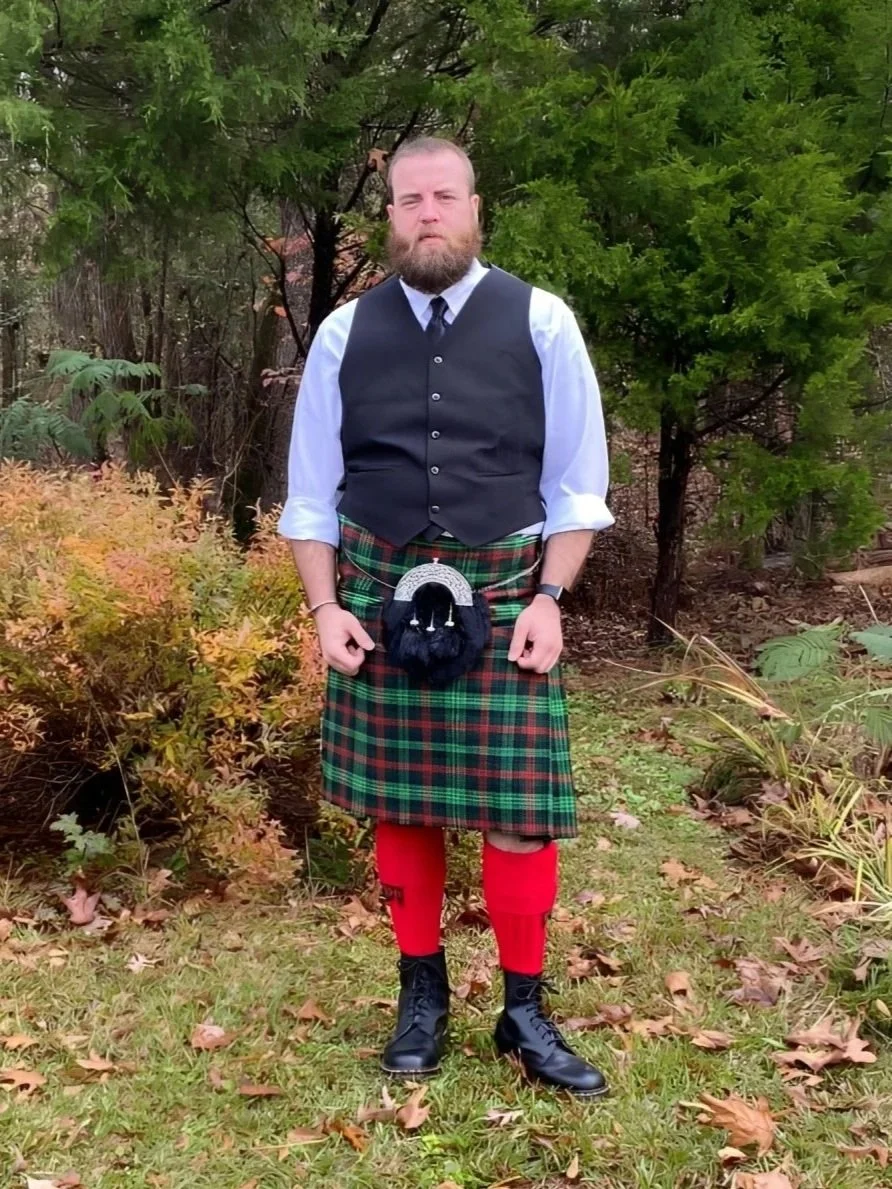
It just doesn't work. Another thing I'd like to tag on to that that's really important is to find somebody that is going to hold you accountable.
Whether it be a friend, a coworker, your neighbor, somebody that is going to also do that tough love for you.
If they know that you're slipping, if they know that you're in a bad place, to stand there and say, "Hey, stop what you're doing. You're messing up here. You're not eating well. You're slipping down these bad paths again. You need to wake up and you need to do the things that you need to be doing."
Brandi Fleck: Yeah. What's your relationship with food like today?
Dustin Rochester: I still very much enjoy food.
That's not going to be something that's ever going to go away. I love food.
Yesterday after competition, I went and had scotch and tacos. It was a fantastic time.
But I've learned that once you get out of the toxic relationship with food, where it becomes a crutch as it was before, and once you start aligning those other goals and working hard and becoming your own support system, that you can still enjoy the food, but you can just have a good, healthy relationship with it.
Brandi Fleck: Okay. And the healthy relationship with it looks like not eating for comfort, but eating to sustain your life, but still enjoying it when you eat it to sustain your life. Is that correct?
Dustin Rochester: Right.
In the case of me now, it's eating 95% of the time to a good, healthy plan. Eating, the way I like to refer to it, is eating for fuel, not for pleasure.
But if 95% of the time you're eating for fuel and not for pleasure, that 5% of the time you can go out, you can have your pizza, you can have your cake, you can have your tacos like I had yesterday. There were some really excellent tacos.
You can have those and not feel a bit guilty about it because the toxicity in that relationship is not there.
Brandi Fleck: Awesome.
Let me ask you this. If somebody's in a place where they're eating for comfort and they sit down and do what I did and eat a whole large pizza in one sitting, how much are you really enjoying each bite of that?
I don't know. I do that. I eat for comfort sometimes. When I do, exactly like you said, I enjoy it in the moment, and then as soon as it's over, I'm like, "Why did I do that? It's not good."
Dustin Rochester: Exactly.
When the relationship improves and you have a situation like I had last night, I was doing it while also celebrating a victory.
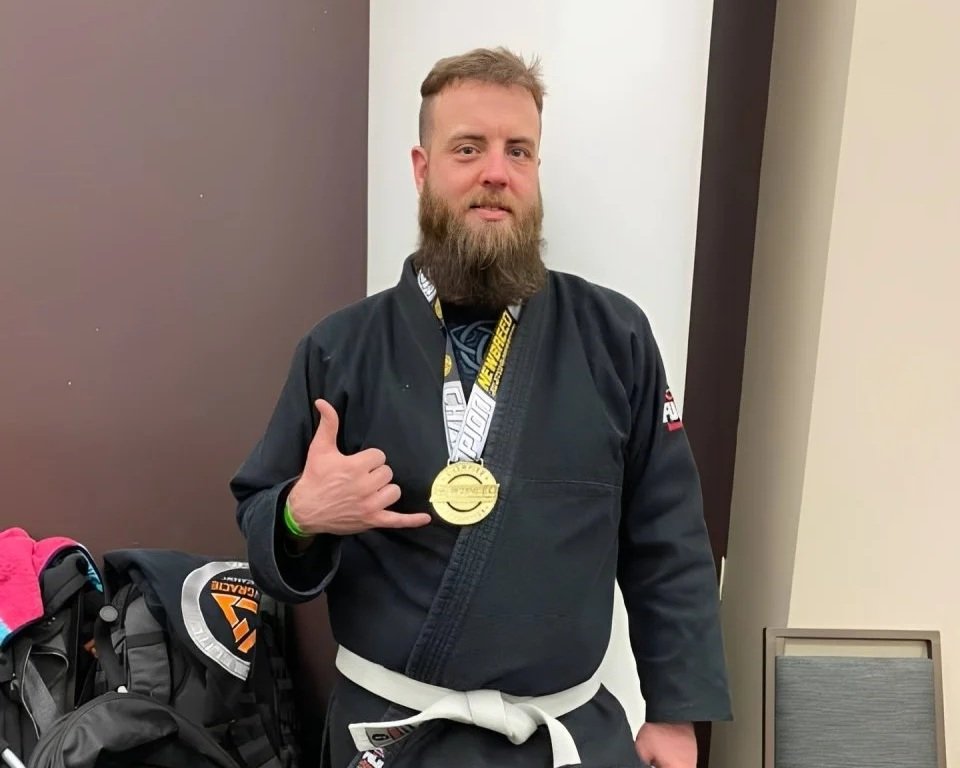
It was two fights yesterday. Won both by submission and took home the gold.
Brandi Fleck: Yeah.
Dustin Rochester: I was there with about a dozen or so friends, and it was a time to celebrate. It was a time to have fun.
I had both of my daughters with me as well, and it was a great time. Enjoyed every moment of it.
I was able to walk away from there with a full belly, probably a little fuller than I needed, but I didn't feel guilty about it because everything else was aligned.
I also walked away fulfilled emotionally because of the day's victory, the time spent with my daughters, the time being around people in that environment. It was just absolutely incredible.
Brandi Fleck: So for someone who's not aligned, can you explain how today you're not going to go back and eat those same tacos? How do you keep yourself from doing that?
Dustin Rochester: I would say a big part of it is the power of habit.
If somebody is just getting started and they have a lot of weight to lose, you're not there yet. You know where you can start really divulging yourself into some of those behaviors that create that level of reward. You'll get there.
There are some studies that say 21 days. There are some studies that say six weeks to build a habit.
A lot of times, if you try to rush that too early, you end up saying, "That felt good yesterday. I'm sure it'll feel good today."
But once you create those habits, and there are so many good resources out there, there's a couple of books. I believe one's called The Power of Habit, another one called Atomic Habits. I would certainly look those books up. I've read snippets of both, and they're great information.
As you build those habits, it's easier to revert back to the habit instead of reverting back to the comfort.
Brandi Fleck: Gotcha. That's a really good point. I haven't heard anybody put it that way quite that directly about habits, so thank you for sharing that. That's really cool.
Creating Healthy Habits That Stick
Okay, so let's talk about how you got into some of the healthier habits. What did you actually do? What are the tangible steps you took to make the physical changes?
Dustin Rochester: The first step happened around the same time as my wake-up call when I went to the doctor and my blood pressure was just way the hell off.
At that level, even at my age. I was 35 at the time. That's the type of blood pressure where, if you stay there consistently for that long, you're looking at stroke, cardiac arrest, lots of other very, very bad things that a 35-year-old doesn't need to be going through.
Having the wake-up call to start putting things into a clearer picture was really kind of step one-A.
Brandi Fleck: Okay.
Dustin Rochester: Because that didn't create any change yet, but that created my catalyst for the change.
One of the first things I knew I needed to do, outside of the doctor saying, "You're not leaving here today without a prescription for blood pressure medication," I also knew that the Adderall was one thing that was going to be causing some of the issue.
Adderall is a stimulant. Stimulants have a relationship with blood pressure.
But I knew all along that the Adderall was masking the underlying issues that I needed to change.
The second thing after that was starting to clean up my diet.
I went down the keto path for the largest part of my dietary changes.
Once I started on that, I stuck to it religiously and noticed some very big results in a short amount of time.
As I started seeing those changes, I started becoming addicted to the success of those changes.
The first week, I lost like 10 pounds. A lot of water weight happens at first when you switch over to keto, but seeing that much of a change that quickly was certainly a driving force that allowed me to stay in that mindset.
I've lost this much. How much can I do this week?
Even if I didn't lose as much the next week, I still had enough of an avalanche started that it kept me wanting to stay down that path.
Brandi Fleck: Yeah.
Dustin Rochester: After I got 35 or 40 pounds off, I did start doing some activity.
I didn't do much at first. I couldn't do much at first.
In hindsight, I wish I would have pushed myself to do a little more then, but it did kind of help start to loosen up and move old joints and muscles that hadn't moved in quite a while.
I did have a small knee injury at one point from doing some of the activity that derailed a bit of it, but I was able to recover from it pretty quickly.
I still hadn't quite found that alignment of physical activity yet, but the diet still stayed true.
In that amount of time, from just dropping the weight, I got off of the Adderall pretty quickly, actually.
Within the first month, I told my doctor. Actually that day when they gave me the bad blood pressure reading, I don't want to be on this stuff anymore. I want to try to see if I can work on this mental state a bit more holistically instead of introducing the stimulant into my body.
He agreed that it would be good for me to try. He advised me to wean the dose off because it's not something that you want to stop cold turkey. It's a very addictive substance.
It was hard. Withdrawal symptoms were pretty bad.
Brandi Fleck: Okay.
Dustin Rochester: But I just fought through those, kept pouring myself back into the diet and the second wind that I got off the successes of it.
Within three months, I was off of the blood pressure medication that he had put me on.
Brandi Fleck: Wow.
Dustin Rochester: Within five months, I was off the antidepressant.
Brandi Fleck: Wow. That's amazing.
Let's take a little side street into the withdrawal symptoms of Adderall for just a second.
Can you describe what you went through with that?
Dustin Rochester: Some of them were just very physical symptoms.
I've never been in this spot myself, but some of them were similar to hard drugs: feeling physical malaise from not having that in me, shaking, body pains, headaches, nausea. Just a very unpleasant experience.
It shot my anxiety through the roof. It was not a pleasant time.
It passed pretty quickly, but it was probably, I said I weaned myself off over a period of a month, probably two and a half weeks of that was the most noticeable.
The initial tapering didn't bother me that much, but once that dose started getting lower to nonexistent is when I really started feeling that.
But like I said, fortunately it passed pretty quickly, and I was able to maintain my focus, and that sort of helped keep me going through it.
Brandi Fleck: Okay.
One other follow-up question to this discussion is, you started with keto. I know a lot of people who are trying to lose weight talk about how some of these—people call these fad diets—and they say they're not sustainable.
Did you eventually come off of the keto diet and just use that to make that initial progress, or is it something that you've modified and tried to sustain?
Dustin Rochester: I still absolutely advocate for the keto diet.
That being said, with the level of activity that I do now, it doesn't give me the fuel that I need at the moment to sustain my level of activity.
So I eat what I call just a mostly clean diet, but I have to have the carbs in my diet now for the amount of training that I do.
We'll go into that in a little bit, I'm sure, but I was doing it at first, and I just didn't quite have the energy that I needed to sustain myself.
Brandi Fleck: Okay, so it's safe to say that you can modify your diet based on what your body needs as you go through this journey, right?
Dustin Rochester: Right.
But again, back to what we talked about earlier, one thing that keto did well for me was solidifying that concept of habit.
How Brazilian Jiu-Jitsu Built Confidence and Discipline
Brandi Fleck: Now we've talked a little bit about how you took home gold this past weekend, so you've definitely found a passion in Brazilian jiu-jitsu, and you've been talking about how your activity levels need to be sustained.
How did that passion specifically help everything fall in line, and can you give us an idea of what your activity levels are now?
Dustin Rochester: To step back from that just a little bit to where I got my start in it, I knew my physical activity, even though I lost the weight, wasn't where it should be.
I didn't have some of the aches and pains, and I could bend over to tie my shoe again, but I still knew I wasn't quite where I should be.
So this last summer, I started off doing a little bit of hiking. I thought, well, I'll start trying to do some activity here and there.
So I started hiking. I went and did some small hikes, a couple miles, fairly flat, nothing too extreme.
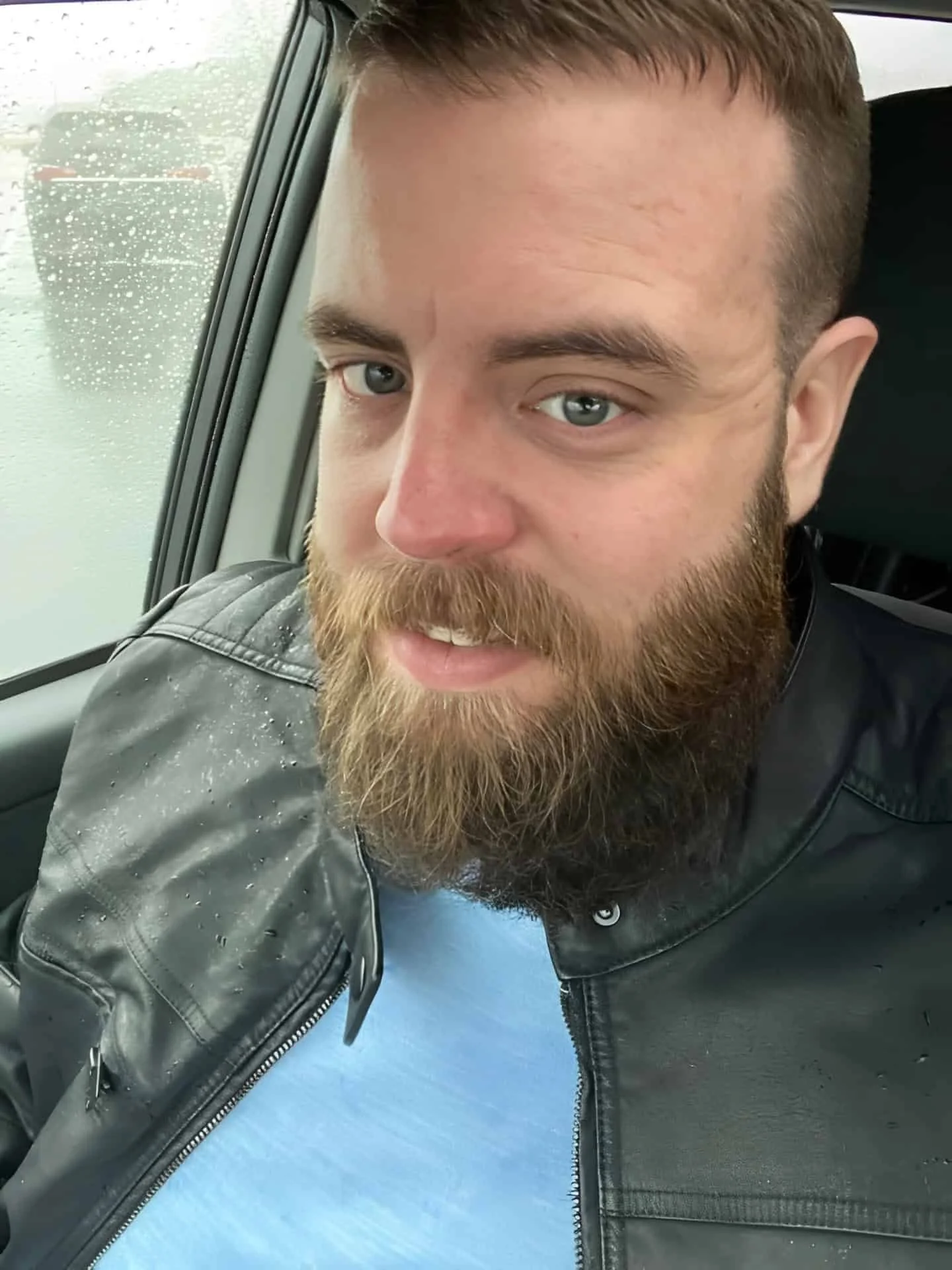
Then on, I want to say it was July 21st of 2020, I recruited a friend of mine to go hiking with me.
At Table Rock State Park here in upstate South Carolina, there was a trail that I did back when I was in high school. It's known as the Pinnacle Mountain Trail. It's 4.3 miles one way and a very, very tough trail.
I had not done that since I was in, I think, 10th grade when I did that last.
It was also something that I resigned myself to never being able to do again when I was at my heaviest.
Brandi Fleck: Okay.
Dustin Rochester: It was always kind of this thing that was looming over me that I knew I'd never be able to do.
But as I hiked the small trails and started thinking more about it, I thought, what the hell, let's go for it.
So I called up my friend Chris and I said, "Hey, I want to do this trail."
I knew Chris would be in for it.
Chris was pretty recently out of the Navy, very into fitness, and his response was, "Hell yeah, bro. Let's go do it."
This was like the 21st of July. I think it was the hottest day of the month.
Brandi Fleck: Oh, God.
Dustin Rochester: Yeah. It was a terrible day to choose to do it.
So we got started at 7 o'clock that morning, and we took the whole trail, went up to the summit, made it back.
Total time was, I want to say, about five and a half, almost six hours for the round trip, if I recall.
But I kind of found something that day.
I hadn't done any activity anywhere close to that to that point, but I found out that I was able to do a lot more than I thought I could.
Now, I also wasn't all that smart that day either.
I didn't hydrate well.
Brandi Fleck: Okay.
Dustin Rochester: So I got home. I knew I was partially dehydrated.
I was laying in my bed because pretty much all I did was walk in the door, crawl into the shower, clean up, and lay in bed.
As I was laying there trying to hydrate, not feeling well at all, I still had a sense of victory for that day, but kind of got put on my ass after that because the lack of hydration forced a dormant kidney stone to start moving.
Brandi Fleck: Oh no.
Dustin Rochester: So I spent the next two weeks as that kidney stone very, very slowly passed its way through.
I should have hydrated better.
I'm glad I'm rid of it, but yeah, I should have definitely hydrated better that day.
Brandi Fleck: Yeah.
Dustin Rochester: Again, picking the hottest damn day of the month was probably not a great choice either.
Brandi Fleck: Yeah, but you had the motivation.
Dustin Rochester: I did.
That kind of set something off that day.
Then for two, two and a half weeks, I couldn't really do much else because of the kidney stone.
But I knew, okay, I can do more. I didn't know what yet.
On a Wednesday, I was going into Walmart to grab some groceries and a few other things, and I ran into somebody I hadn't talked to in—
Dustin Rochester: ...a while.
So back six or seven years ago, before I really started my downward path, me and my youngest daughter did karate for a little while at a local gym. She started doing it. I did it as a thing to do with her.
I really enjoyed it and made a lot of great friends in that. One of those friends I ran into on the way to Walmart.
Brandi Fleck: Okay.
Dustin Rochester: He's like, "Hey, did you hear? We're starting up a Brazilian jiu-jitsu program out at the gym. You should come check it out."
I was like, okay.
So I thought about it. I also started, at the same time, doing the karate a little bit again too. I did usually karate like a night a week, the Brazilian jiu-jitsu a couple nights a week then.
But I really started developing more of a passion for the jiu-jitsu than the karate.
Brandi Fleck: Okay.
Dustin Rochester: I really wanted to focus, so I stepped back from the karate and went full-time into the jiu-jitsu.
I've really missed that type of grappling and combative sport. I hadn't had anything like it since wrestling in high school, which was a huge passion of mine back in high school.
So I decided to check it out.
The very first day of practice for jiu-jitsu, I had not done much activity at all outside of the hiking and my one big hike. I was extremely out of shape.
Brandi Fleck: Okay.
Dustin Rochester: I was lighter, but I was extremely out of shape.
So I hung in there for the whole practice. We lined up at the end of practice like we always do.
I couldn't stand up straight. Everybody else there was standing up as we were listening to our coach give us kind of an end-of-class rundown, as we always do.
I was sitting there, hands on my knees. I couldn't stand up without getting dizzy.
So I finished. I sat down for a little bit, practically had to crawl out to my car, and then got home.
Fortunately, I only live about half a mile away from the gym.
Brandi Fleck: Okay.
Dustin Rochester: You know that feeling where you're exhausted and you pull up at the house and you just sit there in the car? You don't want to get out. You don't want to go in yet. You just want to sit there and enjoy that quiet.
Well, that was me for about 10 minutes.
So I sat there until I mustered enough strength to be able to get out of the car.
I decided it was too much effort to bring my gym bag in that night, so I just let it sit in the car, got inside, took a shower, ate something.
As I lay there in bed after that, my muscles just jackhammering from the muscle exhaustion, I had a smile on my face.
I knew I'd found something that I hadn't had in a long time, and I just kept going back.
Now, those first few weeks, I was absolutely miserable after every practice. Miserable for days.
I was only, at the time, doing it on Mondays and Fridays, so I was getting a good little rest.
But I knew I'd found something that was missing in my life, something that I needed.
That did force me after that to sort of change the diet a little bit. I knew that part of it may have been from not having the energy because of eating keto and not having the carb intake.
So I adjusted. I cleaned up to try to find what fueled me properly.
As I adjusted that and started doing it more, that part did get better.
I started that level of activity back in about mid-August.
Around the end of September, I decided two days a week of this isn't enough. I want to start doing it more. I want to start honing in and doing this practice better.
Ever since I've stepped into it, it's not at all with the mindset that I want to be the best or I want to be a world champion or anything like that.
Let's face it, I'm 36 years old now. There are age brackets for that.
For me, it's about working on what's inside.
While I do some level of competition, I go for the competition for the fun of it, to see how my training has progressed and also to once again push those mental boundaries of what I can and can't do.
For example, in a fight yesterday, my second fight of the afternoon, I'm not gonna lie to you, I was a little intimidated.
Brandi Fleck: Okay.
Dustin Rochester: I'm 6'2". The second guy that I went against was probably all of 6'1".
Brandi Fleck: Yeah.
Dustin Rochester: I was intimidated. Not gonna lie. But I won. Fought hard, and I won.
I walked away from that with another one of those mental victories.
Wow, I can do more than I thought I could. So yeah, I started going more, started going most days of the week. The school that I train at, Forge Family Martial Arts in Williamston, I work there with my coach Nick on Mondays and Fridays.
Nick trains at a school, Electric City Mixed Martial Arts in Anderson, South Carolina. So I started going out there to where he trains at, working with them on most Tuesdays and Wednesdays.
A typical week for me is four days of jiu-jitsu, sometimes weekend practices if I have the time, if me and my kids aren't doing anything.
Sometimes there are open mats here and there. We'll go and get to roll with some people that we don't normally get to.
I've also thrown in, out at Electric City Mixed Martial Arts, they do a CrossFit-type program. I try to now do that also a couple days a week.
Brandi Fleck: Okay.
Dustin Rochester: Which is a whole level of activity in itself.
I've also taken up doing some running.
I'd like to hopefully, before the end of this year, possibly do a couple of 5Ks and maybe even do a Spartan Race.
Brandi Fleck: Okay. So a lot of activity.
I would love to know if your journey with your physical activity and your health has helped in your career in any way.
Dustin Rochester: It has.
Stepping that back to other changes that it's created, my confidence is much higher than it used to be. My self-image is better than it used to be.
Generating a goal-driven perspective from it, those three things alone have definitely helped me with my career.
Brandi Fleck: Okay. You just named some really important things that it's helped with.
But how has this journey helped you get to know yourself better?
Earlier you said some things about working on the inside and things like that. What have you learned?
Dustin Rochester: I've learned that, again, like I touched on earlier, I can do a whole hell of a lot more than I think I can.
A gentleman by the name of David Goggins, if you've ever heard of him, cites a 40% rule that a lot of people are usually only ever capable of giving 40% of what they're really capable of.
I found, and this is in all areas—the physical activity, self-care, my relationships, my career—that there's an upper bound that I was nowhere near touching.
By tapping into that, I've been able to really start to build things I never thought I could.
Brandi Fleck: Okay.
So would you consider this lesson like you finding yourself in a way?
Dustin Rochester: Certainly an aspect of that.
There are a few other things I would say that could factor into that, but finding what I'm capable of, or at least finding more things that I'm capable of, has really been a catalyst to help me want to try to find more things that I'm capable of.
Brandi Fleck: Okay, that makes sense.
So in that sense, I was going to ask you, do you think we ever stop finding ourselves as humans?
But I feel like you're going to say no, we don't, because there are always more things you can find that you're capable of.
What would you say to that?
Dustin Rochester: I think you hit the nail on the head there.
There's always more. There's always more gas in the tank.
We end up leaving so much of our potential on the table that we don't ever really tap into that.
I think something that's really important to think of is we're always going to have some kind of stressors in our lives. That's not going to go away.
One of my favorite authors is a gentleman by the name of Mark Manson. I'm a really big fan of his work.
He says in one of his books, "Don't hope for a life without problems. There's no such thing. Instead, hope for a life of good problems."
A lot of that is just taking those circumstances and changing them and molding them into something that you can work with.
He has another quote that I'll paraphrase here because I don't remember the exact words, but he said essentially that life is a sandwich. Find the one you can tolerate, the one that tastes the best.
So instead of trying to focus on fixing all of our problems, I think the biggest thing for us is going to be trying to find what we're made out of instead of trying to make things that we can't control into something else.
There's a saying that says, "The same boiling water that softens the potato hardens the egg. It's not about the circumstance, but rather about what you're made of."
Everybody's going to have those types of things in their life. It's about taking them and turning them into what works for you.
Lessons Learned From a Complete Health Transformation
Brandi Fleck: Very good point. Okay, so let's contrast your self-care routine from before you started this weight loss journey to now. How would you describe your self-care routine?
Dustin Rochester: For one, I take care of myself better now.
Not just the fitness side of it that we'll get into in a second, but better grooming. I do things like go to a barber more regularly.
Brandi Fleck: Okay.
Dustin Rochester: I focus on how I dress a little bit better. That was one of the last things really to come into alignment for me.
I think now the wanting to take care of my appearance is a physical manifestation of the changes that have happened on the inside.
As I've aligned myself internally, it's springing forth into my appearance physically, and I'm trying to finally reconcile the two.
Also in my self-care, like I said, jiu-jitsu, CrossFit, running now. I do a lot more physical activity than I used to and really enjoy that along the way.
Through the jiu-jitsu, I've made friendships that I can absolutely tell are going to be friendships for a lifetime. Having those close-knit friendships is something as well that is irreplaceable.
For somebody that's never been involved in any combat sports or martial arts, the bonds there are just indescribable.
One thing that I would say is part of it: we get out there on the mat each day.
Brazilian jiu-jitsu is in part about submitting your opponent, whether that be through chokes or joint locks or a few other items.
But we're literally taking each other's lives in our hands. You put somebody in a blood choke, their life is in your hands there.
So respecting and trusting, when somebody taps out, it creates a bond that you can't describe.
Knowing that, hey, I just had this person's life in my hand, but this person is my friend. I love this person. I want them to show back up tomorrow unhurt so we can train and do it again.
I make the joke all the time that I'm going to choke my friends in a padded room today, and it's what we do. But there's a lot more that goes on behind the scenes.
Yeah. Reading. I read a lot more than I used to and work on my self-improvement from that standpoint of learning and knowing.
I try to take each day as well with just a very simple approach.
I try to go to bed each day knowing that there's something that I did to make myself a better person that day.
Now, am I successful on that every day? No. Most days, yeah. But every day, no.
If I go to bed and I haven't improved somewhere, I don't let that discourage me. I just wake the hell back up the next day, do it again, and try to figure out something better.
Whether it be in a relationship, whether it be jiu-jitsu, whether it be something with my daughters, whether it be my career, just find some little piece each day to make myself better.
Dustin Rochester: You know the saying, "How do you eat a whole elephant? One bite at a time."
You have to break it down. You have to celebrate the small wins, and you have to enjoy the spaces in between all of the big moments to really understand the small and simple joys in life.
From an anime that I just finished, there's a quote that says, "You should enjoy the little detours to the fullest because that's where you'll find the things more important than what you want."
Brandi Fleck: Did you post that recently? I feel like I've seen that.
Dustin Rochester: Okay, I just saw it.
I did. I just finished that anime like two or three days ago, and it definitely drove home a lot of the things that I had going on.
Another thing for self-care, one thing I wasn't realizing that I didn't allow myself before, was that I'm really an introvert myself. Maybe an ambivert to some extent.
I also know and understand when I need those days now where I need to recharge.
I can be outgoing. I can do jiu-jitsu. I can do the activities. But there may be a day where I just want to sit there and binge Netflix or something like that.
That's perfectly okay.
I didn't respect that need before when it had arisen because I was in a position where I had to try to be so focused on other things. I didn't allow myself the time or the space just to decompress and have those days.
Now that I understand them and I know when they're coming on, I can allow for them. I can decompress, and I can move forward a lot more composed than I was prior.
Brandi Fleck: That makes sense. I'm glad you brought that up. That's a big one.
Dustin Rochester: Absolutely.
Brandi Fleck: Okay, so what's your best advice for someone who may be struggling to lose weight or just make a change in general?
Dustin Rochester: I touched on this earlier, but not being afraid to get ugly with yourself.
Brandi Fleck: Okay.
Dustin Rochester: It's okay, and it's not damaging to yourself, to walk in there in front of the mirror and say, "Hey, you need to wake up. You're going down an unsustainable path. You can't be doing this to yourself anymore."
You have to look past what's comfortable. You have to look past what makes you feel good, and you need to be able to start holding yourself accountable.
Like I said, you're disrespecting yourself more by not being real and not being true with yourself.
Also, as I've found with the jiu-jitsu, find an active passion.
Brandi Fleck: Okay.
Dustin Rochester: By active passion, I mean something that is going to get you off your ass and get you doing something.
Now, if somebody has a passion for knitting or doing puzzles or something like that, that's great. Any kind of passion is good for mental well-being.
But in the context of what we're talking about here, as far as weight loss goes, those are great, but they're not necessarily going to help you lose weight.
Not everybody's going to have an active passion, and that's okay. But if you can, try to find one.
Get out and try some new things.
I know a couple of people that didn't really have any active passion, and they found things like kayaking. That's really great physical activity, really peaceful activity. It gets you out on the water, gets you moving around. It's a great workout, especially for the upper body.
Just try to find something and see if it's something that you can enjoy and something that works within your lifestyle.
Brandi Fleck: Mm-hmm.
Dustin Rochester: Also, when it comes to diet, don't wing it.
Plan ahead.
There's a saying that abs are made in the kitchen, not in the gym.
Full honesty, I'm quite a ways away from abs. I'm not even going to pretend there.
But that quote definitely goes into a lot more. Maybe we're not talking about abs. Maybe we're talking about, in my case, performance.
I know that when I eat better, I train better. Then when I train better, I feel better about myself.
That creates a catalyst that allows me to stick to that.
Try as well to get others involved in what you're doing.
For my particular case, I've got a gym full of people that I work out with, and they're along with this on me.
I have my daughters as well that support me on it. They were at the tournament with me yesterday, and they had an absolute blast not only being part of that there for me, but also those same people that I've developed great relationships with, my daughters have as well.
They're absolutely part of the team when they're there, which is huge.
But you may not be into combat sports, and that's fine.
Even if it's just getting out and walking, grab your neighbor, grab your dog, call up your best friend, go for a walk a few days a week.
Do something.
Brandi Fleck: Hey, has COVID impacted or put a damper on this for you in any way?
Dustin Rochester: It's definitely an odd time to get into the sport, I will say that.
There have been some precautions. There have been a few COVID cases that have popped up at the gym.
Usually when that happens, we'll have to close and quarantine for a bit before we get back into it.
For me, while I understand the risks of doing it right now with COVID, from my personal take, not doing it is a riskier thing for me to fall back into a lot more negative mind spaces than I would be in if I didn't have these activities and this presence in my life.
Brandi Fleck: You know, that's an interesting thing you've just said.
I've had other guests who have come on to talk about physical transformation during COVID, and they've got the same sentiment, that it's riskier not to do some of these things.
So yeah, that makes sense.
All right, so just one more thing. Do you recommend any apps or resources to help on a journey like this that you've used that have been great?
Dustin Rochester: Yeah, I've put together a few things here.
I spoke about Mark Manson earlier. Pretty much any of his material is fantastic.
I definitely recommend his book The Subtle Art of Not Giving a F*ck. That one has absolutely changed my life.
Brandi Fleck: Have you read that one yourself?
Dustin Rochester: I have not read it yet, but it's on the list.
Dustin Rochester: Highly recommend it.
The book Can't Hurt Me by David Goggins.
David Goggins is a gentleman from a very rough upbringing who decided that he wanted to, as he quotes, "be uncommon amongst uncommon people."
We're talking about a guy who was in the Navy SEALs. Not only the Navy SEALs, but went through three Hell Weeks, went through BUD/S training, also went through quite a few other military special forces training programs.
He's run ultramarathons. He broke the pull-up record for the most pull-ups in a 24-hour period at, I think, something ridiculous like 4,300 pull-ups.
Brandi Fleck: Oh my God.
Dustin Rochester: In a 24-hour period. While I can almost say probably nobody listening to this is going to go to quite those extremes, because that's the extremes of the extremes, it still lets you understand that there's more fuel in the tank than we realize.
That's absolutely what I took away from that, so I can't recommend that book enough.
Another book by a guy named Dr. Robert Glover, No More Mr. Nice Guy.
I didn't talk about this a lot, but myself being of the fixer mentality, if there's an issue, I kind of have that "I want to be the nice guy, I want to fix it, I want to help."
That's not always the best path to go down. So it's a great book, especially for us guys out there that maybe want to tackle some of the underlying issues in relationships and those interpersonal spaces that we want to work on.
I highly recommend that book. Some various readings from some of the Stoics of old, like Marcus Aurelius and Seneca.
So much of that practical information can be applied to our daily lives today.
It's great for people that are looking into keto, maybe to try to kick-start or create a sustainable weight-loss goal.
I found a lot of information from Thomas DeLauer on YouTube. He's got a lot of great information.
Finding some sort of app, if you're going to go the keto route, I used a mobile_app reference called Carb Manager. It was really good.
If you're not going to go keto, maybe track calories. Something like MyFitnessPal has a great calorie tracking program.
On building up my running, I'm doing a program right now called Couch to 5K. Specifically, there are a few different apps out there that do it. I'm using one right now called 5K Runner. It works really good.
Also, in a space that you're obviously very familiar with, there are so many great podcasts and interviews out there to listen to. I've listened to quite a few of yours that have been really helpful.
Then some of the other ones, like Joe Rogan. There's one on YouTube called Impact Theory that's really good.
Getting some of the guests on there. People like Mark Manson, David Goggins, also people like Mel Robbins, Jocko Willink, and Jay Shetty, some of those interviews are just absolutely awesome.
Brandi Fleck: Well, thank you, Dustin, for that little shout-out there and all these great resources.
Dustin Rochester: Absolutely.
Brandi Fleck: Dustin, thank you so much for coming on the show and sharing your story. It was so great to see you today.
Dustin Rochester: Absolutely. Enjoyed it.
Join the conversation!
Feel free to share your own experience and let me know if you have any questions in the comments.
Related Posts










Hi, I’m the founder of Human Amplified. I’m Brandi Fleck, a recognized communications and interviewing expert, a writer, an artist, and a private practice, certified trauma-informed life coach and Reiki healer. No matter how you interact with me, I help you tell and change your story so you can feel more like yourself. So welcome!
Find More on the Blog
Topic
- ADHD
- AI
- Atlanta
- Black and BIPOC
- DIY
- FAQ
- LGBTQIA plus
- Los Angeles
- Nashville
- Seattle
- St Louis
- St. Louis
- UFOS/UAPs/ETs
- abuse
- accountability
- addiction and recovery
- adoption
- affirmations
- afterlife
- altered state
- angels
- animals
- anxiety management
- art
- astrology
- atlanta
- attachment
- awakening
- beauty
- behind the scenes
- being human
- body image
- body work
- boundaries
- brandi fleck
- breathwork
- bullying
- burn out
- burnout
- cancer
- career
- caretaking
- chakras
- channeled
- clarity-dive
- clarity-practice
- clarity-primer
- clean products
- coach
- codependency
Recent Blog Posts
Visit the Full Podcast Audio Archive

Affiliate


Spiritual practice can bring calm, clarity, and self-awareness, but it can also become a polished way to avoid what still hurts. In this guest article, Pat Crilley explores spiritual bypassing, emotional suppression, and how to tell the difference between true healing and performing peace.