
What Happens When We Suppress Our Emotions
Interview By Brandi Fleck
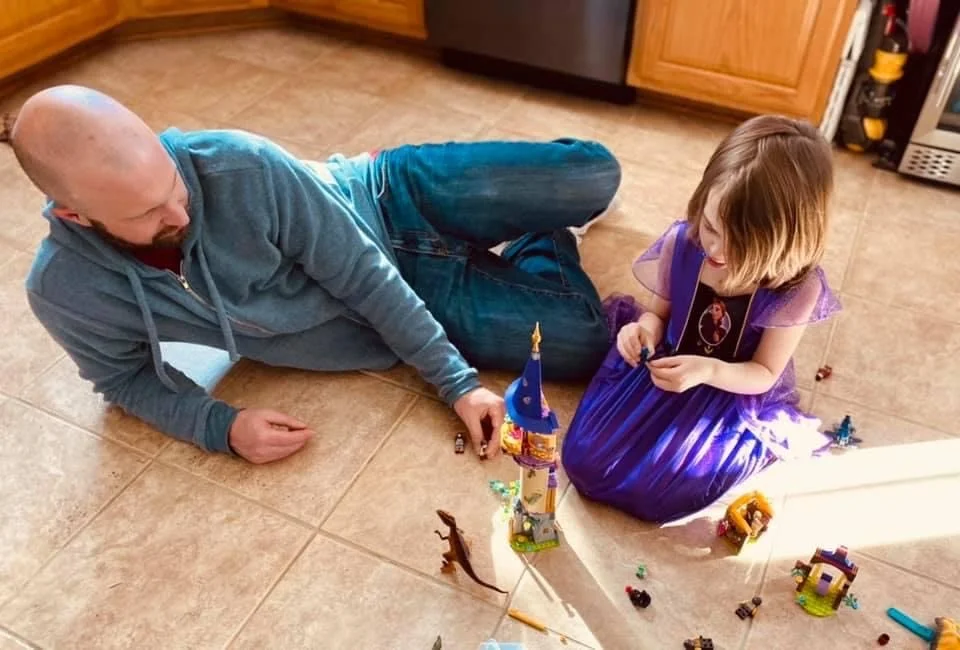
Kevin Clark shares how suppressing emotions contributed to addiction, shame, and disconnection, and how recovery taught him to embrace vulnerability, process difficult feelings, and build a more authentic life.
Trigger Warning: This conversation includes discussions of addiction, trauma, childhood abuse, incarceration, depression, and suicidal thoughts. Please take care while listening and engage with this episode at your own pace if these topics are difficult for you.
For years, Kevin Clark thought his problem was addiction. What he eventually discovered was that addiction was only part of the story.
Long before alcohol and drugs entered the picture, Kevin had learned to fear his own emotions. Sadness felt overwhelming. Vulnerability felt unsafe. Like many people, he found ways to push difficult feelings aside rather than face them directly.
Kevin shares how suppressing emotions shaped his childhood, contributed to addiction, and ultimately led him to a breaking point that changed the course of his life.
If you've ever struggled to understand your emotions, avoided difficult feelings, or wondered why certain patterns keep repeating in your life, his story offers perspective on what happens when we stop running and start paying attention.
Listen to Kevin Clark’s Interview
Watch Kevin Clark’s Interview
Emotional Sensitivity Isn't the Problem
Kevin Clark: My name is Kevin Clark, and I am from Virginia, Northern Virginia.
A lot of times, it's easy to identify the anger, but what's really underneath it? If you don't deal with your feelings, they deal with you. Pain demands to be felt.
Even logically, if you take a step back, how can that not hurt you if you hurt someone else? And how can hurting you not hurt someone else?
Hopefully, what I would love to see is a more emotionally evolved humanity.
Brandi Fleck: This episode does come with a trigger warning. We do talk for a few minutes about abuse, trauma, being in the throes of addiction, and strong graphic impulses that arose from suppressing strong negative emotions. This could be disturbing to some listeners.
This week, we're featuring guest Kevin Clark. He's author of the book The New Prophet and is a certified substance abuse counselor and trauma specialist.
On the surface, this episode is about addiction and recovery. Underneath, it's about how suppressing emotions leads to poor health, self-destructive behaviors, and how spiritual awakening can be a turning point.
Kevin explains that at one point in active addiction, it felt like he was losing his soul and needed to get it back. He then walks us through the tangible steps he took while being incarcerated to heal and change his path in life.
To summarize, the three major points in Kevin's recovery are letting go, having a safe support system, and having a desire to change. These are the things that helped him deal with his emotions rather than numbing them.
We also talk about the social conditioning that led to emotional suppression in the first place. For Kevin, trying to avoid feeling weak as a sensitive person and how he grappled with strong emotions through his childhood, into his addiction, and into his recovery.
In recovery, he started learning how to sit with his negative emotions and just be present as a human being, not a human doing, as he says, a sentiment that other Human Amplified guests have expressed difficulty with too.
Over the next hour, Kevin gets real about the gamut of emotions he's felt and can deal with now, including sadness, fear, shame, numbing pain, denial, and vulnerability. But he also talks about empathy, letting go of control, overwhelming gratitude, and the importance of being open and flexible to new possibilities.
Kevin has hope that there will be a more emotionally evolved humanity in the future and wants to see that, and I do too.
Ultimately, Kevin is an amazing example of embracing emotions that he used to fear so that he could have a different, healthier life helping others, being with his family, and skateboarding in his spare time.
What's really impressive is that when Kevin was at his most lost, he dared to think maybe everything he knew was wrong and accepted help. That's bravery, strength, and emotional evolution if I've ever seen it.
Hey guys, as always, thank you so much for listening, and thank you for your support.
If you haven't already subscribed to the Human Amplified podcast, go ahead and subscribe on your favorite podcast platform of choice, and then leave us a rating and review.
You can even go follow us on Facebook, Instagram, Twitter, all the places, @HumanAmplified, and leave us a rating and review there.
We love to hear from you. We love to know how we're doing and how we've impacted your life.
I'm so excited to have you here, and I'm excited about this conversation. I think it's going to be from a perspective that we haven't necessarily heard before.
So, Kevin, how are you doing today? Welcome to the show.
Kevin Clark: I'm doing good. I'm doing great, actually.
I feel like I've had a little bit of mental fatigue this week, but, again, sometimes that's just the nature of the work I'm in. You kind of take time to recharge and practice some self-care.
Thank you so much for having me on.
Brandi Fleck: Yeah, no problem.
Before we dive in, can you just introduce yourself to our listeners and tell them who you are and all about what you do?
Kevin Clark: As I've said, my name is Kevin Clark, and my author name is actually my full name, Kevin McKnean Clark.
Yes, my middle name rhymes with my first name. It is pretty cool. That's a good way to find me if you want to look for me online.
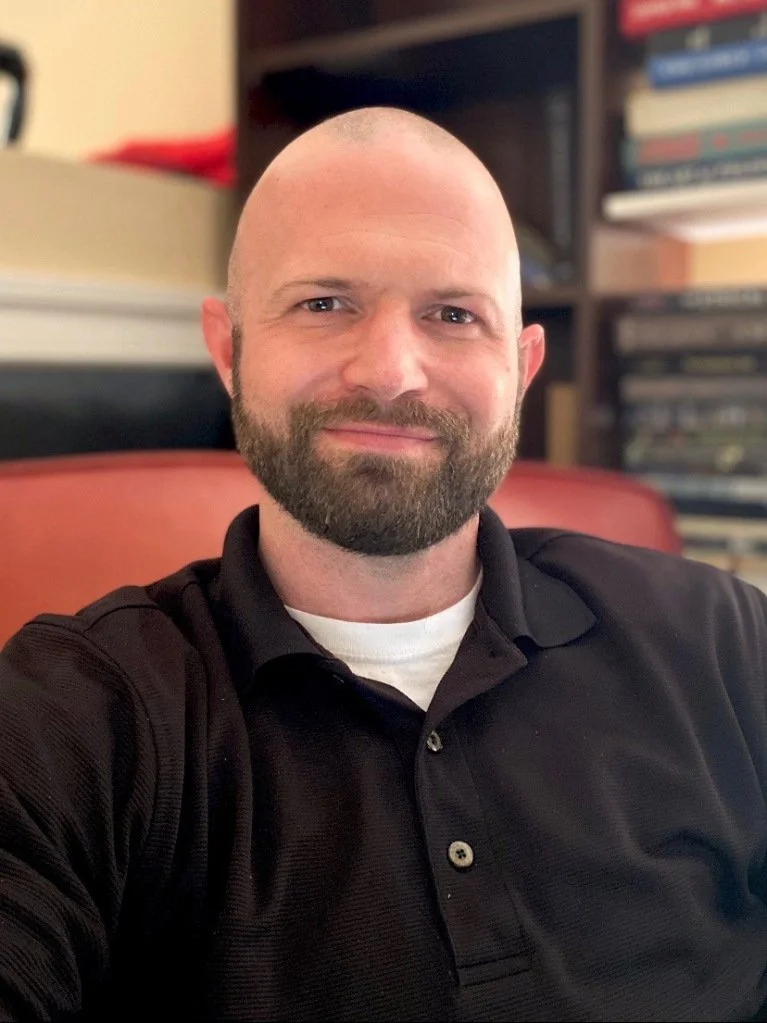
I wrote a book and published it in 2020. That was a new experience for me, but something I kind of knew I was going to do for a while.
Really, what I'm passionate about boils down to three components: family, helping others, and skateboarding.
My job, I'm extremely passionate about. It's exciting to me. I love learning new things about it.
I work in addiction treatment with a specialization in treating trauma because I've kind of learned through treating addiction that you can't really effectively treat addiction unless you at least have some form of trauma-informed care.
Okay, so that's what I do. I work at a treatment center part-time that I've helped develop over the last few years, Recovery Unplugged, the Northern Virginia location.
I also started my own counseling business, Exceller Addiction Services, in 2020 as well. That's me.
Brandi Fleck:
Amazing. That's really cool. Hopefully, we'll get into what led you down that path based on what we're going to talk about.
Let's just dive in and start with the topic of emotional sensitivity. You've told me before that you believe that it is a gift. Why is that?
Kevin Clark: It's a gift because, and it took me a long, long time to get there with that, our capacity to feel deeply...
We know empathy is kind of what connects us as people.
I talked about that in my book, where compassion, I feel, is a connection to the divine, this understanding born in love.
I don't believe in compassion fatigue. I never run out of that.
But empathy, that emotional connection, that's where I kind of have to set some boundaries because when you feel deeply, it can leave you worn out when you are feeling with people and when you're very sensitive.
Learning to be with our own emotions and finding out what belongs to us and what we don't have to pick up is part of the learning process.
Again, I say it's a gift because if I can understand emotions in their most amplified presentation or experience, then I can probably help other people through their process.
It just deepens the capacity to connect with one another.
I used to have a friend whose mom would say when I was a little kid that I had an artist's soul because I just felt everything so deeply. I had big and loud feelings, which were a lot at first, and I didn't like it at all.
Brandi Fleck: Do you create any art?
Kevin Clark: I do. I draw. I drew the cover of the book, actually. When my wife was in the hospital, I just drew it one day.
Brandi Fleck: Awesome.
Kevin Clark: So I draw, and actually I do draw a lot of the time when there's heavy emotional stuff going on in my life. I like to doodle all the time just to kind of keep that flow open.
I usually only draw when there's heavy stuff going on. It's just a nice outlet for me. But I also write.
Brandi Fleck: You've written the book, but what kind of writing do you do other than that? Is it all just journaling, or do you do any fiction?
Kevin Clark: Lately, it's mostly just been journaling.
Actually, I'm working on a second book project now, so I've been jotting stuff down.
Sometimes it comes to me in the middle of a counseling session. I'll say something that comes from that space of inspiration and intuition, and I'm like, "Oh, that was really good. I can expand on that later."
So I kind of have this long list of things, and I already know the chapter outline.
My writing process is completely different in the second book than it was in the first book.
The first book was definitely more of tapping into my poetic self, which poetry is something I have written throughout the years when I feel inspired.
But this next book is more about really taking a hard look at the work I've done on myself over the last two or three years specifically.
I'm kind of deepening my understanding of it as I work with other people using the wisdom I've gained from it.
Brandi Fleck: Gotcha. So it'll be a little bit more self-help and a little bit more of yourself put into it?
Kevin Clark:
Whereas The New Prophet, I was able to speak through this guy who was my wisest self through a character, a counselor who was on his deathbed.
Brandi Fleck: I want to keep diving into emotions for a little while. I think that's great that you connected art and writing to emotions because there is a big connection there.
Being a man in our society, why is the phrase "emotional sensitivity" loaded or hard to grapple with?
Kevin Clark: Because we have the whole "man up" expression, right?
That's usually like, "Quit your whining," or "Don't feel sorry for yourself," or "Don't feel down or sad. Just plow through it."
Partition off your mind, however you want to put it, and just move on. Sometimes there is a time to let it go and move on or shelf it and revisit it. Because if you don't deal with your feelings, they deal with you.
Pain demands to be felt. That's been my experience. It's going to come kicking down your door if you don't pay the bill, essentially.
Brandi Fleck: Yeah.
Kevin Clark: Now, I did hear something a client actually said recently at the treatment center I work at.
He said, "Man up and feel your feelings." I really like that because I think that's the message of the emotionally evolved masculine person.
Brandi Fleck: Yeah, well that's interesting.
Do you think that as a culture and a society we've shifted a little bit from that original definition of masculinity?
Kevin Clark: I think we have a little. Because I don't even remember hearing about toxic masculinity when I was growing up.
Not that I might have been in the circles to hear such a thing. But now it's like we know we've had some clear examples of it in the world around us, and it reflects back to pieces of ourselves that might need to change or grow.
Again, I think, and I mentioned this in the book where I'm talking in the excerpt on diversity and collective trauma, about the age of ego crumbling and hopefully what I would love to see is this more emotionally evolved humanity.
Because I think, like I said, if we're emotionally sensitive and tapped into that stuff, it's a lot harder to hurt people when you're in touch with your own feelings because you know if you hurt them, you hurt you. If you hurt you, you hurt them.
A lot of people are walking around unconscious and in denial of this fact, but even logically, if you take a step back, how can that not hurt you if you hurt someone else? And how can hurting you not hurt someone else?
Brandi Fleck: Gosh, that is such a good point. I'm really glad you brought that up.
Why do you think people are in denial of that?
Kevin Clark: I think, and this is another quote from the book, "When reality overwhelms the eyes, we find ways to learn not to see."
I think there's a lot of pain out there, and it's too much. We will practice not looking at it as many ways as we can.
Denial has four levels in it, according to Gorski. By the addiction definition, level one is a lack of information, level two is conscious denial, level three is unconscious denial, and level four is delusion.
What I'm thinking is hopefully we're moving through to where it's more of just a lack of information. If we can start teaching people different things, like our kids, then we won't be in the position we're in now.
Before, it was like, and I didn't live in this period, but I've heard about it a lot, what happens in the house stays in the house.
That's come down. That still has continued some, but therapy was a big problem. In some countries it still is. They don't even accept mental illness as a thing.
Whereas really, mental health is health. It's just another health issue like anything else.
The Cost of Looking Away From Pain
Brandi Fleck: Yeah. You mentioned this a little bit, or you alluded to this earlier, that you used to be scared of emotions and run from emotions.
Is it all emotions, or was it just one or some more than others? Can you expand on that?
Kevin Clark: I think it started with sadness because the more uncovering to discover what's underneath through this process of integrating negatively charged emotions, which to me is kind of the experience of how to be present, how to be a human being and not a human doing, I find sadness underneath it.
Sometimes there are layers, but that seems to be the basis.
There's sadness and fear, which kind of turns into anger a lot of times.
It's easy to identify the anger, but what's really underneath it? Because it's a secondary feeling.
Brandi Fleck: That's interesting.
Kevin Clark: So yeah, I think I was scared to feel sad when I was a kid. Really scared to.
I think I was sad about stuff because I was really sensitive.
I did become scared of anger too.
So fear, sadness, and anger I was scared of. Those were things I found ways to deny or numb out or quiet or run from.
Brandi Fleck:
Were you scared of those emotions just because they were unpleasant to feel, or was there something else behind that?
Kevin Clark: Yeah, I think they felt so strong. Also, like we were saying, through the lens of social conditioning, I felt so weak when I was feeling them because it's vulnerability.
Then if we have life events where we get hurt while we're in any kind of state of vulnerability, it makes us even more guarded and less likely to want to put ourselves in that position at all.
Part of learning how to be with feelings is also being able to identify and choose safe people until you get to a place where you're comfortable with you no matter what.
Brandi Fleck: Okay, that's a good point. Can you expand on that just a little bit more?
What's the importance of choosing safe people until you're at a place where it's okay to venture out?
Kevin Clark: That's why it's so important that we review our lives.
Stuff like 12-step programs are great because I believe through hindsight we develop insight, through insight we develop foresight, so we can choose to change our future that way.
If my storyline is that people are going to screw me over, it's almost like I put myself in positions to be screwed over.
It's almost like I seek out the psychological phenomenon of confirmation bias.
Brandi Fleck: Yes.
Kevin Clark: It parallels with the metaphysical law of attraction.
Whatever I'm thinking about or believe, I seek things to confirm that belief on an unconscious level almost.
Brandi Fleck: Yeah, okay. When you were afraid of emotions, what were you seeking, even if it wasn't intentional?
What did that fear cause to happen in your life?

Kevin Clark: Yeah. I think I became pretty uncomfortable in my own skin.
I think I developed a shame story, which added to it. That probably is where the discomfort in my own skin came from, really.
I thought there was something wrong with me, and I wanted to shut out those feelings and those thoughts.
So when I found alcohol and other drugs, it was a solution to the problem that I had. It was a way to survive. They kind of put out the fire, so it was a gift at the time.
Searching for Relief in All the Wrong Places
Brandi Fleck: You said you found alcohol and drugs to numb the pain, and that makes a lot of sense. I feel like a lot of people go through that.
Can you tell us a little bit about that?
Did you become an addict? Do you have an addiction story? How did that go?
Kevin Clark: Oh yeah. I was off to the races right away.
I do have addiction in my family, but I say this all the time: genetics loads the gun, environment pulls the trigger.
It doesn't necessarily mean because I have it in my family that I'm going to end up in active addiction.
But based on whatever happens in my life and the way that I react to those things and get supported through those things, that is definitely a good predictor of whether I'm going to land there.
For me, I did. When I was first offered marijuana, weed, whatever you want to call it, THC, I got really excited.
I already knew innately that this was something that was going to help me, even though a couple years before in D.A.R.E. I was like, "I'm never going to do something like that."
But as soon as it was accessible, and stuff had happened in those couple years that probably set me up for it, I remember I used that and I drank.
I remember when I drank, I drank way too much, even the first time, to where I was having dry heaves in my friend's driveway.
So I kind of went for oblivion straight out the gate, which is probably why I got sober so young.
I just wanted to numb and control my feelings.
It's all about trying to control things you can't control instead of learning to be with what is.
Brandi Fleck: At what age did you start using drugs or drinking?
Kevin Clark: Thirteen.
Brandi Fleck: And what age did you get sober?
Kevin Clark: Twenty-two.
The Moment Everything Had to Change
Brandi Fleck: Okay. That's really great that you did. What made you decide to get sober?
In other words, what made you stop running from your emotions?
Kevin Clark: It got to a place when I was twenty-one where I was probably in the darkest place I'd ever been psychologically and emotionally.
I almost felt like I was losing my soul.
But something inside of me kind of reached out from there because all I wanted was to be loved. I just wanted to be loved and I wanted to go home.
That was my spiritual awakening when I realized that.
I had been staying up for four or five days using all kinds of drugs, and I thought there was somewhere I actually needed to go to get there because I was pretty much in psychosis.
But at the same time, I was having a spiritual awakening. It changed everything for me.
Which was scary at first because I was like, "Oh, I can no longer trust my thinking."
But then I realized that's such a good thing because my thinking was so deceitful for so long.
It was setting me up through all that denial. So I went to the hospital when I was twenty-one, and that's when I realized I didn't want to use drugs anymore.
But I had no idea what I was up against. I didn't accept any kind of help and got high that day, got drunk the next day.
Two weeks later I went back. Then I was like, "Okay, I'll do psychiatry and therapy, but I'm still going to try and control it."
I wasn't ready to do 12 steps because I knew that's where alcohol went to die.
This had been the thing helping me survive for a long time, so I was still trying to find workarounds.
That was when I fully started to see the trappings of my mind and the way that I rationalized and minimized and made excuses for everything.
Brandi Fleck: The making excuses part, or rationalizing still using, that's an interesting thing.
I've had loved ones in the past do these things, and it's really hard to watch and understand.
Why do you think if someone logically knows they want to get help, what is it about addiction that makes a person keep going in the addiction?
Kevin Clark: Well, there's this deeply rooted attachment.
I couldn't picture my life with it, but I couldn't picture my life without it either.
So I'm going to try to control it in every way, shape, or form.
In the AA literature, they talk about how we all have this obsession to eventually be able to control and enjoy our drinking.
Some pursue this through the gates of insanity and even death. The other option is you can accept spiritual help.
It's hard to ask for help. A lot of times, people who suffer from addiction are very self-sufficient and can get by without help in a lot of areas.
For them to admit complete defeat against this substance outside of you, again, as a perceived weakness, is a hard pill to swallow.
Brandi Fleck: Let's talk a little bit about spiritual awakening.
3 Things Recovery Couldn't Happen Without
I do want to also talk to you about the tangible steps you took to stop running and start embracing emotions.
Since that spiritual awakening was the turning point, what was that like? Can you give us more detail into what that involved? Was it different than religion, or how did that go?
Kevin Clark: Essentially, I had an experience where I was in the woods.
I talked to a Boy Scout that was not there but was very much there.
Not normal. I've hallucinated on drugs and even hallucinated from lack of sleep, and this was very different.
A lot of people think it was either an angel or a spirit guide.
The only thing I remember him saying to me is, "To get to where you want to go, you have to cross two rivers. Be careful not to stray too far into any side streams or you'll get lost."
I thought I physically had to go to that place that day because, again, I was not right in the head.
But now I've learned that's not what the message was. Again, I think it was just recognizing that I felt homesick even though I had a home.
I felt unloved even though there were lots of people that loved me.
We hear all the time that the opposite of addiction is connection. I was so disconnected. I had abandoned me.
It was finding my way back to that. I didn't do that for a while because I was still trying to control it. I was still trying to process this whole event that happened.
My brain was short-circuited. I was in the deepest depression of my life.
Then eventually I went to jail, and that's when I started to take tangible steps to actually change.
Brandi Fleck: What happened? Why did you go to jail?
Kevin Clark: Well, I was selling drugs. The police broke into my apartment and arrested me and saved my life because I don't think I would have gone much longer the way that I was existing.
That was miserable too. Really, really miserable. It had been for a long time because I knew I wasn't living in alignment with the truth of who I am.
It's just so hard to get out of there when you're in it.
Brandi Fleck: Yeah.
Kevin Clark: So I went to jail, and I saw the devastation I had caused my family.
I saw it clearly for the first time when they looked at me through the glass.
I saw their pain, and it reflected back to me. I mentioned this in a previous podcast, like a crack in the armor of ego that allows in the sunlight of the spirit, which is a flowery quote from the AA literature.
But that's what happened that day. Something inside of me broke. I started to break down and cry. Pretty soon thereafter, I went to my first AA meeting.
I crawled in, whereas when I was nineteen I'd been kicked in and dragged in and pushed in.
But I went in surrendering this time.
Brandi Fleck: So that's where it started for you.
Can you describe the tangible steps that you took?
Kevin Clark: I started going to 12-step meetings.
I went through the 12-step process and implemented it as a design for living, which it's encouraged to do.
I went into a six-month substance abuse treatment program that was in the facility where I was incarcerated.
That was a good deal. That was where I found a really safe person, my therapist, Carl Street, who changed my life by giving me a safe place when I didn't have any.
He inspired me to become a therapist because of the impact that you can have on one person.
I talk to him sometimes, and he's like, "You did all this."
It is the person that does it, but to have the right person there for you to hold your hand in the process is of paramount importance.
I wanted to be able to do that for other people. I had nowhere else. My life wasn't going anywhere.
I wasn't planning to take over the world selling drugs or anything like that.
So I decided I wanted to go back to school and study psychology and become an addictions counselor.
Also, while I was in jail, I did four levels of anger management. I did a faith-based program.
I did the recommended aftercare, which was ten months, I think. I was the only person that completed it. So I did a lot of things. Pretty much anything that was offered to me, I did.
I did a sexual trauma group because I had some abuse when I was a kid that I finally talked about for the first time with Carl.
So I took all the help that was available. I decided maybe everything I know is wrong, and I'm just going to do whatever these people tell me to do and see what happens and kind of let go.
Brandi Fleck: Letting go. Was it difficult while you were incarcerated to stay on this path because there might have been people around you who were definitely not on it?
Or did you find it easier because you had that one safe person?
How did that go?
Kevin Clark: I was definitely in the minority of people who were in treatment for the right reason because everyone was trying to get their ticket punched.
I wanted to get my ticket punched too. When I went in front of the judge, I wanted favorable treatment.
But I also wanted to get better. I found some people. There was another guy, a volunteer there, Jim.
So there were the three wise men that came into my life at the right time, all at the same time, that saved my life. It was Keith, Jim, and Carl.
Carl was my therapist. Keith was another inmate who had been clean before, and he'd already been clean for two years because he'd been down the road and been transferred. He was filled with pain and love, which was the perfect brother that I needed.
Then Jim, he's like a grandfather figure. He taught me so much. He was just loaded with wisdom. A World War II vet. Both him and Keith have died sober.
He taught me, "If you see a turtle on a fence post, it didn't get there without some help." You can't open a door with a closed fist.
He would tell me I needed more confidence, which would piss me off because he was right. I had so much false pride still at that time.
He helped a tremendous amount of people, and fortunately, I was one of them.
Those three were my primary safe people, as well as my family, who I talked to on the phone every day.
Brandi Fleck: So I'm hearing you say letting go is important, having a support system is important, and actually wanting to change is very important.
Kevin Clark: Yeah, definitely. An honest desire to change is huge.
They say the three indispensable principles of recovery are honesty, open-mindedness, and willingness. Every bit of recovery is interwoven with humility.
You have to remain teachable, kind of like the Zen Buddhist principle of always emptying your mind and keeping it empty.
The ideas I had yesterday were actually old ideas, so maybe I need to be open to something different today.
Brandi Fleck: So be flexible.
Kevin Clark: There are so many helpful things.
Learning to Feel Instead of Escape
Again, until I got to the emotional sobriety part, which was a while, because at first I got hit with all these feelings coming up in waves after getting sober, and I learned to recover from them through other vices.
Which wasn't so easy when I was in jail, but once I got out and could get in relationships, or just sex, relationships, or even just staying busy all the time to distract myself.
Some people spend money. I definitely ate a lot more sugar to try and numb out.
For the first seven years of my sobriety, I had a sugar addiction.
It took me a long time to get to the place where it was like, okay, I need to be with my feelings because I can't keep going on the way that I am. Something's got to change.
That's when I found The Presence Process by Michael Brown, which is all about, like I said earlier, integrating negatively charged emotions.
Brandi Fleck: Okay. What was that author's name again?
Kevin Clark: Michael Brown.
It's a ten-week process. Even reading the book would probably be helpful, but it's experiential. I've done it four times now.
Brandi Fleck: Okay, so obviously it was helpful.
Kevin Clark: Anything that I do more than once or read more than once has to have a whole lot of value and be extremely influential for me.
Brandi Fleck: Okay.
Let's talk a little bit about, you said the word false pride. Can you describe what that is?
Kevin Clark: Yeah. False pride is essentially fear.
It's a mask of ego worn by insecurity.
People say it's like an egomaniac with an inferiority complex.
I have to prove my worth to people because deep inside I don't believe it's true.
Because I was still full of shame. There was still a lot of healing that needed to take place.
It was a process of kind of unpacking the boulders.
That's what I mean by false pride. Just this false sense of self. An overinflated identity.
Sometimes it's the tough-guy personality.
It's not true, so it's not right-sized or humble.
Brandi Fleck: Okay.
Why Healing Requires Other People
I want to know, since your initial spiritual awakening turning point, have you had any other spiritual instances where you've seen a spirit guide or had a message like that?
Kevin Clark: Nothing like that, for sure.
Like I said, that was the darkest point in my life.
I think if that day hadn't happened, to tell the truth, around that time there were not enough drugs, alcohol, or people to distract me from my emotions anymore.
I couldn't keep it numb.
I was a drug dealer, so I was thinking about going and shooting the guy that abused me because I knew where he lived.
That would have been crossing a line that I don't know if I could have come back from.
I think of It's a Wonderful Life when it's like, "Hey, it's George's moment. Let's send down the guy, Clarence."
That was my moment of wishing I'd never been born.
Brandi Fleck: Okay. I love that movie, by the way.
Kevin Clark: It's a good one.
Brandi Fleck: It's amazing.
Thank you for sharing all of this.
Let's shift a little bit into the freedom that you experience now that you embrace emotions.
What is that like?
Kevin Clark: I travel much lighter. The emotions I do feel are more like responses to the present situation.
If I'm angry now, it's not old anger. Sometimes there still is stuff that I find and work through as it comes up, but because I've done a lot of that work, I get to be more free in the present moment to experience whatever comes up now.
Now that I have the practice of being with it, which I once thought was insane if they weren't good feelings, I allow it to be.
Or I shelf it and then take it down when I'm in an appropriate space where I can feel it.
Because sometimes it's not a good time to unload.
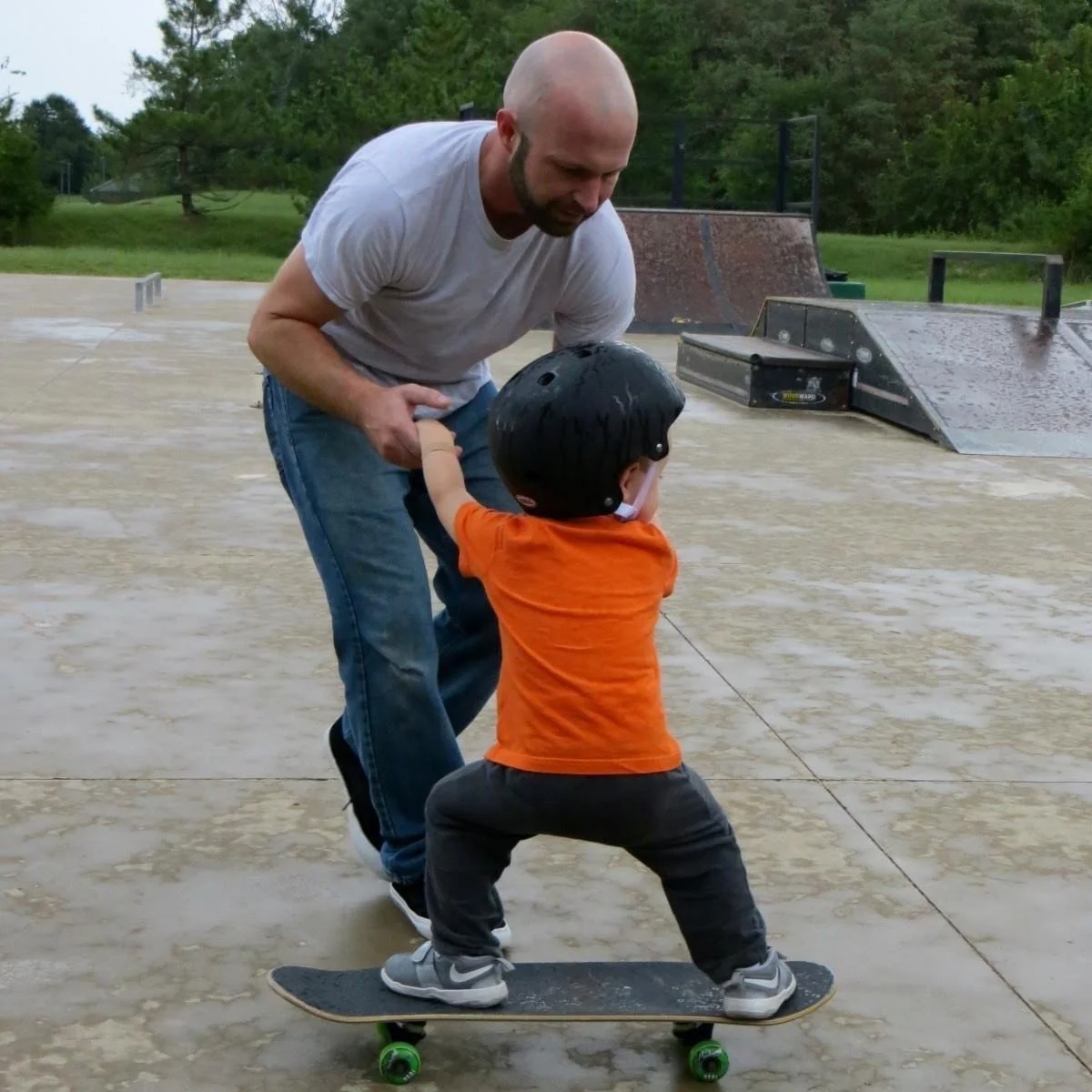
Brandi Fleck: You talk about sitting with your feelings. For somebody who doesn't know how to do that, can you explain what that is?
Kevin Clark: It's almost like, and this might speak to women and men, but definitely probably a lot of men who have been training themselves not to cry.
If you're emotionally sensitive, it happens a lot, and it'll come at you when you're watching a movie, when your guard is down.
You get up to drink a glass of water or hold your breath and try not to look at anybody.
I still sometimes slip back into that. But instead of getting up to get a glass of water, allowing myself to feel it.
It's almost like this guard starts to come up, and mindfully setting it down. Instead of having the single cool Clint Eastwood tear, it might get a little uglier.
Brandi Fleck: Gotcha. Thank you. That's a really good explanation that I haven't quite heard before, so I like it.
Kevin Clark: Also, if you're in therapy with somebody and you're doing trauma therapy especially, that's going to bring up the old stuff.
Having a safe person to do it with and to help you co-regulate the feelings. Because self-regulation is survival. Co-regulation is connection.
That's what we really need as humans. For that really hard stuff, doing it with somebody. They can't do it for you, but they can be there with you.
Brandi Fleck: I think even that empathetic connection makes all the difference in the world in allowing you to finally give yourself a chance to be with what was.
Would you say that fear of judgment sort of hinders that empathetic connection sometimes?
Kevin Clark: It could. That's why finding safe people is so important.
Sometimes that's how I know I'm around a safe person because I'll just walk into their office, shut the door, and cry. A massage therapist, I've done that before.
Brandi Fleck: I have too.
Kevin Clark: Stuff going on with my dad after he left my mom.
It was some stuff. I didn't even know it was going to happen. I went in and I was like, "Oh, this is a safe person. Cool."
My boss at the treatment center, my supervisor, she's one of those people.
When I got the call that my wife had a tumor in her spine and was going to need to go to the emergency room immediately, I went right into her office.
That was before she was my boss. I was just like, when I find those people, I put a pin in there and I cherish them because you need them for the hard and heavy stuff.
What Freedom Feels Like After Years of Numbing
Brandi Fleck: Yeah. We can't do this thing alone. Nobody can. Can I ask, is your wife okay?
Kevin Clark: She is. She beat cancer.
Brandi Fleck: That's amazing.
Kevin Clark: Yeah. She had ependymoma, which is extremely rare for adults. It's even more rare to have it in your spine.
Brain tumors are rare, but spine tumors are 200 times more rare. I learned a whole lot about everything because that's my mind. I want to learn about it too.
But yeah, she had to do a lot of chemo, radiation, and the surgery. As of last summer, she's been cancer-free since then. It's a really good thing we had kids.
It was heavy. Yeah, it was a lot. I didn't realize how much I was carrying until we did this end-of-chemo party and I started to have feelings come up. I was like, "What feeling?"
This relief was what I was having. Tears of relief.
Brandi Fleck: Yeah. Something subtle that just came out of what you said that I really like is that sometimes when emotions come up, you don't always immediately know what they are.
You have to sit and think about it for a minute to know what you're actually feeling. That's a good point.
Kevin Clark: Yeah, because sometimes just because you're crying, it's not always because you're sad.
It might be such powerful joy, gratitude, or relief that you're crying. We're complex.
And then there's "saudade," which is an emotion I've made up. Well, I'm sure everybody has it, but that's what I call it.
All of a sudden I see the sunrise, or the sun setting in the clouds when I'm driving my car, and I get these tears.
I figure I'm feeling this so strongly because I went through so much pain where I couldn't ever see this stuff. I had my blinders on and was living in black and white.
I'm just so grateful that I'm here to have it today. Maybe that's the freedom you get from feeling stuff.
Brandi Fleck: Gotcha. Awesome.
The Story Behind The New Prophet
Let's talk about your book a little bit. Your book is called The New Prophet, and based on what we've talked about and what I've seen of it, it explores the theme of mindset shifts with a focus on emotion, which is sort of what we've been talking about today.
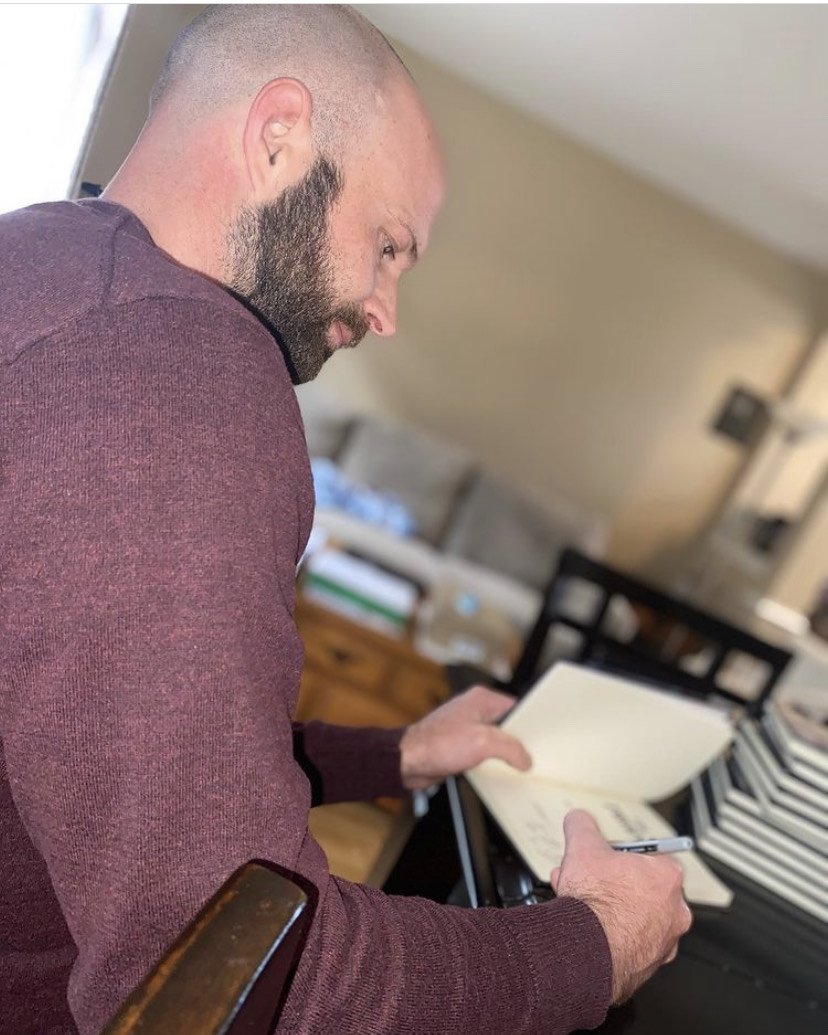
You've said that your life could sort of be summed up in that theme.
Can you describe more of what the book is about for our listeners and just tell us about it?
Kevin Clark: Anyone that's familiar with Kahlil Gibran's masterpiece The Prophet, which I think was written in 1923 and published in 1928, knows it's about this guy leaving a city.
He was getting on a ship to go home, and different people from the city came to him and said, "Tell me about this," because they knew this guy was a sage who had been observing them.
Through very deep metaphors and poetic words, the author drops a whole lot of wisdom about different aspects of life: marriage, children, prison, sadness, buying and selling, food and drink.
That was one of the books I have read more than once and actually studied with a group of guys.
I decided that the first book I wrote was going to be inspired by that and probably have more to do with the stuff that I think about, talk about, and have worked through so much, which is emotions, spiritual living, therapy, and all the kind of stuff that I teach on already.
It came to a point where I realized that I think I take some of my wisdom for granted sometimes and that I could help more people, which I love to do because I see how it changes the entire world when you help one person, if I wrote a book.
So that's what I did. My book is a counselor on his deathbed having an exchange with his son.
He's telling him about unbeing human, imperfectionism, addiction, recovery, guilt and shame, trauma, inner child work, therapy, spiritual awakening.
I wrote on all those topics and a whole bunch more. I just followed the pen and saw what came out of me and made it into a book.
I've gotten a lot of good feedback. People are finding themselves in it. They're feeling seen.
Words are being put to their emotions that they couldn't articulate. Some people are having their own emotional experiences when reading it.
Even one of my macho-guy friends was crying when he was reading it. It's doing exactly what I wanted it to do, which is reflecting back to the reader something within themselves.
Brandi Fleck: It takes me back to when you said you were there in jail and saw the emotions of your family reflected back to you through the glass.
It's sort of full circle almost. I would love for you to read an excerpt of the book. Are you up for that?
Kevin Clark: Yeah, definitely.
Brandi Fleck: Okay.
Kevin Clark: I return to my truest self by sharing my uncertainties.
We take off our armor because though it protects us from hurt, we cannot be held while wearing it.
Walls come up in relationships.
To be vulnerable is to speak your truth, to show up raw and real.
We stand naked, uncomfortably letting all eyes fall upon our skin so that we may be comfortable in that very skin we are in.
Intimacy. Is there such a thing as too close for comfort?
Not between people, if the people are truly comfortable in the skin they're in.
That is why some say, "Into me, I see."
It is the optimal way to take advantage of this house of mirrors we are living in.
One school of thought is that everyone we meet in our dreams is really ourselves, a piece of our unconscious mind.
To enter a dream lucidly with this understanding, we realize we are all part of the collective consciousness.
Do we dream peacefully, or do we toss and turn terrorized by our unmet selves?
So it is when one becomes emotionally intimate with oneself that forgiveness transforms their pain into love.
An organic alchemy of the soul. We realize the monsters under our bed are only monsters in our head. Leaving irrational fears behind, we merge energy with those around us.
We see the good in our neighbor. We see the God in our lover. We live in spiritual experience synchronized with the world.
This is authentic intimacy. This is to feel safe and at home wherever you go.
So consider carefully what you feed your mind, as it has a way of infecting your consciousness. Input equals output.
This simple equation will keep the doors of your home open and inviting.
But be ever vigilant, for it can also bar your doors, locking you in and the world out.
Nothing seems safe. This is spiritual homelessness.
Brandi Fleck: Thank you so much for reading that.
I loved it. It was really good. I definitely want you to let our listeners know where they can find all that stuff.
But first, do you have anything else coming up? You said you were writing a second book. Do you have any timeline for it yet?
Kevin Clark: I don't. This one, I wrote in seven weeks and started the whole publishing process because it all just started happening at once.
Like I said, this next one's different. I'd like to say a year, but maybe a little bit longer. Maybe less time. I don't know.
Brandi Fleck: Okay. Springtime's coming.
Kevin Clark: Which is my most creative season. That's when I wrote this one. Maybe I'll find time to sit. It's really just making the time to do it.
Brandi Fleck: Yeah. Where can our listeners find you, your book, your services, basically anything and everything?
Kevin Clark: Definitely. ExcelsiorAddictionServices.com is my counseling business website.
I also have an author page with a link to my Square site if you want to buy a signed copy of my book and you live in the U.S.
On Instagram and Facebook, Kevin McKnean Clark. If you type in Kevin McKnean Clark Author, you can find all my stuff on The New Prophet.
Once I start posting stuff about the next book, you'll find information there about that too.
Brandi Fleck: Okay. Those are probably the best places?
Kevin Clark: Oh, and TheNewProphet.org is another one.
And you can also find it on Amazon, which is what most people are going to do anyway.
Brandi Fleck: Okay, awesome. All of that will be in the show notes, so guys, make sure you go and check all of that stuff out and go check out this book.
Kevin, thanks so much for coming on the show. It has been an absolute pleasure, and I'm just super grateful that you shared your story with us.
Kevin Clark: Thank you for having me. It was awesome.
Join the conversation!
Feel free to share your own experience and let me know if you have any questions in the comments.
Related Posts
















Hi, I’m the founder of Human Amplified. I’m Brandi Fleck, a recognized communications and interviewing expert, a writer, an artist, and a private practice, certified trauma-informed life coach and Reiki healer. No matter how you interact with me, I help you tell and change your story so you can feel more like yourself. So welcome!
Find More on the Blog
Topic
- ADHD
- AI
- Atlanta
- Black and BIPOC
- DIY
- FAQ
- LGBTQIA plus
- Los Angeles
- Nashville
- Seattle
- St Louis
- St. Louis
- UFOS/UAPs/ETs
- abuse
- accountability
- addiction and recovery
- adoption
- affirmations
- afterlife
- altered state
- angels
- animals
- anxiety management
- art
- astrology
- atlanta
- attachment
- awakening
- beauty
- behind the scenes
- being human
- body image
- body work
- boundaries
- brandi fleck
- breathwork
- bullying
- burn out
- burnout
- cancer
- career
- caretaking
- chakras
- channeled
- clarity-dive
- clarity-practice
- clarity-primer
- clean products
- coach
- codependency
Recent Blog Posts

Visit the Full Podcast Audio Archive

Affiliate


What if remembering you’re a starseed isn’t about escaping your humanity, but embracing it more deeply? As you explore where your soul may have come from, there are a few important truths that can keep you grounded, embodied, connected, and fully present for the human life you’re here to experience.