
Brujería, Witchcraft, and the Return to Personal Power
Interview By Brandi Fleck
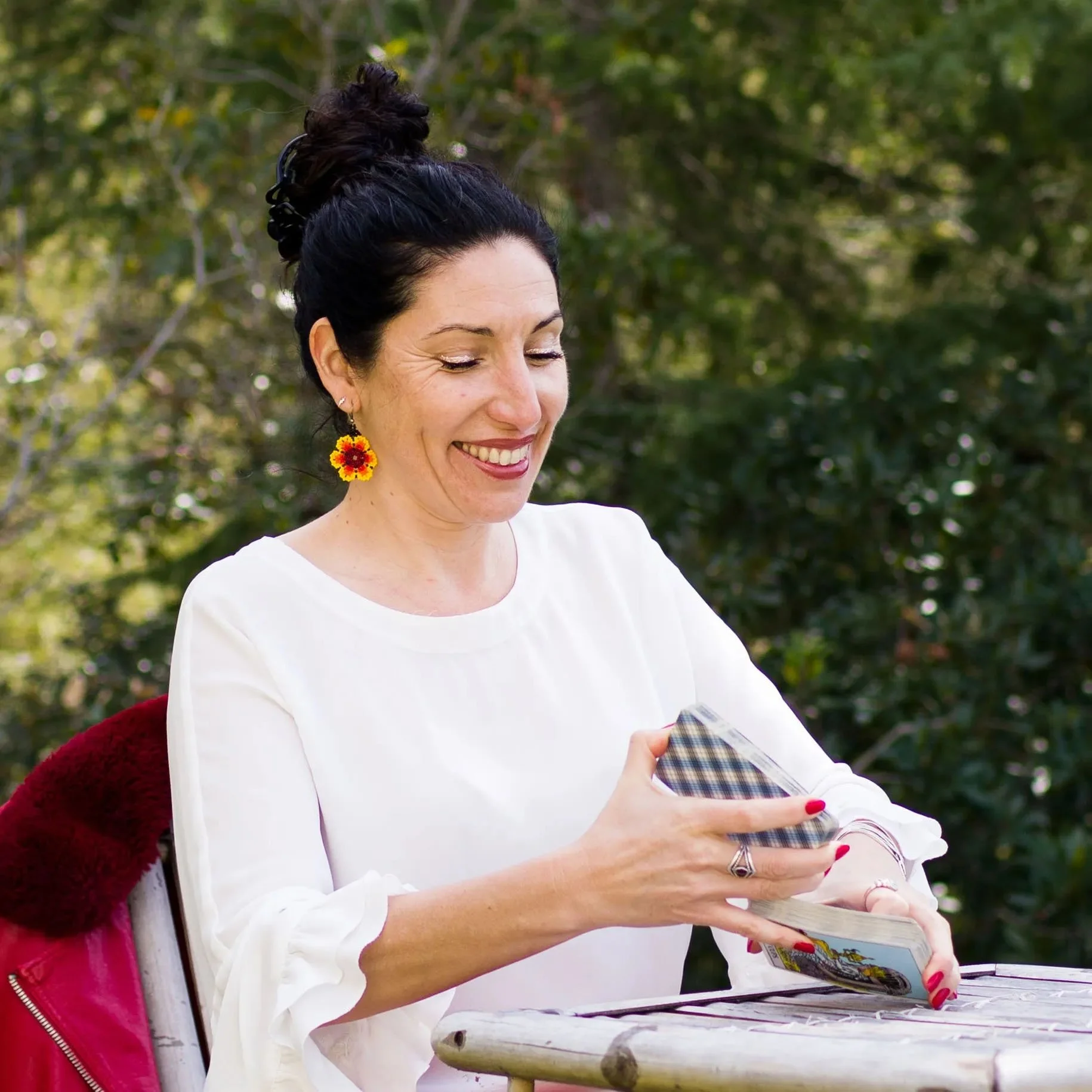
Maritza Schafer explores Brujería, modern witchcraft, energy work, cultural appropriation, spiritual liberation, social justice, and the everyday practices that help us reclaim personal power.
What if magic isn’t something you have to chase, perform, or prove?
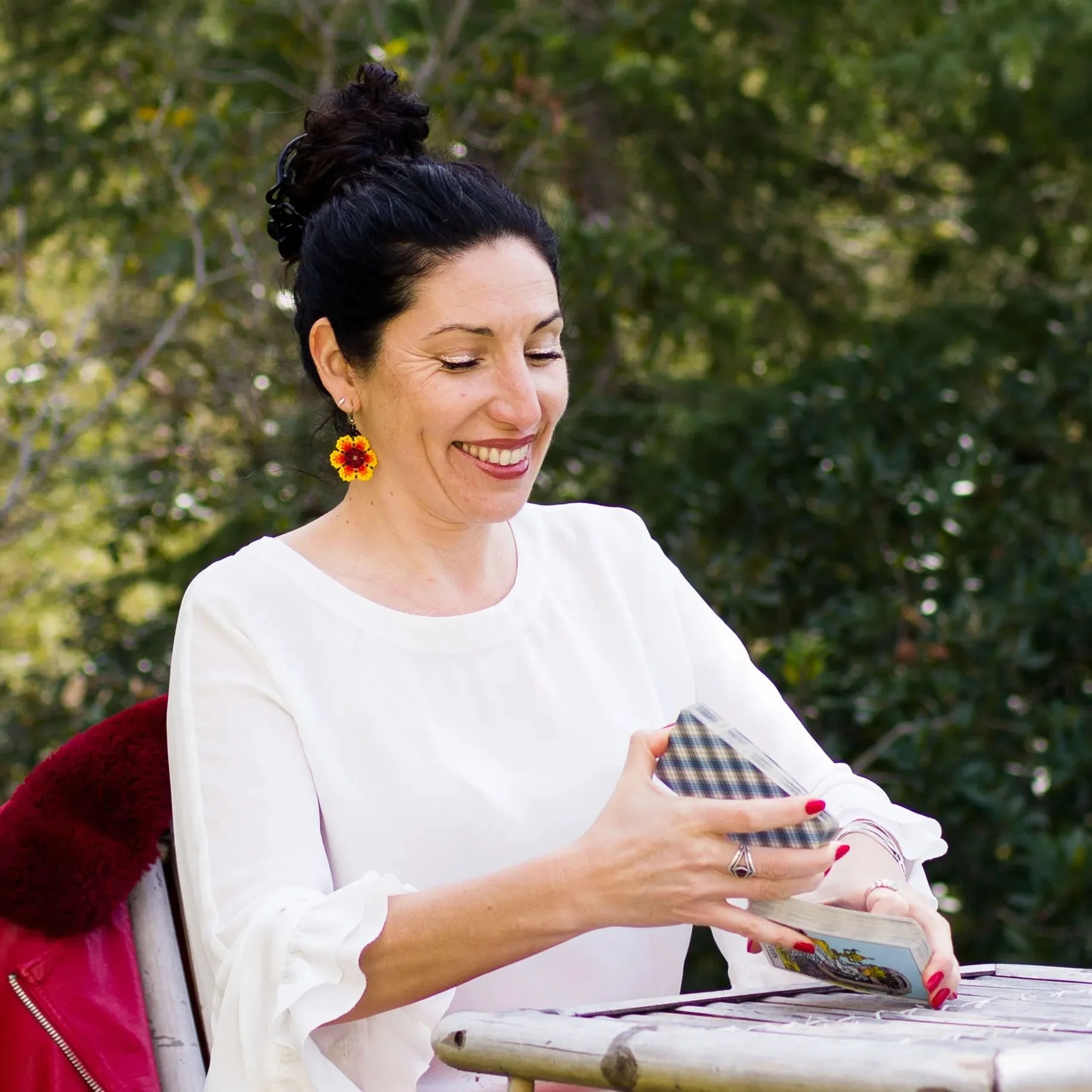
For Maritza Schafer, founder of Bruja School, magic was never separate from everyday life. She grew up in Chile in a family of witches, surrounded by an understanding that the visible world is not the only world shaping our reality. But her work is not about making witchcraft seem mysterious or inaccessible. It’s about helping people remember the power they already carry.
In this conversation, we explore Brujería, modern witchcraft, spiritual coherence, cultural appropriation, liberation, social justice, and the simple practices that help us reconnect with our bodies, intuition, energy, and truth.
Listen to Maritza Schafer’s Interview
Watch Maritza Schafer’s Interview
Being Human as an Expression of Mystery
Brandi Fleck: What does being human mean to you?
Maritza Schafer: What a great question, especially with the rise of the robots in this era of AI. It's a question that seems to come up a lot more often than it used to, I think. For me, being human is about, more than anything, an expression of the mystery. And so what I mean by that is that the fact that we're alive and that we're lifing and that the world is here with the trees and the wars and the weddings and the happies and the sads, not to mention the rest of the universe, is we don't know enough. In fact, we know very little about how this is all happening. I mean, we have a lot of science that's powerful, but there's still a lot of mystery. And so I think that having a carbon-based vehicle, this body, to experience consciousness on this planet is the basic sort of ingredient for being human, period. And to be truly human, in my opinion, having the consciousness of that and making some decisions based on that consciousness is what makes the ride really meaningful and worthwhile.
Brandi Fleck: Beautiful. Thank you, everyone. Today, we are welcoming to the show Maritza Schafer. She is joining us from Oakland, California, and she is the founder of the Bruja School. Maritza, I'm so excited to have this conversation with you today. Welcome to the show.
Maritza Schafer: Me too. Thank you so much for having me. Very excited to have this chat as well.
Brandi Fleck: I think this is going to be a really fun one, but I can't wait to see what comes up. And before we get too deep into it, can you just tell our listeners a little bit about who you are as a person?
Maritza Schafer: Certainly. Who I am as a person. I love that caveat, like as a person. This is not about what I do, but who I am. I am super excited to be a human. I am horrified by what we're all doing to each other. I am doing my best to be always integrated and in coherence from all aspects of myself. And what I mean by that is my body and my mind and my heart and my spirit. And since I've been practicing that for a while, I also support people in finding that coherence and alignment in their own lives as well, teaching spiritual tools.
Spiritual Coherence and Living in Alignment
Brandi Fleck: What do you mean by coherence?
Maritza Schafer: I mean, you know when like, let me give you an example. I just came home from the gym, right? And I go. It's not my favorite, but I go. And so when I'm sitting at home before I leave and my mind is like, I don't want to go. And my body feels like, but it would be really good for you. There is a moment of incoherence because I want different things and I'm not aligned. At the end of the day, my mind decided that I don't have to like it. I don't have to want to do it, but I'm willing to do it. And with that little bit of willingness, I came back into coherence because I was like, okay, let's go. And I did. And I came back. And so coherence to me is a way of living that makes sure that all parts of your being, your emotions, your heart, your mind, your intellect, your body, so what you're actually doing in the world, what actions you're taking, what your behavior is demonstrating, and your spirit are all on the same page. And basically, you know who you are. You're living your values. You're trying to be the kind of person that says what they do and does what they say.
Brandi Fleck: I'm so glad that you gave us that example. Thank you for that. In my life recently, this just keeps coming up. So I've been thinking about it a lot. And I heard somebody say today, just follow the breadcrumbs of joy. And I was like, well, it's not that simple because your mind might not want to go to the gym. So you might not be experiencing joy in that moment, but maybe you experience it after you go because you like the results. So it's not black and white when we're following the breadcrumbs of joy necessarily.
Maritza Schafer: Totally. And I also think it depends on how you define joy, right? Because if you're thinking about joy as instant gratification, you're going to have a very different experience of following those crumbs than if you think of joy as, however else you might think of it, as a way of living that might come with some discomfort, but feels really good about who you are as a person, who you're being as a human being. And so I totally get what you mean. And I think that every human on Earth has had that experience. And I think that that's why it's important to be clear on what it is that you value and what it is that you want to do on this Earth. Because for me, joy is not necessarily about instant gratification. In fact, I would argue if it was, I'd probably be dead by now. You know what I mean?
Growing Up in a Family of Witches
Brandi Fleck: Yes, yes, for sure. Okay. All good things to think about, and I'm so glad that came up. And so to set the stage for the rest of the conversation we're going to have today, I would love to learn a little more about you and your background. I know that you grew up in Chile with a family of witches, and I find this so fascinating. Can you tell us what that was like?
Maritza Schafer: You know, I get this question all the time, and I totally get it because so many people are like, what are you talking about? Is that even real? What is that? And it's so difficult because we are all the centers of our own universe. And my experience is normal, right? Because it's what I know. And so it's taken some effort for me to really understand that, no, actually, this is pretty freaking unusual. Most people are not raised by witches, and most people don't grow up with magic around them or knowing how to work magic. And so it's a very special experience. And excuse me, it's like asking a fish to describe water. I'm like, I don't even know that it's wet. You know what I mean? But over the years from my work, I've come to understand that, for me, growing up in my family was mostly about never questioning or even considering that it could be a question that there are invisible, powerful forces at play in humans' lives, right? In the lives of all humans. And so the fact that what we see and what we touch or taste is not all that there is, and some of the science hasn't caught up to it yet, was super clear to me from a very, very young age. And so it was never weird to have a sense of Spirit or all kinds of other expressions of Spirit, intuition, even premonitions, connectivity with other people without even having to physically be in the same space. There's a lot of ways of communicating and experiencing life that are not material. And that's that. That's just how it is. And when you're familiar with these forces, with this way of experiencing life, you can work with it. You can incorporate it into your life, and that's a huge part of what working magic is about, which is simply magic the way I define it. It is simply the craft of transforming reality. And so if there's a piece of my reality that I'm not really excited about, I can do something about changing it. And if I've tried all the things that are the usual things that people try and it's not working, then magic usually is the next step. And it incorporates a very, very powerful spiritual aspect, which is always there whether we're acknowledging it or not, that then can really start shifting things for us and really move the needle in the things that we want to improve in our lives or just have be different.
Brandi Fleck: I feel like, and please correct me if I'm wrong, we all have access to these unseen forces. And there's just so much fear around that, that we've kind of conditioned the knowing and the ability to interact out of ourselves as a society. Do you agree with that?
Maritza Schafer: Oh, my God. A hundred percent. That's why I'm always kind of taken aback when people ask me like, oh, that's so weird. What was that like? And I'm like, how do you not have that? I mean, because you do. How do you stay in denial about that? Right. And my theory related exactly, Brandi, to what you just said, it's like we're kind of conditioned out of it, or society is pushing it out of us, is because I genuinely believe that the reason for that is purely political and purely about power. If we all were fully aware of our own divinity, of our own Spirit, of the power that we carry, of the magic that we are simply by being human, and we knew how to work with it, the entire neoliberal, capitalistic, misogynistic, racist, homophobic system, etc., etc., would collapse, right? Because it's only propped up by oppression, fear, and abuse. And when people can break free from those things on a personal level, it has a huge impact at large. Having said that, and this is a very important caveat because it's one of my pet peeves, it doesn't mean that if I just focus on myself, everything is going to be okay. I have a bit of a chip on my shoulder about some spiritual spaces that are very, very individualistic. And they're like, oh, you can create your own reality, which I 100% agree. I know that that's true. And you can't or really shouldn't be doing that without acknowledging that we're not all starting from the same starting point and that a lot of what we've done as a collective, I just paused because I was like, can I curse? It's a bit of a shitshow. You know what I mean?
Brandi Fleck: Yeah.
Maritza Schafer: So I think that both are true.
Brandi Fleck: Well, and when you change your reality, it impacts everyone that's in the web with you. And you don't even know how many people are in the web or what things are in the web, right?
Maritza Schafer: Yep.
How to Work With Energy and Spiritual Power
Brandi Fleck: Okay. Well, so I wasn't going to go here this soon, but let's do it anyways.
Maritza Schafer: Sure.
Brandi Fleck: No, that's great. How do you work with that power?
Maritza Schafer: Do you mean with my own internal spiritual power?
Brandi Fleck: Yes.
Maritza Schafer: Okay. Well, how much time do you have? I mean, one of the reasons, so I don't think that we've talked about this yet, but I founded Bruja School, which is a spiritual tools program. And so what happened was that over time, I grew up in Chile in this family of witches. I moved to the U.S. when I was 18. And I went about my business. I lived my life. And over the decades, my friends and people that got close to me were always like, hey, what is going on here? They always knew that there was something a little bit different about me. And it took me a while even for myself to understand, oh, they're noticing the magic, and they don't even have the verbiage for it, so they don't even know how to ask the question. And so then I became more and more open about my spiritual practices and my spiritual tradition, and people have been super fascinated with it. And over time, I started sharing some of the tools that I use and the skills that I have.
Maritza Schafer: And eventually over time, I realized, okay, this is a total thing. And I turned it into a proper curriculum, right? Where I put together, again, all of my practices, all of my tools, all of my wisdom in a format that people could really comprehend because of this question exactly that you're asking, Brandi, right? It's like, how do you work with that power? I can give you a couple of lines quip that I think will do for now, but the real answer is that is a lifelong practice. And the sooner you start with it, the better you're going to get at it. And it starts by developing a set of skills that have to do with awareness and relaxation and focus and concentration and projecting energy and working with energy and a bunch of things that, like you very wisely already mentioned, are available to everybody, right? You don't have to be special to be able to have a solid, vibrant, powerful spiritual life. I think that what happens is that some people, like in any aspect of life, are born more gifted and talented, and some people maybe are less innately good at it. But no matter what, there are some skills that everybody can learn.
So, for example, if I want to cook, right? There's some people that at seven years old are cranking out some incredible meals, and they're becoming chefs and all that. And maybe I don't have that kind of gift for it, but it doesn't mean that I can't make really good food in my kitchen following some YouTube recipes, right? And so I feel that magic and witchcraft really is kind of like the same thing. There's some folks that are more gifted in the sense that they're naturally more attuned to their bodies, naturally have more open channel to Spirit, but everybody is capable of having the skills that are required to have a powerful spiritual practice that can really also, this is a fun part I think, have a huge impact on your material life. This is not just about sitting at the altar and meditating and feeling at peace, although that's lovely and you can do that, but it's about what does this mean when I leave out the door in the morning and go live my life? How is it going to make me happier? How is it going to make me more useful? How is it going to make me more grounded or, in the way my language is, more me, right? I believe that we're all here with a gift that needs to be fully expressed, and everybody's gift is so different.
Oh, my God. I'm like, I totally digress. What was your question?
Brandi Fleck: No, just accessing the power, accessing that power.
Maritza Schafer: Right. So I would say it's a practice, right? And like you already mentioned, I think part of the challenge is that in the 21st century in Western civilization, we're not set up in a way that from a very early age allows us to realize that we do carry this power, that we do have access to invisible powers, like we've already talked about. And so I think that how you work with it is very simply. The first thing that I would say people can do to connect with their power is spend a moment on their own doing nothing in silence. And that sounds so dumb to say out loud, but you would be floored by how common it is that people never have that experience.
So, for example, when teaching, I teach this program called Liberation Magic, which is literally that, right? Work magic for your own liberation. The first exercise that I have people do the first week is spend three minutes in silence by yourself doing nothing so you can start not only hearing yourself think, because sometimes there's a lot of noise up there and that's not really helpful, but so that you can just be and you can sense yourself and you can really understand how your body is feeling. And so that your emotions have a moment to settle and so that your energy can be really sensed by you. And then over time, you can start playing with it and understanding that you have power over shifting it.
And the other thing that I recommend is get outside and move. I don't mean go have a run or do a workout or anything like that. I've also just been really surprised by the number of people that can literally spend their entire day indoors sitting and forgetting that they're truly embodied. And so I start with, I love your question at the very beginning, that's like, what does it mean to be human? In order to really connect to your full, my opinion, there's many practices and many traditions, but in my opinion, in order to fully connect to your own humanity and develop your spiritual practice, the first thing that you need to do is remember that, right? Remember that you're embodied, that we're meant to be out in nature. And again, I don't mean a beautiful hike in the woods, although that would be lovely, but just outdoors, right? Feeling the air, feeling the sun even if it's cloudy, just not being in this concrete cocoon that so many of us inhabit so often, and with ourselves. We're all, especially in the last couple of decades with the whole doom scrolling, all the screens, all the, it's been incredibly difficult to find the space and time to just be, particularly when society tells us you can't just sit there and quote, do nothing. What's the point of that? What are you doing? And it's like, I'm just remembering my essence. And we start there. And from there, build the power.
Brandi Fleck: Beautiful. Okay. And I know to some that might feel a little abstract, from there, build the power. But I feel like just from personal experience, I can say, try it and then you'll know. You'll know what Maritza's talking about here. Do you feel that way too?
Maritza Schafer: Oh, my God, Brandi. I can't, I'm like, oh, my soul friend. Listen, because what happens with magic in general and spiritual practices too, and that's why I jokingly said, it sounds so stupid because so many times when you hear about the practices, our brains, our minds get in the way, and people feel like there's no way that's going to work. And so they don't try it, right?
Brandi Fleck: Mm-hmm.
Maritza Schafer: And having the experience, magic, my spiritual tradition is very experiential, okay? What I mean by that is that I'm not asking, I've never been asked to believe in anything or to do a particular thing a particular way. It's all about try it and see how you go, right? And so if you don't have the practice of having a moment to yourself, and I don't mean to yourself like go get a manicure or have a bubble bath, although those things are beautiful and, yeah, do them by all means. I mean a moment to really show up for yourself and get real about how am I? How is it in here? And from there, what I mean by the build your power, things start emerging like, oh my God, I am so excited that this relationship is going so well. I hadn't taken the time to realize it, to feel it in my heart, how that love feels in my life. Oh my God, I'm actually exhausted. My freaking shoulders are super tight. I kind of hate that job. All of those things, right? And again, it sounds obvious, but until you have the experience, you won't know. And most often my students in Liberation Magic have this comment about, I've heard a little bit of the kinds of things that you teach, but until I've actually done them, right, until I've had the experience of working the magic myself, I had no idea how transformative it was going to be.

So I really appreciate you mentioning that because I think that very often we just can get very judgmental, right? And be like, yeah, no, I don't know about that. It's like, try it. Have you tried it? If you've ever had the experience of tasting a dish that looked kind of awful or sounded ridiculous, and then you were like, oh my God, this is delicious. That's exactly what I feel some of the spiritual practices are like, that people are like, that can't be that good. It can't be worth the time. And then when they do it, they're so delighted.
Brandi Fleck: Yes. Or I think there's also this, in parallel with the fear around magic and the unknown, there's also this romanticizing of it or thinking that it's going to be so sexy. And then when you hear about the practice, it's like, oh, well, that's not that big of a deal. Maybe, you know, how is that magic? So there's lots of perceptions around it that might be keeping people from it.
Maritza Schafer: You know, what I want to say about that too is that I think you're correct, but also that's what I think surprises people, that it makes it so accessible because when I'm working with folks and teaching and sharing my wisdom, if you will, it's really funny that folks are like, oh, that's it? I'm like, 70% of the time, me working magic looks like this. You know what I mean? I'm just sitting there with my eyes closed because I'm working with energy. I'm not climbing a mountain looking for the feather of the eagle that then, what? You know, I mean, sometimes it is like that. It can be like that. But the beauty of it for me anyway, I feel the power of it is that it's so accessible and it's not complicated and it doesn't require a trillion weird ingredients.
And it can, right? Sometimes we work with cords or with different stones, with different flowers, with different herbs, colored candles, all the things. But the magic that I teach, I always joke with my students, I was like, listen, I'm prepping you for the zombie apocalypse, right? If you ever find yourself in a situation where you don't have your tarot cards, where you don't have your candles, where all you have is you, fantastic, because you can work energy. That is my main teaching. Anybody can do it. It's totally accessible. And you're correct. It sounds very abstract until you've done it. And then you realize, oh, energy is basically one of the building blocks of reality. And I have power to influence it. And when that happens, it's transformative. It's completely a new way of looking at life entirely. And again, anybody has access to this. Most of us are not taught it, but it's not because it's so hard to learn. It's because we just hadn't had the opportunity yet.
Modern Witchcraft and Cultural Appropriation
Brandi Fleck: Yeah. Okay. Well, so this brings me to, I feel like there is a phenomenon going on right now that I've just been calling the rise of the modern witch. People are hungry for this type of wisdom and knowledge and returning to it because I feel like it used to be accessible at some point in our human evolution. And so when you say it's accessible to everyone and you're teaching people your traditions, how do you feel about the cultural appropriation aspect of it? And is there any part of it that you feel like needs to be respected as a closed practice versus an open practice?
Maritza Schafer: That is such a great question. I mean, I feel that.
Maritza Schafer: Where do I begin with this? I'm super excited that people are interested in reconnecting with their own Spirit and their own sense of magic because the world needs it desperately. And people are struggling. This is a weird time to be alive. And so I'm a huge fan of more access, more ways of connecting, more ways of people finding their way back in. I think that's all fabulous.
The cultural appropriation piece is really complex because I genuinely do believe that not all, but most tools are sort of available to humanity. The fact that I get to maybe use it doesn't mean that I own it, doesn't mean that it's mine, right? And so the appropriation thing is, I would say, how did you learn about this? Who told you it was okay for you to use it? Are you giving credit to where you found it? What I really think is problematic is sort of the Columbusing of spirituality, when you have somebody that's telling you about, I mean, I think that the number one example that's super mainstreamed is what's happened with yoga in the West, right? Now it's a practice at the gym, and it's a lovely practice at the gym. And I go. I love the stretching. It's fantastic. And most of the yoga classes that I've attended, and I've practiced for 25 years, are not really what yoga was supposed to be about. And they give me some benefit, and I have very mixed feelings about it. I'm grateful that I get to practice it in whatever way, and also, I know that that was so not the point. And that's a problem.
What I do have a bigger problem with is when people are trying to profit from other people's wisdom. Don't do that. You just don't do it. It's going to come back and get you. I promise you, it's not a good path to take. And some of my students come to me and they're like, I feel awkward about learning from you because I'm not from Chile. And I was like, listen, first of all, I'm charging you. It's a good exchange, right? You are going to pay me money so that I can teach you, so that my labor is well compensated. And I am so happy to share this with you because I think it can help you.
And a huge part of my own teaching is about, listen, the spiritual path is so personal because I'm not teaching dogma. I'm not teaching anything specific that you have to believe. There's no story that it's only this way. It's like I'm inviting people over to a buffet of a bunch of different things, and they can have tastes of what they might like and what might help them. And I genuinely believe that that is my service to people that need it, and I'm perfectly happy with it. So I don't mind sharing it in that way. And I think that when people act like they have this access that has never been theirs to claim, that's a problem.
And I also think that people are starting to see more and more through that. You know what I mean? I think there was a period of time when that was way more problematic. And I think that now in general, folks are more aware of, wait, who are you to be, I don't know, pouring ayahuasca now? Who are you to be leading this retreat? I think there's a little bit more discernment because people are looking for something real that they can lean on. And when it's not, it shows. The practice doesn't work. It fails them.
Brujería, Magic, and the Path to Liberation
Brandi Fleck: Yeah. Okay. Well, speaking of something real, can you tell us the story of when you were initiated into Brujería by your grandmother?
Maritza Schafer: Yeah, look, it's super funny because that's also a question that I get a lot. And I didn't understand, like I was sharing earlier, that this was anything special, right? I mean, that's not the right way of putting it. I understood that it was special, but I didn't really understand that it was as rare or unique as I've come to understand it as a grown-up, particularly after I moved countries, right? Because Chile is mostly a Catholic country, but the relationship to magic and to the mystery, if you will, that the culture in general has is incredibly different to what we have here in the U.S. It's a lot more open. It's a lot more accepted. People understand that there's things that they don't understand in a way that seems more flexible, so it didn't really hit me as hard that this was such a strange thing, if you will, until way later in life.
I think that because of that, sometimes people have this, like you were talking about a minute ago, Brandi, this romanticized expectation that it's like, oh, you know, I'm sitting on my grandmother's knees by the fire, and she's telling me this story. And it's like, I wish. It was so not like that. It was just like, we're living life, right? And in the process of living life, in hindsight, all of these things were taught to me and embedded into my consciousness and my subconsciousness in ways that were super powerful. I always knew that water has incredibly profound healing powers. And I can't tell you how I knew that because I was never sat down and told in a linear, you know what I mean? It wasn't like a classroom setting. And I think that's what's been so powerful about Liberation Magic, that I can't really replicate a magical upbringing for people, but I can.
I could and I did capture it in a way that most of our brains are wired to understand and learn. And so that's been an incredibly fulfilling thing that I've been able to do with sitting down and thinking about, okay, what are the things that I take for granted that are not obvious to the vast majority of people in terms of spirituality and working magic? And how can I document it, if you will, and talk about it and teach about it in a way that people can really connect with and apply, right, experience in their own life, not having the benefit of swimming in the culture that's completely imbued in it all the time. Does that make sense?
Brandi Fleck: It does. It does. So what does it mean to be on the path to liberation?
Maritza Schafer: To me, it's, well, first of all, you need to have your own definition of what liberation means. So I'll start with this brief example. In my particular tradition, like I already mentioned, it's a very embodied thing, and it's a very experiential thing. So some spiritual traditions talk about other planes of existence and transcending the body and sort of how Spirit continues to travel. I do believe that, but what I'm interested in is this lifetime while I'm here before I die from this body.
And so what that means to me is that how can I connect with the true essence of who I am? Because I know that I'm unique because we all are. We're all very unique. And how am I unique? And what does that mean to how I'm living my life? And the more I can explore and discover that, the more I feel I'm walking towards liberation because the way I experience it, the way I think about it, is that we're all born being very unique with a particular set of characteristics, gifts, defects, all of the things, and we're meant to be doing something with that while we're here. However, we're all told to do the same thing for the most part, right? Which is all about behave a particular way, make a certain kind of money with a certain kind of job, like we were talking about earlier, to prop up a system whose purpose is not for all of us to be fully expressed and really support one another in enjoying life. The purpose of the system is to hoard money for a few people. And so that's a huge part of the liberation and also spiritually, right? Understanding that while I'm not focused on other lifetimes or what happens after death, I do know that this isn't it. And having that awareness or that knowledge is also quite freeing because it allows me to not take it so seriously. You know what I mean?
And one of the things that I teach is that I believe that paradox is life's organizing principle. And I bring it up now because I don't want to take my life so seriously because really it's the end, it's not the end. But also, I take it incredibly seriously because it's literally the only thing that I have. And holding both at the same time allows me to live in a way that to me feels a lot freer than trying to fit one idea in one box that it was never meant to fit in.
Brandi Fleck: Okay. Paradox. I think it does. Paradox is the organizing principle of life, and holding it all at the same time is freer than trying to fit yourself into one or the other, I think. Again, this is one of those concepts where until you start living that way, it's probably a little difficult to grasp, but I think I got it. I think I got it.
Maritza Schafer: But I'll tell you what's interesting about this is that most people who are interested in learning about their own spirituality or walking a spiritual path or become interested in magic are motivated by something in their lives that is not quite right. You know what I mean? So the reason I bring that up is because, yeah, maybe as concepts these are not so easy to understand, but people know that there's something that's not quite right. And so they want to try something else. And when they actually do, and they no longer feel like there's something that's not quite right, or in some cases something is outright terribly wrong, then it becomes so much easier because there's nothing really confusing or challenging about the concepts per se other than allowing the veils to fall and look at reality for what it is.
So it's not about necessarily walking towards something for me as much as it is letting go of all the blockages that are there to see reality as it is and ourselves as we are, which is a foundational practice of magic, like truth and reality as it is. Because if we can't accept it, then we can't change it.
Spirituality, Social Justice, and Collective Change
Brandi Fleck: Gotcha. Yes. Wonderful. And I feel like this is a great segue into talking about your career up to this point, because I know that you've done social justice work. You worked with Greenpeace and then have done some communications work. And I feel like that's almost an embodied example of your magic coming into the world. But what do you think?
Maritza Schafer: Oh, thank you so much for saying that. I definitely feel that way. And I think that many people have a really hard time seeing that. They're like, these things are, they're like, what? You do these two different things? And I'm like, they're not different. They're not different to me at all. Because they're both about fully expressing what I really care about, right? And so I really care about other people. I really care about the Earth. And by extension, I really care about human rights and social justice and things that I would rather be working for and towards than not.
And so, yeah, I worked in the nonprofit sector for a very long time in communications. I ran advocacy campaigns, again, for environmental issues, for women's rights, for economic equity, racial justice. And for the last nine years, I've had my own consulting company doing organizational development, meaning helping organizations that are working on those topics function really well, have really good organizational cultures, feel really good about how the work is getting done, being able to collaborate. And I also started Bruja School six years ago. And to me, it's the same thing. One is more at the explicitly spiritual level, working with individuals, and the other one is implicitly spiritual, with the excuse of arriving at some mission that the organization is trying to achieve and working with groups of people.
So for me, it's been two seemingly different expressions of basically the same thing, which is how can I contribute to the things that matter to me? And I think that like we've discussed, having access to an awareness of our own spiritual nature is something that I think is a basic human right. So many people don't have access to support in discovering that.
Brandi Fleck: Yes. Yeah. Is this phenomenon of people not necessarily being able to see that it's all related part of the paradox as the organizing principle of life?
Maritza Schafer: A hundred percent. Because, and I think the paradox there is that, so for example, the fact that everything is related, which I believe it a hundred percent is, we're all interconnected, doesn't mean that I can be everywhere all at once, right? And that's the paradox. It's like, well, this is connected and this is connected and this is connected. So I want to be involved in that and here and here and here. Yeah, but I have one body. That's just not going to happen. So I have to be mindful of what's possible with the one body that I have and the 24 hours that I have in the day. And so that's one way.
And I think that, yeah, I mean, listen, I think that especially in the last few years, there's been a lot more conversation sort of in the mainstream media and in the public discourse about how all of these different things that we think about as different topics, if you will, are part of the same thing. It's like, oh, obviously, politics are connected to the economy. And obviously, the economy is connected to access to education, and education is connected to the evolution of technology. And that's always been the way it is, I think.
But it seems to me that in the recent past, this has become more and more obvious or more acceptable to talk about, that we're basically playing a game of whack-a-mole as a society because we continue to insist that these things can be treated individually. And the reason we do that is because if you try to capture it all at once, your brain would just explode. But there's more of an awareness that it's all part of how we are one.
Is the Patriarchy Collapsing?
Brandi Fleck: Yes. And this brings me to, based on your experience and all the work you're doing and the connectivity you just described, is the matriarchy rising now?
Maritza Schafer: I hope so. I mean, I don't know about that, but I do know that the patriarchy is falling. That's for sure.
Brandi Fleck: I think so.
Maritza Schafer: I mean, look, having a way of organizing ourselves as humans that only benefits a handful of people at the literal expense of everybody else, it's not a sustainable way of being, and it's going to collapse sooner or later. It was always meant to collapse. It always has in the past. And I think that we're in the middle of that collapse. I think that everything that's going on in the outside world, if you will, like when you look at what's going on in the world, when you read the news, I'm like, yeah, this is obviously crashing and burning.
It's not going to keep going in the way that it's been going for much longer because it literally can't. And so I want to believe that the matriarchy is rising. And I think language is complicated because to me, patriarchy has a bit of a negative connotation. It talks about power over women or power over anybody or anything that's not a very particular kind of male. And so I don't think that the matriarchy is in opposition to that. It's not about flipping it over and having women act that way, but rather having society act more like women, who in general tend to be more caring, more interested in solidarity. And I think that's historically and culturally the maternal instinct. And I don't mean it literally. I don't have children, and that was by choice. So I don't mean it like, oh, you know, women must have babies. But I just mean whether you're male or female or non-binary or any gender, there's a part of your energy that is connected to solidarity, generosity, care that is not running the show right now. And I do hope that that's changing right now. I think it is. I think that it's just not changing fast enough for most of our tastes, but it doesn't mean that it's not happening.
Trance Work, Tarot, and Meditation
Brandi Fleck: Gotcha. Yeah, I agree. And now I want to ask you, just before we wrap things up and give listeners a chance to know where to find you and all of your information, what are your top three favorite magical tools?
Maritza Schafer: Oh, that's a hard question. Okay. I would have to say trance work. And what that means is basically things that we can do to alter our state of consciousness. I believe that you can't really make a change in your life from your regular consciousness because your regular consciousness is giving you the result that you no longer want. So you need to connect with your higher self, with the Divine, with your subconscious mind, with ancestors, with something other than the brain that is always running the show in order to make that change or to gain some wisdom or information. And so that's what trance work is. And there's many, many ways of doing that.
Very popular as of recently are plant medicine and different drugs. I think that's a great way. That's not my practice at all. I normally do that through drumming, dancing, breathwork, deep meditation. And because I've been doing this for literal decades, I can put myself into a trance very, very quickly. But I feel that the access to insights and wisdom and solutions is second to none. It's fantastic. My head is not going to get me where I need to go. So I go elsewhere and then bring it back. And that's super beautiful. So trance work is one of my favorites.
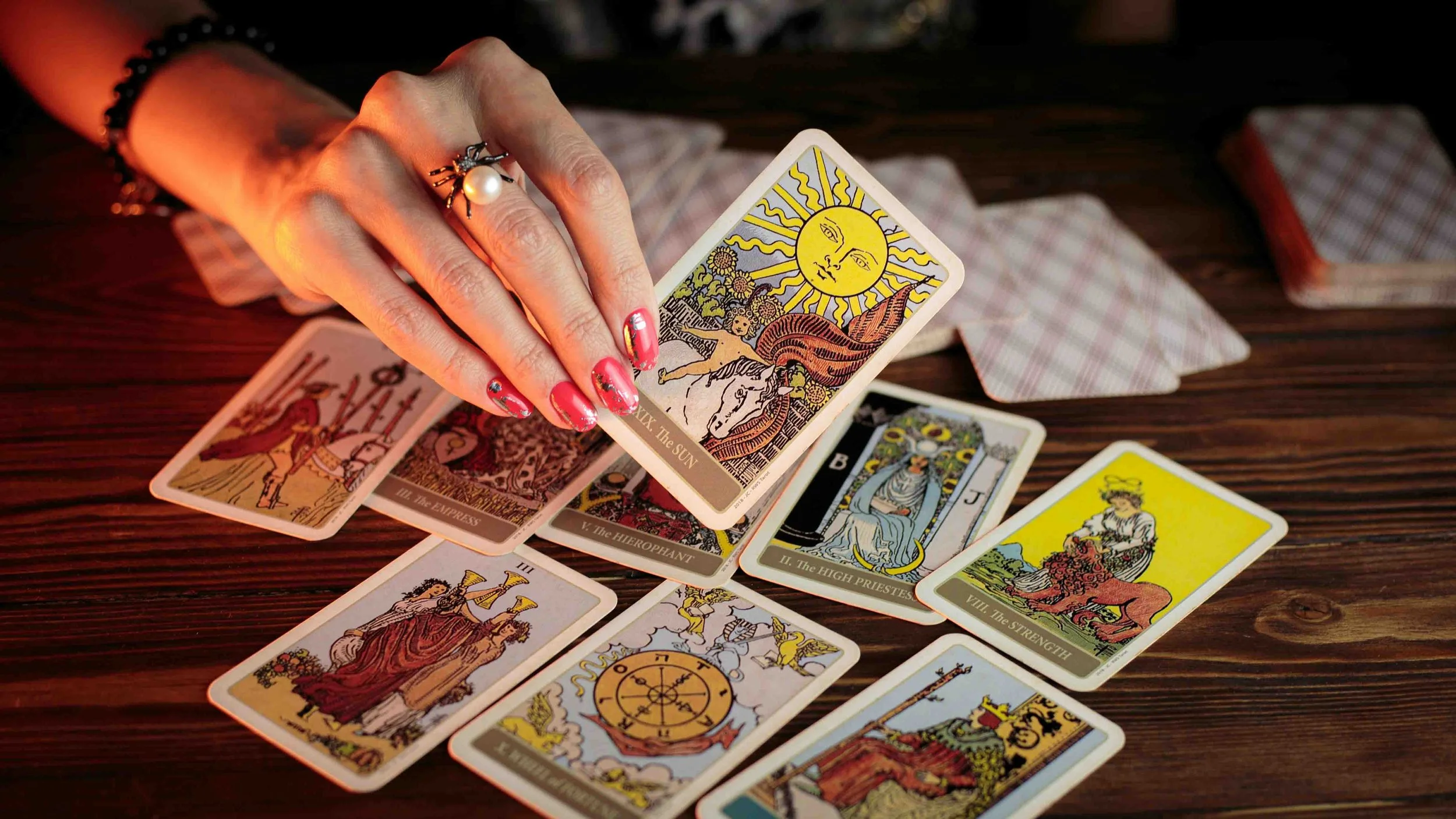
Tarot cards. I have been reading the cards for a long time. I pull a card for myself every morning just to reflect on or as guidance for the day. So that's really, really good as well. It makes sure that it keeps me connected to other realms, to the magic and out of my head. And I would say it's just very simply, like we were talking about at the beginning of the call, meditation. Straightforward. I know that for some people it sounds incredibly boring or like they can't sit still, but you can. There's many, many, many kinds of meditation, and I promise you, you can find one that works for you. And it's incredibly powerful to be able to still our minds and just be there and see what happens.
Tarot Reading for the Collective
Brandi Fleck: Beautiful. Yeah. You can totally say no to this if you want to, but would you feel like pulling a card for the collective who is listening to this?
Maritza Schafer: Oh my God. One moment, please. Let's do it.
Brandi Fleck: Okay, that's exciting.
Maritza Schafer: Okay, Brandi, do you want me to use pile one or two?
Brandi Fleck: Let's go with two.
Maritza Schafer: Okay, so I've pulled the Nine of Swords. The Nine of Swords is not a very pleasant-looking card. I will give you that. But what is good about it, so the Nine of Swords is really about worry, anxiety, being stuck in our heads a little bit. And I think we've talked a lot about facing reality and accepting life as it is. I think that right now there's a lot of noise and fear in the collective. I think this is accurate. People are worried and there's just a lot going on in the world, and it's not a particularly easy or peaceful time. And so this represents literally losing sleep over those things.
But also, it's a nine, which means that it's towards the end of this cycle of stress and anxiety. And so the invitation is to really, for the time being, while we're feeling under this level of pressure and this level of stress, don't check out. Don't ignore what's going on, but make sure that you're also focusing on what you can do to keep your own self sane and rested and hydrated and all of the basic things that are going to make coping with daily life a lot easier. So yeah, take better care of yourselves so that you can be better prepared to deal with the outside world.
Brandi Fleck: Yes, beautiful. Thank you so much for that. It seems related to what we were talking about with the patriarchy collapsing as well, that nine, that wrapping up.
Maritza Schafer: I think so. I hate pulling cards that I know are difficult, especially for the collective, but also I'm not surprised that that was a card. I think it's accurate. You know, I wish it wasn't. And I think it's going to change very soon. But it's where we're at right now, going through this process that can feel very tense. And we totally have it in us to make it through. So hang in there.
Brandi Fleck: Yes, yes. Okay. And on that note, Maritza, will you please tell us where we can find your work, all the things you're doing in the world?
Maritza Schafer: Yeah, certainly. So I think the best way to find me is on my website. It's brujaschool.com. That's B-R-U-J-A school.com. And from there, you can learn about my tarot readings, my Liberation Magic program, follow me on my socials, subscribe to the Liberation Letters, which is a weekly dose of magic straight to your inbox, and learn about everything else that I'm doing. So that would be the best way. Thanks for asking.
Brandi Fleck: Awesome. So guys, that will be in the show notes so you can find that and go check it out. And thank you, Maritza, for being here today and sharing a little piece of your magic with us.
Maritza Schafer: Thank you so much. It was so fun to be here. I appreciate it.
Join the conversation!
Feel free to share your own experience and let me know if you have any questions in the comments.
Related Posts












Hi, I’m the founder of Human Amplified. I’m Brandi Fleck, a recognized communications and interviewing expert, a writer, an artist, and a private practice, certified trauma-informed life coach and Reiki healer. No matter how you interact with me, I help you tell and change your story so you can feel more like yourself. So welcome!
Find More on the Blog
Topic
- ADHD
- AI
- Atlanta
- Black and BIPOC
- DIY
- FAQ
- LGBTQIA plus
- Los Angeles
- Nashville
- Seattle
- St Louis
- St. Louis
- UFOS/UAPs/ETs
- abuse
- accountability
- addiction and recovery
- adoption
- affirmations
- afterlife
- altered state
- angels
- animals
- anxiety management
- art
- astrology
- atlanta
- attachment
- awakening
- beauty
- behind the scenes
- being human
- body image
- body work
- boundaries
- brandi fleck
- breathwork
- bullying
- burn out
- burnout
- cancer
- career
- caretaking
- chakras
- channeled
- clarity-dive
- clarity-practice
- clarity-primer
- clean products
- coach
- codependency
Recent Blog Posts
Visit the Full Podcast Audio Archive

Affiliate


What if remembering you’re a starseed isn’t about escaping your humanity, but embracing it more deeply? As you explore where your soul may have come from, there are a few important truths that can keep you grounded, embodied, connected, and fully present for the human life you’re here to experience.