
When Assimilation Isn’t the Goal: Finding Your Own Identity
Interview By Brandi Fleck
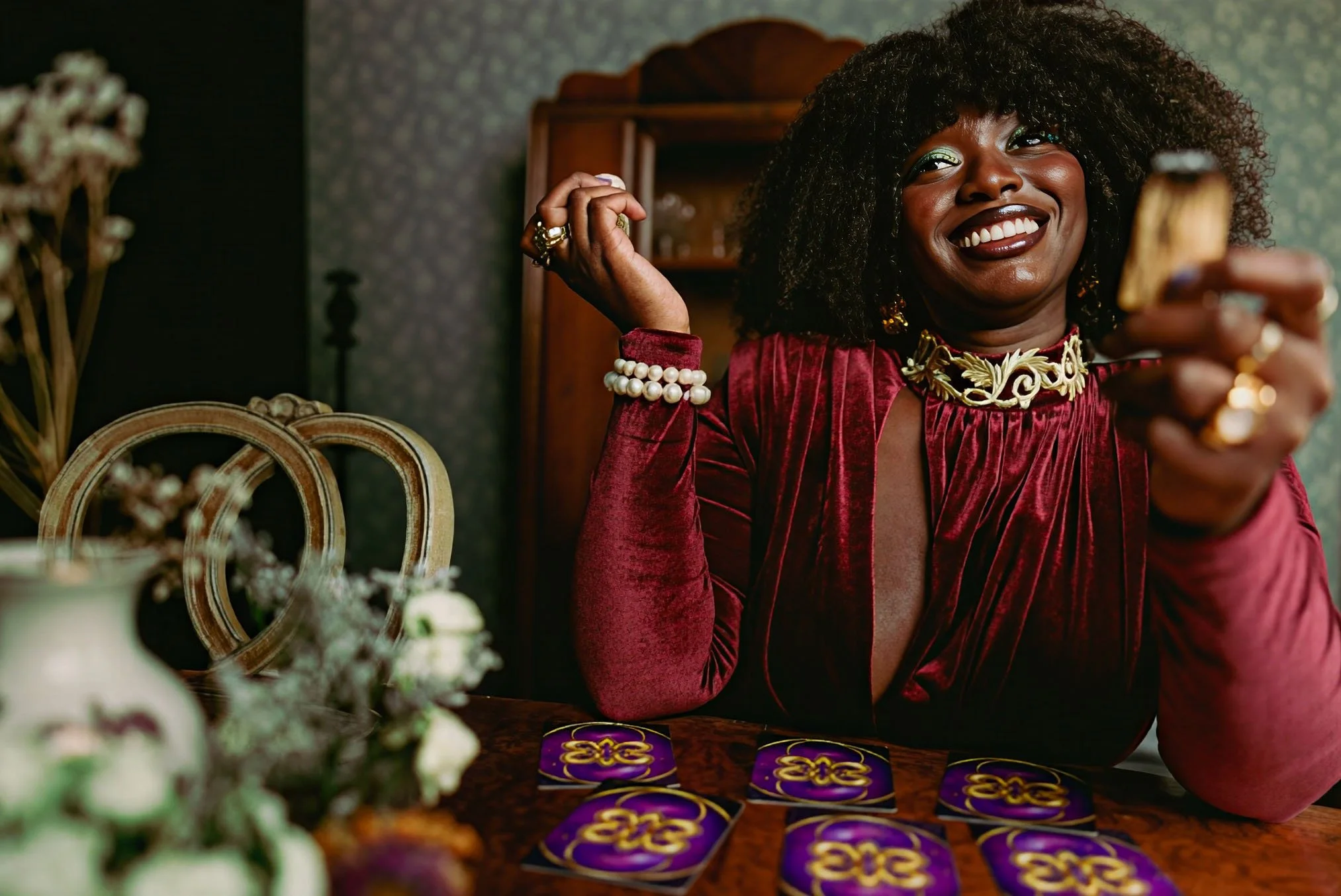
Delanyo Mensah shares how growing up between cultures, questioning inherited beliefs, and learning to stop contorting herself shaped her journey toward belonging, self-trust, and a life built around her own values.
What if the thing that helped you fit in is also what’s keeping you from feeling fully yourself?
Delanyo Mensah grew up moving between worlds. As a Ghanaian immigrant child in a predominantly white college town, she learned to adapt to different cultures, expectations, and spaces. That ability became one of her strengths, but it also left her wondering what it would mean to stop contorting herself to belong.
In this conversation, Delanyo explores the difference between belonging and assimilation, why success can feel frightening when it requires being fully seen, and how radical imagination, creativity, and everyday rituals help her return to herself. She also reflects on her conservative Christian upbringing, religious deconstruction, and the process of learning to trust her own body and intuition.
From the belief that she can be “paid to exist” to her realization that “failure for me is assimilation,” Delanyo’s story offers a grounded, expansive look at what it means to build a life around your own values without giving up the communities that matter to you.
Listen to Delanyo Mensah’s Interview
Watch Delanyo Mensah’s Interview
What It Means to Be Your Authentic Self
Brandi Fleck: What does being human mean to you?
Delanyo Mensah: I would say that being human to me means being alive and experiencing each of the senses that comes with being alive. So being human is being able to smell and touch and feel and be in community with other people. Being human is being the version of yourself that you were born into this world as, being outside of the layers of conditioning and things that we have to do to function in society. Just being your most authentic self is what being human means to me.
Brandi Fleck: Beautiful. Thank you.
Everybody, today, please welcome to the show Delanyo Mensah. She is joining us from Nashville, Tennessee, and I am really excited for you to hear her story. We're going to talk a lot today about identity and how it changes and how that transformation impacts the work that you end up doing in the world. And so on that note, Delanyo, can you tell us a little bit about who you are?
Delanyo Mensah: Yes. My name is Delanyo Mensah. I describe myself as a changemaker. I'm very interested in helping guide people on the journey of returning to themselves. I am a multidisciplinary artist, creative being, space maker.
I do writing and physical art. I'm really into collage. I also create spaces of becoming for people. That is through workshop facilitations, my work in my day job as the senior manager for social justice and advocacy at YWCA Nashville and Middle Tennessee, or as part of several community organizations in Nashville.
Brandi Fleck: Beautiful, beautiful. That is all really important work. And I'm glad that we are in the same community. And we're going to dive into so much of how you got to where you are and where you're at at the moment.
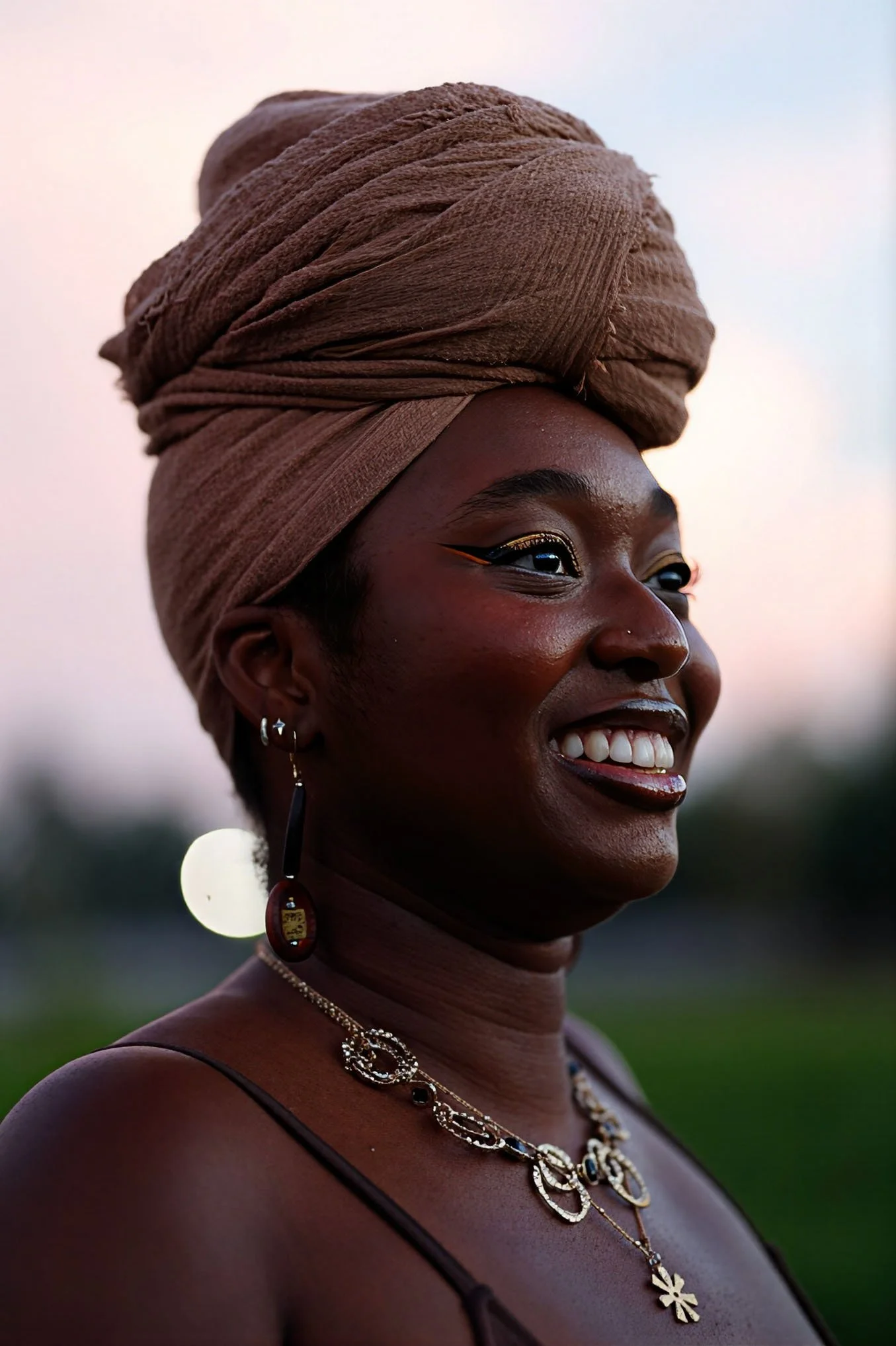
Just tell us, what do you do for fun? What lights you up?
Delanyo Mensah: For fun, I really enjoy cooking and creating art. Actually, I enjoy making art. Cooking is a subsection of that. I like to make collages, like behind me is one of my pieces. I really enjoy just creating for fun and for work as well. I feel that my life values are creativity, community, and connection. So everything that I do comes back to creativity in some way.
Finding Purpose and Getting Paid to Be Yourself
Brandi Fleck: Nice, nice. Yeah. And speaking of having fun and just what you do in your personal time and your professional life, I heard you say once at a community event that you want to just get paid for being you. Do you feel like you're able to do that?
Delanyo Mensah: Absolutely. I absolutely believe that. I'm very intentional about my words. So before I even graduated college or was getting my first job, I wrote over and over again, "I am paid to exist. I am paid to live out my life values. I am paid to exist." And I am. My job is me being paid to exist because I'm doing things that are in line with my life values.
I actually recently, last week, was on an artist residency, and I was paid to exist. I didn't have to produce anything there. There were no stipulations. I was in nature for a week existing, and I was paid to do so.
Brandi Fleck: Yeah, that's amazing. Yeah.
Okay, so I know that there's—well, actually, I don't know if there's a lot to that. I was about to say, I feel like this is a big question. But how did you get to that point of where you were just paid to exist?
Delanyo Mensah: I would say it was a lot of steps, but one, believing that how you exist is inherently valuable. Understanding the different skills that you bring into the world and that those things are valuable. So for me, my life values are creativity, community, and connection. My creativity is something that I can be paid for. Me existing by doing my life values, I can be compensated for that. Community, creating spaces where others can become themselves.
That is something that I could be paid for. Connection, connecting others to themselves or to each other. I'm really interested in something called the social change ecosystem map, and we all have different roles. Helping people figure out which role they are is a skill that I can also be paid for. Just scanning my environment for opportunities that align with who I am as a person makes it easier for you to be paid to exist.
Brandi Fleck: Fantastic. I know. I feel like many people listening can resonate with wanting that for themselves. And so this is a great example that I hope they pull from.
And on that note, we were talking a little bit before we came on today about where you're at and where you came from. And so just starting wherever you would like to start, can you tell us a little bit about either of those and how they relate?
Growing Up Between Cultures and Finding Your Identity
Delanyo Mensah: Yeah, we can start at the very, very beginning of the story, because I believe that everything is connected. I grew up in a college town in rural Appalachia, Athens. It was a really interesting experience growing up as an immigrant child in a pretty homogenous environment. I grew up around a lot of grad students. My parents moved to Ohio from Ghana so my dad could attend grad school and then later my mom could go to school as well. But I was always surrounded by their friends, professors, professional people.
Other students that they were in community with. I had a really interesting multicultural upbringing within this rather homogenous space. So I remember I learned how to use chopsticks from my dad's Japanese colleague, or at the church that we went to, there were people of lots of different backgrounds who had come to the town for school. But then going to K through 12, I only had white teachers and most of my classmates were also white. But I think that upbringing of being in many different types of spaces made me a really adaptable person. It made me see the value of multiculturalism. It made me really curious. My parents were in grad school, so they were always reading and things that sparked an intellectual curiosity within me. I also would say growing up in this pretty homogenous environment, at least in the academic sense, made me really interested in moving away and seeing something else. So yeah. Again, I'm very intentional about writing things. I, in sixth grade, wrote a letter to my future self and was like, "I know that you've gotten into a really good school and you have a nice life. And remember when you used to read and not care what people think?"
You got it, girl. So that was in the back of my mind that I need to get out of here and expand myself. So I was in high school really intentional about looking for opportunities to branch out. I ended up getting a full ride to Vanderbilt, and that's what brought me to Nashville. And then even in college, I was kind of the stereotypical immigrant child experience of, "Oh, my parents would like me to be a doctor, lawyer, engineer. I should probably do that to fulfill them." But my freshman year, I was like, "Honestly, who am I? Who am I outside of what my parents want me to be?" I really had to ask that hard question. And then coming out to my parents and that disappointing them, I was like, "Okay, we're at rock bottom here. What do I genuinely want to do?"
And that sparked where we are now. So I ended up majoring in human and organizational development, which is really understanding how people function in community groups and larger groups and helping those groups run better. So that is such an interdisciplinary degree that allowed me to do things like health and public policy or education, continuous improvement, things that I'm actively using in my day-to-day life. And even also in college, I returned to my creative self. I was in different writing clubs. I was a Curb Scholar for arts, enterprise, and public policy. I did a lot of things that, looking back, were so in line with my younger self, and that has allowed me to continue to snowball and just become more and more myself with each passing day.
There's so much more to the story, but I think that's a good start.
Brandi Fleck: Okay. Okay. Yeah. Well, so a lot of stuff sort of popped out at me as you were talking. I love that you mentioned the letter that you wrote yourself when you were in sixth grade. Do you rely on that wisdom often? Do you come back to it?
Delanyo Mensah: That particular letter? No. So I think my sixth grade teacher mailed it to us somewhere in college. And I forgot about it. When I wrote it at 12, it left my mind. I think it was more of a, "Wow, you have always known that you would succeed." Rather than that specific letter being a guiding post, I think, yeah, I've always had this really deep, innate knowledge that I'm going to succeed. There's never been a version of myself that didn't believe that. Even if I didn't act on it, I always believed it. I think I've always been, if anything, afraid of success rather than failure.
Self-Belief, Faith, and the Power of Community
Delanyo Mensah: Because what even is failure to me? Everything is a learning experience. So, yeah.
Brandi Fleck: Yeah. What do you think is behind that unwavering belief that you will succeed?
Delanyo Mensah: Many things. One, I would say my parents had a lot of faith in my childhood. I grew up pretty conservative Christian. Throughout my life, no matter what was going on, my parents just believed that it would work out some way or another. There was just so much proof and evidence of that throughout their lives, before I was even born and through my childhood, that I can't not believe. For example, I was born with a birth defect and had to have several surgeries as a baby and toddler. And my parents were immigrants working as TAs. So they didn't have the however much money a multiple-surgery doctor bill would be. And I remember my parents talking about how they would have the medical bills and pray over them. My parents would fast and just believe, "This is going to be taken care of somehow. This is going to be taken care of somehow." And they got a call one day that some of the bills were wiped, or they got in contact with different community groups that would help cover medical bills. Even your brain has something called the reticular activating system that is constantly scanning your environment for proof of your beliefs. I think having the belief in your mind and actively saying, "Okay, there's someone or something that can help me solve this problem," is why I believe.
Brandi Fleck: That is such a great point. So I'm hearing you say that your support system through early childhood and on helped instill this faith in you. And also because you're looking for that success, you're finding it because our brains are wired to do that.
Delanyo Mensah: Absolutely. Yeah, I would say I believe because I see it in others. I think a lot of my belief comes in the form of community. Whatever problem or thing that I need a solution for, it comes to me through another person. So in that story that I just told, the people were community groups, or somebody at our church told us about something to apply to. Or I was in something called Help Me Grow, and the person who was in that knew other people who could help this and that. Whatever you desire can come from someone that you're in proximity with. It's not necessarily a man in the sky pulling strings. It's you and the energy that you're putting out being mirrored back to you and others.
Brandi Fleck: I'm really glad you brought that up. And that's really powerful. What would you say to someone who is just so hyper-independent and they feel like they don't have people to turn to in a situation like that?
Delanyo Mensah: I would say plant and water and nurture the seeds that you want to grow. So if you want community, you need to be a community member. You cannot just take community. Things move in balance. You have to give and receive. For everybody's cup to be full, everybody to be well-resourced, you need to give and receive. What somebody can give is different than what somebody else can give. But as long as we are all giving as we are taking, I think is really important. I think oftentimes people get into an extraction type of mindset. "What can I take from this person? How is this person useful to me?" Not, "How can we be in a symbiotic relationship with each other?"
Brandi Fleck: Gotcha. Yeah. Okay. So put out what you want to receive. You have to be part of the community to receive community.
Yeah, okay. Well, I would love to go back to your identity in terms of, I know you've mentioned being Black, queer, immigrant, and those things are all very important to you. But you grew up in a very homogenous environment, so were there any obstacles that you had to face because of that that tested that faith or tested you in some other way?
Turning Adversity into Strength and Finding Belonging
Delanyo Mensah: Yes, I would say that, well, it's a multilayered thing happening. Yes, it was homogenous in an academic or larger scale, but there were also pockets of diversity. So there was the African community of other university students. There was the larger international community. We would go to another city, Columbus, where there were more Ghanaian people to buy certain things. So I think being in those homogenous environments, but also seeing glimpses of other things, created a space for me internally where I felt like I was in many gray areas. I'm technically an immigrant myself because my parents brought me here when I was one, but I have no concept of what Ghana was like. I've only been there a couple times since being born. So I felt like I wasn't Ghanaian enough compared to the people who came later on in their lives. I felt like I didn't have the same Black American experience as people because of my Ghanaian-ness. I wasn't white, so I couldn't relate on all levels to my predominantly white peers. I felt fragmented in an identity sense. I actually wrote my college essay about that, saying that I feel like I exist between a lot of different worlds. And because of that, I'm not fully part of any of them. And I think that feeling has...

It's part of a larger iceberg of something that I've noticed in myself of hovering. I feel like I'm a hummingbird that is able to pollinate a lot of different things because I am in this level of motion. So what was an obstacle, I have transmuted into a strength of being able to relate to so many different groups. And that's so helpful in all of the things that I'm doing now. I can relate to old people or young people. I can relate to Black people, white people, Asian people. I can move in different organizations, connecting different things together. I would say that, yeah, that almost being on the outside of things also helped me to be really observant. Even in elementary school, I didn't really play as a kid. I would sit on this red bench and observe the dynamics of the playground. I would talk to the teachers. I would talk to other kids. Something else, going through multiple surgeries as a child and having to deal with chronic pain from a young age made me, one, physically slow down. So when you are slower, you can observe things. And then two, having this early experience with pain, which is something that people experience as older people, made me be able to relate to others in a very specific way as well. It really expanded my capacity for empathy. So yeah, those are a couple obstacles that I had with my very specific upbringing that I feel I've transmuted into useful things in the present.
Brandi Fleck: Absolutely. Yeah. The power of observation, being able to relate to many different types of people, I can see how that would be really important and really powerful if you know how to use those kinds of gifts.
I always think that as so many of us have gone through some kind of trauma or, if we don't want to overuse the word trauma, we'll just say trials or challenges. And I think that it's to hone our gifts. What do you think about that?
Delanyo Mensah: Absolutely. I believe that 100%. I don't think that I could do all the things that I am doing and meant to do, will do, if I didn't have this very specific lived experience. That's why I really try to take everything as a lesson and see how I can grow from each experience. Sometimes people may think of that as toxic positivity, but I think that that's the only way to keep going in life, is to understand that, yes, this is difficult. I'm not saying ignore that. But how can I take this difficult thing and use it as fuel for something else? Even thinking about how if you're planting, sometimes you need to burn down some brush to clear an area to plant something new. In nature, things regenerate. Death is a part of life. You have to go through trials to get to something else. Even if you're tilling, tilling land, you're breaking something. You're breaking the ground for something else to sprout. Understanding that life is the same thing.
Brandi Fleck: Yeah. Oh, yeah. Yeah. There's so much that I want to ask you as you've been talking.
And I had something in mind. Give me just one second. Okay, got it. When you are on the, I guess, the outside of so many groups, what does belonging actually become and what does it mean?
Delanyo Mensah: So yeah, this is something that I am actively unpacking right now. This week I had the revelation that I'm an anthropologist of belonging. I even take my notebook around and write things as I'm there.
I feel that sometimes I feel like I don't fully belong in any space. But I have been having the thought that my presence is enough. That is the belonging. The fact that I come into this space and I add value to it, the conversations that I have with people, they feel that they have changed in some way as a result of our time together. That is belonging. I don't need to be the same to belong. I think that is a function of the white supremacist capitalistic society in which we live, where everyone feels like you can't be an individual. You need to be like everybody else. That's the only way that you can truly belong in a space. That's a lie. Diversity is a really important part of belonging. Again, using nature analogies, there are lots of different types of trees. You need each type of tree in the environment for it to work. There are different types of plants. There are different types of animals. We can't all be an oak tree. We can't all be a fern. Somebody's got to be something else. So just understanding that my differences add value and I belong.
Brandi Fleck: I love that. And something I want to repeat that you said is, "I don't need to be the same to belong." And I think that's so true. And so this is bringing up for me kind of a paradox that exists in American society where we have this rugged individualism, and everybody is for, I don't know if it's for themselves, but however you define rugged individualism, I can't, I'm having a hard time putting it into words, but I think we all know what it is if we live here. And at the same time, there's this white supremacist idea that we must all be the same. So if we're all the same, how does that even fit with rugged individualism? It just doesn't make sense. It doesn't.
Delanyo Mensah: Yeah, it does not. It doesn't. I mean, it doesn't make sense. And that's why as we are trying to legislate sameness, things are not working. That's a good point. The more we strip diversity away, that's not even diversity of physical being, diversity of thought. We are not innovating. We need difference to innovate. So, yeah, it's a paradox that we need to stop.
Brandi Fleck: Gotcha.
Radical Imagination, Embodiment, and the Power of Ritual
Brandi Fleck: Okay. Well, let's pivot now a little bit into imagination and embodiment and all of those things that are very important to your work. Can you tell us a little bit about how that fits in?
Delanyo Mensah: Yes, I really believe in radical imagination. Imagination specifically of yourself and your place in the world and how you can add value.
I recently have come up with a framework that helps people return to themselves. And the first part is remembering. Remembering who you were before the world taught you to be anything else. Once you remember, you need to have the imagination to believe that those things can manifest in ways that are helpful to others, that you can create spaces for others to be their authentic selves, and that authenticity can birth new ideas that change the world around you. I have seen so many times in my life the power of my radical imagination, even the fact that I keep saying, "I am paid to exist." In a capitalist society, that is using radical imagination. We are taught that you are only paid through hard work and physical labor. I am imagining a world in which that is different. Every time I put on a facilitation or a workshop or make a collage, I am using my imagination to bring something that doesn't exist in the tangible sense into reality. That has even been, in October, I put on an event called Continuum. And I said, "This is not a party. It's a portal to liberation." And that required a high level of radical imagination. I woke up one day with the idea for this event and I said, "I must put it on."
I didn't know how that was going to happen, but I felt it in my spirit. And so I did. I set out very clear goals. I will be paid and I will pay others. We will circulate money within the Black queer community. And all of those things happened. I had to have radical imagination to think about where these sources of funding are going to come from. I had to have radical imagination of thinking who's going to be here. I had to have radical imagination of what will this look like? Yeah, I would say radical imagination is really at the core of the things that I do.
Brandi Fleck: Okay. And then you alluded to, I think, the embodiment piece of it. Is that the same thing as when it finally comes into being, the manifestation of it?
Delanyo Mensah: Yes, I would say that. Because embodiment is getting out of your head and into your body. So tangible. I didn't explicitly say it, but tangible things like making a collage, that is a form of embodiment. Talking to someone and building a physical space for the thing that is in your mind is a form of embodiment. Even when I put on these events, I try to have embodiment activities. So at Continuum, for example, there was dancing.
I want you to feel your body as you're listening to the music. There was a collage station with some reflective questions. Think about this and then make something to take away. I recently, at the residency that I did last week, concluded with a workshop that was a collage and tea blending workshop. So kind of using that same framework of returning to yourself, seeing where you fit in, make a physical collage of that. And then with the tea, I had different herbs and I labeled them and said what different characteristics they have. I asked the participants to make a tea that reflects the version of you that you want to take away. When you go home, I want you to brew this tea, smell the tea, feel the warm glass, imagine these things, and drink it. The act of drinking it is putting all of these thoughts into your body. You are watering yourself.
So yeah, embodiment is a big part of the radical imagination. The two of them go together.
Brandi Fleck: Yeah, that's beautiful. It just sounds like such a powerful ritual of drinking the tea and imagining. What do you think about the power of ritual?
Delanyo Mensah: Yeah, we're always doing rituals. I think people are scared of the word ritual, but everything is ritual. If you wake up and brush your teeth every day, that's a ritual. Do you drive the same way to work every day? That's a ritual. I think having, again, a radical imagination to take things that you're already doing and be more intentional about them as ways of actualizing yourself. So with the tea, people drink tea or coffee. You could, every time you're drinking your tea, speak into the cup and say, "This water, as I drink this water, I'm more confident. More money is coming to me," whatever. And believe that, and then now your brain is scanning your environment for proof and evidence of what you just spoke into your tea, your coffee, your water. Or as you are washing your hands, "I'm cleansing myself of energy that I don't want to take with me."
I really believe in ritualizing things in my life, adding a deeper level of intention to them. Even my practice of journaling, saying, "I will be paid to be my authentic self. I'll be paid to exist." That's a ritual.
Brandi Fleck: Yeah. Okay. So when we put intention behind the rituals that we're doing, they can become more powerful than maybe just a drive to work or just brushing your teeth.
Religious Deconstruction and Learning to Trust Yourself
Brandi Fleck: Yeah. Okay. Perfect. Well, I would love to also dive in a little bit into your conservative Christian part of your identity. What can you tell us about that? How has that evolved as you've sort of come into who you are now?
Delanyo Mensah: Yeah, so for some context, I grew up going to a white Pentecostal evangelical church, like the long skirts, they don't cut their hair, women don't wear makeup type of church. I grew up going to purity conferences. I had a signed pledge that I got at an event where we dressed up in nice prom dresses and had a dinner, and the dinner was with Jesus. And at the end, we signed this pledge that said that we weren't gonna have sex till marriage. And our pastor's wife signed this. I think our mom had to sign it, we signed it. We were supposed to frame it and put it up in our rooms and look at this all the time.
Also, going to that type of church as a, not even just a Black person, but having an immigrant background was a really layered experience of the God that you are speaking of doesn't look like me, doesn't sound like me, wants me to adapt and change in lots of ways that are not innate to me. So that kind of created an interesting mental space growing up. It was very much rules, authority, submit.
Contort yourself. How you are is not good. Your flesh is deceitful. You should not listen to it. So something that in my deconstruction journey, I've noticed I don't trust my body. So lately, one of my affirmations is, "My body is a reliable source of information, and I listen to it," rather than viewing what I listen to outside of myself, whether that is a person or a being. I am coming back to a place of, "I trust myself and I listen to myself and my intuition." Yeah. So I would say my deconstruction began while I was in it. I always had questions. Some of this didn't feel aligned with my individual being, but also the world at large. The Bible felt like it had a lot of plot holes for me.
So I was always a curious person, but I didn't feel like I had the space to question things because, yeah, the type of church that I went to was a, "The Bible is the infallible word of God. This is from God's lips to the paper to you, no edits, read it exactly as it is." And that just never, that never really made sense to me. So yeah, going away to college, I was able to ask myself more of these questions of, "What do you actually want? What do you actually believe? What do you know to be true in your life?" I know to be true that God is a kind and loving being that wants me to succeed. I know that God puts people in my life to help me actualize my desires. I know that when I really am quiet and ask God, "How are things going in my life? Am I on the right path?" the answer is yes. Not, "You need to change," not, "You are inherently bad," not all of these things that I was taught to believe.
Also, I feel the more that I question, the closer I am to God. The more that I search myself and the world around me, the more that I see God. I see God in everything now. Everything is church to me now. If I'm talking to another person about themselves and the world at large, where two or three are gathered, God is in the midst of them. That is church to me. When I go sit under a tree and feel the sun on me, taking a deep breath, knowing that my heart is pumping blood through my body, I feel God rather than I can only feel God in this one specific place. So I can only hear God from a person who is outside of me, just realizing God is way more accessible than I was taught to believe. And that if God is within me, then I really do have the power and capability to actualize whatever I desire.
As long as it's in the highest good of others. Also, I would say since stepping away from religion in the way that I grew up, I've become much more empathetic and caring towards people. I feel like I grew up in a church where it was, "Love the sinner, hate the sin." And that sounds good, but it doesn't really manifest in the way that it's said. I feel like now I don't. I'm far less judgmental of people. I'm much more compassionate. I love the person. I'm not adding another part of that sentence. Just love people. The greatest commandment is to love people. And you can't fully love a person if you're here judging them.
Self-Acceptance, Authenticity, and the Journey to Wholeness
Brandi Fleck: Yeah. Okay. As you were talking, I can sort of see how embodiment has become so important to you, since all of these, well, specifically this conservative Christian type of system or institution has instilled shrinking and not trusting your body. So it makes sense. But so through this conversation, we've kind of talked about these different parts that were fragmented, I think. And because you said you felt fragmented. And then we've talked about how, as you've evolved, what has come from that and what you're doing in the world and the gifts that it was able to provide assistance with. But is there another way it all has come together for you so that you feel whole?
Delanyo Mensah: I would say I'm still very much in the process of this. I haven't arrived. I don't think you ever arrive. I think this is a lifelong journey. But I would say recently I've been able to even give language to the fragmentation and these experiences in a way that I wasn't before.
I came up with the term "edging," edging myself. I feel like all of these lived experiences and this fragmentation has created, on multiple different fronts of my life, this pattern of edging where I'm at least aware of things, but I don't quite land. I used the hummingbird analogy earlier. That's a positive use of it. I'm a hummingbird, so I can pollinate things, but I'm also a hummingbird, so I don't land in things and allow people to fully see me and help me. I give more than I receive. That is something that I'm actively working on and unpacking. Even with the embodiment aspects, I still have in the back of my mind moments where I distrust my body. I ignore things that are happening because I was taught my body is not reliable. My flesh is deceitful. That is something I'm actively working through. I've noticed it even in relationships, platonic and romantic.
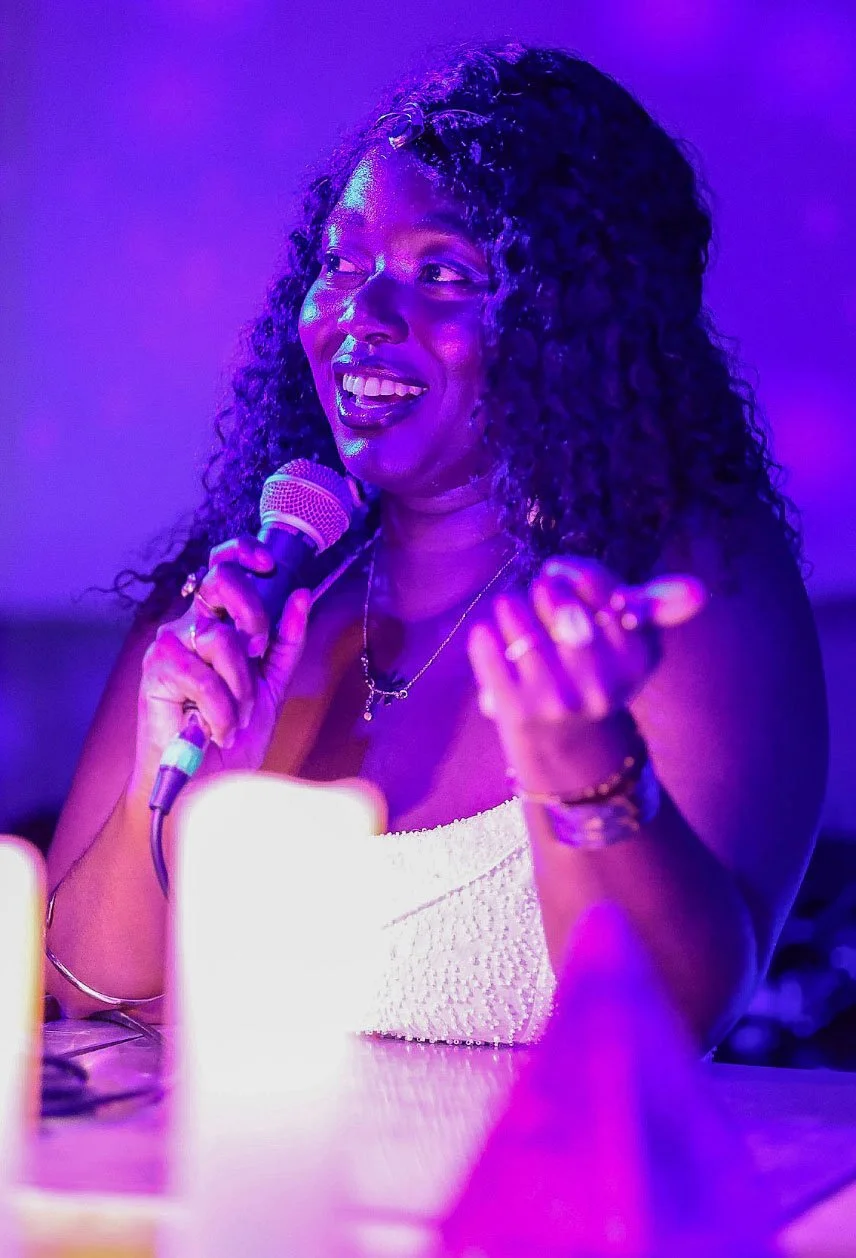
I don't fully allow people to see different parts of myself. I'm very aware of how I'm being perceived. I want to be useful or I want to present the best version of myself because I had to do that as the only Black kid in my classes. I had to be the best. I'm just seeing lots of different ways that the fragmentation is manifesting in my life. I think at the very beginning of this conversation, I said, "I am not really afraid of failure. I'm afraid of success." I'm afraid of success because I know that what success is for me requires me being my full self, standing on it, having this high level of internal authority that the systems and people that caused me to fragment wouldn't fully like. I contort myself to fit in all of these spaces. If I am fully myself, I'm not contorting anymore, which is good. But if you've been conditioned to believe that contortion equals love equals safety equals whatever, it feels scarier to be successful in the true sense of the word than fail. And failure for me is assimilation.
Okay, failure is assimilation. That's the first time I've ever said it in those words, but yeah, failure for me is assimilation.
Brandi Fleck: Wow. And you know, none of us are immune from failure. So I guess that as you're going through this process of acknowledging the fragments and kind of seeing where they are and how they fit, you might fall back into assimilation every now and then, and then that's a new learning experience that just kind of pushes you closer to success and to being in that authority. Would you say that's true?
Delanyo Mensah: I would. I would say that's true. And also with each time, understanding that my capacity has increased. So sure, maybe I assimilated in a way today, but the way that I assimilated today is far different than me five years ago.
In this piece behind you, the little white lines are an essay that I wrote a couple years ago. And in it, I said, "For the first 18 years of my life, I was being a person that I felt pre-programmed to believe I should be. I traded my brightly colored Ankara African print dresses for monochrome athletic wear to go to school so I could be like all the other people. Or I played cello because that's what smart kids do." I was really fully living my life for other people. I don't do that anymore. Assimilation now might be something like changing a ring in my outfit. This is actually something that happened a couple months ago with my parents. I was wearing a cowrie shell ring and they didn't like that because they felt like it's a symbol of witchcraft in our culture. So I just took it off and put it down because I didn't want to have a full conversation. That is not me fully changing my entire identity for them. That is a small form of assimilation, and then next time, another time we have an interaction like that, maybe I don't take off the ring. Maybe I just keep it and it is what it is. I feel like each iteration, my capacity has expanded. I'm getting closer to the version of me that is that full internal authority. Because there's no arrival. It is a constant journey.
Brandi Fleck: Yeah. I always say if you don't have the self, you don't really have anything.
I think this is such a beautiful journey. And I'm really appreciative that you have shared this experience with us. I don't feel like a lot of people talk enough about the journey of self-realization or actualization and that it is a process where you might be falling, feel like you're falling back, but you've actually taken steps forward and it's at a different level. I just love the way that it has all been exemplified here. So thank you for that.
And yeah, is there anything that we have not covered today or that I haven't asked you that you feel is important to share?
Delanyo Mensah: I mean, there's always more that could be said, but I feel that this was the perfect amount. Yeah, I think this was the perfect amount.
Brandi Fleck: Wonderful. Well, Delanyo, where can people find you and your work and all the things you're doing in the world?
Delanyo Mensah: Yes, I would say right now the easiest place to find me is Instagram. My handle is @DelanyoTheChangemaker. I also have a Substack, which is Delanyo the Changemaker as well, where I share a lot of my reflections on all the things that we've discussed today: embodiment, self-actualization, the spaces that I'm creating, and the conversations that I'm having.
Brandi Fleck: Yeah, beautiful. Well, everyone, all of that will be in the show notes, or if you're watching the video, check out the information in the description. And Delanyo, thank you so much for coming on the show today.
Delanyo Mensah: Yes, thank you for having me. This was wonderful.
Join the conversation!
Feel free to share your own experience and let me know if you have any questions in the comments.
Related Posts
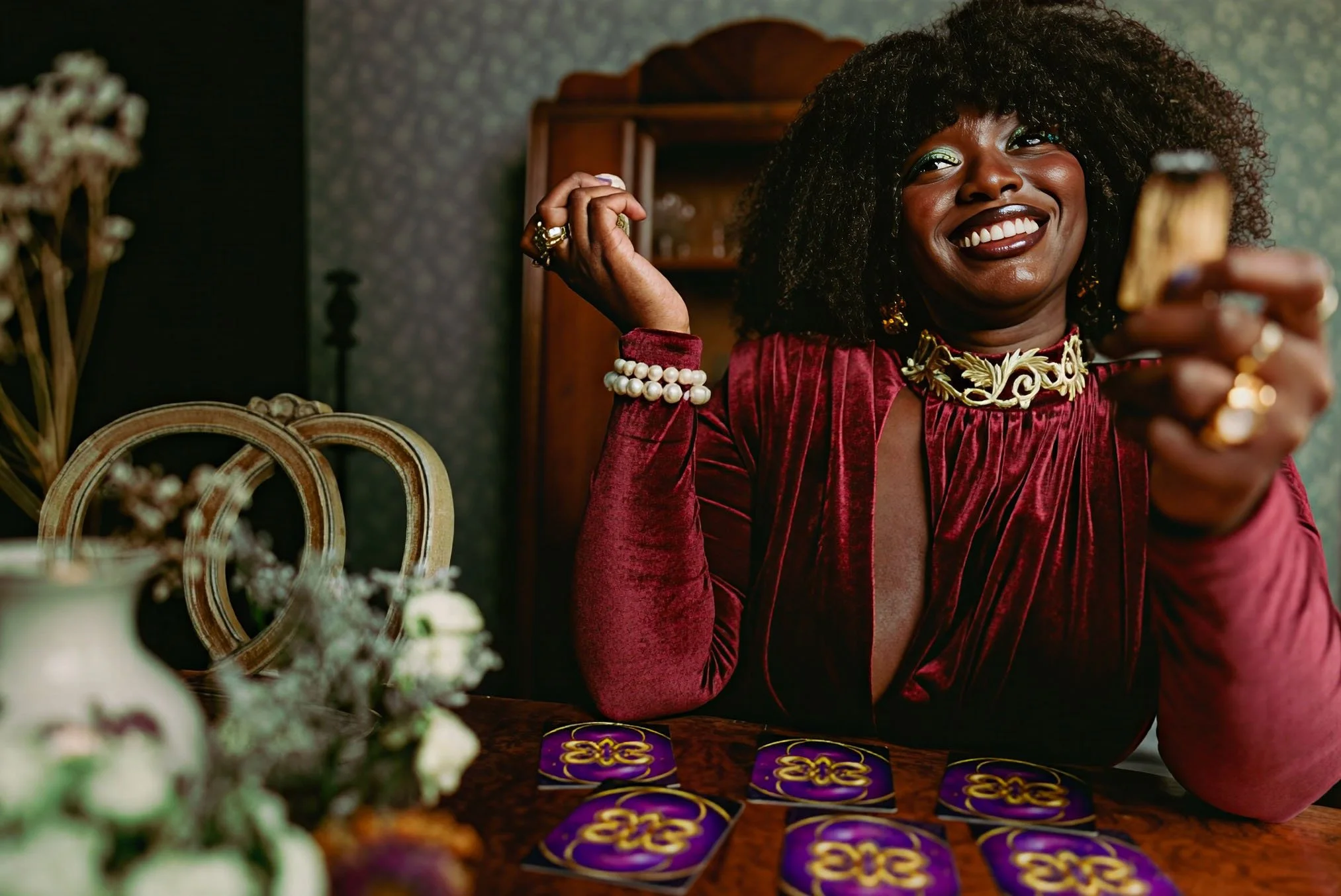



Hi, I’m the founder of Human Amplified. I’m Brandi Fleck, a recognized communications and interviewing expert, a writer, an artist, and a private practice, certified trauma-informed life coach and Reiki Master. No matter how you interact with me, I help you tell and change your story so you can feel more like yourself. So welcome!
Find More on the Blog
Topic
- ADHD
- AI
- Atlanta
- Black and BIPOC
- DIY
- FAQ
- LGBTQIA plus
- Los Angeles
- Nashville
- Seattle
- St Louis
- St. Louis
- UFOS/UAPs/ETs
- abuse
- accountability
- addiction and recovery
- adoption
- affirmations
- afterlife
- altered state
- angels
- animals
- anxiety management
- art
- astrology
- atlanta
- attachment
- awakening
- beauty
- behind the scenes
- being human
- body image
- body work
- boundaries
- brandi fleck
- breathwork
- bullying
- burn out
- burnout
- cancer
- career
- caretaking
- chakras
- channeled
- clarity-dive
- clarity-practice
- clarity-primer
- clean products
- coach
- codependency
Recent Blog Posts
Visit the Full Podcast Audio Archive

Affiliate

Psychology specialist Corey Hatfield explains character strengths, anxiety, mindfulness, and why two people can experience the same situation in completely different ways.