
How Nature Helps Us Heal Our Disconnection From Ourselves
Interview By Brandi Fleck
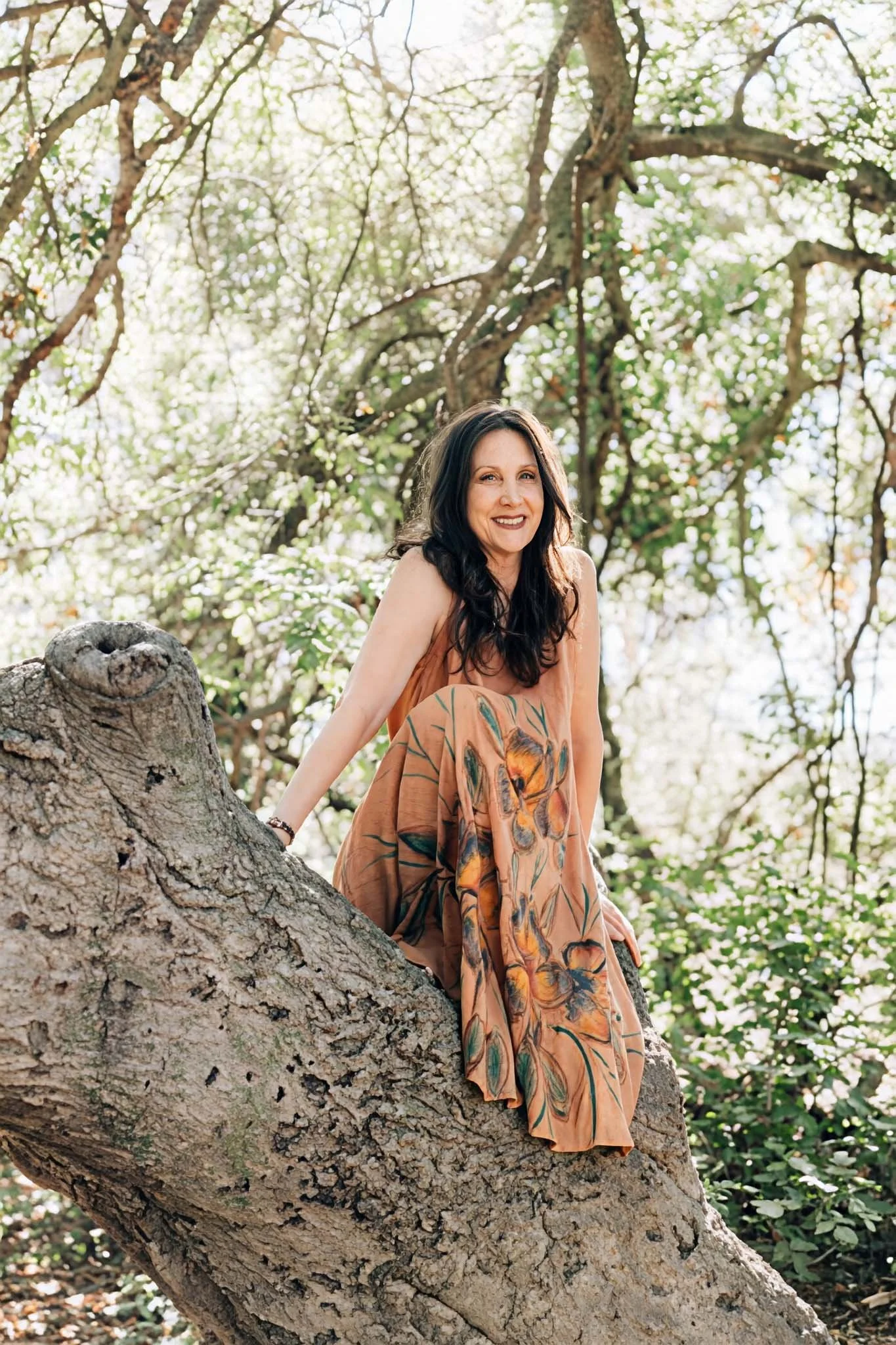
Therapist and author Julie Brams explores how reconnecting with nature can help heal the perceived separation between mind, body, Earth, and one another.
What if many of the struggles we face as individuals and as a society stem from a single misunderstanding?
According to therapist, meditation teacher, and author Julie Brams, modern humans have become disconnected from something fundamental: our relationship with the natural world. In this conversation, Julie shares how the growing fields of ecopsychology and forest therapy are helping people reconnect with nature, regulate the nervous system, and rediscover a deeper sense of belonging.
From the mind-body connection to Indigenous ways of knowing, spirituality, reciprocity, and human evolution, this discussion invites us to consider a powerful possibility: that healing ourselves and healing our relationship with Earth may be inseparable.
Listen to Julie Brams’ Interview
Watch Julie Brams’ Interview
Letting The Rest of Nature Inform Who We Are
Brandi Fleck: What does being human mean to you?
Julie Brams: Such a rich question. I think what being human means to me is an expansion of maybe what our culture tells us. To me, being human means recognizing ourselves as not just part of the natural world, but embedded within the natural world. And I guess part of what my work is about is understanding more of what it means to be human than just what human beings tell each other about that, but really letting the rest of nature inform us. What does it mean to be human?
Brandi Fleck: Beautiful. I love that. Letting the rest of nature inform us, which no one else has ever said over the course of all the years I've been asking people this, so thank you.
Okay. Everything's looking good, so I'll go ahead and welcome you to the show. So I'm pronouncing your name Julie Brams. You're in L.A. Your book is The Nature-Embedded Mind. Do you want me to mention that it won the Nautilus Gold Award today?
Julie Brams: Yeah, I think that's kind of cool.
Brandi Fleck: Okay. All right, here we go.
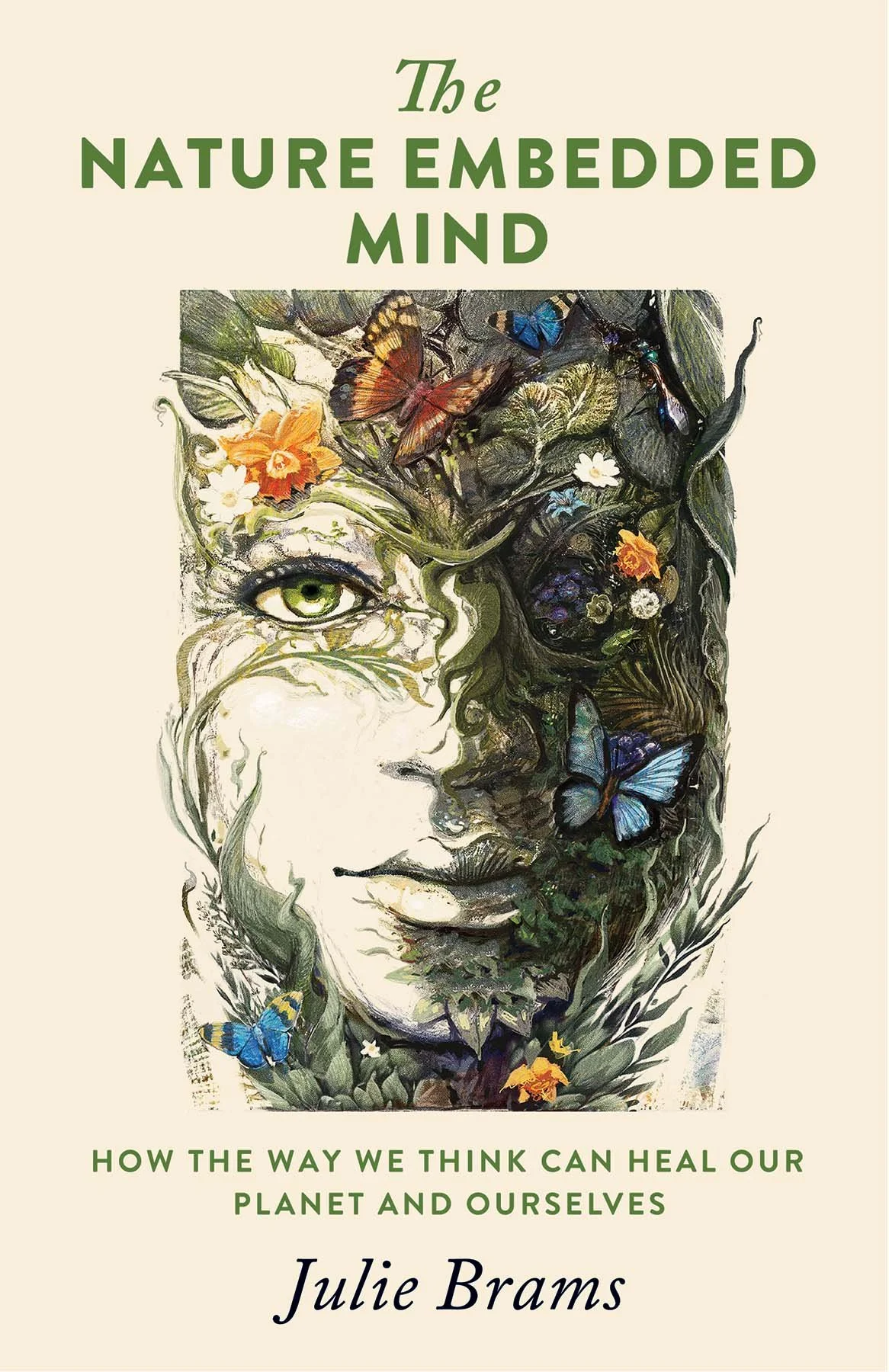
Everyone, today we are welcoming to the show Julie Brams. She is joining us from L.A., and she is the author of The Nature-Embedded Mind. It's a book about how the way we think can heal our planet and ourselves. And amazingly enough, it literally just won the Nautilus Gold Award today. So congratulations, Julie, and welcome to the show.
Julie Brams: Thank you. Yeah, it feels like such a great part of the celebration to meet with you and speak more about it.
Brandi Fleck: Yeah, I think that's really amazing. And I know you do other things. You're also a therapist. Can you tell us a little more about who you are and what you do?
Julie Brams: Yeah. I am a mental health professional. I've been a clinician for 34, 35 years. So that is where I'm coming from, this professional career in wanting to understand more about human consciousness, about human potential, about what causes suffering, and most importantly, what relieves suffering.
So this is sort of what I, in the book, was bringing my skill set to, what I saw as the problem that we're facing as a species currently.
I'm also a meditation practitioner and teacher in the Vipassana tradition, so that's a part of what informs my experience of being human and maybe deepens that so that it isn't just an intellectual experience of being human, but that people have a sensory experience of what does it mean to be human.
And then I'm also certified as a nature and forest therapy guide through the Association of Nature and Forest Therapy. And that is a particular distinction that, again, I wrote about in the book mainly as a kind of calling in of my colleagues, that there's a particular role that we can take in mental health that I believe requires this other skill set of being able to not just be the therapist, but to learn how to set a container, or as we say in this method, create invitations for the rest of nature to be the therapist, and that the guide is there to open the doors, is how we say it in the association.
So those are a few of the things that I'm doing in my career at this point and wanting to kind of give back to humanity with whatever I've learned in my 63 years.
Brandi Fleck: Yeah. Oh, that's really beautiful.
Ecopsychology and the Human Disconnection From Nature
I definitely want to learn more about your story, but first let me ask you, what is the problem that we're currently facing as a species?
Julie Brams: Yeah. I think there are different positions on this, but we're in a kind of critical phase where we're maybe heading toward extinction. Some people may feel that we have a climate crisis, that we have a lot of global pressures, and that's at least the way that I see it.
I see that we have taken our current paradigm to its nth degree of extraction, and we have depleted it. And this is a point in time to return and to repair and come back to a sustainable way of being on the planet.
And so that's where I kind of looked at my skill set and thought, what can I bring to this answer? And that's where I started to look at what is it about our mind, our mental paradigm, that makes it so difficult to move the needle in a significant way.
And that's where I got very clear about the need and the way to return our mind to its natural state. To use the word, and I know it's a little controversial, but to use the word, to its indigeneity. Because all cultures at some point in time were Indigenous and rooted in the environment and had a very clean connection to the other-than-human beings.
And we broke away from that. Western civilization purposefully broke away from that, created this domination, hierarchy, extraction method. And again, we're kind of at the end of that game and have an opportunity, I think, for all of us to come back to reality, that we are this planet. We are family members. We can do better. We do better when we're in connection. We feel better. All the things.
Why Humans Feel Separate From Nature
Brandi Fleck: Yeah. So as you were talking, some things that stood out to me were when you mentioned what does make it so difficult to move the needle, and also just the concept of extraction in general. Can you expand on that just a little bit?
Julie Brams: Yeah. So the way that I see it is that our actions follow our thoughts, or our actions follow the story that we tell. We can be stuck in our mental story of what it is, what we can and can't do.
And so as long as we're in a framework that exists on the foundation that humans are separate from nature, superior to nature, and therefore can dominate, use, and extract, this is the way that Western civilization formed itself, on that premise that the rest of nature is here to serve humans and only humans.
And as long as we're still operating in that, it's sort of like the operating system running in the background. We can make mental changes inside that, but until we change the foundation, we're going to keep bumping up against these, like I call it in the book, invisible bars.
So it really requires changing the foundational premise. And then the needle can move forward because it's coming from a set point that acknowledges and then will operate from the reality that we are part of a living web of relationships.
And the biggest leap, I say, is that we are actually the planet. It's one organism. It's one body. It's one consciousness that we're a part of. We have a unique role, but not better than any of the other beings that we co-create Earth with. We're not better than the air.
But we have a particular role to play, and I feel like that role has been kind of stolen from us. We don't even really remember what it is.
And so I think there's a lot to recreate, but from the ground up, from the earth up, from our body up. When we reconnect to these deeper parts of ourselves, I think that there's a lot that can come back online, so to speak, and inform us again of what it is to be human in the best sense of collaboratively serving the rest of the planet.
Again, if we get rid of the separating, it's not like, oh, we're going to serve the planet as if it's separate, or the planet's going to serve us as if it's separate. But we're serving each other. We're in harmony. We're in community. We're in kinship.
Brandi Fleck: Yeah. That beneficial symbiosis, kind of.
Julie Brams: Yeah, which is how we lived for most of our species' existence. It's only been a few thousand years, 150 generations or so. Long enough for us to forget and think this is how it's always been. But it was not like this.
And also we have our Indigenous contemporaries that show us the original way and how it functions so much better. I'm going to say better, but at least we can say it functions differently.
Brandi Fleck: Yeah. Well, thank you so much for expanding on that. And I definitely agree with you that we are the planet, and we're part of it. We're all part of that same body.
The Nature-Embedded Mind and Earth-Centered Living
So I'm excited to dive into this a little more. How did you get to the point where you became so Earth-centered and kind of got really clear on that idea?
Julie Brams: Through trial and error. A lot of trial and error.
Probably, in some ways, I would say in hindsight, my entire life. Kind of searching for... there was something, even as a child, that I felt like, this is weird and wrong.
So trying on different ways of being. But I think as a clinician, then really listening to a lot of people's experiences and listening to my own experience and reading some of the stuff.
Again, I'm not coming up with something brand new. I'm just trying to language it in a new way that might be a little more accessible.
There is a field called ecopsychology. It's been around for decades, but it's not really recognized in a mainstream way.
So trying on some of Joanna Macy's work. Thich Nhat Hanh, if you or your listeners know, is a huge not just proponent, but poet in really bringing clarity to the living being that is Earth.
His book Love Letter to the Earth is an amazing tribute and explanation to what he has learned through his practice.
So it's like trying all of that on and re-embodying sensory awareness. This is another part of...
Julie Brams: The pathway to understanding how we are Earth, and then searching for a way that I felt was scientific enough for me as a clinician. Again, there was something that I felt I wanted to find that was repeatable and standardized and had many different qualities that I did come across, developed by a man named Amos Clifford, who is the founder of the Association of Nature and Forest Therapy.
And when I went through that training, which is a very rigorous training, that really opened me up, opened up my mind and my embodied experience of what does this mean to live this way. Because again, it can land only in the mind, but it doesn't change anything until we're practicing and living in this way.
And then, of course, where did I learn this? From the rest of nature. These are my teachers. This is who is informing me. And the more time that I spend in this living question, the more answer—I don't want to say it's a definitive answer—but the more information comes.
And this is true for everyone. This is what I really want to emphasize, that this is not a special skill. This is the way that we're born. This is our birthright. And to reclaim it is fun and pleasurable and all of these amazing things and information about what it means to be human.
Brandi Fleck: So when you say this is our birthright, do you mean just being part of Earth and learning from nature?
Julie Brams: Yes.
Brandi Fleck: Okay.
Julie Brams: Yes, because I look at it as a part of us that was...
I want to say it was something that was stolen from us around 500 BCE. There's a spike. There's this actual implanting of this notion of anthropocentrism that did not exist, which again severed us, tore us out of the Earth psychologically.
Our body cannot be torn out of the Earth. Our minds can be torn out. And this is where I feel like so many of our social ills come from, this artificial division that dysregulates our body. We're constantly living in a sense of agitation from having to be psychologically over here when our body is deeply, inextricably part of Earth.
And I think that's where we suffer from that. And when we come back into alignment, we feel the coherence, and our bodies respond by down-regulating or relaxing or whatever word we want to use.
Coming back into reality is a huge relief that we're not even aware that we're suffering through 24/7. We're just coping, trying to figure out what will fix it. And until we get to the root of it, we can't. It's going to just be Band-Aids.
Brandi Fleck: Yeah. That makes a lot of sense.
And I was going to ask you what parallels you see between our disconnection from our own bodies and disconnection from the planet. It feels like you might have just touched on that a little bit, but is there more to it?
Julie Brams: I think so. And again, I'm not a historian, but I have delved in to understand more. So anybody who wants to correct me, please do. I like to think of this as a group project, that this is for all of us to contemplate and report back.
But I think that what originally happened is we were brutally punished for being connected to the Earth. When this idea of human beings separate from the rest of nature, superior to it, and therefore able to dominate and extract whatever we want—that nature is here to serve human beings—was introduced, that was accomplished with some very brutal punishment.
Now, at this point in time, we just use humiliation and ridicule and shame if somebody feels these pulls, this connection. But in the beginning, it was bad.
And then I think we've got Descartes, who comes along and says, "I think, therefore I am," and separates the mind from the body, the mind being superior to the body, the human body being superior to the rest of nature or the Earth body.
So you're getting these spikes in pulling us, Western civilization—not everybody, but Western civilization—further and further out of reality.
Now we're kind of in this turning, where there's still the outcome of that experiment, so to speak. But then science, interestingly enough, is coming back in and going, this isn't true.
So you've got people like Carolyn Myss or Bruce Lipton and a lot of others saying the mind is the body. That's the first reclamation that most of us get, that the body is an expression of the mind. The mind is an expression of the body. There are molecules of emotion, right?
So there isn't a separate thing happening. Your molecules move with the emotion and the thought simultaneously. There's no separation.
So we reclaimed that one. And now what I'm wanting to really push forward is reclaiming that our body is Earth.
So the mind comes back to the body. The body comes back to Earth.
We can see the mind is the body, the body's the Earth, the Earth is the body, the Earth is the mind, the mind is the Earth.
And really, I keep getting the image of—I don't know what this process is called—but when tissue heals, it kind of comes back together. It's not sewn. It actually rejoins.
Brandi Fleck: Yeah. So it fuses?
Julie Brams: Maybe. So that we can operate again as this actual system that we are, that is an outgrowth of Earth.
We are one of the species of many that Earth created to do a particular thing with the others that we've been ignoring because we've been on this trajectory of dominate and extract.
And that's not really what we're here for, in my opinion. That's not what we're here for. That's some weird sidebar game that has to end.
Brandi Fleck: Yeah. Especially at this turning point that we might be at so that we can avoid extinction or just destroying the Earth so that we can no longer live on it or have the abundance that's actually here.
Julie Brams: Yeah.
Brandi Fleck: So this all makes a lot of sense to me. And I'm curious, too. You've mentioned a couple of times that we're not completing our role here on Earth. So I'm very curious to know what you see as our role as humans, what it really is.
And also, I'm really curious if there's a spiritual component to the mind-body-Earth connection.
Julie Brams: Yeah, yeah.
And again, I want to really re-emphasize that this is everyone's birthright. Everyone has an answer. So I will give my answer, but it's not the answer.
And I really believe the answer is discoverable. What is our role here? It's discoverable. We have to enact it to find it.
I've been living this way now for about eight years, so I do have my ideas about it, and I am happy to share them. But I don't want it ever to come across as, "This is it," because I think everyone's wisdom is crucial to understanding it and reclaiming it and enacting it.
But I think about... let's see. How do I want to enter into this logically?
The piece that's really important in discovering what is our role is remembering a dynamic of relationality and reciprocity.
So if we can wander the world with an attitude of, what does the rest of nature want from me or need from me? And again, that can be species-specific, this question.
We will be shown. And I don't want to make it too esoteric, but a simple example—and these are the ones we know.
Your plant is drooping. You observe that. What does it need?
You're going to get a sense. Water, maybe. Touch the soil. Oh, it's dry. You need to water it.
That's a communication.
We're touching the soil. We're understanding it needs water. We can see then the leaves perk up. Ah, yes, I got the right thing.
Or if you're someone like me, who traditionally has a brown thumb, oh, it also needs light.
I grew up in a city, in an apartment. I did not have any of those skills handed down to me. Although my mom was great at it, I didn't pay attention.
I just thought plants need water. I never understood, oh no, they need sunlight.
So I would keep giving water. It's like, why is this plant not doing well?
And then suddenly somebody hipped me to, it needs light.
I'm like, oh, okay.
Now I'm at a point where I also understand the nutrients in the soil.
But you're learning it through interaction. You're learning it through, what do our pets need?
Dogs and cats—dogs especially—are pretty good at telling us what they want.
But this is true for every other species. It's just a matter of how willing we are to listen, to be in relationship, to, in my mind, allow ourselves to connect to some receptors that we forgot we had.
A message is coming out from another-than-human being. If we pass by it, the receptor in us doesn't ever get used.
But if we hang out with it over and over and over again, we start to notice, oh, I have some kind of sensation that leads me to this impulse.
And to really, again, reanimate the world. But that's an actual thing coming from that being. We're not in this alone.
I feel like many of us are feeling this and understanding it in some way or another. And I believe it's because the Earth is calling us home.
She wants us back. It's like, okay, you guys had your little fun, but it's not working. Come back home.
She doesn't want us to die. She wants us to come home.
Brandi Fleck: Yeah. Speaking of, do you pay any attention to the Schumann resonance and the spikes that have been happening lately?
Julie Brams: Yeah.
Brandi Fleck: What do you think about that? When you say she's calling us home, I feel like that's part of it.
Julie Brams: I do too. And again, I think it's discoverable. I think keeping curiosity around it.
But yes, it's fascinating to me. And the way that when you do let go of disbelief, what information you can get even before it arrives.
You can feel it and then check what happened.
Oh yeah, there was a spike.
You're feeling it in your body.
I have felt earthquakes before they happen, or I have felt like I will know, oh my gosh, my body is really agitated.
And it feels like there was once when I was like, it feels like I'm feeling water and fire and something.
And then a volcano erupted in Hawaii.
These things, again, we're taught to say that's not possible. Don't believe that.
But if we suspend the disbelief, which is, I'm going to say, an artificial implantation in our mind, we have a lot of ability to sense this place and behave in accordance with what's going on.
Julie Brams: I just wanted to circle back to what you asked about spirituality. I think this, again, is very personal because it's an element of being human, and everyone has their own relationship with it, including maybe no relationship, kind of an atheistic way.
And so it doesn't have to be, but there is definitely a sense of something bigger than me, and that I think is a good start for us to become right-sized. That we're not the biggest thing here. We're not the most important thing here.
Maybe it is a seed of spirituality. I don't know. I kind of like to leave that to the person to wander out into the rest of nature and find out.
Spirituality, Consciousness, and the Mind-Body-Earth Connection
Brandi Fleck: Okay. Yeah, I feel that's a really interesting answer, and I love it.
And it leads me to, I know that you do nature and forest immersion experiences with some of your clients. Is that part of this? What is that like? What does it do for us? How does it help this process of reconnecting?
Julie Brams: Yeah, that is the thing. So it isn't just with clients. Clients can partake in it or not, but it is the method of forest therapy that I was certified in.
It's a method that was developed by a man named Amos Clifford, who founded the Association of Nature and Forest Therapy. And it's a very rigorous and particular way of allowing the guide to learn how to step out of the way and create, we call them invitations, for people to connect with the rest of nature, whatever that means to them.
And then having an experience, whatever that is, coming back in a small group of participants that are doing the immersion and just sharing heart to heart. What did you notice? What did you experience?
So it's a way of not contaminating anyone's experience or judging anyone's experience. You could come back and, I mean, I haven't really heard this, but you could come back and say, nothing, felt nothing. That's fine.
I write about my experiences in the book, from the first walk through my certification process, and my first experience was like, what is this? What am I doing? I don't understand. What am I supposed to be doing? Why are there so many ants? I don't get this.
It was very weird. And I thought I had had it dialed in. I was like, oh, I get this.
And when I actually was given the opportunity to just bond with, in this case, it was a tree, I was like, I don't know what to do.
Which is right. If you haven't had the space to do that, of course you don't know how to do that.
But then over time, the tree starts to tell you how to be with it, and you as well. Like, what do I want to give this tree?
Oh, I would love to rub its leaves or whatever. Something comes because you're spending time, just like it would be with a human being.
If you don't know a person, you don't know what to do with them. You have to ask, like, hey, what do you like?
Forest Therapy and How to Reconnect With Nature
Brandi Fleck: Yeah, yeah. Okay.
If somebody wanted to do a forest immersion experience, even if it was just on their own, what would you recommend they do to get started?
Julie Brams: Yeah, so first of all, kind of coming with a sense of, I don't know, letting yourself at least step outside of, to the best of one's ability, trying to make something happen.
Just wander out of doors, whatever that means. Again, I'm in a city, so it's very urban. But there's nature all around, and we're in nature in our bodies all the time.
So wander out of doors and notice if an other-than-human being grabs your attention. And I like to put it this way so that we can, again, know that they're there and they know we're there. They are aware of us. Even the plants are aware of us.
So wandering out, noticing maybe there's a sound or a fragrance or a movement or something that catches your attention, and take that as an introduction. Like this being is saying, hey, I'd like to spend some time with you.
Then just do that without an agenda. If you want, kind of introduce yourself. I mean, I say in the book, if you're on the right track, you will begin to feel weird. It will feel strange.
If it doesn't feel strange, you're not coming outside of the cage. You're still in the barriers that are culturally allowed.
But it will be weird. Like, I'm saying hello. My name is Julie. I'm from L.A. Or whatever. Introduce yourself like you would maybe at a friendly cocktail party or something.
Anticipate that they're going to be kind, although not all of them are. You don't want to be kind of deluding yourself that you walk up to a rattlesnake, hi. No, don't. We know.
But wander out and do that, spend time, and then find a way to give something back. Find a way to reciprocate whatever it is you've received.
And again, you may feel like, I didn't receive anything. Give something anyway.
Whatever, a thank you.
I think what we give back is a huge range of possibilities that are discoverable. There are some that are obvious. There are some that we do naturally, especially when we're with plants. We're exhaling. We're creating atmosphere together. They're taking in what we're exhaling. We're taking in what they're exhaling. That is always happening.
We are dropping skin cells. We're dropping hair, probably. That's mineral-rich. If it's depending on the weather, we're sweating, offering that moisture, heat.
So we are always giving because this is what we do. But to put it in your mind intentionally, what else might I give? Or what do I notice this being might want that only I can do?

Because again, we are, for example, I know that there are some trees that do slowly walk. They do. They move. But most of them don't.
So, okay, I'm a being that can move. What might I be able to do for this one that is stationary? Or what might I be able to do?
Just thinking like that, starting to make oneself aware and then do it and then see what happens.
So it's always this dance of, again, trying to come into relationship, like friends, family, ultimately me.
What do I need in this form of myself?
Brandi Fleck: Yeah, wonderful. I think that's really good guidance to get started.
And is it correct to say that this would be the beginning of healing a relationship with Earth, with nature, with yourself?
Julie Brams: Yes. And I want to say, healing your mind. Because that's the part that's broken. Our bodies are always connected. It's our mind that is suffering.
And this being torn out of the Earth is a trauma. So this is the trauma therapy, let's say, coming back psychologically into reality, into coherence.
And one will feel differently in your body because of that connection, that being connected to reality.
It's very hard to walk around in a delusion and feel regulated. You can't.
And then again, right, we look for all these ways to feel better, and we can't fully feel better until we're back in reality.
How Connection to Nature Can Change Society
Brandi Fleck: Yeah. Okay.
I am curious that once we start to heal our relationship with our mind, body, Earth, nature, that relationship, how do you see social systems and injustices and those types of things being impacted?
Julie Brams: Well, again, and I know I keep deferring to this, but I think it's really discoverable, and it's important to keep it that way so that we, for one, include the rest of nature in that answer.
I think one of the problems that we have is we think we have to do it alone. So some of the answers are going, again, I think, to be surprising to us.
But if I look into the rest of nature and how it operates, it's largely, or I'm going to say totally, harmonious. Again, it's not to say that there isn't death, that there isn't even conflict at points, but it's different than the way we are functioning at this point, which is extremely distorted.
So it's harmonious.
I love to quote Gloria Steinem: imagine that we are linked, not ranked.
And if you include the other-than-human beings that you are linked with, the entire planet, the entire web of life that balances and sustains itself, sustains life. Even the death is about sustaining life.
You can start maybe to imagine how you might behave in your own life. And then culturally, I believe it would result in more sustainability, more care, more, let me say, less mindlessness. Actions, not feeling the impact, the consequences of one's actions.
So when you're embedded, again, you feel the consequence of your action in a way that, for me, I'll just speak, is heart-centered and caring.
I've been growing tomatoes for the first time in my life, and I was kind of reflecting on, I'm watching this plant grow because I'm helping it and I'm invested in it, and watching the flowers and then wondering, is it going to turn into a tomato? Am I going to get any tomatoes?
Or not me, but is it going to produce a tomato?
And then I see the little baby tomato and it's like, oh my gosh, like you feel like a grandmother or something.
And then as it's growing, I'm starting to think, when it's ripe, I might have to eat it or I might choose to eat it. And then what does that mean to me? Because now I have this long relationship with this.
And if I do choose to eat it, I'm going to eat it in a particular way that is honoring of the gift, that is honoring of the sacrifice, that again allows me to say, and this is something I learned from Thich Nhat Hanh's blessing that he does before meals, may I be worthy? May I live in a way that is worthy of this food, of this sacrifice?
So it's a very different perspective. And again, this is not unimaginable because our Indigenous contemporaries live like this. And we all did.
Brandi Fleck: Yeah. It's a beautiful way to live, acknowledging that relationship and honoring the sacrifice.
Julie Brams: Yeah. And it isn't intellectual. I guess that's what I want to keep redirecting to. It's the felt sense.
Or maybe you say, I'm not going to. I'm not going to eat it. Maybe you say, no, I won't. I'll make a different choice.
I personally tend to be more vegetarian, pescatarian, whatever, but sometimes my body wants something cow. And I have to think about, am I going to do that? What has this particular animal in our system had to go through?
And I make that choice. And so sometimes I say, no, it's not worth it. I don't want to support this. It's too cruel.
Which again, is where I see the difference in our human species at this point is cruel.
Julie Brams: It's not about, oh, you have to kill. Okay, great. But the cruelty is, I think, a phenomenon stemming from this delusion, this falsity.
So yeah, the disconnection allows cruelty to flourish. And it goes everywhere. The cruelty we inflict on each other, the cruelty we inflict on ourselves, it's all, to me, the result of this mental—I know I'm repeating myself—but this mental imaginary tale that has nothing to do with the truth.
Human Evolution, Healing, and a More Conscious Future
Brandi Fleck: Yeah. When I think about it too, as an energy healer, I'm a Reiki Master. And so if we're ingesting the pain that was inflicted through cruelty, that's in us, we're just perpetuating it.
So I really feel like everything we've talked about here today is a really conscious way of existing, a very intentional way of reclaiming who we are. I think it's really important.
And I've got one more question for you before we go to where listeners can find all of your good stuff and your book.
What do you feel is, if more and more people embrace this conscious, intentional way of living, what will that do for human evolution?
Julie Brams: Yeah. I mean, save us is one way.
I think it's very interesting because we're not going to go backward in time. We are going to have the technology that we have. It's, again, how do we use it?
But I think what I imagine is just a calmer way of being, a more just way of being, the evolution of... Again, it feels like the return. Like the glorious return to wiser.
We know what can go wrong. And valuing even more doing it well.
I guess I'll stop with that because, again, I don't want to predict. I think it's important to leave it discoverable.
Brandi Fleck: Yeah, I was going to go back to that too. And I think there will be so many new things that we find in our humanity that we can't imagine right now based on where we're at.
So beautiful.
And Julie, where can our listeners find your book, your work, all of the stuff you're doing in the world?
Julie Brams: Yeah, the book is anywhere you like to buy books.
If you want a signed copy, you can come to my website, which is the home of all the work that I do. There are online things, so wherever you are, there's a way to join this.
Again, I feel like all of us are needed. Everyone's experience, everyone's wisdom is needed.
That is experienceelemental.com, and you can find all of the things there, including the book, which I would be more than happy to sign and send out.
And again, really wanting to build community and make this not just a one-off thing or, again, a nice idea, but more, yes, let's do this together.
Let's do it with all of us and the other-than-human beings. Think how many of us there are if we're all linked together. There's way more nature than there are humans.
And if we join in, all of us, then this small little glitch in the program that is causing great upheaval...
Brandi Fleck: So nice.
Well, everyone, those links will be in the show notes, so be sure to go check those out. Order your copy of the award-winning book.
And Julie, thank you so much for coming on the show today.
Julie Brams: Thank you so much. It was a pleasure.
Join the conversation!
Feel free to share your own experience and let me know if you have any questions in the comments.
Related Posts


Hi, I’m the founder of Human Amplified. I’m Brandi Fleck, a recognized communications and interviewing expert, a writer, an artist, and a private practice, certified trauma-informed life coach and Reiki healer. No matter how you interact with me, I help you tell and change your story so you can feel more like yourself. So welcome!
Find More on the Blog
Topic
- ADHD
- AI
- Atlanta
- Black and BIPOC
- DIY
- FAQ
- LGBTQIA plus
- Los Angeles
- Nashville
- Seattle
- St Louis
- St. Louis
- UFOS/UAPs/ETs
- abuse
- accountability
- addiction and recovery
- adoption
- affirmations
- afterlife
- altered state
- angels
- animals
- anxiety management
- art
- astrology
- atlanta
- attachment
- awakening
- beauty
- behind the scenes
- being human
- body image
- body work
- boundaries
- brandi fleck
- breathwork
- bullying
- burn out
- burnout
- cancer
- career
- caretaking
- chakras
- channeled
- clarity-dive
- clarity-practice
- clarity-primer
- clean products
- coach
- codependency
Recent Blog Posts
Visit the Full Podcast Audio Archive

Affiliate

Hematite doesn’t always protect by making life feel easier. Sometimes it reflects hidden truths, redirects misaligned energy, and reveals the growth edge you’re being asked to face. Explore how to work with this complex stone intentionally for grounding, clarity, energetic deflection, mirror work, and spiritual protection.