
Living Authentically in a World That Rewards Performance
Interview By Brandi Fleck

Rebecca Hulse shares how creativity, intuition, body awareness, and unconventional self-care practices helped her move beyond perfectionism, overthinking, and the pressure to constantly perform.
Modern self-improvement culture often promises peace through discipline, consistency, optimization, and control.
But for many people, trying to follow the “right” routines only creates more anxiety, perfectionism, overthinking, and disconnection from themselves.
In this episode, Rebecca Hulse (author, creative business coach, and former professional dancer) shares how years of chasing achievement, perfection, and external validation eventually pushed her to question whether the systems she was following actually worked for her at all.
We explore the pressure to constantly perform, why creativity and intuition are often dismissed as impractical, and how learning to trust your own knowing can become an act of rebellion in a world that rewards conformity.
If you’ve ever felt exhausted trying to become the version of yourself you think you’re supposed to be, this conversation offers a more human approach to self-care, creativity, authenticity, and being fully alive.
Listen to Rebecca Hulse’s Interview
Watch Rebecca Hulse’s Interview
How to Stop Caring What Other People Think
Rebecca Hulse: I am Rebecca Hulse. I'm from Christchurch, New Zealand. You need to start by knowing what's actually important to you. We live in a universe that actually has a wealth of choices, but we're taught to only look for binary choices. Relaxation is knowing that you can be everything for yourself, and then you can receive it from others as an added bonus. Those highs and lows and the different nuances of what you can experience is, to me, the gift of being alive.
Brandi Fleck: Have you ever felt like traditional spiritual practices just aren't helping you find peace? Are you hard on yourself because it feels impossible to do all the right things like shop green, do yoga, drink enough water, and the list goes on? Or does being told what to do by supposed authority figures make you want to do the opposite of what you "should" do just that much more? And I say "should" with air quotes.
What about that list of people in your life who said you couldn't or shouldn't do something that you truly believed you were meant to do? I have a proverbial list like that, and today's guest, Rebecca Hulse, definitely does.
Rebecca is a New Zealand-based professional dancer turned author, speaker, and creative business coach. She's all about embracing your inner rebel as fuel to move forward in a way that works for you. Once she started doing this in her own life, she says she ended up being 10 years ahead of schedule in terms of achieving her dreams, and she had to answer the question, "Now what?" Well, that's possible for you too.
I just love how personal Rebecca gets on today's episode. By the end of the interview, she creates a space for you to truly let go of anything bothering you from the day and gives you actionable steps for how to move forward after that.
Essentially, from this episode, you'll be inspired and empowered to live on your own terms, strengthen your peace, listen to your body and own knowing, and make space in your day for creativity. How awesome is that?
Welcome to the show. I'm super excited to have you here. Just how are you doing today?

Rebecca Hulse: I'm doing good. I've been on a lot of different sessions this morning, so I'm definitely in a talking mood. I'm on my second coffee here in the morning in New Zealand. Yeah, I'm ready to chat.
Brandi Fleck: Great, great. Well, let's just dive in. Rebecca, can you please introduce yourself to our listeners? Tell them who you are, what you do.
Rebecca Hulse: Sure. I'm Rebecca Hulse. I describe myself as a creative rebel at heart. If I had to give my job description, that would be a business and creativity coach. I am a writer that recently came out with a new book, my latest soul expression, which is Rebellious Rituals. I'm excited that it's finally out in the world and ready to get into people's hands.
Brandi Fleck: Awesome. Well, that all sounds just amazing. First, I would love to dive into "rebel" and how you're a self-described rebel. What does being a rebel mean for you?
Rebecca Hulse: It's a good question, and it's something I had to claim, otherwise it was going to claim me. I think many people can relate to the experience of having that innate desire to say "screw you" when someone tells you what to do or recommends something. It really doesn't matter how good the advice is. You still need to do things in your own way.
That's how I realized, all right, you have a pretty strong rebellious streak. You're going to have to learn to work with that before it destroys you.
That's where I use it in things like my bio and how I describe myself and recognize when those streaks come up, that rebellious energy comes up, so that I can make sure that I'm not reacting. I'm actually actively choosing what I desire.
Finding Confidence, Purpose, and Authenticity
Brandi Fleck: Okay, this is really interesting. At some point, did it sort of start to destroy you and you had to make changes? Or how did it manifest in your life?
Rebecca Hulse: Well, I think it depends. I've definitely used it for creating my life a lot of the time. When I was a teenager, I wanted to be a professional dancer, and I got told with my partner at the time that, "Oh, you guys are never going to be able to get into the same company, let alone on the same ship where we wanted to dance. It's never going to happen. You're just going to have to accept the reality."
We said instead, "Watch us," and we used that as fuel to create what we wanted. We did. We ended up not only in the same company but on the same ship, doing and living our dream.
I've noticed time and time again that when you use not necessarily outside criticism, I guess you could say outside disbelief, more external disbelief, is what I've used. I've been able to channel that into creating what I want.
I've also seen times where I've spent too much money or I've tried to prove to someone that I am something in a certain way that they approve of, and that's always just taken far more energy than it's worth.
Especially lately, I've definitely dropped a lot of that. I know that there are a lot of people that we haven't seen in a while. I was talking to a friend yesterday, and I said, "You know, there's some people that when I see them again and they want to give me a hug, I'm just going to say no."
They're like, "Oh my God, Rebecca."
And I'm going to be like, "No, I'm sorry."
I just know that I'm not interested in being in their world or having their touch especially. I realize that this is also really what it means to live rebelliously and to use these innate instincts that we have to propel us forward and to create what we want in our own lives. It's to be able to say no to the things that we actually don't want, even if it would make someone else feel better.
Brandi Fleck: Oh my gosh, wow. How do you see that going? When you say no, what do you think these people will do?
Rebecca Hulse: I think they'll be shocked, especially because I can be quite a gracious person. I think it's going to have a reaction on their side, but I also now realize that that's on them. That's not on me.
Brandi Fleck: Do you think you'll still maintain relationships with people after you have really claimed what you want?
Rebecca Hulse: Well, we haven't maintained the relationships now. They're people that are within my friend's circle that are not active components. They're not people that I've actively stayed in touch with in particular.
But I have a really worldwide network, so I'm certain that I will see them again. I just know that they're not big markers in my life anymore, so they're going to get a no.
Brandi Fleck: Gotcha, gotcha. Okay. It takes a lot of strength and, I think, self-awareness to be able to do what you've just described. Gosh, there's so much to unpack here.
I definitely want to get into your dancing a little bit and creativity, but I'm going to hold off on that for a little bit later. First, I want to follow up to you using that fuel of them saying, "No, you can't," and saying, "Well, watch me."
That resonates with me so loudly because, well, growing up, and a lot of my listeners know that I'm an abuse survivor, there were people in my life who were always like, "Oh, you're never going to do that. You're never going to amount to this."
I did the same thing. I was always like, "Watch me. I will do what I want."
It's funny because that doesn't necessarily fuel me anymore, but I know that I'm where I'm at today because there was that fuel at one point in time.
Rebecca Hulse: I think that's an important distinction that you've picked up on there. I'm not sure where you wanted to lead the conversation, but I also just want to highlight that you can have that external fuel, but you don't need it. That truth does actually come from within you anyway.
How to Trust Yourself and Make Better Decisions
Brandi Fleck: Yes, and I love that you said that because this is the perfect transition into how would you advise someone to embrace living rebelliously on their own terms?
Rebecca Hulse: All right. Well, you need to start by knowing what's actually important to you.
It can be hard to know what we want because of a few things. The first is that we live in a universe that actually has a wealth of choices, but we're taught to only look for binary choices: this or that, one or two. God forbid that you choose three.
It's this huge paradox that can screw with our brains quite a lot. You actually do have far more choices available to you than you think you do, and then you have this training that says to just choose one or two things max.
Learning to actually be willing to look for more than one possibility and to know that there are lots and be okay with it, and not go like, "Oh my God, how am I supposed to choose when there is a lot more?" Instead, to actually go, "All right, I have lots of choices, so what is actually going to work for me here?"
Getting over the idea that you only have binary choices and that you do actually have a lot more available to you, that's one part.
Then the other part of this is most of us don't know what we want and therefore have to start exploring what we don't want. This is great for the rebel because whatever gets you mad, whatever gets you irritated or annoyed, is fuel and a great signal that there's something better.
I will often use these areas where I get really irritated and then ask myself, "What do I know that's better than this?" Then I'll go for that.
I can understand that it's really hard for us to sometimes know what we want, but if we have these two tools, the one is knowing that there's always more choices available than you've considered, and that it's okay to explore what you don't want in order to find what you do want, then you start to realize how you can actually propel yourself into your choices by using the rebellious streak and finding what you actually do want and then being willing to make a choice.
Brandi Fleck: Yeah, that's a lot of tangible advice that I definitely want our listeners to take away.
Rebecca Hulse: That's hopefully what they're going to get out of this because one of my pet hates and the things that I feel is I hate either advice that has to disempower someone before it empowers them, where you stir up people's fear so that they feel vulnerable and manipulated in order to do what you want them to do, or things that you listen to that waste your time because you couldn't do any of the things that they talked about.
Those are two of my pet hates that I have used for fuel into how I speak and how I work and what I offer.
Brandi Fleck: Awesome. I hope that we're walking your talk.
Rebecca Hulse: Yeah, for sure.
Brandi Fleck: Let's go into your book. You have a book called Rebellious Rituals that you mentioned. Just tell us a little bit about it.
Self-Care Practices That Actually Work
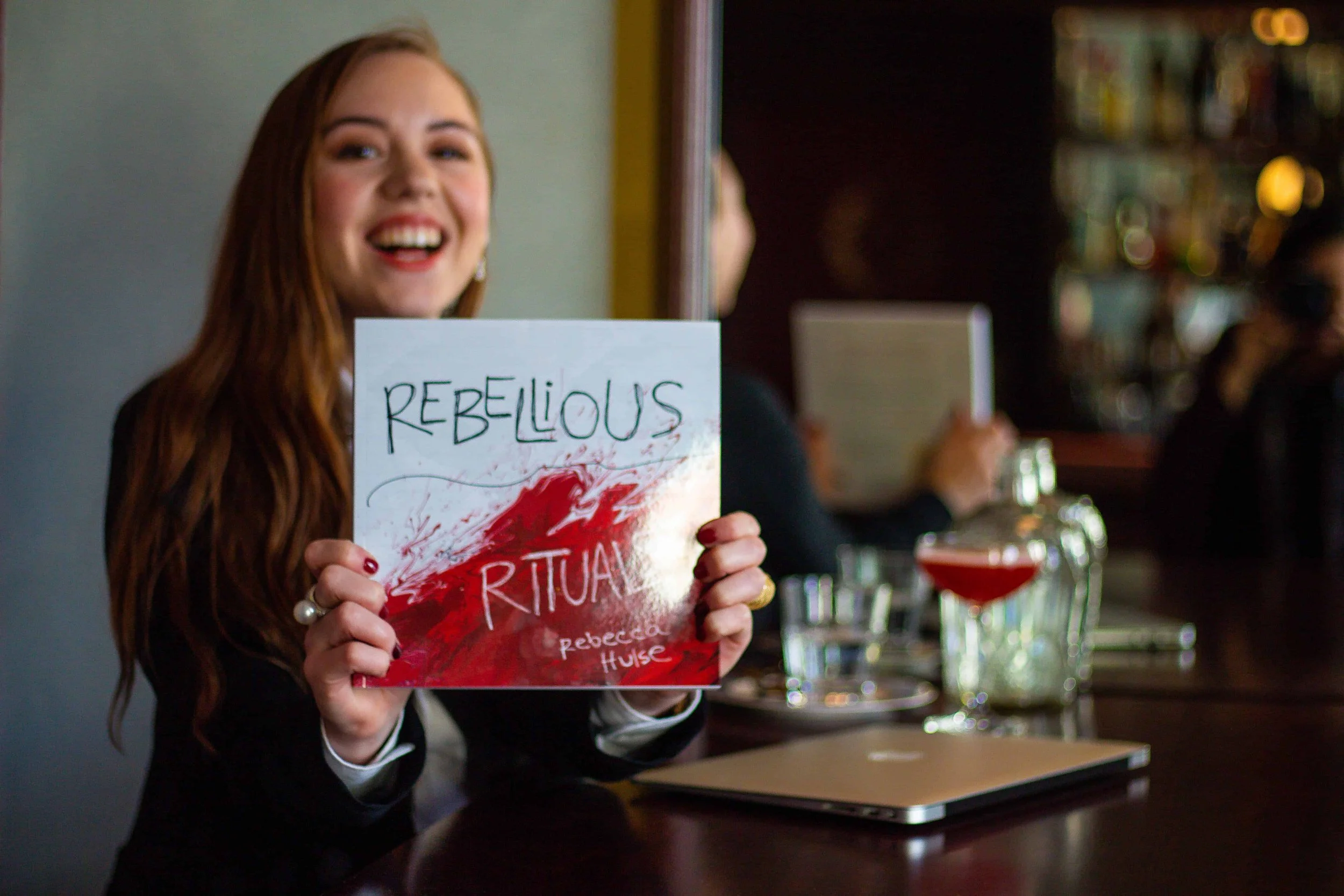
Rebecca Hulse: Yeah. Rebellious Rituals is my rendition of a bad joke turned good. I like to say that it's like a sketch pad, a self-care guide, and a rebel me walked into a bar and we sat down and wrote this.
It's designed as a guide that is fluffy but not fluffy. It's got enough magic and woo that you feel like you've experienced something transformational, but it's also practical enough that you can use it when you have something real happen in your life.
All of these rituals are channeled through experiences and things that I wanted to change in my own life that I didn't necessarily feel like I had a tool at the time to do.
One of the things that I talk about early on in the book, and that propelled me into creating this, was back when I was a dancer and I was trying to improve myself a lot of the time and be a bit of a seeker. I was looking for all of these spiritual tools to help me deal with the massive levels of anxiety and perfectionism that I was dealing with.
I was trying to learn how to meditate and to keep myself calm. I had a lot of anger and frustration and this perfect vision that I couldn't achieve and was always comparing myself to.
I would get up in the morning and meditate and create my fragile bubble of peace, and then I would come downstairs and see the smallest thing that was wrong. I would see a dishwasher that wasn't unloaded, a juicer that hadn't been cleaned, something that hadn't been put away from the night before, something annoying that my boyfriend had done, and it would shatter this peace.
I would march myself back upstairs to meditate again to try and get myself calm, and then I would go downstairs and something else would happen. I didn't really ever get any peace. The only thing I got was a decent ass from climbing our stairs up and down all the time.
I was like, there's got to be something that's a bit more natural than this. I finally realized that maybe I wasn't necessarily the issue, but the tools I had just weren't the right tools for me.
That was such a moment of relief, to know that I wasn't the thing that was screwed up. I just wasn't using the right tools for me.
That's really why I wanted to offer this book in the world and just offer something different in the space of self-care that doesn't require a day spa or lots of time because we're all so busy and doing so many things.
Do you need to spend an hour doing yoga every morning and fresh-press your juice and make sure that you went to a local green grocer? Or is it okay that you ordered stuff online from the supermarket?
A little bit more forgiving measures, that's what I think is needed. That is what this book is in homage to, having a bit of change in self-care.
Brandi Fleck: Okay. I really love how you phrased "the fragile bubble of peace." Can you just expand on that a little bit? You said you meditated and some things like that, but they just weren't working for you. How did you get a non-fragile bubble?
Rebecca Hulse: Well, I mean, speaking and asking, and I do believe that the universe is throwing things in our path all the time that we're asking for, that we're willing to receive.
For me, growing up as a bit of a personal development junkie kid, I'm that weird girl that was homeschooled by parents that were spiritual. I've been taught how to goal set and how to manifest and to meditate and a few different energy works like that.
It was in my vocabulary, but it wasn't necessarily
Rebecca Hulse: That effective, so I had to start searching for my own tools. I came across the tools of Access Consciousness, which said that they were about empowering people to know that they know.
They seemed really irreverent and real, and to my spiritual hippie, high-strung self at the time, I was like, "You can't drink Coke, and how dare you have water with chemicals in it, and you swore, and none of this makes sense."
I was very critical of all of the tools, but they were really simple, and I started using them. A lot of them are actually what propelled me and my partner into the dream dance job too.
I started using those tools of asking questions and clearing and destroying and uncreating the limitations, and actually within a month of discovering these tools, I had the dream dance job that I wanted.
I was like, "This is working."
I don't know if you can swear on your show, but I've been trying not to.
Brandi Fleck: You can as much as you want to.
Rebecca Hulse: All right, good. I will just say a warning for people now, my book does swear a lot, which is bizarre because it's actually approved to be in some of the schools in New Zealand, and I just don't know how or why they let that, but they have.
Brandi Fleck: Well, that's good. It's probably a very helpful book.
Rebecca Hulse: I'm hoping so. Yeah, we will see.
Brandi Fleck: Well, okay. You mentioned self-care, and I feel like we hear the phrase "self-care" a lot. Why do you think there is such a need for it, and how does it relate to what you do with helping entrepreneurs?
Rebecca Hulse: That's a lot to unpack. First thing is I believe that we truly do need to be self-sufficient in order to be able to contribute to others fully.
For me, this is really an homage to being what you crave. I use that language specifically because we all have these cravings, these needs for things that we actually need to be met in order to thrive as a human being.
If we're relying on external sources for those, they can easily be taken away. They're very volatile, and I don't think our personal strength and our ability to take care of ourselves should rely on something that's volatile.
I think that if you're craving the energy of support and a hug, you should be able to wrap your arms around yourself and feel your own embrace and know that you're going to be okay.
I believe that if you need to have more touch in your life, you should be able to enjoy and embrace your body enough that touching yourself actually provides that sensation that your body is looking for, and you value your body enough to be able to do that.
This is truly what self-care comes from to me. It's not necessarily, you know, there's boring self-care that is very important, like getting the kind of sleep that your body needs and brushing your teeth and going to the supermarket so you have decent food that your body likes to eat and having a shower. There is boring self-care, and that's so needed. I love that those conversations have started now.
Then there's an internal self-care that often gets missed because we'll go more into the glamorous side of things like day spas and, "I have a big bathtub," and, "I sat down," or, "I went out on a date by myself," and that kind of self-care, while it's glorious, is expensive and it's not accessible to everyone.
It's what I call white girl self-care. It's a little entitled.
Whereas this is actually starting to look a lot deeper into your, "What is it that I need in order to thrive, and what if I could be that for myself?"
Because then when someone else comes into your life and can be something that you crave, if you need it, first you're grateful for it. You don't have this needy need to grab onto it or suck onto it anymore. Maybe that's the wrong word, but you get the energy of it.
It has this desperation, and then when it goes away, you're screwed. Whereas if you can be it for yourself and then someone else is also willing to give that to you too, there is this sense of gratitude and generosity of spirit and relaxation that can be really precious in relationships.
It's not seen that much in our relationships anymore. Do you truly have friends and family and loved ones around you that you can relax with?
I think the relaxation is knowing that you can be everything for yourself, and then you can receive it from others as an added bonus.
Brandi Fleck: Gotcha.
Rebecca Hulse: Okay, so I don't want to see self-sufficiency as a way of, "I don't need everyone. I'm fine." That's not the energy we're going for here. It's, "Yes, I am absolutely fine on my own, and I can be everything for myself, and I value the wonderful humans around me for what they can contribute to me."
Brandi Fleck: Thank you for that explanation. You've mentioned being a dancer a couple of times since we've started this talk, so let's go into that for a little bit.
First of all, could you just tell us a story? You said you made it and you were doing what you wanted to do. What was it like?
Rebecca Hulse: Well, it's interesting because you have this dream or this vision of what you think a dancer's life is going to be like. You're on stage and you get applause, and when you're on a cruise ship, you're traveling to these amazing locations, and it sounds idyllic.
But for an empathetic person who's quite energetically aware, I was also a person living on a ship, which is like a tin can reverberation of people that thought that they could escape their lives and their problems and realized about three hours into the cruise that everything that they thought they'd left behind had come with them.
Brandi Fleck: Gotcha. That is quite the experience. Sounds intense.
Rebecca Hulse: It is intense. Then you have different crew dynamics as well, and you hope that your dance team is a team, and sometimes it is, but everyone does have their own lives and agendas, so there is often a lot of different play behind the scenes.
Then your own insecurities also didn't leave when you left land. They came with you too.
It's this experience of thinking that you've left so much behind, but really you've left nothing behind, and now you're in a space where you're perhaps a little bit more isolated or quiet, and those demons come to visit.
I had realized that I had achieved, like I had this bucket list that I was like, "All right, this will take me until I'm 30."
It was to meet a great person to spend my life with, to be a professional dancer, to travel the world, and to start a business helping people.
I realized one day as I'm on this cruise ship and I'm stressing out a little bit and my anxiety is still pretty high up on the list. I never really felt safer, like I had everything going for me.
But I realized as I'm looking there, I was like, "Well, hang on, Rebecca. You've just done a lot of your things. You are on a ship. You're traveling the world right now. You're getting paid to dance. You're doing a show tonight. You just started your coaching business, and you have a great support person here. You have your partner."
I was like, "Well, crap. What am I going to do for the next 10 years?"
That's when I realized that this dance world wasn't really something that I desired to do for a long period of time anymore. I was like, "Well, now what do I do?"
That's when the universe kind of stepped in and they were like, "Don't worry, we've got you," and kind of threw me into the world of personal development. I started working a lot with Access Consciousness and exploring creating businesses on an international level.
It was definitely this moment of, "I'm 10 years ahead of schedule. What the hell am I going to do for the next 10 years?"
Brandi Fleck: Okay, so do you still dance at all, or are you just doing coaching now?
Healing Body Image and Perfectionism
Rebecca Hulse: I don't dance professionally at all anymore. I continued that freelance for probably another four years, but by then the perfectionist toll and some of the unhealthy body image things started to catch up with me.
I used a lot of the Access Consciousness tools to heal that and to create a relationship with my body where I look at it in the mirror and I no longer pick it to bits and actually adore it for the shape that it is.
That was a huge, huge revelation for me. I created a ritual in the book based on that called "Body Needs Love," which I think is a really great homage to the TLC that our body actually needs from us, not necessarily from other people.

Brandi Fleck: Yeah. Can you go into a little bit more detail about what some of the body image issues were that you healed from?
Rebecca Hulse: Sure. For me, you have this spiritual, empathic, energetic side that means that we're constantly receiving and aware of everything that's going on for not only me but everyone around me.
Then you throw that into a room of teenage girls going through huge changes with their bodies, staring at a mirror every day for six to eight hours a day. There's a lot of critique. There's a lot of body image.
I'm fortunate that I never did as drastic measures as I have seen some of my friends and other dancers go through in terms of anorexia and bulimia. I never went that far, but I definitely restricted myself. I definitely thought that I was the fattest dancer in the room.
I look back at myself now and I'm like, "Holy shit, I was skinny, and I had no clue."
It's really this body dysmorphia that occurs between what you see in the mirror and what is actually going on with your body.
For me, it was about learning to see my body as it is, understand what it wanted to look like. Our bodies actually have their own consciousness and their own desire and their own ways of communicating, and most of the time we're not listening.
For me, it was actually more of a conversation of how to listen to my body and understand what it wanted. How does it like to move, to sleep, to eat, to take care of itself, to enjoy things that bodies do? Things like sex, things like movement, exercise, stretching, things like that.
It was like a reintroduction to being alive on the planet, is how I would describe it. It was something that I'm so grateful I did.
Then I went and I pushed myself by traveling around the world nonstop, and my body was like, "Okay, this is a new form of hard."
It was fabulous throughout all of it, but then when I came home in 2020, it was exhausted, and I slept for like six weeks.
How to Listen to Your Body and Build Intuition
Brandi Fleck: Okay, well, so how do you listen to your body?
Rebecca Hulse: I talk to it like the crazy person I am, most of the time in my head so other people don't know how crazy I am.
I do. When you wake up in the morning, it's like me as the being, I've probably been off doing crazy dreaming, but my body's been in bed sleeping. I'll always ask my body, "Hey buddy, how are you this morning?"
It's like, "I'm fine. I didn't know what you were doing, but I had a great night's sleep."
I was like, "All right, cool."
We get up from there, and then I'll ask her, "All right buddy, do you want to do some yoga? If so, what kind of yoga video do you want to do?"
I let it dictate everything. What kind of clothes do you want to wear today? Do you want to wash your hair today or not? Because it's long and it takes forever. What do you want to eat this morning? Tell me when you're hungry. Tell me when we need to move or have a break.
Anything that's to do with my body, I ask it.
Brandi Fleck: Then how do you get the answer?
Rebecca Hulse: Well, it's taken time. It's taken time. Now I can ask and just get a bit of a sense, whether it's a picture or a thought in my head or a bit of a craving. But when I started, I had to use this tool in Access Consciousness that's called "light or heavy."
Basically the premise of this tool is whatever is true for you will feel lighter. Whatever is a lie for you will make you feel heavier and more contracted, so you want to follow the lightness.
It sounds simple, but the more you ask for it and the more you practice it, the more you perceive it.
When I first started, the only feeling I could get was with my nose. If something felt a bit heavier and stiffer, kind of like you're wrinkling your nose, I knew that wasn't right for me.
Then when something felt lighter, it felt like I could breathe easier. I was like, "All right, cool," and I just went with it.
Then it kind of spread out to my whole face and then to my shoulders and then to my whole body, and then I could kind of perceive it more energetically outside of me.
By that time I knew what was light and what was heavy for me, but it started with a really small part of my body, and the more I trusted it, the more it grew.
Brandi Fleck: That's really cool. That's a really helpful description too because I know a lot of times we talk about these concepts, but it's hard to figure out how it would even apply, so that's very helpful.
Rebecca Hulse: Yeah, and I won't say that I didn't have moments of doubt, like, "All right, let's just go with it."
But I also realized the more that I chose my intuition's answers, the more strength I got and the more I trusted myself.
It is an exercise in active trust and active choosing, but that gift has been priceless to me. I've had to use my intuition more and more over the years and over the more difficult tasks and things that I've done.
If you're willing to try and experiment with it, it really will show you a different way to live.
Brandi Fleck: Yeah, especially good if you overthink things a lot and you're just like, "No, I'm going with the first feeling. We'll see how it goes."
The fact that this is an exercise in active trust I think sort of subtly brings up the point that sometimes we don't trust ourselves and we don't even know that we don't trust ourselves.
Rebecca Hulse: Well, we're not exactly empowered to trust ourselves. It's like, "Do your research. Figure out this information. Who taught you that? How did you figure that out? Where's your sources?"
Other people are allowed to be experts, but clearly not you, is the subtle message that we're given.
That sounds so harsh, but unfortunately it's true of what I've experienced. I'll let each person consider that in their own worlds to see if it's true for them.
For me, there's nothing more rebellious than listening to your own knowing. In a world that supports finding out everything you know from someone else, finding out something that you know from you is a rebellious act.
It's something that excites me, and I think in our fellow rebels it will incite a bit of a, "Yes, that is something I want from my life," kind of energy.
It really comes from making your own choices. That doesn't mean that you should reject research or you should not ask questions or explore your avenues. That is not what I'm saying.
I'm not saying just absolutely only follow your empath with no external resources, but I do think we put too much reliance on external resources over our own knowing time and time again, and that damages that knowing.
Brandi Fleck: Is there a connection between creativity and this self-care and the self-trust maybe?
Rebecca Hulse: Let's explore. Creativity is innately human. We've been making stuff, making inventions and painting on the walls and caves for 40,000 years more than we were trying to create agriculture.
That kind of stuff, that we make before we secure, for me is just such a great reminder. It's like, "Yeah, I'm a maker. I'm not someone that's here to make sense and ensure safety and all those very important things."
It can be easier to be safe now than it was then, so let's get back to making stuff.
For me, even though I've been a dancer and I've painted and I've loved experimenting and making things, it's taken me until being a grown-ass adult to embrace being creative, mainly because that's not considered something that's very valuable.
Also because of a fantastic conversation that I had with a friend. He said, "What would you have to be dying or stop breathing in order to stop doing?"
I was like, "Coming up with ideas and making things happen."
He was like, "Right, so that capacity as a creator is your thing."
It was such a great moment to just go, "Right, I really would have to be sick or dying in order to stop creating."
For me, creativity is as much my breath and my oxygen as air is, and I've decided to embrace that in my life fully and in my work.
It may be different for someone else, and I will say it has taken a lot of courage for me to say, "No, it's not all my business expertise or my ability to write or my rebellious streak," and to really hone in on, "This is my home, this land of ideas. This is my home."
It's taken courage to say it's okay to have something as lighthearted and almost intangible as your main contribution. Yeah, it's taken a long time to get there.
If you first ask a question like this and you get something that's a little bit more useful or you can't yet embrace something that seems so silly, I just want to say you're not alone. It's a deep part of the process.
Eventually, I think we'll let our more frivolous, silly light shine through because I think we need more of that more than ever. We need more of the exuberant joy and intangible things over things that you can easily monetize or make sense of.
Brandi Fleck: Yes. Let's dive into that a little bit deeper. What are some of the intangible benefits of creativity?
Rebecca Hulse: I think first you learn that the path is no longer straight, and if you're going to create things, you have to create trust. Trust in yourself and your ability to make something, to bring it to life. Trust in the idea and that it actually wants to be made and that it's ready, it's the right time.
Also a trust in the process that all of your side tangents and the people you talk to or how you get distracted or when you leave something and come back to it are natural and a part of it and not a deviance or something that you did wrong or that distracted you. They're actually just as welcome as all the tangible steps that you took.
We're taught steps. We're taught you learn letters and then you learn words and then you learn sentences and then you learn grammar. We're taught steps for so many things, but we as people are incredibly nonlinear.
That's why we often struggle with things like rules and why there's so many different clashes within communities and society. We're essentially very nonlinear creations ourselves.
For some bizarre reason we think that we need to follow an order in order to be successful, but most of the time it's a random jumble of choices, hopefully where you've trusted yourself and chosen things based on your intuition and what works for you more often than not, and that is actually what ends up creating our success.
Why Inconsistency Can Improve Creativity
Brandi Fleck: Well, this is perfect to start talking about inconsistency, and I know that you've said before that inconsistency is the key to creativity, but we always hear this advice that we have to be consistent to be successful and that, you know, do something daily, make it a habit, make yourself do it.
How do you reconcile that? What's the difference that you teach there?
Rebecca Hulse: Well, I'm now very grateful that I brought out the tool of light and heavy earlier because it's like when Brandi said that, did anyone feel lighter? Or does everyone feel like, "Oh my God, yes," heavy?
For me, that simple thing is light or heavy. "Be consistent. Work harder. Do something daily," fills me with dread because I know not for the life of me I cannot do that. I can probably be consistent for three days, and that's it.
Instead, I try to find ways to live my life that embrace the inconsistency.
Now, does that mean that I don't have responsibilities or things that have to be done? Absolutely not. There are all things in our life that are very pragmatic that have to be taken care of, and I'm not saying that you should reject those.
What I am saying is that you should allow some space for your inconsistency because those highs and lows and the different nuances of what you can experience is, to me, the gift of being alive.
We've never really had the same day twice, right? So why do we suddenly expect ourselves to be the same every day?
To me, that just seems like a crazy expectation that we're incapable of fulfilling, and we should embrace more of that imperfection and, just as I said in the very beginning, more depth.
Brandi Fleck: I think society has, the way that we've set things up and just gotten into the grind of things, has really made a lot of us miss what you just described as the gift of being alive.
I think that healing can start for our society as a whole. We can be happier as a human race if we are experiencing these things that are meant for us in that way.
I love it. Let's talk about, though, the pragmatic things that you mentioned that we still have to take care of. If we're leaving space for the inconsistency, how do we make progress on goals? How do we keep moving forward?
Productivity Tips for Creative and Neurodivergent Minds
Rebecca Hulse: The one thing that I really love the use of, and I particularly use this with my clients, especially if they have issues with things like dopamine or some of our happy brain drugs in particular, is create a menu so that at least once a day you're going to choose something that's going to create something for you, whether it's in the self-care or with your body and your health or to deepen your relationships or to do something that you don't necessarily like to do.
Create a menu so it's like you can use your inconsistency and that you don't have to do the same thing every day. You can also get better at making a choice because there's not just two items on the list generally. There's five to seven.
You're getting used to making choices, and then you're also prioritizing you because you're choosing something that's actually going to create for you.
We're bad at remembering the things that we love to do, and so for me it's like having these reminders of some different choices available strengthens my ability to choose, gives me a sense of prioritizing myself, and will often give me something that I know that I need to do.
I love menus for a lot of things for when you are an inconsistent person because then you never really have to start at the beginning of a step, which I find really difficult. I'm much better at starting in the middle or the end and then finishing off the other bit.
That's probably a creativity hack just kind of dropped in there, but things like menus are really good for inconsistency and for when you do have certain targets that you want to meet.
Do a bit of a layout of what's required, but then don't start at the beginning. Let yourself go out of order and then your brain won't race ahead, which I find makes it really hard for you to complete it.
It's like when you've done it in your head, you're done, and that makes it harder to do things again.
When you can start out of order, you can kind of trick your brain into going along for the ride because it no longer can make sense of it, and then you realize that you take far more actions than you normally would.
I guess that's three things: don't start in order if you've got a particular project or task that you want to accomplish, create menus of choices to practice choosing and to find different ways to take care of yourself and your body, and choose what's light.
Brandi Fleck: I really like the create-a-menu tip, and I'm going to try that.
When I am always working on creative projects, I never start at the beginning either. Fellow creatives, this will be amazing for you to try if you're not already doing something like that.
Then I wonder if you've already told us some of the rebellious rituals that help in self-care, but if you haven't, can you give us an example?
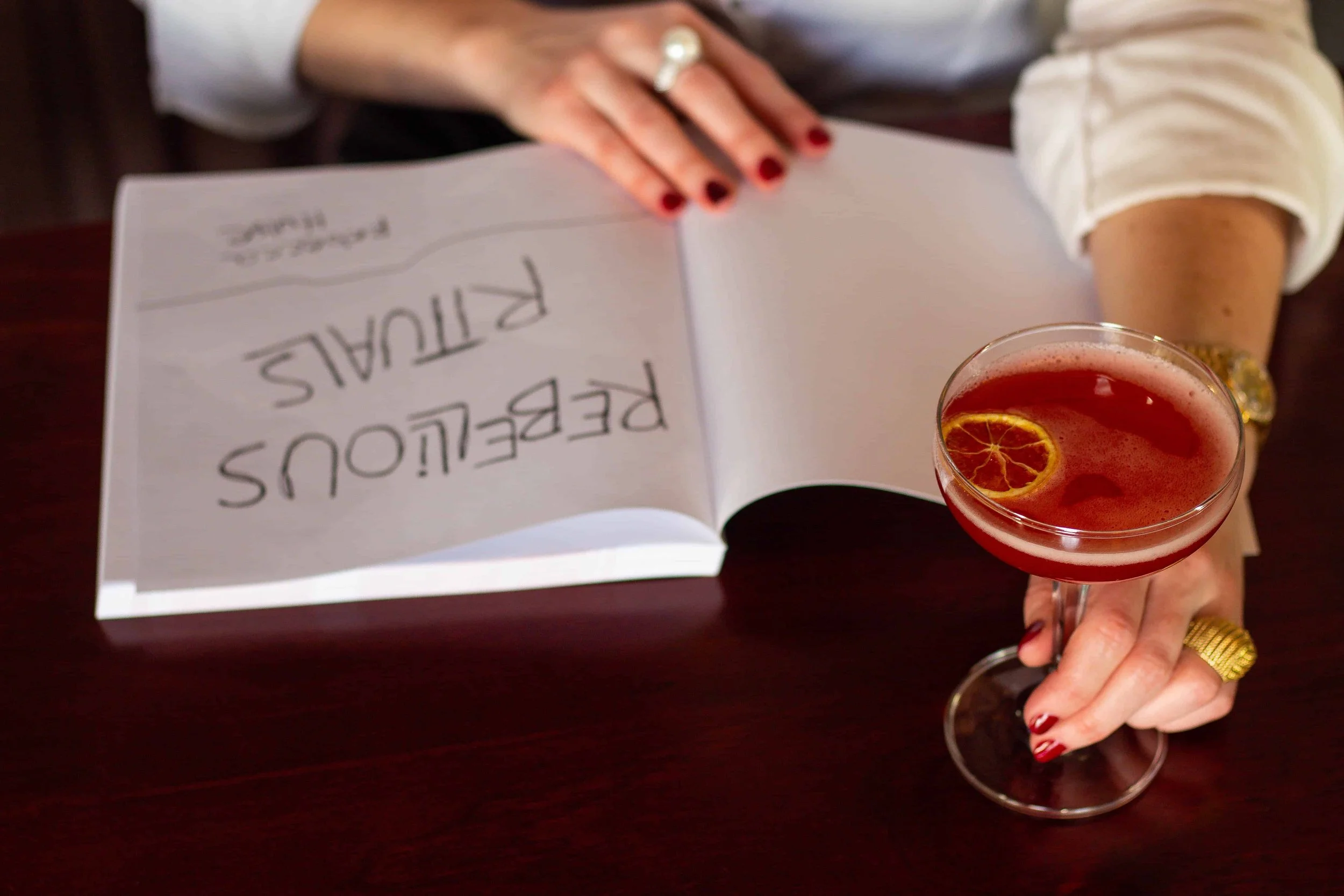
Rebecca Hulse: I'm going to read some of the titles of them and then I'm going to let you pick.
We have things like "Morning Questions," "Introvert's BFF," "Cranky," "I Feel Weird," "I Screwed Up," "Squirrel." There's one for working from home. This one seems to be a favorite: "The Universe Has Your Back." Things like "I Don't Want to Go to Work Today" or "A Ray of Sunshine" or "A Screen Break."
Here's one for "Everything Is Going to Shit," and then there's the one straight after it where "Everything Is Going Great" because I don't think that you need to fix anything in order to necessarily take care of yourself.
There's one for when you need to get motivated or when you want to be a bit more turned on.
Those are some of the things that are available in this book of rituals.
Brandi Fleck: There's something sparking. The two that struck me the loudest were "Introvert's BFF" and "Squirrel." I think those can kind of summarize my life.
Rebecca Hulse: All right, all right. So we're going to page 57 here with "BFF."
This one, I mean, we start with a really great sentence: "People can suck it." So this gives you a bit of the tone of the book. It's very much a download from my soul to yours.
What this process in particular does is it gives you permission to not like people, at least for a minute, because when you're done, you're done. It doesn't really do much good to suppress it, but instead to give yourself the space you need.
I created this as a way that I thought someone could take this into the bathroom on their phone if they're at a social event, or they could go and sit in their car, or if you have been in an event and you've managed to escape, you can come home and do this ritual.
Or let's say holiday season is coming up, so maybe you're going from party to party. You could do this ritual in between to kind of give yourself a break.
That's kind of what the aim of this is to do. The first thing, which is just something that all of us could do right now, is just to let go of all the connections to everyone that you've connected to or talked to today. Just let that go and also let our barriers down.
That may seem unsafe, but remember it's just you and me and Brandi here on this podcast. If you just let your barriers down for a second, that also lets you out. When you've got your layers of protection up, that also keeps you in.
Just take a moment to be safe and to lower our barriers and to let ourselves have a bit of breathing room.
Then it invites you to bring up the energies of things that have your back. Things like your body literally has your back. I love that as a good corny joke.
This beautiful planet that you walk on that provides the air that you breathe and the nutrients that you enjoy, the universe.
Then it gives you a moment to reflect on some of the things you personally have in your life that have your back.
That's just a bit of a taste of what happens in the ritual. The ritual then goes on for another page or two, so probably about five minutes to enjoy depending on how long you need to take. You can make it go for as short or as long as you want.
Energy Healing, Overthinking, and Mental Clarity
Brandi Fleck: Okay, but that's just a bit of a sense of what would be in the "Introvert's BFF" ritual. Can you describe for us how to let go of all the connections? How do you even begin to do that?
Rebecca Hulse: You begin by asking for it. Everything happens with a choice. Choice creates.
You choose to let go of the connections, and then what's really interesting about this particular kind of energy work is because it sometimes doesn't have a feeling, and that's perfectly valid.
For any of you that have tried any kind of energy or spiritual work and someone's gone, "Did you feel that?" and you didn't, it doesn't mean that you didn't do it or it didn't work for you. It just means that sometimes energy doesn't have a sensation.
That's where you can use light and heavy and say, "Is this working? Did I truly let go?" and you might find that yeah, you did.
For me, one of the ways that I can sense that I've let go of connections to other people is it just feels a little bit quieter.
You might even be able to tell in the recording that you're listening to that it might be a little bit softer, a little bit quieter, a little less white noise in the background kind of vibe.
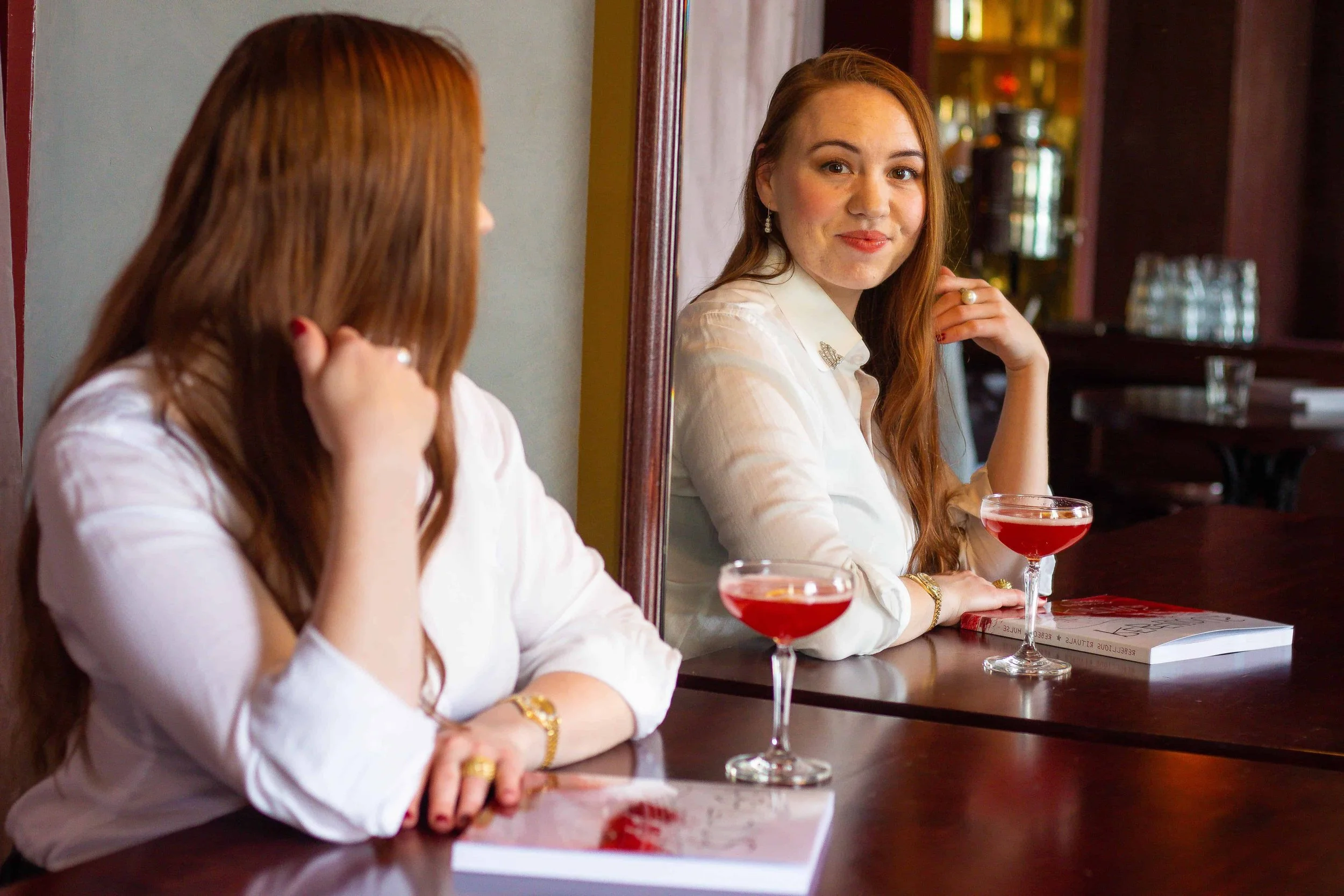
I've even noticed here, the birds outside, it's springtime here in New Zealand, they're actually a little bit quieter than they were.
You may not necessarily notice this big sense of relief, and that is, I think, a really dangerous thing that is done in a lot of metaphysics, this huge emphasis on feelings that for most of the time I kind of feel like they're made up.
Some people will hate me for that, but it's more about getting really present with what you notice and not needing to necessarily have a lot of external proof for just making a choice.
How to Stop Overthinking and Calm a Busy Mind
Brandi Fleck: Fantastic. Yes, thank you. Girl, because we all have a squirrel brain, let's face it.
Rebecca Hulse: So it starts because, like, wait, what was that? Your idea leaving the station without you?
This is a ritual where I promise no seriousness, and it's very much just a lighthearted thing of like it's okay if your ideas leave the station or your thoughts leave the station without you. It's okay that you're sometimes a bit scattered and unfocused. That doesn't have to be a bad thing, and here's how you can enjoy it.
This sounds counterintuitive, but I actually ask you to ramp up the level of chaos in this ritual because, again, that suppression, it doesn't work. It doesn't help. It just means that you're going to have to deal with it later.
Instead of trying to focus, let's embrace the chaos of our current frame of mind and ramp it up and try and relax into it.
We use something in Access that is called the Clearing Statement, and I won't go into it on this because I'm not sure that we have time for it, but it is explained in the book and on the Access Consciousness website.
We use that to destroy and uncreate energetics. It's kind of like a quick shortcut to using just a verbal statement to clear energy easily.
One other question that is really great that I do want everyone to have, especially if they're having a moment of squirrel brain, is we say, "What are you actually aware of that you haven't acknowledged that you're aware of?"
Often when there's some squirrel brain stuff going on, it's really actually a callout to go, "All right, there's a lot of things that I'm aware of right now. Let's take a minute to sift through them, to write them down, to get them out of your brain onto paper."
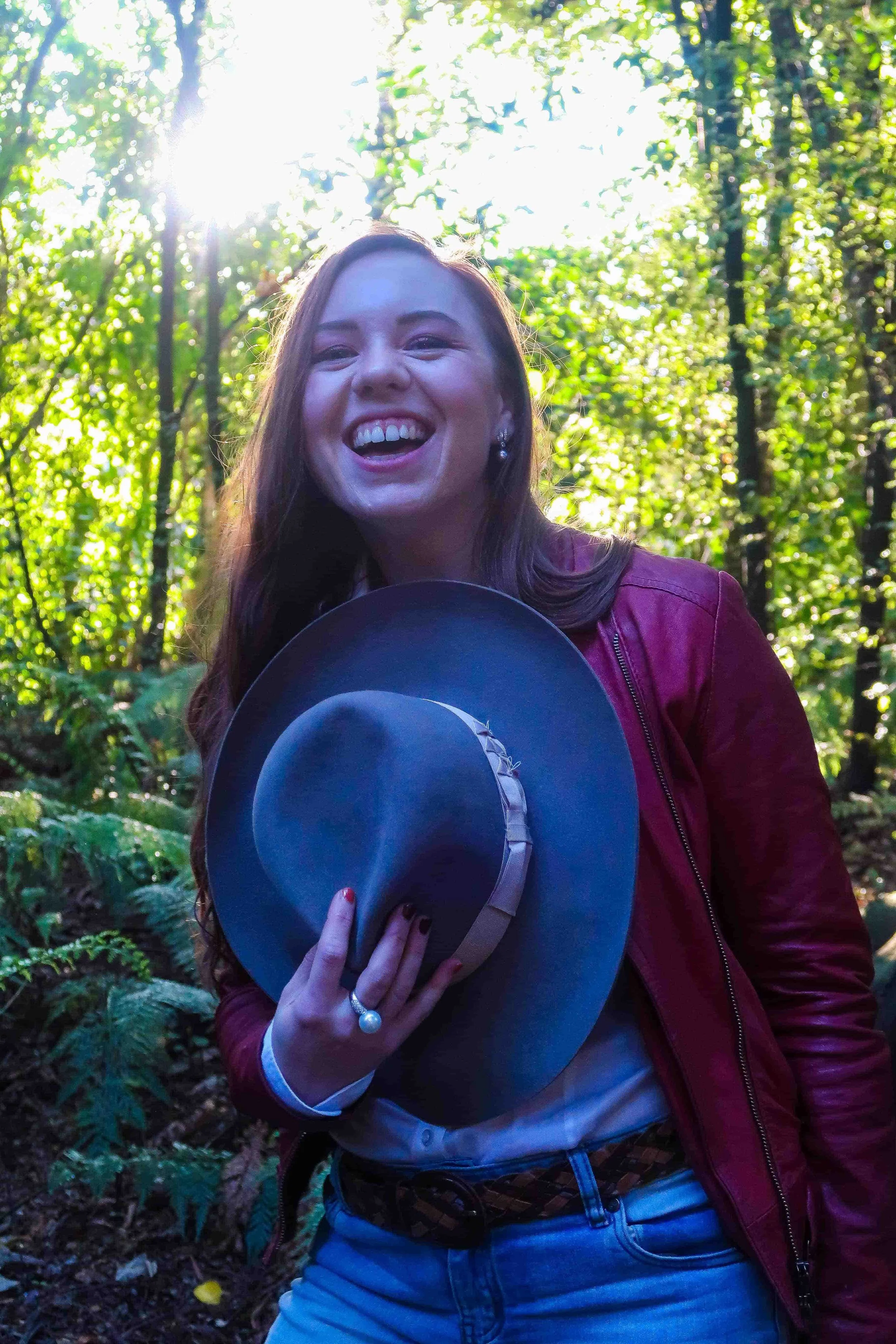
It's a really great way just to sift through your thoughts a little bit more and realize that maybe there's something that's been pinging you that you haven't been paying attention to.
It could be something simple like, "I left the sprinklers on," or it could be a little bit more of a thing like, "Hey, I really need to get started on this project now, otherwise it's not going to start itself."
It's another very long nonlinear callout for that there are a lot of things that you're aware of and you haven't given yourself the space to look at yet.
Because of that, we create this little page in the book at the end of the ritual called "My Awareness List" that you'll be able to trash, hopefully, is the idea.
Brandi Fleck: Okay, well that's awesome. So it's sort of like a little workbook even.
Rebecca Hulse: Yeah, and you can use it over and over. That's the idea.
Brandi Fleck: Well Rebecca, this has been wonderful. Where can people find you, your latest book, and even all your other work?
Rebecca Hulse: They can find me at rebeccahulse.com and on Instagram and Facebook. Those are the places where I'm hanging out.
I'd love to meet you guys. This has been such a fun interview for me, Brandi. Thank you so much.
If I can contribute more to the people that are listening, please come chat because we have to find our tribe, our tribe of weird, wild, inconsistent rebels. There has to be a space that is cathartic enough for us to say "screw you" to the things that don't work and to fully embrace what does.
Brandi Fleck: Well, thank you so much, Rebecca. It's been very enjoyable for me too, and hopefully we'll keep in touch and talk again soon.
Rebecca Hulse: Yes, I hope so. Thanks everyone. Thanks, Brandi.
Join the conversation!
Feel free to share your own experience and let me know if you have any questions in the comments.
Related Posts








Hi, I’m the founder of Human Amplified. I’m Brandi Fleck, a recognized communications and interviewing expert, a writer, an artist, and a private practice, certified trauma-informed life coach and Reiki healer. No matter how you interact with me, I help you tell and change your story so you can feel more like yourself. So welcome!
Find More on the Blog
Topic
- ADHD
- AI
- Atlanta
- Black and BIPOC
- DIY
- FAQ
- LGBTQIA plus
- Los Angeles
- Nashville
- Seattle
- St Louis
- St. Louis
- UFOS/UAPs/ETs
- abuse
- accountability
- addiction and recovery
- adoption
- affirmations
- afterlife
- altered state
- angels
- animals
- anxiety management
- art
- astrology
- atlanta
- attachment
- awakening
- beauty
- behind the scenes
- being human
- body image
- body work
- boundaries
- brandi fleck
- breathwork
- bullying
- burn out
- burnout
- cancer
- career
- caretaking
- chakras
- channeled
- clarity-dive
- clarity-practice
- clarity-primer
- clean products
- coach
- codependency
Recent Blog Posts
Visit the Full Podcast Audio Archive

Affiliate


Psychology specialist Corey Hatfield explains character strengths, anxiety, mindfulness, and why two people can experience the same situation in completely different ways.