
The Art of Reconnecting With Yourself
Interview By Brandi Fleck

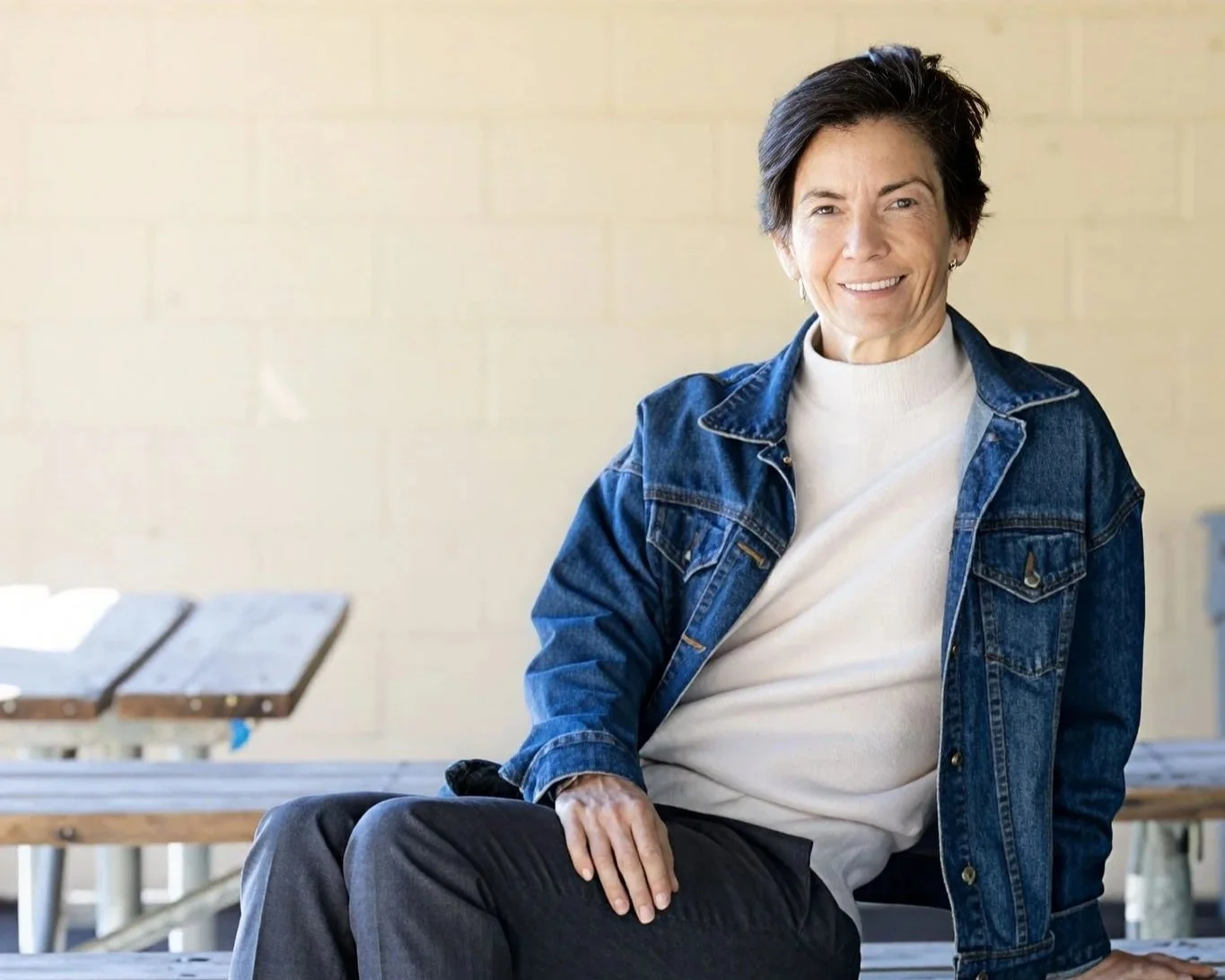
Carrie Akre explores intuition, shadow work, emotional healing, and the subtle ways people disconnect from themselves over time.
At some point, many people stop listening to themselves. Not all at once, but slowly through years of pushing through exhaustion, overriding discomfort, prioritizing everyone else’s needs, and convincing themselves their feelings are something to ignore instead of something to trust.
Carrie Akre reflects on the emotional process of reconnecting with yourself after years of self-abandonment. The musician, podcaster, and intuitive life coach shares how intuition, shadow work, and emotional honesty can help people better understand their patterns and make better decisions.
Together, we move through emotional exhaustion, trauma, boundaries, people-pleasing, and the subtle ways many people lose touch with themselves while trying to survive, succeed, or be what everyone else needs them to be.
Listen to Carrie Akre’s Interview
Watch Carrie Akre’s Interview
Healing Through Self-Compassion
Carrie Akre: Hi, my name's Carrie Akre. I think what's working for me is I'm giving my really internal self a sense of, “I'm here for me. I'm not constantly abandoning myself.” Wouldn't that just be the worst? Like, “Oh, I got everything I wanted and I feel hollow and unhappy and it's no fun.” The more you know yourself, the more you can make good decisions. Healing comes from understanding. Self-compassion should be the vitamin you take every day.
Brandi Fleck: Last week on the show, we talked to Nashville singer-songwriter John Mullins about the healing power of music in his marriage with wife Whitney Mullins and the vulnerability behind one of John's top songs.
This week we're talking to another brilliant musician, singer-songwriter, and all-around badass rocker, Carrie Akre. She's an intuitive life coach, podcaster, solo artist, and also has fronted the bands Hammerbox, Goodness, and The Rockfords with Mike McCready.
Carrie's a repeat guest at Human Amplified. We just have a ton of fun every time we get together on Zoom. You can find her backstory on the blog in an article titled High Volume. There we talk about what it was like coming up in the '90s Seattle grunge scene and the impacts of fame.
There's definitely an undercurrent of dealing with and going against societal conditioning beneath a lot of that discussion. I mean, isn't that part of why grunge is so amazing?
So today on the podcast, we're following up on that and diving really deep into unpacking societal conditioning around emotions that, when addressed, brings relief and healing. From using your emotions to navigate making good decisions to using your intuition regularly to choose yourself, Carrie explains the importance of self-compassion in alleviating insecurity, anxiety, and fear, which in turn leads to a better life.
We also explore shadow bubbling up to be dealt with in the collective and in ourselves and how that's a good thing, even if it's hard.
You'll leave this episode knowing what shadow work is and the importance of it, how to start recognizing the truth and what resonates with you, how to tell the difference between your intuition and your analytical mind or thoughts that you might confuse as your intuition, how to strengthen trust in your intuition, and most importantly, how to make decisions that are best for you even when that results in hard emotions coming from other people.
Welcome to the Human Amplified podcast. I'm excited to have you here. Like I said, we had you on the blog back this summer and we talked a lot about your past career and being a musician and also incorporated some intuition into that, but what have you been up to since the last time we spoke?
Carrie Akre: Oh my gosh. Well, like everybody else, just coming on, off, on, off, like the whole COVID thing, you know? So that continues, and I'm not the only one in that weirdness.
But I have been starting to work on music again, so returning to that. Also just doing a lot of internal work, per usual.
I feel like what I'm noticing is really feeling like the onion layers, right? As you grow, looking at it that way. Like, okay, I took a look at these things, I now understand them or have healed them, but they often reveal something even underneath that.
So for me, I have been really looking at and finally being able to recognize places where I've realized, like, “Oh, I've gotten really good at enduring,” over years, you know, as a way of functioning, right? Because we have so many sayings that say, like, “Just keep going,” or “Just do it,” or “Flex here,” or whatever.
And I've come to realize that in a lot of ways that's fine, but not if you don't have a solid relationship with yourself, right? So every time you go to flex or accommodate that or whatever, it's kind of done without a lot of thinking, without stopping and asking yourself, “Hey, is that okay with you?” or “What do you really want?”

So I'm really realizing there's a lot of practices of that, like me stopping and saying, “What do you really think? What do you really want? What works for you? If this doesn't work for you, say so.”
I know all of that sounds really simple, but it's actually, for me at least, a true muscle that I unwittingly hadn't exercised.
When you're doing music and you're young and you're in that industry, you're being a trooper a lot of the time. It's not an easy industry, so you are working hard and flexing where you need to, making the best of moments a lot, right?
If you're on tour and you're in some club, there's always something going wrong and great things happening as well, but you're constantly having to make the best of it so you don't lose your mind or get depressed.
But in doing so much of that, I forgot to do the practice of stopping and asking myself, “Was this okay with you at all?” or “Would you like to stop?” or “Would you like to make a decision just based on your own personal preferences?”
I had just lost track of doing that kind of thing. And so now, in the name of creating a future for myself that is really authentic, I'm going back and practicing, firstly, getting in my own body and just being present, and then waking up in those times where I need to say, “Hey, wait,” and exercising that muscle, being able to be the person who says, “No, hey, that doesn't work for me.”
Brandi Fleck: As you're doing this, what are you finding is your authentic direction, and what is working for you that maybe you didn't know was going to work for you?
Carrie Akre: Well, I think what's working for me is I'm giving my really internal self a sense of, “I'm here for me. I'm not constantly abandoning myself.”
So every time you accommodate without thinking about it or asking yourself if it's okay, you're kind of doing a little abandonment of yourself.
And that helps you feel insecure because your internal self is going, “I don't think she's really going to take care of us. I think she's just going to go be a trooper and not even think about us.”
Carrie Akre: You know, all your parts, all my parts, all of me, yeah.
So a couple things I'm finding is that really stopping and taking good care of that, I feel calmer, I feel clearer, which helps me make truer decisions for myself, ones that I'm actually excited about. So I'm feeling happier.
I'm also able to see my vision of what I'd like to do, reconnect with it, love it, feel all the feelings of excitement, because it's really easy to lose track of being able to do that. Being able to say out loud some things I actually wish for but get afraid to even think about.
And then with all of these practices, I'm able to get very present in order to do the minutia that had also gone by the wayside. Like, if you want to get from here to here, it's going to require some attention and some work in anything that you do, right?
And nobody likes the minutia sometimes. You know what I mean? Like, “Oh God, it's chop, chop, chop, let's just go.”
But when you do that, you skip over things, and that makes you feel insecure because you haven't done your homework, you haven't practiced, and that leaves a little void that shows up in fear, nervousness, all of that, because you skipped over it. You haven't taken care of your belly, your insides, your homework too.
When you're prepared, it's just easier to go do stuff.
So I am also learning how to slow down, give myself permission to have space and maybe take longer so that I can come to the authentic thought. Like, what really works for me? How do I want to do things?
That's another thing that I had just let go of. So for my coaching, for music, I make myself think longer about, okay, how does this work best for you? What is it you need in order to do this creatively?
For example, for coaching, I'll get a lot of ideas, which is great. I'll get a lot of ideas, and in the past I would be like, “Okay, chop chop, let's just implement these things,” because going fast feels better. It means I'm getting something done. It means I have it here. I'm not waiting.
There's a lot of fear in the waiting. Now I'm like, “Well yeah, we can go do it, but let's think about the things you need. Don't book something the day before. You need rest. Put time on your calendar to write out all the things you want to talk about.”
Putting things in the calendar, blocking out time so that I can get prepped in a way that works for me because this is a lot of energetic output to do podcasting and writing, a meeting, or performing, any of it. It's a lot of energetic output.
Brandi Fleck: Yes.
Carrie Akre: And if you don't take care of yourself, you start to feel thin, spread thin, hollow.
Brandi Fleck: Hollow, yeah. Perfect word. Perfect word. And what's the point of doing all the things you love if you just end up feeling hollow?
Carrie Akre: What a joke, right?
Brandi Fleck: Exactly, because you can't enjoy it.
Carrie Akre: Wouldn't that just be the worst? Like, “Oh, I got everything I wanted and I feel hollow and tired and unhappy.” What a joke. I don't want that for me.
Brandi Fleck: Yeah. Well, this sounds like a great little journey you've been on, and I love that you said, “I'm here for me. I'm not abandoning myself.” I've never heard it put that way, but it really resonated.
Inner Child Healing and Emotional Safety
Carrie Akre: I mean, that makes a lot of sense. If you talk to certain therapists or even coaches or things like that, we all have an inner us or inner child, right?
There's a lot of practices that say, “Put a hand on your belly button,” because that is our little source, where the umbilical cord was.
And sit with that and ask yourself, “Okay, what comes to mind? What age of Brandi comes up?”
For me, I'm always like, “Eight-year-old Carrie.” Boom. I don't know what there is at eight. It just feels sovereign. I liked who I was. My mom made me groovy clothes. It was pre my stepdad. It just was like, no, this is when I was me.
Pre my stepdad, pre any other voices that were squashers. So that's the Carrie that's kind of in full force. Kids are wonderfully in full force when they haven't been manipulated or shaped or whatever.
So I see myself at eight, and that's the girl I talk to. That's the little kid side who needs tending to, needs to know they're safe.
I mean, it could be your adult person, your internal person, however, but your insides, your internal life, need to know that we're going to make good decisions, we're going to think about it.
And it just kind of heals up your internal structure, right?
Brandi Fleck: Yeah, and you're so right. If you skip over a bunch of that stuff, feeling hollow feels tenuous and it leaves room for nervousness and anxiety and fear to come creeping in and fill up that space.
Carrie Akre: Yeah, and it's no fun to be trying to do things at all, or what you love, under anxious duress, under anxiety.
I mean, for anyone who struggles with depression, anxiety, or panic attacks, I know how that feels.
Brandi Fleck: It's so weird. I just want to tell you real quick, last night I had a dream. You know I have generalized anxiety every now and then, but even in my dream last night, for the first time, I had an anxiety attack in my dream, which was so weird. They haven't been happening out on the surface, but I woke up and was like, “Wow. That was crazy.” Now what should I take from that?
Carrie Akre: Do you care about sharing the dream?
Brandi Fleck: Well, I was with an ex-boyfriend. You know, I'm married now. This was a way long time ago. Ex-boyfriend. And he was having some trouble in his life. His wife wasn't around, and he wanted to get back with me.
And I was like, “No, no, no.”
And then everything blacked out and I woke up and I didn't know what had happened. And he sort of insinuated that we had been together, and I was like, “No, no, no, this can't happen.”
And then I just went into full-blown anxiety.
Understanding Trauma and How It Lives in the Body
Carrie Akre: Wow, panic. Well, that could be some really deep stuff right there. I mean, I don't know your relationship with that person at all, and I'm not saying there's any of this, but trauma is for real. Trauma lives in the body.
Trauma can reside there and we don't think about it, and then one day, bam. There's great books like The Body Keeps the Score, all about how trauma literally remains in our cells.
And I think we mistake or don't realize that trauma comes in a lot of formats. It could be psychological. It can be verbal. It doesn't have to just be physical.
You grew up with a narcissist parent who debilitates your sense of opinion and all of that, that's trauma, right? Negative environments over and over and over again affect your person.
It comes in a lot of formats, and I think people sometimes don't realize that.
Brandi Fleck: I agree. You just think an accident that harms you or physical abuse is what you immediately think of or something like that, but it's so many different forms.
And we go into protection mode, right? There's all the information about how we'll go into protective mode, be it freeze or other things that can also become a habit too.
Carrie Akre: Because we sort of have been taught to be like, “Handle it.” Like, “I'm doing a good job because I'm handling it.”
And if handling it means you're just quickly moving on so you don't have to be close to it or shoving it down or putting it out of mind or whatever, those aren't really solutions. And it will come back.
Nobody deserves to have trauma put on them, and everyone deserves to heal, I think.
Brandi Fleck: So I'm really glad that you brought up inner work earlier and your inner child, and now we've sort of gone into, well, trauma lives in the cells and it's sort of inside us too, and there are layers there, like you said before, that we don't always see at first. You have to work through the different layers to get deeper and deeper to start healing.
So that takes me to, I wanted to talk to you a little bit about shadow work. Do you do shadow work with your clients, your coaching clients? And if so, can you explain for us what that is and why it's important?
Shadow Work and Emotional Healing
Carrie Akre: Well, shadow work. We all have shadows, right? We all have shadow work to do. Most of the time, understandably, people don't want to take a look at that because they don't know what to do. It feels bad. They're not sure how you move on from it or heal it or things like that.
So I definitely work with clients who end up having shadows, and it affects how they're behaving or decision-making in their current life. The first good step is that they have had a realization at all, that they're like, “Hey, this isn't working,” or “Something's not working.” It could be as vague as that.
That's all you need to have as an inkling. That's fantastic. I mean, be happy when you have an inkling. And the fact that you're stopping and noticing and then you might do something about it, I'm always like, “Huge bravo. Bravo that you even did that.”
So when my clients come to me, they usually always have an inkling and they've reached out for help. Then we start to take a look at what their stories are.
If someone describes to me, “Here's how it is right now,” we start doing the work of asking the good questions.
Firstly, I can usually tell when someone's like, “Oh, you have a particular viewpoint on something,” and I'm never negating somebody's truth. Somebody's truth is what it is, even in the current story.
But breaking down stories requires asking the good and sometimes tough or direct questions, or the question not asked.
People will present stories like, “I don't know why this always happens to me,” and “It's always like this,” or “I always have a bad boyfriend,” or “I'm always in debt.”
Underneath all of those is shadow. Like, why is it we're always picking someone like this?
So that might be a first question. What was going on when you met this person? What were your thoughts in this? Did you think at all? Really asking the questions to get underneath, to say, “What is happening underneath? Where does that thought come from?”
And it always leads to, “Well, I was always told this,” or “This was hammered into me,” or “I don't know. I didn't know what to do.”
So in shadow work with my clients, it is about firstly hearing the story, asking the questions, potentially breaking those stories down, and then doing really good healing practices, like a lot of self-love things, a lot of self-understanding, a lot of self-forgiveness, be it forgiving somebody else or forgiving yourself, which can kind of be harder.
Brandi Fleck: Yeah.
Carrie Akre: Yeah. I do a lot of work around that. I will do a lot of dispelling stories. People will feel like, “Nope, it's just like this,” and I'm like, “Is that really true? Why is that true?”

You do have options. So I'm also big on being an encourager, encouraging people, especially when they're like, “I'm just down for the count.”
Sometimes it's just nice to hear the voice say, “This is not the end. This is not unsolvable. You are capable.”
For things that get deeper into trauma or psychological things, that's when I will recommend a therapist because that is not what a coach does.
I may pose questions in order to help them facilitate answering for themselves, breaking down things and looking at things, checking perspective.
Because I'm telling you, when you do that kind of work, things do get revealed. And that is the best part about problem-solving, is you just want to know, right? Like, what is going on?
So when you're asking the questions, if someone's courageous enough to stop and think about it, because that's not easy, especially when you're in pain or you feel bad, to say, “Okay, is that true?” Whatever story. “Why is that true? Okay, well maybe that's not true,” or “Would you like to change that?”
“Yeah, I'd like to change that. I don't like that story.”
Again, just in that moment, I give a lot of applause to someone who's willing to do that kind of work around their stories and shadow because you're willing to show up.
Brandi Fleck: Right. Is a shadow anything that's under the surface that hasn't been revealed, or is it more like the parts of yourself that you just don't like? How would you describe it?
Carrie Akre: Well, I think shadows can be stuff that's on the inside or that's from history you haven't seen yet.
Shadows can also be behaviors that are based off of other things. If you're drinking and drugging and maybe sleeping around, I'm getting into church now. I'm like, “Well, if you sleep around, sleep around.” There's no shame in that.
But when you're seeing outward behavior, shadow can be that. Like, “Oh, I hate that the shadow part of me told a lie to my friend.” Shadow behavior. “Oh, I drink every day.” That's my shadow behavior. “Oh, I'm being sneaky about finances.” Shadow behavior going on.
There's usually reasons behind all of that. Like, okay, why that choice? What are you covering up? What hurts? Why? What's going on here?
Brandi Fleck: Okay, so it can be inside and outside.
So if I'm hearing you correctly, it's sort of like behaviors that are happening because you're hurting, maybe?
Carrie Akre: Yeah. And we all have shadow. We all have the potential to have our dark shadows on the inside. It's part of our humanness, right?
It's not brokenness. It's not sin. It's not any of those things. We're just human. We're human and fallible, and we're going through this life learning what we can learn.
Brandi Fleck: Yeah, I mean it totally makes sense. So a shadow doesn't necessarily have to be bad, but it's something that you can learn from and embrace and maybe grow from.
Carrie Akre: Yes, I would say absolutely. Absolutely.
Just knowing that it doesn't mark you as someone who is singularly bad is good to know. If someone says, “Oh, I got some real shadow coming up,” I'm like, “We all do. We all have it.”
Brandi Fleck: Well, so when it comes to shadow, I feel like we're in a reconciliation period in human history where, in the last couple of years, when we've had time to just sort of sit during the pandemic and things like that, all of these dark things have been bubbling up to the surface in society on a grand scale across the world.
What are your thoughts on that and why it's happening?
Healing Generational and Societal Trauma
Carrie Akre: Well, if you're in the metaphysical world, it's a very clear, poignant time that has been coming a long time, where you've seen examples of what could happen on the interior. So all your crud needs to bubble up for it to heal. All of our societal crap needs to bubble up, and confrontation might be a part of that. Anger, violence, not understanding—it's all part of the process of a growth process, right?
Brandi Fleck: Yes.
Carrie Akre: But that's not comfortable. So when we talk about racism in this nation or in the world, that can be a really uncomfortable topic. Somebody getting angry about it, someone voicing their opinion, someone saying, “Hey, this isn't okay,” or “I'm going to let you know all the ways this hasn't been okay, and I'm just going to sit here and I'm going to get mad because I have the right to have that space.”
That's a really uncomfortable moment, but it is a part of a natural healing. It has to happen. I'm not a proponent of violence, but we're seeing outward what can also be a very interior process.
Shadow's got to come up to take a look at it before you can heal it or do anything with it. I think there's a lot of things going on in the world that are that.
Again, I guess I should go back, in the metaphysical world, it's obvious to a lot of people in that scene, like, “Oh yeah, we're seeing an outward... this is meant to happen. This is an opportunity for people to heal. This is an opportunity for humankind to change and heal and uplevel, or not.”
Brandi Fleck: Yeah.
Carrie Akre: Some people are going to and some people aren't.
And getting a chance, if you can step back and just sort of see it and think about it that way without emotion, more like a fact, it's not as rattling, right?
Some people just aren't going to. Their life path isn't going to be about that healing.
If there are people who make you angry, or their opinions around vaccines and racism and all kinds of stuff like that, remembering everyone is on their own path.
I always try to remind myself, like, “Look, I don't know that person's life path. I have not been in their shoes every day their whole life.”
I don't like what they're saying, but I think it's important to have walked in somebody's shoes or gotten the whole story, even if it leads me back to like, “Oh, I can see why you have that kind of opinion. I don't love it, but I can see why you do.”
Okay. And that helps. I don't know.
Brandi Fleck: How do you take that lesson from the shadow and incorporate it or reconcile it with the light? How do you sort of transmute it into something positive going forward?
Carrie Akre: Well, I think you first have to take the label of shadow being bad off.
You got to shed a little bit of light on it. That's how you get it to be light, right? Like maybe a little bit of positive light, healing light on it.
And the first thing is to not continue to talk about it in terms of judgment. That's the first step I would do.
There's just no helpful thing about judging and condemning. It's a stop sign, right? “Well, that's just bad.” Well, what do you do with “just bad”? There's nowhere to go with that.
And I don't think that's true.
Let me caveat that. I personally don't like a lot of behaviors, don't find them permissible, don't think it's necessarily the right thing to do, or think they're harmful.
But if I'm dealing with a client, it's more like you can't get anywhere unless we take the judgment roadblock off.
Brandi Fleck: Yeah, that makes sense.
Carrie Akre: I'm remembering that if somebody has come to me for a coach, this person has chosen to seek help, right? So there's that.
Just that.
So I keep that in mind.
But the first step towards light, I think, is let's take all the permanent judgment off this so that we can move forward. We got to take the stop sign out, and that way we can get into the deeper conversation about, “Okay, why? Why this choice? What's underneath that?”
So in order for me to go forward with someone, any stop signs have to go in order to move forward into conversations that will then lead us into healing.
Healing comes from understanding, right? Understanding why. Understanding where did that come from. Why might you be making that decision? What is that based on? What makes you react that way? What in your past, what in your childhood, what in your experiences have led you to decide like that?
And there's always stuff underneath that.
Again, when you're asking why, you're asking why with no judgment. I don't go, “Why'd you do this awful thing?” or “Why'd you do the stupid thing?”
We all do stupid, awful things on some varying degree. It's American degree.
Hopefully that makes sense.
I get in there and I take all judgment off.
Brandi Fleck: That does make sense, yeah.
So for someone who's maybe just trying to incorporate a lesson from their shadow in their life, that would be a good place to start, taking the judgment off.
And then I'm hearing you say just keep asking why until you find the answers.
Then would you say at that point, once you find the answers, it's easier to just accept yourself for who you are or let it go?
Carrie Akre: All those things. Forgive. Forgive.
For some people, it might mean a lot of forgiveness. That's a lot of self-compassion.
Self-compassion should be the vitamin you take every day.
So when someone gets to understand why, there might be a little breakdown moment of self-compassion. When you see it clearly, that can be a really vulnerable, tough moment. You might just want to cry a lot when you see the clear story.
And that is a part of the process as well.
Then going forward, if you have a better understanding of why you're making decisions, you can choose differently for reasons hopefully that are built on wanting to do differently, understanding who you are better in order to know what works for you best, and then deciding differently.
There's a whole get-to-know-yourself process when you choose to heal yourself.
The more you know yourself, the more you can make good decisions that work for you in life, and in response your life changes into something that's better for you. You got to know yourself.
Brandi Fleck: I'm really glad you brought that up because it leads me to thinking of the concept of your true self, authenticity, but just truth-finding in general.
Sometimes finding the truth can be hard to do because you have to process how you actually feel about something, and you have to figure out, “Is this really my truth or is this somebody else's truth that was just put there that I accepted?”
So how would you tell someone to find the truth and to recognize what resonates with them versus just noise?
Carrie Akre: Well, when a person sets a conscious decision to go find out, that's a choice, right? Like, “I want to very consciously make decisions that work for me. Okay, how do I do that?” Posing the right question. “How do I know what's right for me?”
And that's when I slide right into intuition for me. Gut. I am a big proponent that the guiding tool for you is your gut, your intuition. It's you talking to you.
If you're metaphysical, it's your higher self talking to you. It's the tool. It's you. Your intuition, your gut, your sense of knowing.
That's what it is. You'll have this feeling, and the feeling really could be boiled down to, “Is that a yes or a no?”
But you have to consciously honor and believe in what's coming up for you. That's a big deal.
When you go to make decisions, being someone who will ask, “Okay, how does that feel? What decision feels good? Does it feel good to say yes to this? What do you feel?”
“Oh no, but it seems like I should say yes.”
How do you feel today? Let's just say today. “I don't want to.”
If I'm honest. And that's a huge leap, allowing yourself to be honest. “I really don't want to.”
Then honoring it. That's the next huge leap. So for people making decisions, the best way to make an authentic decision is remember that you have this born-with tool: intuition in your gut.
Everyone's born with it. If you've gotten far away from utilizing it, then start with practices to get back in touch with yourself, be that meditation or sitting in silence.
You need to set up some space to be able to feel and then practice asking yourself, “Well, how do I feel about that?”
How to Stop Abandoning Yourself
Carrie Akre: It sounds simple, but to be someone who truly decides that they're going to listen to themselves, that's a huge step right there.
Like, are you going to actually listen to yourself? Yes? Okay, then when you feel something, are you going to allow yourself to be honest about it? Because maybe what you feel isn't what the rest of the tribe wants, right? Or it doesn't make sense to anyone.

We got a lot of outside voices going, “What are you doing? Why would you do that?”
There's nothing worse than an outside voice. There's nothing harder than a family voice, right? Your tribe.
Really hard to be the one person in your family who wants to be a clown for a living, right? And everyone else is an accountant, and they're like, “What?”
You could be told that's so wrong on so many levels, right? But to you, you're like, “I want to make people laugh. I really like clown.”
That could be very true for someone.
So it's really important once you get back in touch with and can understand and see, “I can feel my feelings. I know how to do that,” the next step is actually honoring that.
Brandi Fleck: Yeah.
Carrie Akre: And right back to our beginning conversation, when you honor what you really feel, your inside person is going, “Oh, she hears me. Finally she hears me.”
Okay. And that will game-change your whole person and your whole life consequently.
Brandi Fleck: Yeah. Well, so here's what happens.
I know I have intuition, and I set out to try to honor it, and I will get a gut feeling, and it's so quiet and so fast that then my mind takes over and I'm like, “Oh, this is what I think my intuition's telling me.”
But actually it was that very first impulse that I maybe missed or didn't pay attention to.
So I think that's common for a lot of people.
How do you tell the difference between your intuition and your thoughts or your ego mind or fear even?
Learning to Trust Your Intuition
Carrie Akre: Well, intuition, I think, is automatic and it is quick, and it's a feeling.
Okay? It's a yes. It's a feeling. That's the key word: feeling.
But we are raised in a culture that says use your mind, figure it out, fix it. All the work in our culture is told to use our brains. It's all up here.
“I'll figure it out. I'm going to fix it. I'm going to make it happen.”
It's all done here.
And what I think that does after a while, especially around 40 and midlife, is people go, “Oh my God. One, I'm tired. Maybe I'm ill. Things aren't working anymore. No matter how much figuring it out, I'm still unhappy.”
It's like, yeah, because you have forgotten here, the gut.
And this is the tool, the authenticity tool, not here, which is counter to so much of what we're taught.
It's counter to all the tips and tricks that maybe parents have provided us in order for us to do well. People want you to do well. They want you to survive, right? So these are the ways you survive.
That's what we're raised with, so we think, “Oh, that's how you do it. That's the right way to do it.”
But I will go back to, well, how do you feel? If you don't feel good, something's not right.
Feelings are often in this culture marginalized, especially if you're a woman, right? “All your feelings,” or “You're so sensitive,” or “Feelings are out of control.”
People really feel like feelings are namby-pamby. They're out of control.
“You're going to use that as a tool for making decisions in your life? You're crazy. It's not strong enough. That makes no sense.”
There's a whole no-man's land for people outside of the way we're told to problem solve that just seems unfamiliar, kind of crazy.
It requires a lot of trust. Trust is huge.
A faith walk is real. Plenty of organized religions talk about faith, going on faith. “God works in mysterious ways.” “You got to believe.”
I get that feeling. Same thing with intuition.
You have to trust that what you feel, you're feeling for a reason, and it's your inner guidance system going for whatever reason.
And there can be many reasons. Like, that person's not cool and your gut's telling you that. That's all you need to know. You don't need factoids to prove that how you feel is correct.
Brandi Fleck: Yeah.
Carrie Akre: And I will say with a lot of women, that's a huge area of healing.
If I say, “One, I'm feeling,” I have to get okay with the fact that that's not tied to old ways of talking to me like, “Oh, you're emotional,” or “You're out of hand,” or whatever.
That's where emotions have been relegated. Crazy, out of hand, hysterical, not in control, right?
So that's how emotions are talked about, which negates you using your emotional guidance system at all because it's associated with that.
So really healing women back into, “No, no, your feelings, your gut, your intuition is a good, correct, strong tool, and it's right.”
And you may not even know why it's right, and that's why it's a trust walk and a faith walk and a trust in yourself.
It will be revealed why your gut said no. You got to know that too.
Brandi Fleck: Right.
Carrie Akre: Yeah. It requires a bunch of the things we don't do.
Brandi Fleck: Well, and it could be revealed why your gut says yes too, right? I mean, it's like on both ends of the spectrum there.
How to Tell the Difference Between Intuition and Fear
So since emotions and feelings are something that we need to strengthen, how would you recommend going about strengthening that trust in your intuition or even listening to it?
Carrie Akre: Practice, practice, practice. Notice. Pay attention. And just start logging in the experiences of seeing it work. Okay? And that trains your mind to be like, “Oh my God, this is real. Oh my gosh, this is real.”
Because I know that every time I've followed my true gut, it does really work.
You need evidence, and evidence comes from practicing it over and over and over again and somewhat separating it, especially because it's about feelings, from these other stories about being crazy and out of control.
You really got to be like—I'm very much about the simple action of just going, “No, no. You want to call it that? Yeah, not, doing it.”
I'm not going to say because I have feelings or I follow feelings that I'm out of control.
Brandi Fleck: Yeah. I just want to clarify here because I think I understand what you're saying.
You need evidence to build that trust in your intuition. That's not necessarily the factoids of why your intuition told you something about somebody. It's just the evidence that your intuition is working in some way.
Carrie Akre: Yeah.
Brandi Fleck: Could you give us an example maybe from your life of when your intuition has kicked in and you followed it and it worked?
Building Confidence in Your Intuition
Carrie Akre: Oh my God, all the time. Any time in music, probably a lot of times in music. It will happen for me when I get a sense of a person. I can't put my finger on it. I'll be like, “No, no.” Either can't hang out with that person, nope to dating that person, no to working with that person.
And I have really honored and come to trust that feeling, especially when there's no proof or facts, because I'm certainly not someone who's interested in irresponsibly just going, “Oh no, no.” That's not my no.
My no is based on my gut. So I have really practiced actually not having facts, just going, “I can't put my finger on it, but something's not right here, so I'm going to say no.”
It's as simple as that. If I get the feeling of even “not yet,” that's a no. So really getting clear on what's a yes and what's a no.
And that can include “I'm not sure.” That's a no. Okay? For now. So that's a concept too. For now. Saying no doesn't have to mean forever, but for right now, when I'm asking my gut and it says no for now, it's a no.
I've had to do that, I think, in music work, even in coaching work. I've had people who've come to me wanting to be clients, and I'll meet with them, and just in meeting with them my gut will be like, “No.”
I can sense chaos. I can sense this person isn't really ready or is all over the place, so not ready.
And my gut will say, one, I don't want to work with chaotic people because it's kind of pointless and draining, or they're not ready, and that's not who I work with. I work with people who are ready.
So it happens all over the place. And I'm telling you, I've had to really practice that part where you go, “I don't know why. I don't have the facts, but I feel a no.”
Because in this work, when you're using a gut, often there aren't going to be facts to back it up.
And that's no-man's land in our world, right? Like, “So you're telling me you made a decision just because you felt that way?”
But yeah. In our world that's like, “You're an idiot,” or “You're not bright,” all the things people could say to you.
They're wrong, but we don't have language around that. We don't have a lot of language in our culture around, “Yeah, that informed me, so I said no.”
Brandi Fleck: And then I think the proof that your intuition is working in that situation would be maybe the peace that you feel afterwards?
Carrie Akre: Or evidence of what transpired down the line. I've worked with people and been like, “Oh, something's not right here. I'm backing out.”
It might have been backing out of a show, things that I would've been like, “Really? You're backing out of a show?”
And I'm like, “Yes. Something about this person doesn't seem right, and I feel like more ugliness is on the way, and I don't want that, so I'm going to say no.”
And then that show goes on and everyone around me tells me, “It was horrifying to work with that person.”
And I was like, “Yep. That's why I said no.”
Or when it's music and someone wants to put together a show and it sounds great in theory, but my gut will be like, “No, no. Maybe they're not organized. No, it feels chaotic. No, I'm tired. I don't want to. It wouldn't be good for me to do that right now.”
So I'm feeling. I'm going to trust my feeling and say no. And then later, if you let things transpire, that's another way to watch.
So when you say yes to something, it will roll out great, right? It'll roll out good, and you'll know it. Your feelings don't go away once you make a decision. Your feelings, this is what's great about this tool, it's with you all the time.
So you may say yes to something, get into it, and be like, “Okay, check. Check again. Still feel good? Yeah. Really liking working with this person. This is really great.”
Setting Boundaries Without Guilt
It's also okay to say yes, get in there, and then all of a sudden, depending on what's happening, go, “Not anymore. No. Something's going on.” It's okay to say no. It's okay to change your mind.
Brandi Fleck: I think a lot of people are afraid to do that.
Carrie Akre: Yes. They're like, “Oh, I said yes, so I have to see this through, and if I don't then I'm a bad person.” And right there, you abandoned yourself.
It's better to support yourself than abandon yourself for someone else's needs if it leaves you feeling hollow, chaotic, negative. I guess for several reasons.
One, you are responsible for you, and the person you're so worried about offending or whatever won't be there when all the stuff goes down. You're responsible for you, right?
So you could go farm yourself out to go help a bunch of people, but when you're then exhausted because you shouldn't have taken on that work, is that person going to be there to help you?
No. It doesn't work that way most of the time. So that's why all the way back here in the decision-making, you need to be responsible for you because you are responsible for you.
And then you won't have to back out, but sometimes when you have to, it's okay. It is okay. And frankly, a person who learns to not abandon themselves is better for the world.
We also have to learn how to invest in the long-term game and believe in the power of the ripple effect.
Brandi Fleck: Yes.
Carrie Akre: So you saying no to something and honoring yourself, maybe somebody else sees that and says, “Wow, she really honored her own feelings. Hence she didn't get in a mess. She didn't end up working with someone who treated her badly. She seems happy.”
The more you make a right decision, the more the right things come to you. I'm going to boil it down even to boyfriends. The more you stop and go, “Who is actually good for you? Who's actually kind?” and then you go make those decisions, you will attract those kind of people.
You keep dating the jerk, only jerks are going to show up. I mean, it's a bit of a law of attraction, but I also believe it guides things coming to you in your life.
Like, “Hey, I'm going to be a person who honors myself. Therefore things that work for me are going to show up more because that's the path I've created for myself.”
Brandi Fleck: Yeah. It takes me back to the shadow work where maybe selfishness could be a shadow, but maybe selflessness could be a shadow for another person.
So how do you balance taking care of your loved ones and being a good friend and being a good person to other people, but also taking care of yourself when you're saying no?
Selfishness vs. Selflessness in Emotional Healing
Carrie Akre: Well, first, selfish is also one of those words that gets bandied around as an insult to you, right? It gets used.
There's nothing like calling you selfish to make someone go, “Oh.” It gets abused, I think, that word selfish.
Brandi Fleck: I agree.
Carrie Akre: Secondly, I think you're no good to anyone if you're not in good shape, right?
It's the airplane: put your mask on first before you put your child's mask on. It's important for you and whomever you want to support to make sure that you're in good shape.
And if that requires making decisions to help you be in the best shape possible, it is benefiting your friend. They may not feel like it in the moment, but the truth is taking good care of yourself makes you a good proponent to help people in a great way.
A tired you, a bitter you, an upset you, an “I didn't really want to do it” you isn't the best helper. If what we're really wanting, and this is what I love, get down to the truth.
If, say, a friend is like, “Hey, will you come help me drive me to the airport at four in the morning?” or “Help me move my whole house,” and you've worked all week and it's been 40 hours of work, and then on Friday they want you to help move and you're depleted, right?
Someone might be mad if you say, “I really can't. I got to get rest.”
But that's not the truth that you stay on, right? Like, “Oh, I haven't helped my friend. That's terrible.” That's the truth? No. That is not the truth.
The truth is you've had a long week. You need rest. Yes, your friend happens to be moving on the Friday. That's true. But you need rest, so you're going to choose rest.
Chances are, I believe, other people will show up to help that person, right? It will work out. I even think situations that potentially will look bad, if you choose the right thing, they kind of work out for everybody even if a person doesn't realize it.
Like, “You can be mad at me, but I have a feeling it's going to work out.” Hopefully you'll stay open to that.
But again, selfish gets used wrongly, I believe. I think you should be super selfish if it means taking good care of yourself. Knock yourself out. Be selfish. You're not—
Carrie Akre: Responsible for other people either. If someone wants to have a tantrum, let them have a tantrum. It's not your job. Apparently they have some growing to do, right?
Brandi Fleck: Yeah.
Carrie Akre: But selflessness, again, is another path where you may deplete yourself, martyring yourself out or farming yourself out to help anybody and everybody.
And “I'm being selfless” means all that's happening is taking from you, and your inner person is like, “Okay, how much of us are we going to deplete in the name of being selfless or caring for people?”
If you're selfless, you're not with yourself.
Like, “I'm just going to give all of myself away in the name of.” Again, this is where some people get fooled, “in the name of caring for people,” because isn't that such a good thing?
And of course it's a good thing to care for people, but not at the expense of your health, your anxiety or depression, your sense of healthy self. That's important.
If there's anyone in those selfless or selfish situations where any of those words are getting used around you, I'd really take a good look at that person and look at what they're saying.
What a great friend, then just get angry at you for being honest. Maybe not such a great friend.
Those are hard conversations, but just like our conversation about all the shadow coming up in the world, that's another example of shadow.
Maybe you need to know your friend is going to be mean if they don't get what they want. They're going to do a little attack thing.
Maybe you need to know that about someone. You don't need to solve that. You don't even need to tell them that they need to change.
But what we as individuals need to do is be conscious, aware, and looking and noticing because we go blind when we're emotionally getting hurt.
Brandi Fleck: Yeah.
Carrie Akre: When you feel disappointment, like almost the hardest feeling, like, “I've got this great friend and they were totally mean to me,” that really hurts. Now I'm really confused. Now I'm kind of down for the count because that really hurts.
Of course that breaks anybody down. But those are the areas where we've got to really stop and take care of ourselves.
Notice and be like, “Okay, it doesn't feel good to hurt.” Of course not. But you got to kick in your staying power, gentle, loving staying power.
And that could show up as, “I'm going to take some private quiet time and have tea,” right? Give yourself whatever space you need to make the right decision.
You have the right to fight for whatever time and space works for you in order to make the best decision based on your intuition and your gut. It's based on your gut and what works best for you.
You might be someone who wants to take a whole day to ruminate on something before you give an answer, and in that time you're like, “I just need to be silent. I need to let my body know that we're in no rush so it can calm down, so that it can release anxiety in order for me to make a good decision.”
Only you know what is the best timing for your person. When I rush, I get nervous and I don't make good decisions. You got to know that.
Brandi Fleck: Yeah. I really like to mull things over and sit with my gut and wait for it to tell me when to give that answer. Maybe I need a whole day for that.
Carrie Akre: And I don't even need to know why you need that. It's none of my business.
Brandi Fleck: Yeah.
Carrie Akre: You need to know that.
Brandi Fleck: Yeah, uou have to know that. I wish we could just talk for so much longer, but could you just let our listeners know where they can find your coaching or anything else you want them to find?
Carrie Akre: Yeah, you can find me at CarrieAkreCreative.com.
I'm also on Instagram at @AkreCarrie. I'm on Facebook with Carrie Akre Coaching. I also have a personal page, Carrie Akre, and there's a music page there.
And then if you want to know about music, oh my God, just Google my name. Go find me on YouTube.
Brandi Fleck: Yeah.
Carrie Akre: Go to iTunes. It's all out there.
Brandi Fleck: Well, Carrie, thank you so much for coming on the show. It has been an absolute pleasure. I love it every time I talk to you. It's fantastic, so I hope we do it in the future.
Carrie Akre: I really would love that.
Brandi Fleck: Yeah, thank you.
Carrie Akre: Awesome. Thanks.
Join the conversation!
Feel free to share your own experience and let me know if you have any questions in the comments.
Related Posts















Hi, I’m the founder of Human Amplified. I’m Brandi Fleck, a recognized communications and interviewing expert, a writer, an artist, and a private practice, certified trauma-informed life coach and Reiki healer. No matter how you interact with me, I help you tell and change your story so you can feel more like yourself. So welcome!
Find More on the Blog
Topic
- ADHD
- AI
- Atlanta
- Black and BIPOC
- DIY
- FAQ
- LGBTQIA plus
- Los Angeles
- Nashville
- Seattle
- St Louis
- St. Louis
- UFOS/UAPs/ETs
- abuse
- accountability
- addiction and recovery
- adoption
- affirmations
- afterlife
- altered state
- angels
- animals
- anxiety management
- art
- astrology
- atlanta
- attachment
- awakening
- beauty
- behind the scenes
- being human
- body image
- body work
- boundaries
- brandi fleck
- breathwork
- bullying
- burn out
- burnout
- cancer
- career
- caretaking
- chakras
- channeled
- clarity-dive
- clarity-practice
- clarity-primer
- clean products
- coach
- codependency
Recent Blog Posts

Visit the Full Podcast Audio Archive

Affiliate


Psychology specialist Corey Hatfield explains character strengths, anxiety, mindfulness, and why two people can experience the same situation in completely different ways.