
Creative Projects Can Change Your Life
Interview By Brandi Fleck
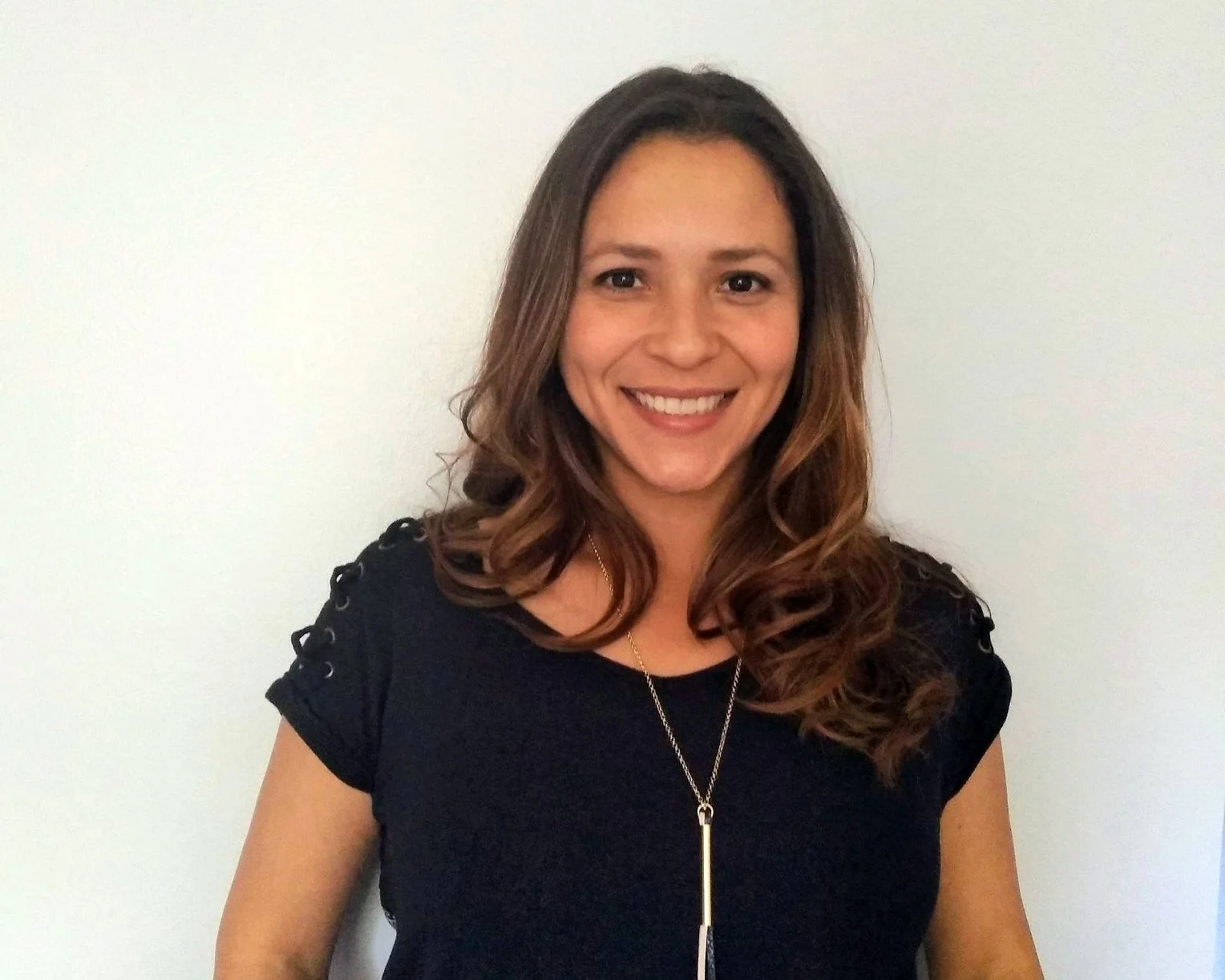
Artist Michelle Liter shares how one creative project became a path to purpose, resilience, and a renewed appreciation for imagination, handmade art, and family.
Sometimes the project you start isn't just something you make. It changes the way you see yourself.
When Michelle Liter found herself wondering what came next after years of raising her family, she returned to the one thing that had always been part of her identity: creating.
That decision led her to write and illustrate her first children's book, but along the way, it also reshaped how she thought about purpose, consumerism, handmade traditions, and the value of imagination.
Michelle reflects on why creative projects matter, how art helps us connect across generations, and why it's never too late to make something meaningful.
Listen to Michelle Liter’s Interview
Watch Michelle Liter’s Interview
Growing Up as a Creative Child
Michelle Liter: Being human, I think, is to have an imagination. That's something I found that sets us apart. It gives us the tools to imagine a future for ourselves. And if we don't like how that goes down, then we can reimagine it, and then we can change the course that we're on to help it align with the things that we want in the future.
I feel like my imagination is one of the best tools I have to solve my daily problems and enrich the lives around me.
Brandi Fleck: Michelle Liter of Spring Hill, Tennessee, has written and illustrated a children's book encompassing the values of imagination, handmaking, frugality, and being resourceful.
Michelle is a mom and wife with a background in fine arts and graphic design. We start out talking about spending time in cemeteries as a child and different cultures. Then Michelle continues to open up about her life being a lifelong artist and her first experience with fine art.
She tells us about the journey art has taken her on and how art, combined with being a mother and raising her own family, has all culminated in her recent project: writing, illustrating, and starting the process of publishing a children's book.
From this episode, you'll get inspiration to be creative, inspiration to start that project you've been meaning to do while incorporating your true passions, and you'll receive a thoughtful perspective to consider about our consumer-driven culture.
Now let's hear from Michelle.
All right, everybody. Today we have with us Michelle Liter. Welcome to the show, Michelle. You're here today to talk about a book that you've been working on, but first, how are you doing?
Michelle Liter: I am doing great today. Thank you, Brandi. Thank you for having me on your show. I think it's wonderful what you're doing and the outreach that you have, and I'm excited to be here.
Brandi Fleck: I'm really excited to have you here. So please, before we jump in, go ahead and introduce yourself to our listeners. Tell them who you are and a little bit about what you do.
Michelle Liter: Okay. I am a wife and mother of three. I graduated with a Fine Arts degree from the University of Tennessee back in '02, and I worked as a graphic designer for Tennessee Tech University until my daughter was born. That's when my career as a stay-at-home mom began. Currently, I'm working on publishing my first children's book.
Brandi Fleck: Awesome. That is so cool. I love it.
Can you tell us a little bit of your life story? Why are you the way you are?
Michelle Liter: Yeah. So I was born in Oklahoma City, and I'm the youngest of three. I actually had a really great childhood. My parents were together 49 years until my father passed away.
Yeah, it was a very loud, affectionate, encouraging home. My grandmother lived with us on and off my entire childhood. So when I think back, there's always Grandma somewhere in the background throughout the different stages of life.
My parents were sales representatives in the cemetery industry.
Brandi Fleck: Oh, interesting.
Michelle Liter: Yeah, I know. So I spent more time than any kid should spend at the cemetery.
After school or during my summer breaks, I'd go to work with my parents, and I'd hang out. We'd walk through the cemeteries during lunch. It's strange, but I have a lot of fond memories of walking through cemeteries with my parents.
Brandi Fleck: That's awesome. Were you ever scared at first?
Michelle Liter: No, I wasn't scared. They always seemed so peaceful to me. The flowers, and it'd always just be really nice outside or whatever. I got to spend time with my mom, so that was fine.
I think what it did do, though, unfortunately, my parents were raised in New York City, and so with that came a little bit of mistrust and paranoia about crime and stuff. It was compounded by them working in the cemetery industry. They would attend funerals sometimes and the graveside services of children, unfortunately, who died all different sorts of ways.
I think that made me, being the youngest, the baby, I think that also made them extra nervous. Like, "Oh my goodness, this child."
Anyway, so there was a lot of sheltering that went on, just protection.
I had two older sisters. One's six years older than me, and one's 13. We were always kind of in different stages of life, so I spent a lot of my childhood just entertaining myself, building card houses. I loved doing that. Playing with marbles and sticks and reading and drawing. That's how I learned to entertain myself, and it's probably part of the reason why I'm kind of an introvert now. I really enjoy just being alone, and I'm comfortable in that space.
Brandi Fleck: Gotcha.
Michelle Liter: Yeah. We moved to East Tennessee the summer I turned 10, and that was kind of a culture shock.
Growing up, my mom always glorified New York City. It was always the cool place that she always wanted to go back to. So in my mind, I think I latched on to that, and I also was like, "Oh yeah, big city life. That's the best."
So when we moved to this very rural area in East Tennessee in the late '80s, it was just culture shock. We were singing the Green Acres theme song in the car. I remember that very vividly. We were like, "Where are we?" People here are chewing tobacco. What is that? That's disgusting. I'm seeing people spit while they're talking. The accents were different. I saw a lot of farm animals that I'd never seen before.
So yeah, it was very weird. I felt like we were just kind of plopped there, and it was like, "Okay, now what do we do?"
When I moved there, there were a lot of people who were second generation in that town, and we weren't from there. I'm 100% Puerto Rican, so we looked a little bit different than the East Tennesseans who were there. I was Catholic by birthright, but we never stepped foot in a church. So that was something that was like, "Oh, they don't go to church." You just kind of felt a little bit out of place.
I remember when I was 16, we went to Puerto Rico to visit family, and I was so excited because I was like, "Oh, these are my people. I get to go see my roots and everything."
Then my older cousins had just met me for the first time, and they were marveling. They were like, "Wow, she doesn't even look Spanish."
I was like, "I don't even fit in here. What?"
I never picked up the language either, so my grandparents were kind of shaking that disapproving finger, like, "She doesn't even speak Spanish."
So there were some times when I felt quite out of place, but I had a great family life. We were very close, and it was great.
Brandi Fleck: Good. Yeah, very good.
Discovering a Passion for Art and Graphic Design
Well, you told us a little bit about your professional artistic background, but can you give us a bigger picture of your artistic and writing background? How long have you been doing that?
Michelle Liter: I'll start at the beginning with that too.
I have been an artist, I feel, in my soul since I was old enough to pick up an instrument. That was something that came naturally to me. I enjoyed it. I got praised for it, which helped that feedback loop. Then I'm like, "Oh yeah, this is what I do good, you know?” I was never accused of being athletic. I was never an active child. That's kind of what I did, was just draw and everything.
I was big stuff. I remember in second grade, I think I won this competition in my elementary school, and I got this $25 savings bond or whatever. I was so excited. I was just like, "Oh wow." It helped spur me on.
Later on in my teen years, I got a gig through someone that my parents worked with, and he hired me to do some renderings of homes for some investors for a new neighborhood. Then I got paid for it, and I was very excited. I was like, "Wow, I can actually make money doing this. This is great."
That kind of started me along that path. I went to college, and I was kind of naive going in. I wasn't exactly sure what I wanted to do, but I always loved just looking at buildings and structures and always would try to duplicate things. So I thought, "Well, maybe architecture and design is the way to go."
Then I quickly realized that I did not have the math and physics and that kind of strong ability for that. That's when I discovered the graphic design path, and I switched into a more Fine Arts degree. That's really where I found home. I really enjoyed it, and I loved the community, the critiques, just talking with people about art and everything.
So after that, I got married, and I did some sign work. I worked at a web design company, and that's where some of my writing past comes from. Some of our clients needed content for their websites, so in addition to designing them and building them, I would also add content for different areas, real estate and things.
It was something that I was always really good at in school. Creative writing and the five-paragraph theme and poetry, everything like that. I always just kind of saw it as a puzzle, and it was always fun to try to figure out how to best communicate.
Brandi Fleck: Gotcha. So you're definitely a natural artist and a natural communicator, I would say.
How did you learn to create? I know you said that you spent a lot of time alone entertaining yourself, but can you tell us a fond memory you have of those times when you were learning that you could really do it?
Michelle Liter: I want to tell you my first experience with fine art.
Back, I think, in the '60s, my dad commissioned a portrait of my mom, this oil painting. This was the only piece of fine art that was in our home, hung up with pride. It had my mom captured in her 20s with the ringlets and this beautiful outfit.
I remember just being so young, staring at it. I was just captivated. I was like, "How did this likeness of my mom show up on here? It's here forever, and it's frozen, and it's perfect, and it looks like glass."
I think, honestly, that set a seed in me of wanting to enjoy that because we never went to museums or anything like that. So I think that was pretty instrumental in my life.
I do remember I was probably maybe six, and I had one of those things that you would press down, and then you could lift the film and put it back down, and it would erase it. I was trying to draw a tree, and I was not happy with how it was working out. I think it had something to do with the leaves. I couldn't figure out, like, "I don't want to draw all these leaves. I don't know what to do here."
So I went to my mom, and I was like, "Can you draw me a tree?"
She drew me one, and I just remember it very vividly in my mind, this sad little tree. It had sticks coming out. It just looked like this winter stick. I was like, "No, that's not going to work."
So I went to my dad, and I was like, "Hey, can you draw me a tree?"
He did. He drew me what you would very much see as the generic six-year-old tree, the trunk and then the cotton candy kind of top, and there you go. That's the tree. It's done.
I was like, "Oh, that's so cool."
So I copied it, and I think it also clicked. I just copied that, and I just learned how to do this new thing. It was kind of fun. It was kind of neat.
I remember being in third grade. I'd go to the library at school and just check out all these different books on how to draw. Everything, like cartoons. I remember drawing famous buildings.
Then all that time I spent in my parents' offices over the years, there was always some kind of chalkboard or dry erase board or whatever. I would always just go in there, and I would draw things all day long. That was very fun for me.
That was something too. Either because they didn't want me just out wandering the streets when I was younger, or because I was with them at the office, art supplies were always very plentiful. It didn't matter where we were financially or whatever. I could always go get some paper from a printer somewhere. They always made sure I had my Crayola supplies. That was kind of like my, "I get as much of this as I want," and it was always encouraged. I think that's how it started off.
Brandi Fleck: Well, great.
Finding Creativity Through Children's Book Illustration
So now you're currently working on a children's book called Ruben Parker's Homemade Bumble Wing. Can you tell us what the story is about?
Michelle Liter: Absolutely.
Ruben Parker's Homemade Bumble Wing is about a young monster, and he's excited about the upcoming season of Bumble Wing, which is very similar to our Halloween. He's especially excited to enter his house in the annual Bumble Wing House Decorating Competition.
Then his mother tells him the bad news that it's been a rough year for them all, and they're not going to be able to afford to buy any decorations this year.
He goes through all the feelings of disappointment and jealousy, and he comes home to find his parents have found a way for them to participate by making homemade decorations out of things that they find around the house.
So they all work together, and in the end, Ruben is really proud of what they accomplished. He's excited that they got to participate, and they had this good time as a family in the process of doing it.
Brandi Fleck: Awesome.
There are so many things there, and I'm thinking, okay, it's a monster, and it's at Bumble Wing, which is like Halloween. How much of your family's influence growing up sort of played into this?
There are also some other themes we'll focus on, but what do you think about that? Do you think your childhood influenced what you wrote in this story?
Michelle Liter: Honestly, instead of my childhood, I felt more connected to it as how I am with my family now, with my children.
When they were little, we had decided we thought homeschooling would be the best route for our family. When my oldest was just two, I was going to these mom groups where there was this retired schoolteacher, and she was telling us all kinds of things we could do for preschool curriculum for our children.
I was soaking it up. I loved the idea. We were just using things from your pantry. We were making these elaborate activities just out of things from around the house.
I think that was fun for me because I grew up kind of frugally. I liked the fact that I didn't have to go buy hundreds of dollars' worth of curriculum. I could just put things together and use that. So I think that's where part of that comes from.
Brandi Fleck: Gotcha. Okay. Yeah, well that makes sense.
So we're definitely going to dive into the theme of saving money and making homemade decorations rather than buying holiday decorations.
Are you making a statement at all in your book about our consumer culture and the importance of handmaking and reusing household items?
Michelle Liter: Yeah, that's part of the theme that I was going with.
I feel like it hit me in the face when I had kids. That's when I realized how much consumerism is at the holidays.
Between my husband and me, we have a large family, and everybody was so sweet. They blessed our kids with so many cool toys and stuff.
It was emotional for me because I had all these ideas, right? Like, okay, I'm going to buy this awesome little wooden drum, and it has no batteries, it has hardly any packaging, it has longevity, and my daughter can then pass it on to her kids. She can remember it.
I had all these ideas of how special this present was, right? But then when your kids get 20 presents, and they're all lighting up, and they're singing songs, and they're so stimulating, that drum is sorry. It just sits in the corner, and I'm over there beating on it like, "Come on. I just want to play with this drum."
Nobody cares. Nobody cares about the damn drum.
So yeah, I love homemade things. I love handmade things. It could be like a love language thing. I don't know. The idea that somebody thought about me and sat and did something for me, I think it's so special. That's something that I wish I could do for everybody on my shopping list.
But I also get it. There's time constraints, and if you don't have a special skill, then what are you going to do? Yeah, that's where it came to be.
Brandi Fleck: Awesome. I think that's great. The story is really special and close to your heart, and it's something that you think is important for families to have, an experience together.
Consumerism, Frugal Living, and Handmade Traditions
From your perspective, what impact has consumerism had on our human condition?
Michelle Liter: Once your basic needs are met and you've got enough money for your food and your shelter, I think it's so easy to accumulate so much so quickly.
I feel like in our brains, we start equating, we don't have to hunt, right? So I think shopping becomes that hunting sometimes. It's so satisfying to find something on a steal. Maybe we wouldn't even pay full price for it, but it was on sale.
I mean, I'm guilty of it. I've done it before. Then later I'm like, "Why did I buy this thing that I don't really need? I don't really like it. I'm not in love with it, but it was cheap, so it made me feel good."
You know, that retail therapy.
I feel like we're looking for ways to decompress or make yourself prettier or more acceptable. There's a big cost to that just with debt. It's a problem for so many, and it causes stress that's felt in your body. Stress in your body can cause inflammation and heart disease and all kinds of things that can really mess you up.
So I think culturally we need to start looking at other ways. A lot of people do other things, but sometimes it's just easy. You're on your phone, go to Amazon, just buy something real quick, and it's fine. "Oh, that was great." You get a little rush from it or whatever.
But shopping is not the answer. Maybe we should be running or dancing or talking to people in our lives that matter. That's way better therapy. That'll penetrate our souls instead of just filling our spaces up.

Brandi Fleck: Yeah, and sort of nurture those connections that you already have using the stuff that you already have instead of just bringing more and more in. That makes a lot of sense.
I've become really picky over things that come in. When we look around, we're like, "Wow, how did we accumulate so much?" I'm looking around now. I'm in my basement. I'm like, "What are we going to do?"
Anyway, I love donating. I love calling up the ARC service, and they just come and they'll take it away, and they will give it to people who need it. I love doing that.
Michelle Liter: Good for the soul, too. It's better than retail therapy. You're actually going to help somebody else with the stuff that you don't want.
Why Creative Projects Matter for Mental Health and Purpose
Brandi Fleck: Okay, let's shift just a little bit into the logistics of the book, I guess you would say.
What made you choose to write to the children's demographic rather than teenagers or adults?
Michelle Liter: The first thing I really wanted to do was paint. That's my big love in life, painting. I wanted some kind of platform where I could paint with a purpose, and it just seemed to hit all those spots.
I think I need to go back a year and a half. This is where all of this started.
I had just turned 40. My kids are getting older. My household chores were getting done. I had extra time during the day, and I'm wondering what to do. What do I want to do? What can I do?
I'm sort of an introvert, so it's not easy for me to just go out, make connections, volunteer somewhere, and join groups. That's kind of not really my personality.
So I started really thinking about what I can do. What's helpful? What's useful?
I had this breakdown one day. I was at the gym with my girlfriend, and we're getting out all these weights and setting them up. I just felt so broken inside. I just sat down on my step, and she was like, "Are you okay?"
I just started to cry. I was like, "What am I doing with my life?"
So I'm having this breakdown in the middle of a class, and I knew I had to figure something out. I had to figure out some way to contribute to society that would not just turn my home life topsy-turvy. If I just went out and got a job or did something, my husband was still traveling. The kids still needed me at certain times to be in certain places for them.
I didn't want to stress out my whole family just because I'm having some kind of midlife crisis.
So I started thinking about it, and I found some old papers, old critiques, and things from college. There were all these nice notes written about how great my illustrations were, things from my teachers and my classmates, just encouragement.
It kind of reminded me, yes, this is a part of your life that you miss, that you love doing.
But I didn't want to just do it for myself. I didn't want to just be like, "Oh, there's a blank spot on my wall, and I just want to paint something to put it up," or create something that just gets put in a closet. To me, that seems fruitless. It wasn't just about the process of the work. I feel like I'm very purpose-driven. I want it to be for something.
So I started kind of playing with the idea of children's books. I went to the library, and I sat and read them all. That was something that was really special when my kids were little.
The idea that I could create those moments for people with their children was so satisfying to me. Plus the challenge, too, of taking complex themes or emotions and trying to figure out how to translate them into a language that children can understand.
It had the perfect combination. It barely cost us any money other than some supplies. I could do it during the day while my kids were at school. It gave me a reason to paint, and then I always knew what I was going to paint next. "Well, it's the next page. What's on the next page?"
It hit all these points. It was very exciting. It was such a good challenge.
It's been a long time since I've tried something new for the first time. Sometimes in life, you get to this point where you're like, "Oh yeah, this is what I do. I do this, and I don't do that."
This was something that I'd never done, but I was like, "I feel like this is accessible. I feel like I can do this."
It was very character-building along the way because probably about a third of the way in, I'm like, "Wow, this is taking a long time. This is harder and more frustrating than I thought. I just thought it was going to be simple."
But no, it was challenging.
Then it occurred to me that my kids were watching my progress, and they were telling their friends. People were getting excited. The kids that would come over to my house would look.
Then I felt a responsibility to them. I wanted to set a good example. If you want something, you need to stick with it, even though it's hard and it's challenging. There are times when you feel like you should have never even started. I'm going to make these mistakes, and I'm going to keep going. I'm going to try over and over.
This experience was as much for me as it will be for anybody who buys the book.
Brandi Fleck: Yeah, it was kind of like a turning point.
What was challenging about it? What were some of the obstacles you came up against?
Michelle Liter: There were so many.
I had never made pictures where you've got two-dimensional paper, and you've got to move this character around. They have to look the same from page to page. Emotions, drawing all the different emotions, trying to do that. Coming up with characters.
I made a long list in the beginning. It probably took me a month of really thinking of different types of books to even write. I wasn't even really sure. Like, is it a book you know? Is it about hygiene? Is it about family matters? Is it about animals? I was all over the place.
I spent so many hours just in my sketchbook trying to figure that out. This one theme of a kid that had to do without, and then his parents help him figure out a different way, and then they can all work together, it just kept coming back. I think that helped me figure it out.
Then the artwork. I was very much a graphic designer. I sat at a desk, and I did things on a computer. A lot of the books that I've seen now are very computer-generated images, and they're beautiful, and they're wonderful, and there's nothing wrong with that.
But for me, I love seeing texture and brushstrokes and just the little squiggles and things like that. I wanted that tactile feeling with my book, so everything is hand done. When I mess up, and I mess up to the point where I can't fix it, I start over. That was challenging, but eventually I gave in to it. I was like, "Yep, I got to do it," because once this is in print, it's there. It's there forever.
The Children's Book Illustration Process
Brandi Fleck: Well, it was really cool to hear how you worked through those challenges. I totally agree. The computer-generated artwork is beautiful, but I miss all of the hand-drawn things that we used to be saturated with in our childhoods, right? So that's really cool.
You sort of told us how you got started, and it's obvious at this point that artwork is a really big focus of this book. It's bold, it's colorful, and you do capture a lot of emotion in the illustrations.
What influenced the style of artwork in your book?
Michelle Liter: I wish I could have built it up to where you feel paint on the pictures, on the page.
I always have loved just chunky paintings, texture, and thickness and stuff. I also love books like Ladybug Girl, where it's very watercolor-y and very light.
I don't know. I think it's just a combination of both. I wanted something that was bold and thick and sometimes very in-your-face, but then other times could be very airy and spacious.
I kind of touched on this earlier, but when I go to an art museum, I am sort of weird. I go by myself. It's my weird happy place. That is something that I do for me.
I'll go, and I don't just stand there and look. I am the person that kind of squats down, and I'm looking at the side. I'm trying to capture the light in certain areas of the paintings or illustrations or whatever I'm there seeing. I'm trying to understand the process.
I love it when I can see a random hair from a brush from the 1800s, and it's there, and it's stuck there forever. Right there, you're connected with that artist.
To me, it's not just about what the piece is. I really love trying to be part of the process. Maybe it's because I do love making art. I want to decode it. I want to figure out, "How did they do it? What layer went down first?" I can't figure it out sometimes. I just love that part of it.
To me, it's like this visual puzzle, this 3D puzzle, and I just want to know how they did it so I could do it too, and also just to feel connected to the artist.
I feel like that's the long-lost tribe that I've been searching for my whole life, the collective of artists in this world.
I've always had those feelings of being a little odd, a little socially weird sometimes, closed off. I think my tribe is artists.
Brandi Fleck: Yeah. You mentioned earlier how you were struggling to find a place to fit in, and maybe that's your place.
Michelle Liter: Sure. Past, present, and future, that's where I want to be.
Brandi Fleck: Yeah.
I am so glad you said something about the brush hair in the paint because I will tell you, I have painted so many times and gotten dust or a brush hair or a cat hair in the painting. I'm like, "Oh no, it's there." Then I try to get it out, and sometimes you just don't get them all out. Then you mess something up while you're trying.
But to your audience, that could just be this beautiful artifact that was left by you as part of your process.
Michelle Liter: Yeah. She's doing this, and then a cat goes by, and then the cat, this is from her pet.
Brandi Fleck: Oh, I love it.
How Art Connects Us Across Cultures and Generations
Well, that's great. So you did tell us about trying to decode the process. That seems like the impact that art has on you personally.
Is there any other impact art has on you personally? Does it make you feel a certain way other than fitting into a group or anything like that?
Michelle Liter: I think it totally depends on what I'm looking at, which I guess is the intention too.
I'm not going to lie. There are some installations that I'll walk through, and I don't give them the time of day. I know I should. I should stop and really try to absorb what the meaning is, but I'm like, "I'm not feeling this."
Brandi Fleck: Yeah. I don't know if you should stop.
Michelle Liter: Yeah, right.
There's so many types of art out there.
Sometimes I'm moved by something that was done in beadwork.
I recently saw this really wonderful exhibition. It was Native American women only, and there were these beautiful beaded baskets and just everything they made. I was amazed. I went so many times just to stare.
I caught a glimpse of their traditions and their culture and the fact that these ways of being were just passed down through their artwork.
I don't have a lot of traditions. I probably have more traditions than I know that I have that were passed down to me, but we didn't have any of that. I don't think I'm passing down many artistic traditions or anything.
But for art to capture, like a scrapbook, the memory of your family or of time together, it's a beautiful thing.
To capture, even if it's capturing ugly parts of culture and society for the time, the fact that it was created for us to look back and glean something from it, I think that's a beautiful thing.
I think we can learn so much, not just from visual arts, but performance art and music and the written word. I think all of it has something that can help you connect to people from all eras, all cultures.
I think it has a transformative power.
Brandi Fleck: I like that.
Encouraging Creativity and Imagination in Everyday Life
So, Michelle, what hopes and dreams do you have for the book you're working on?
Michelle Liter: I hope that there will be good moments created between parents and their children.
I hope there are lessons that will spark discussions about recycling, upcycling, resilience, being persistent, and being open to new ideas that are not conventional.
I would love for this not just to be the book I made, but just the first. I would love to continue doing this. I've enjoyed the process so much. I think I've learned a lot. It was, like I said, character-building for myself.
Brandi Fleck: Well, that's great. Those are some great hopes and dreams, and thank you so much for sharing that with us.
Now I'm sure everybody is dying to know, what are the details on when your book will be available? Guys, this isn't out at the time of recording, but once it's available, where do you anticipate listeners can get it?
Michelle Liter: It should be available on Amazon in August.
Brandi Fleck: Awesome. Yes. Okay, you guys heard it here first.
Last but not least, what is some parting wisdom that you can leave for our listeners?
Michelle Liter: I've talked a lot about my artistic bent.
This may sound real hokey to say, but I think that just being human, everybody has, in some way, shape, or form, the capacity to create and the capacity to be an inventor.
It makes me sad to think that people out there who are maybe like, "I'm a math person. I can't even draw a straight line," have just brushed it off, probably because somewhere, when they were seven, somebody told them that it didn't look good or whatever.
That makes me sad.
I would love to encourage everybody that even if you've never done anything creative before, there is nothing stopping you. It is good for your soul. You might even discover some talent that you never knew you had, and you should discover those things as quickly as possible so you can enjoy them as long as you can.
Not just visual art. Anything, like writing or music. Maybe you're a really great dancer, and you just don't know it.
Just don't sell yourself short. Try to discover something about yourself that you didn't already know, and just try to create something. Change a recipe. Add something. Take something away.
I think everybody has that in them, to create and be inventive and solve problems creatively.
Brandi Fleck: Well, awesome. Michelle, thank you so much for coming on the show today. It has been an absolute pleasure talking to you.
Michelle Liter: Thanks, Brandi. I really enjoyed it. Thanks for having me.
Join the conversation!
Feel free to share your own experience and let me know if you have any questions in the comments.
Related Posts



Hi, I’m the founder of Human Amplified. I’m Brandi Fleck, a recognized communications and interviewing expert, a writer, an artist, and a private practice, certified trauma-informed life coach and Reiki healer. No matter how you interact with me, I help you tell and change your story so you can feel more like yourself. So welcome!
Find More on the Blog
Topic
- ADHD
- AI
- Atlanta
- Black and BIPOC
- DIY
- FAQ
- LGBTQIA plus
- Los Angeles
- Nashville
- Seattle
- St Louis
- St. Louis
- UFOS/UAPs/ETs
- abuse
- accountability
- addiction and recovery
- adoption
- affirmations
- afterlife
- altered state
- angels
- animals
- anxiety management
- art
- astrology
- atlanta
- attachment
- awakening
- beauty
- behind the scenes
- being human
- body image
- body work
- boundaries
- brandi fleck
- breathwork
- bullying
- burn out
- burnout
- cancer
- career
- caretaking
- chakras
- channeled
- clarity-dive
- clarity-practice
- clarity-primer
- clean products
- coach
- codependency
Recent Blog Posts
Visit the Full Podcast Audio Archive

Affiliate

Psychology specialist Corey Hatfield explains character strengths, anxiety, mindfulness, and why two people can experience the same situation in completely different ways.