Benefits of Ballroom Dancing for Confidence and Trust
Interview By Brandi Fleck
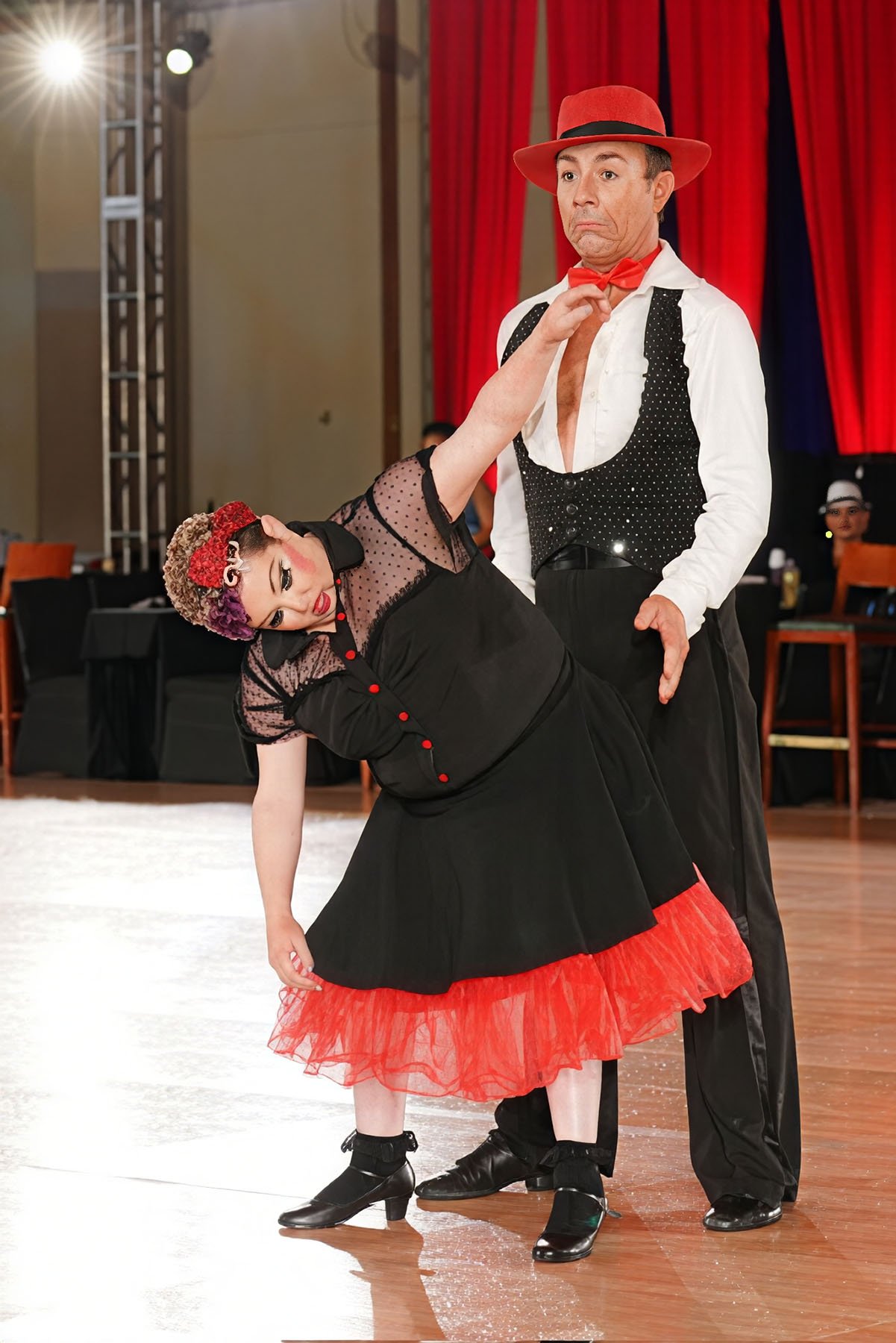
Brea Cox shares how ballroom dancing helped her manage stress, process grief, rebuild confidence, and reconnect with her body after being diagnosed with type 1 diabetes.
What if ballroom dancing could become more than steps, rhythm, and polished movement?
For Brea Cox, a pro-am competitive ballroom dancer based in Nashville, the dance floor became a place to breathe, reset, and come back to herself. After being diagnosed with type 1 diabetes at 40, she was already looking for ways to care for her health and stay connected to her body. Ballroom dancing gave her something sustainable, expressive, and deeply human.
In this conversation, Brea talks about how dance became her “happy bubble,” how it helped her move through grief without avoiding it, and why confidence is not something we earn once and keep forever. She also shares what the lead-follow dynamic can teach us about trust, listening, communication, surrender, and the courage to begin again.
Listen to Brea Cox’s Interview
Watch Brea Cox’s Interview
What Ballroom Dancing Can Teach Us About Being Human
Brandi Fleck: What does being human mean to you?
Brea Cox: That is such a lovely question because when I'm on Facebook and I sign off all the time, I say, “Be kind, be well,” usually give some other interludes, and it says, “Always remember love wins. Always.” And I think being human really just comes back to those things: being kind, being compassionate to others, and being compassionate to yourself.
Remembering that you are human as well. I'm a human. I can say no. I can say yes. And giving grace to all the others in my path whenever I have interactions. So, I think that's just being human, being kind.
Brandi Fleck: That's beautiful. Thank you, everybody. Today, we are welcoming to the show Brea Cox. She's based in Nashville, Tennessee, and she's a pro-am competitive ballroom dancer. And we're going to get into the details of the mental health benefits, all kinds of cool things about ballroom dancing today. And I'm really excited. Brea, welcome to the show.
Brea Cox: Brandi, it's nice to see you again. Thank you for having me. I'm excited to be here and talk about this subject.
Brandi Fleck: Yeah, I'm really excited to talk about it. We talk about a lot of heavy stuff on this show. So, it's always really lovely to get not necessarily a lighter topic, but one that feels good.
Brea Cox: Exactly. And dance feels good, right? Listening to music, getting your body moving, that's all to get those endorphins going and get you feeling good. So, that's the top benefit that I get out of it, at least, for sure.
Brandi Fleck: Fantastic. Well, that's good to know, especially in our time right now. So, I'll just give the audience some context. We're recording on March 30th, and so it'll be a little past that when this episode comes out, but with all of the heavy things going on in the world, do you find that dance is helpful?
Brea Cox: It is so helpful. I want to use the word escape, but I don't know that that's the right word, but that kind of is what it feels like. It's my bubble. I walk into the studio, I see my friends, I see my teacher, I know what we're here to do, and it's my feel-good bubble.
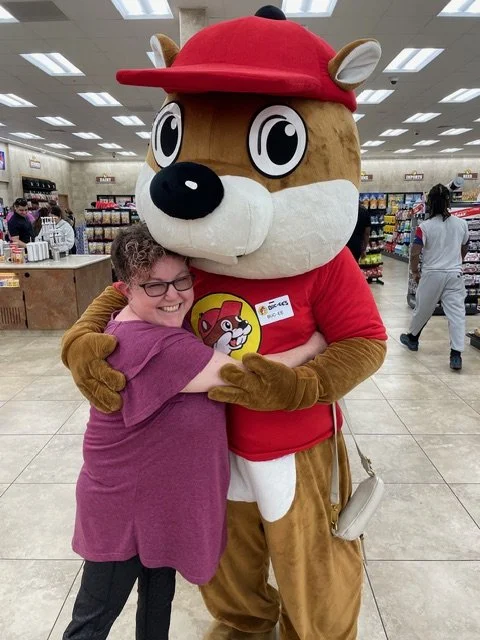
I don't have to think about the outside world. I'm just listening to music, focusing on my body and my dance, and so I leave all that behind when I walk in the studio. So, I just think of it as my happy bubble.
Brandi Fleck: Yeah. Okay. Well, before we get too much deeper in, can you tell us, Brea, who are you?
Brea Cox: Who am I? I see Alice and I have a little Cheshire going. Who are you? Well, my name is Brea. Sounds like the cheese, spelled differently. I usually say I'm pretty cheesy. If you know me for a while, you know that's true. And believe it or not, that's with no caffeine. I don't drink caffeine, so I am the way I am, which I think is awesome as well.
But I am not ashamed to say I'm going to be coming up on 50 years old. I’ve lived in Nashville 20-some years now. The beginning of my life, I was an army brat. My dad was a colonel in the U.S. Army, so I moved around a lot. Every three years, we were being stationed somewhere different. So, I learned how to adapt and how to meet new people.
I've always been involved in some sort of arts. I'm a very nerdy theater kid. I was in, still am in, choir. Played flute and piano, and theater, and ballet, and tap, and jazz. So, I've always had that theater arts, but somehow I landed in the IT industry.
So, I sit behind a computer all day for my normal job. And so finding ways to be outside of that and not be behind a screen and be trapped like that is important to me. And so, in my real world, I like to be out with everybody else. I built my house a couple years ago here in the area. It's just got this nice little world for myself where I can work to live, right? I don't live to work.
And so, I'm always trying to find different things to do and ways to engage my creativity, especially with others, for sure.
The Mental Health Benefits of Ballroom Dancing
Brandi Fleck: Nice. Well, thanks for that. I know that when I'm introducing guests, a lot of times, when people introduce themselves, they talk about what they do, but I love to think about who you are. And so, when we're thinking about your identity and who you are, how does ballroom dancing fit into that?
Brea Cox: I think right now, it's a lot of who I am. Most people that have known me forever, one of the first questions they ask me now is, “What's going on with dancing? What's your next thing? How's dancing going?” And so, I think just because my passion comes out when I want to talk about it and share it with others, I think that's infectious.
And so, when they see me, they're like, “How are you doing? What's going on?” So, I think that's a lot of my identity. But hopefully I'm just known as Brea and that I'm a good human who dances.
Brandi Fleck: Yeah. I like that. What drew you to ballroom dancing to begin with?
Brea Cox: So, I was invited by a friend to come to a guest night at a local studio. And because of my background, because I love all things performing and have done dance and marching band and all those things before, of course, I was game. I was like, “Sure, I'll go see what it is.” And I will tell you that I was hooked from moment one.
They got me. They got me good. I was their perfect candidate to sign me up. How far can I go? And I realized that I started getting a little FOMO when I wasn't there, fear of missing out, and wanting to take all the classes and do all the things and be great. And then I settled down. It was like, okay, what is it that I really want to do?
And kind of fell into the routine of it. And I think that's where I am now, just in this really good routine of growing and doing the things that I want to do with my dance.
Brandi Fleck: Fantastic. Do you still find that it is, I mean, you said you're passionate about it, but because you're in a routine now, does that passion change?
Brea Cox: I think when I feel myself getting in a rut, I think of the next thing, and I talk to Christopher and I'm like, “Okay, what is our path? What is the next thing? Here are the things that I want to do.” And so, I think that's a natural progression. When I get to that point of the ebb and flow of feeling in a rut, then I just look, okay, what is it that I'm working on next?
And then that focus gives me the renewed energy to do the next things and keep growing with it. I don't think I ever want to be in a rut and just go to my lesson and dance the same dance and do the same thing. Until my body says I can't do it, I want to learn all the things and do it all.
Brandi Fleck: Yeah. All right. So, it's like a constant learning process where you can constantly add something new.
Why Dance Fundamentals Matter at Every Level
Brea Cox: I take the beginner basic group class on Tuesday nights. And one of the reasons is that I can work on that beginner technique. In dance and anything you're doing, if you don't have the foundation of the skill, then you're not going to be able to grow in it and look better and get the better arm stylings for it if you don't have the fundamentals.
So, I think even nine years in, I really do try to keep working on the fundamentals and take those classes where I can work on those. And the same with my other friends, we're in there to learn. It's really funny. Some of the teachers will be like, “I know some of you are good dancers. If you have the brain power for it, here's the next advanced thing I can show you. If you're just here for the first time, don't worry about it. Do one, two, three in your box.”
So, we have that balance of consistently trying to retrain your brain to do what it needs to do.
Brandi Fleck: Yeah. Okay. And just for context, you mentioned Christopher when we were talking about getting out of the rut. Is that your partner?
Brea Cox: Christopher Wayne is my professional instructor. He owns The Ballroom of Nashville, and I have been dancing with him for almost seven years now. He is the partner that I compete with and do showcases with. He's a wonderful man, and he's definitely the organizer and makes it all happen and gives me the direction that I need.
When I tell him what I want to do, then he can tailor what we're focused on in order to get me to those goals. But yeah, I've been with him for almost seven years now. It's great.
Ballroom Dancing for Confidence and Body Trust
Brandi Fleck: Gotcha. That's really impressive. I am curious. So, I feel like in order to really understand the type of internal shift that participating in something like ballroom dance can provide, we need to understand a little bit about your internal world when you first started. So, I'm wondering, where were you? What was going on internally or just in your life?
Brea Cox: Internally, I was trying to get better at my health. I had been diagnosed as a type 1 diabetic at 40 and had started CrossFit and was trying to figure out my health journey and trying to get my body better. And when I started dancing, I realized I was like, “Oh, this is something that's in it for the long haul as long as your body is moving,” instead of lifting weights and doing all that heavy lifting.
There's a consistency there with body movement. And then within the first year or two, I'm like, “Okay, I got the fundamentals.” Then I started to get that yearn of, okay, what's next? What other techniques? Watching other people dance and like, “I want to learn that move. That looks really cool. How do they do that?” Right?
And then figuring out where my progression would be. And so now, nine years in, I think I've got a totally different mindset of, “I am a dancer now.” At first, it took me a long time to actually say that I was a good dancer. I was like, “Well, I take lessons. I go to group classes. I have fun at parties and hang out with my friends.” But then eventually, there was the shift that, no, I compete. I'm a dancer, and I'm good, and I can do this, and I can get better at this.
So, there has been that progression. And the great thing is that I see others do that in the studio as well. I've seen a lot of people come in that start off that way. And it's really fun now that I am where I'm at to help all those younger ones, or younger in their dance journey, I should say, not younger in age, who are just starting out on their dance journey be like, “Hey, you're worrying about the wrong things. I hear you mumbling. You're fine. You are where you need to be. If you want to grow, then this is what you do. But just know you're in the right place, and this is what you like.”
So, it's fun to see where I was in others as well.
Brandi Fleck: Yeah, that would be really cool. So, it sounds like I'm hearing you say that your confidence grew over time. Your identity actually did shift from taking lessons or being a student to, no, I am a dancer and I am good at this. So, that's really cool.
Brea Cox: Now, that confidence sometimes can break, even as long as I've done this. There are moments where I'm working on something new and taking new things out on the floor or a new routine in a showcase, and we put in a new move, and I'm like, “I don't know about that.” But the repetition and the care that Christopher gives all of his students to make sure we're ready helps build that confidence as well.
And then once it's done, it's back. But that confidence is an ebb and flow, too. I don't think it's something that you get and keep. I think there are moments, if something else has happened in my life and I'm dealing with something completely outside of dance world, maybe it's a work problem or a family issue or something's going on, that can show up in my dancing, in my confidence there, where I'm just like, “I'm not really feeling it today.”
Brandi Fleck: Yeah. So, there's an ebb and flow with that as well. I love that you brought that up because in the personal development space, in a lot of spaces, we act like confidence is a linear journey, like, oh, if I could just be more confident. But it's a continual cycle, like you mentioned. So, yeah, I don't hear people talk about that.
Brea Cox: Yeah. It's sometimes hard to recognize and hard to understand. It's taken me many years to, when things are feeling off, go, why is it? And then you go, oh, okay. And then you start to get the correlations. I'm like, okay, then I need to find a way to deal with that in my brain. And maybe that is bringing it onto the floor and just dancing it out.
As I say, it's like having a day. I just want to dance. I don't care. And then Christopher's like, my job is to make you laugh and forget about that, and when you walk out of the studio, you don't remember the feelings that you had when you walked in the door. So, I think that's the beauty of it as well, because you can leave it behind.
But recognizing it, for sure, is a hard thing sometimes, and then figuring out how to deal with that, and how next time, like, okay, I came in today. Next time I'm going to do these things, and then when I come next time, I'm going to be in a better mindset. So, that's part of the journey as well.
Brandi Fleck: Gotcha. So, it definitely sounds like dance can help you deal with things outside of dance, but how do the lessons you learn in dance apply at all, if they do, to your everyday life?
Brea Cox: I think just having structure. When you're learning new dances and you have to formulate technique and skill, your brain is activated, right? And you're trying to remember choreography, remembering the steps in the right order, or even just learning a technique, how do I need to have my body? Arms. Oh, yeah, my leg needs to be this way, not that way when we do this move.
And in real life, we go through that too, right? You're at work and you're starting a project, and you're like, “Okay, let's start at the fundamentals.” I'm working on a new training assignment. I've got to put together a new training. What do I need to do? I need the fundamentals. I need to start with the agenda, right? And then build upon that.
So, I think that correlates and translates. You can think of dance and learning different things in that same fashion as your life or work. Approach it that way. I've got to start somewhere, so what are the basics? And then we level up from there, and I think that helps.
Brandi Fleck: Okay, so I want to pivot in just a second into relationship dynamics on and off the dance floor. But before we do that, are there any other benefits that you'd like to add to ballroom dancing or from ballroom dancing?
Brea Cox: I think there's some science to dancing as well with the different levels in your brain, right? So, even if we pivot, there are neurotransmitters, or all those chemical messages that you get in your brain, that are used in dance. I think it opens all of those up, right? You've got that dopamine. You've got that reward and that high of feeling good. You've got mood regulators in there that give you that feeling of calm and happiness.
If you hear a good song come on and it brings you joy, your brain activates. You're like, “Oh, this is a happy song.” The dopamine kicks in and your body releases what it needs to, and then you end up feeling really good. So, I think the science of dance is also something not to sleep on.
There's a beauty of it. When I first started, there was this lovely lady. I don't know how old she is, but she's one of those sweet little grandma ladies that would come to our parties. And I looked over one day and I was like, I want to be her when I grow up. I want to be that little old gray grandma lady who everybody loves and is just coming up to, and she's out there on the floor and she's dancing to what her body can do, and she's still out there moving, and you can see the happiness and joy in her face.
And I know that just comes from our bodies and our brains reacting to the good things we're giving it. So, I think that makes a total difference as well.
Brandi Fleck: Nice. So, it's uplifting. It helps with mood, and there is actually science going on with the neurotransmitters in your brain.
Brea Cox: 100%. 100% it is.
Healing Through Dance and Emotional Release
Brandi Fleck: Okay. I wonder, and we don't have to get into this too deeply, but since it impacts the neurotransmitters in your brain, I wonder how it helps people with trauma or if it could be a healing path for trauma.
Brea Cox: I definitely think it can. There have been days when I walked in the studio and I have been just in a really bad mood because of grief, a bad day at work. I've lost a few people close to me in this time, and sometimes that's heavy in your heart. You've gotten that phone call right as you pull into the parking lot, right? And you're finishing that awful conversation in the car and then you have to go take your dance lesson, right?
And having a good partner and having people who understand that you can be going through that, so when you walk in, they're not all just like, Christopher can read me like a book. He's like, “What's wrong?” And if I say, “It's not dance. It's not here,” he knows that all he needs to do is what we need to work on, and he can get me out of that because there's something that transforms when I have to leave it at the door and I have to put on my shoes.
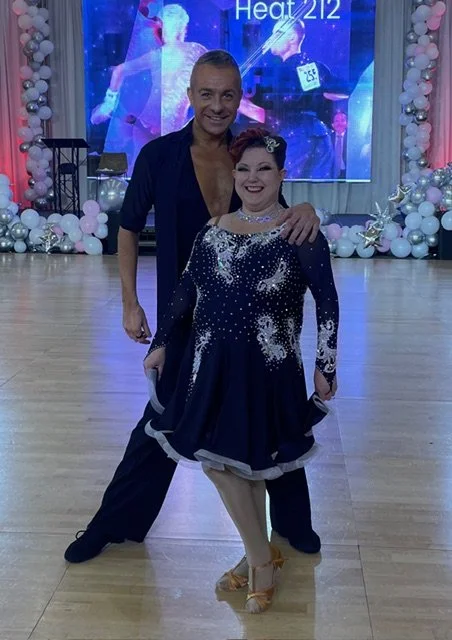
I have to focus on something different. I need to retrain what I'm thinking about because I can't be thinking about my grief and trying to figure out if I'm doing my rumba swivel correctly, right? They just don't go hand in hand. Now, not to say that some days aren't hard, and I leave and don't feel like I've had a good day. But in the end, you've done it, and you've moved, and you've allowed your body to release whatever it was.
So even if you have a bad day dancing, it's still a day dancing, and then you can get in your car and do what you need to. But I just love the bubble. I talked earlier about going into that bubble. And I think that having a safe environment, having the people with you who understand that makes a big difference. Not every studio is created equally.
And so, I think I found a really good place where that has helped. Especially the few times in my world where I've had those time periods where I've had the grief and used going to the studio as just like, okay, I'm going. I'm in. We're going to get it done. I'm not on my couch wallowing. I'm not doing something else that could harm me. This is to my benefit, to use all that science and use that brain to release whatever it is.
Brandi Fleck: Yeah.
Brea Cox: I think it makes a difference. People use massage, Reiki, all those other tools that we have at our disposal to release that energy. I think dance can do that exact same thing. It might not feel or act the exact same way, but it's the same concept for sure. Releasing whatever it is in your body.
Brandi Fleck: Yeah. And there's a difference between avoiding the emotion and the experience altogether and releasing it through your body. I just want to point that out because you're not talking about avoiding it, I don't think.
Brea Cox: No. No. Yeah. I think you're right.
Brandi Fleck: Yeah. It's not avoiding. It's like moving through it.
Brea Cox: Yes. I think that's a good way to think of it. I'm moving through it. It's like, okay, it's happening to me, but I'm going to change my focus and just let it travel out of the center of my thoughts and go back to where it needs to be because the center of my thoughts right now needs to be on my technique and what I'm trying to learn because I have goals.
So, it's trying to let your mind adjust and your body adjust to that shift of where you want to be. And in the end, then it doesn't overcome. You work through it and put it back where it needs to be.
Brandi Fleck: Very, very healthy way of coping.
Brea Cox: Hope so. Most of the time.
Ballroom Dancing, Trust, and Partner Connection
Brandi Fleck: Yeah. Yeah. Well, and you've mentioned quite a bit the support of your friends, the people who are at this studio. Not all studios are created equal. So, let's talk a little bit about the safety of the dynamic you have with your dancing partner and how does that work out? How do you even begin to feel safe, and is there a vulnerable period?
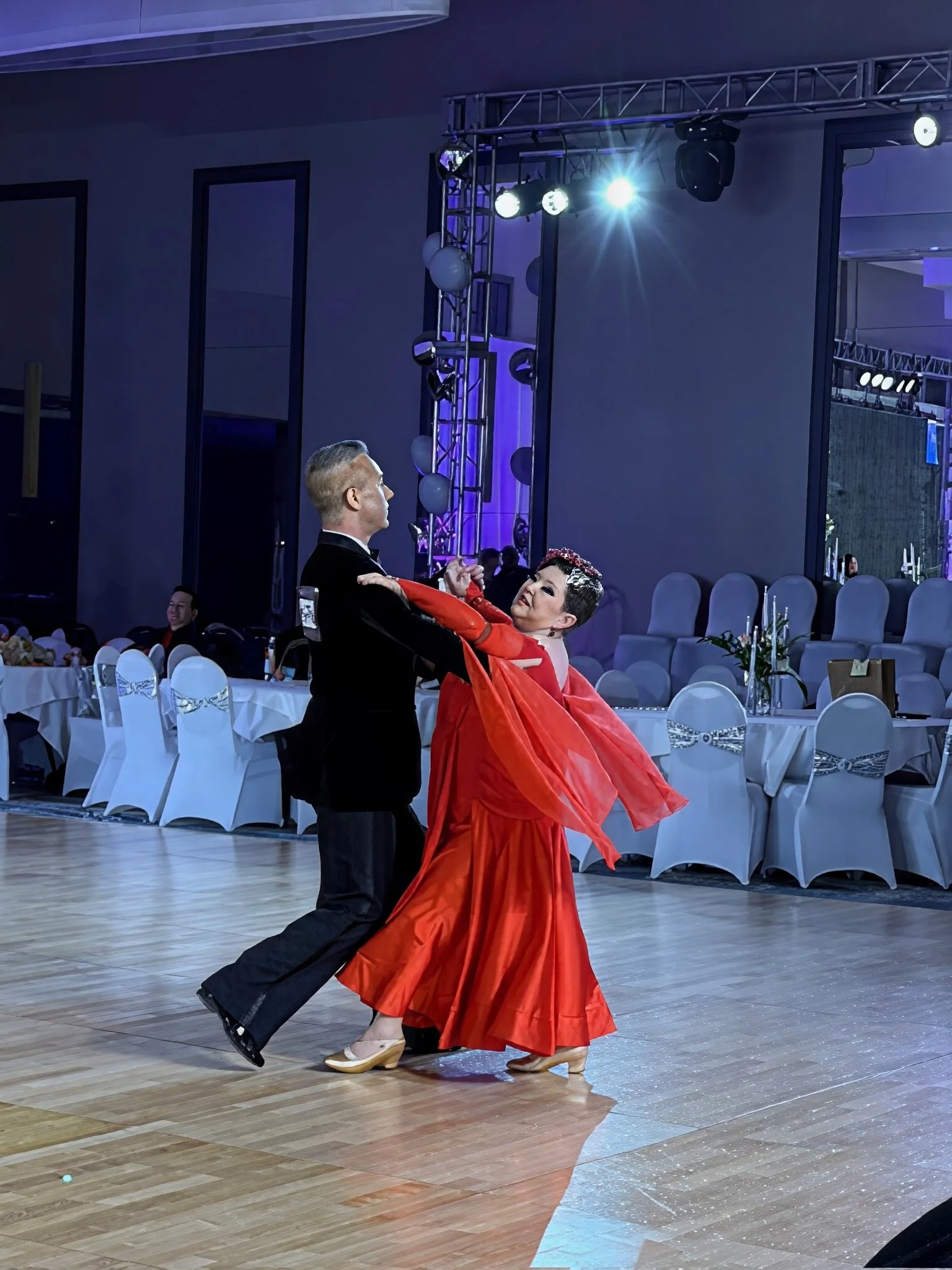
Brea Cox: Yes, there is. I think there's always that vulnerability. In the end, I'm paying for a service. I'm paying for lessons. I'm paying to dance, right? But there's something that happens in a connection, both physically as we're dancing. We get better at our connections.
Christopher and I, over time in our smooth frame, have been able to really come in closer and be able to find where it feels good and where it works for our heights. And so, we've worked on that through coaches and just he and I being able to say, “Is my hand better here or here?” and those things. And then you're right that there is a safety and a comfort of just getting to know your partner.
He's very quirky like me and very much a theater kid too, and so fun songs come on the radio and we have little dance breaks in the middle of our lesson just because a fun song has come on, or even not. We've worked on all of a sudden, he just looks into, we just start grooving together, something completely different than what we're working on. But then being vulnerable to tell him, being honest about what's happening in my brain.
So, I used to just come in and not let him know what was happening. I was just like, “I'm okay. I'm here. We're dancing now.” I can walk in and I can say, “Hey, this has happened, or I just got out of this. I need a minute, or I just need to dance because this is weighing heavily on me.” Or through grief, he understands the things that have happened of me grieving.
And so, if I can just be honest and say, “I'm having a moment. Something triggered me before I walked in here, and we just need to dance until that's gone,” he goes, “Okay, well, then my job is just to make you not think about that by the time you leave.” And I was like, “Perfect.” And he does.
So, I think that trust is built over time, but when you get it, it feels so good because that allows you to free up physically for your body. At first, you can be in a social setting dancing with new people. It can feel very tense and very robotic. There's not that comfort of who the person is. And so, there's a lot of trust in that because they're touching you, right? You're standing close to them. You're in frame. They're almost hugging you, right?
And so, you have to be able to be okay with that. And sometimes, people have had issues with that. And they stay kind of far away, and they have to build that trust to come in. Me, I'm a talker, and I hug everybody and love everybody, so a lot of the time that's not hard for me. But I have seen and recognized that that is different for people.
A widowed lady who's coming to start dance because she wants to have something to do and needs to get used to people hugging her and a dance teacher being in her space and connecting in frame, that can take a lot. But I think just finding the people for that and being honest about those things makes the world of difference, for sure.
Brea Cox: Yeah, a lot. Sorry.
Lead and Follow in Ballroom Dance
Brandi Fleck: No, that's totally okay. I am curious. We've touched on the topic of trust, which I think is really big, but there's also this leading and following dynamic in ballroom dance that I don't know if it involves an amount of control versus an amount of surrender. How does that dynamic work?
Brea Cox: Well, for me, who is single, has been single for a while, and kind of has her girl-boss, I’ve got my life, I’m doing. Being able to follow is something that I have to work on. I can't anticipate what he's going to lead. I might know the choreography, but even then, I shouldn't anticipate it. I should be able to wait. At the same time, the leaders have to be strong enough to be confident enough to give me the right lead.
So, if I'm dancing in a social setting, I can tell those leaders who have done it for a while, and they have a good lead, and they're able to let me know what they want me to do, raising my arm because they want me to do a turn, those kinds of things. And so that lead-follow dynamic is definitely front and center in no matter what you're doing with your dancing.
And again, that's a trust thing. You've got to work out, does he know what I can and can't do? Do I know what he can and can't do? And then, if it's Christopher or any of my other pros, I trust that even if they throw something at me, they feel I can do it. And then when I do it, they're like, “See, I knew you could do that.” I was like, “Well, I haven't done that before.” It's like, “Well, you followed it and you did it, so you can do it.”
So, those things get kind of fun as well. You're just like, “Oh, okay. I was listening.” There's that body connection. When you're dancing, you always have that body connection. Whether it's an arm, a hand, or a full body, there's always that connection point. And we always talk about making sure that there's a give and take in that connection point.
And I think that that's where the relationship really is built, for my leader to know that I'm giving what they need so that we can balance each other out.
Ballroom Dancing for Social Skills and Communication
Brandi Fleck: Yeah, it's definitely something that has to happen for it to be. That's an interesting thought, that there is give and take in a lead-follow dynamic. Has this informed how you approach things in your life and how you lead or follow, like at work or anywhere else?
Brea Cox: I think it's in listening. I think I've learned to listen a little bit better. In dance, you're listening with that connection point and with the music. But I think in life, we're listening to the words people say and/or the words people don't say, right? And being able to interpret how we're listening.
So, I definitely think that that skill is heightened because I’m more aware of what I'm presenting to people and then being able to receive what they're getting back and be like, “Oh, okay. Maybe you didn't mean what I thought you meant. You were giving me that lead and I thought you were going somewhere else.” Right? So, that listening skill, both with our ears and words and with body language, I think can definitely be prominent.
Brandi Fleck: Yeah. What would you say to someone who is trying to be a better listener?
Brea Cox: Take a breath and internalize what you're hearing. Don't try to make something. Don't make up the story. Listen for what the story is, what they're telling you. Because in dance, they can be telling me to turn, and I don't want to turn, or they're trying to make me stop, and I'm like, “Oh, well, I want to free spin here and do a turn.”
In real life, my narrative might not be the narrative that you're trying to tell me because I'm already thinking in the next steps. I'm already thinking through what I want to say next based on my narrative instead of taking a breath and listening and saying, what are they trying to tell me?
And then repeating back. You've already done it in this once or twice, but what I hear you saying is, or did you mean this, this, or that? Using all those different communication tips, I think, makes a big difference in how we listen to people, and I don't think people do it enough.
Everybody's so go, go, go, and I'm for me, and I want to get my stuff done, and I want to make sure that you know what I'm doing. They're not trying to say, “Hey, how are you? What is the story you're telling, and how can I be a part of that and partner with that instead of us being on two separate planes?” Right? Let's communicate and partner together, just like in dance, which we make dance because we're a partnership.
Brandi Fleck: Yeah. Gosh, I really do feel like listening is becoming a lost art, just like letter writing, just like other forms of communication.
Brea Cox: It is. We're all on our phones, and we want that short, sweet TL;DR. Give me the six words that I need to know, and that's it. And really, I think people, especially after COVID, during COVID, people were craving that communication, right? We wanted to get engaged, and I think we were.
And now that we're back to our lives, I think we've lost it again. I think we were wanting to call up our friends and have these deep conversations, and now we're back to just, “Oh, I got to go, go, go.”
Brandi Fleck: Yeah. Right. So, I do know that one of the things that the Human Amplified audience is seeking or wanting to become better at or have more of is connection. And so, I think a really interesting takeaway from what you've been saying, or at least what I've noticed, is that because you have the constant connection points, even if they're physical, in dance, you're able to communicate without words. You're able to build trust over time. You're able to build confidence.
And all of the benefits that we've already talked about come from those connection points. And it's a matter of, well, let me ask you, how do you maintain those connection points in real life? And what are those connection points in real life? Not that dance is not real life, but you know what I mean.
Brea Cox: Yeah. I think I'm actually just better aware of really connecting with people. So, I do text the memes and check in with people, but then making like, “Hey, when's the next time we can sit and have a meal together?” And having some of those one-on-ones.

I just yesterday morning had a lovely breakfast at Cracker Barrel with a friend who I don't see often, but we both really value just that moment, no matter how big or small, to sit together, no one else with us, where we ask each other, “How are you? What's going on?” And we give each other the space to really do that. And so, with longtime friends, that's pretty set in stone. I can do that pretty easy.
And with new friends, especially new dance friends, it takes a minute, or even at work. You see people walk by. You might engage with them. You might not know who they are, but have you really taken a moment to hone in on that one thing that you have in common and talk about that thing and get that entry point? I think a lot of the time communication doesn't happen because we don't have an entry point.
In dance, I have an entry point because we're in a group class, or we're at a social, or I'm having a lesson. At work, maybe we're in the break room together, and I take the chance to notice that they're wearing some school attire, and I can speak, “Oh, hey, you're a Kentucky fan. So am I.” We have that connection point.
So, I would say, you've got to start there and find that in. And then from there, you have to be intentional about building those things. And some people might not want to. I'm not going to connect and build a friendship with every single person I meet. I would like to. I go into it with that intention.
But then there's also that recognition that, hey, some people just might not be your cup of tea, or you might not be their cup of tea, and that's okay. Learning that that's okay is a hard thing. I want them to be my friend. Everybody likes me. So, self-awareness is hard. It's hard to know when to stop, when to give a little, when to push back, when to push forward.
So, I think that's just a matter of life. Coming up on 50, and I'm still learning and growing in that. But I do think my dance has enhanced that because of going to socials and, in a group class, having to dance with people that I might have never met, but here we are dancing together in some form or fashion and having that connection.
Brandi Fleck: Yeah. So, dance touches on physical health. It touches on emotional health, connection, lessons for being social, all kinds of things.
Brea Cox: Yeah.
Dance, Spirituality, and Self-Expression
Brandi Fleck: Well, so since we're covering the whole gamut of mind, body, spirit, how does dance influence your spirituality or your spirituality influence your dance?
Brea Cox: I think sometimes it's more spirituality influencing my dance. So, I am a churchgoer. I am a believer. So, I think sometimes when I hear music and it relates to a memory or relates to a feeling, I lean into that. And a lot of the time, that can bring out different things in my dancing.
So, I picked contemporary. I did a song from Pink, “Just Give Me a Reason,” from a showcase, and I had heartfelt into the lyrics and to how it made me feel. And so, I wanted to bring that out in dance. So, I definitely think there's influence there, for sure, but that's all a personal experience of how much you want to bring that in, how much you want to bring it out.
But I can't see why it wouldn't and how you couldn't have some sort of emotional connection there, whether it's spiritual or just fun. But for me, there is sometimes, like going through grief, sometimes I have to dance it out. And so, those emotions and how I'm processing my grief with spirituality and with my prayer and being a believer, I can access those things through my body, through dance.
And so, I feel like when it all connects, it's all one thing. It's not I'm just dancing, but I'm having this connection to my mind, body, and spirit all in one.
Brandi Fleck: Yes.
Brea Cox: And it's reflected visually because my body is moving in dance.
Brandi Fleck: Okay. Yeah. Thank you for explaining that. It's so many experiences. I don't want to say should be all one thing because I don't want to tell people what they should experience, but I feel like it is. It's always just all one thing, even if you're more focused on one aspect than another.
Brea Cox: It's still you, and all your feelings are valid. So, if you're happy and just doing a dance party and y'all are just grooving and having a great time, that's still all of that working together. It doesn't have to be traumatic or grief-laden. It can just be pure joy as well, right? And just the joy of it.
And a lot of the time, my showcases are done, I'm a theater kid, so musicals. And so, a lot of my numbers are off of musicals just because they're happy and they're fun. So, there is the dynamic there. It doesn't have to just be so heartfelt and make everybody cry all the time, right? It could just be fun, like, hey, let's pick a jammer and put a good routine to it.
Or just during a lesson, the song comes on, you're like, yeah, stop what you're doing and move a little bit. It's all of that. It's all of that.
Brandi Fleck: Yeah. Let me go back to trust for just a second because sometimes I feel like the word trust can be synonymous with the word faith. How do you experience those two concepts?
Brea Cox: I do think they're different things. So, I have trust in myself that I have my beliefs and my boundaries and my understanding of myself. And then I have trust that somebody else wants to come into my space and dance with me or talk with me, and I'm giving a part of what I want to show. Some people get more of that just because we're more connected and others don't.
I remember first starting to dance, I was petrified. I hadn't wanted to be that close with a lot of people, and having to go into a group class and stand in frame and be connected with somebody, it took a minute. But then you're just like, it's that servant, being the one who serves versus the one who's getting served.
And back to my belief in faith, that whole Mary and Martha aspect, right? There are times when I need to give of myself because that's what the other person needs. And there are sometimes where I just need to follow and dance and be led because I don't know what's going on, right? And so, I think all of that is there as well, if that makes sense.
Starting Ballroom Dancing as an Adult
Brandi Fleck: Yeah, that's beautiful. I really have loved this conversation and your perspective on this outlet and this art form. Is there anything I haven't asked you today that you feel is important to share?
Brea Cox: I think there's an aspect of being scared to do it and scared to start something new. I've seen people just come into classes because other people brought them, right? And then I've seen them stick with it and find that they're just as passionate about it as I am.
So, I still get scared when I need to learn something new, but I have that trust in the process, right? There's that whole curve of walking into something new and being okay that it's new and okay that you don't know everything. And we have that in life and in work too, right? You get put on a new project and you're like, “I haven't worked with this team. I don't know their dynamic.” And so, you have to step into a new dynamic of people, and you have to figure it out.
And so, how do you continually build that? And so, knowing who you are and being okay with like, okay, remember I said at first I didn't call myself a dancer. Now I can say, no, I'm a dancer. So, having that kind of confidence just grows with time.
It's things like that as well. It's weird that just saying the word, “I dance,” brings out this whole gamut of uncovering all of these layers of what it means and what it does for me, what I've seen it do for other people, and release them to be who they really are and just be less timid and more sure of themselves.
I want that for myself, too. I want people to look at me and be like, why does she have that joy in her? I want to bring that out. And I'm happy to say it's because I'm a believer and I have my faith, but also, I dance, and I have confidence, and I'm not scared to just show myself.
One thing that has done that has been my makeup, my dancing, getting glamorous. I've seen that change over time as well. I pay now more attention. I can do my makeup better, and I pay attention to how I look and am a little more put together and less just T-shirt and a hat. Just put a little blush on and good. Now I actually know what to do.
And so, those real-life applications have come just because I want to present myself differently. I feel differently, so I want to present myself differently, if that makes sense. So, that has changed as well.
Brandi Fleck: Okay, Brea, this has been amazing. Can people watch you dance? Is there a place they can go to find what you're doing?
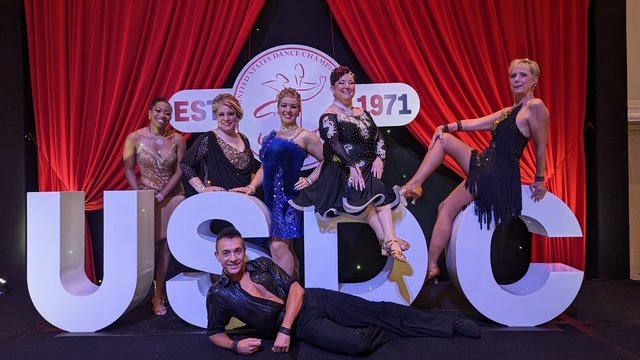
Brea Cox: So, where I am and what I am doing is called The Ballroom of Nashville. You can look, they've got a great website. There are multiple group classes each night. We've got a stretch class, West Coast Swing, the ballroom basics, Lindy Hop, country swing, and country two-step on Thursday nights. I'm usually at the studio Tuesday and Thursday nights are usually my nights.
Our studio has two showcases a year, so the next ones, they're usually at the end of May and October at the Franklin Theatre. And then we travel and do competitions. Our main Nashville competition is in January. It's called Nashville Starz, S-T-A-R-Z. And our studio is usually there.
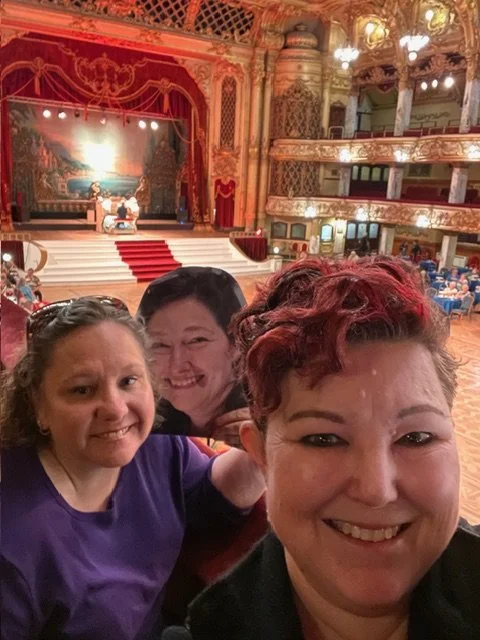
But yeah, we're on the competition circuit going around the world. Actually, last year we went to Blackpool, England, and danced at the 99th Blackpool Dance Festival, which was really special for those of us that went. So, yeah. We're around the studio.
There's plenty of people that can get you plugged in if you want to just social dance, if you want to actually take lessons, if you just want a group class, if you want to compete in different things. There is the gamut, and I'm sure there is a fit for anyone who just wants to see what's happening with this.
Brandi Fleck: Yeah. All right. Well, all of those links and information to that will be in the show notes or the description of this video. And Brea, it's been a pleasure, and thank you so much for coming on the show today.
Brea Cox: Brandi, I appreciate you having me. This is an awesome conversation. Thank you so much.
Join the conversation!
Feel free to share your own experience and let me know if you have any questions in the comments.
Related Posts










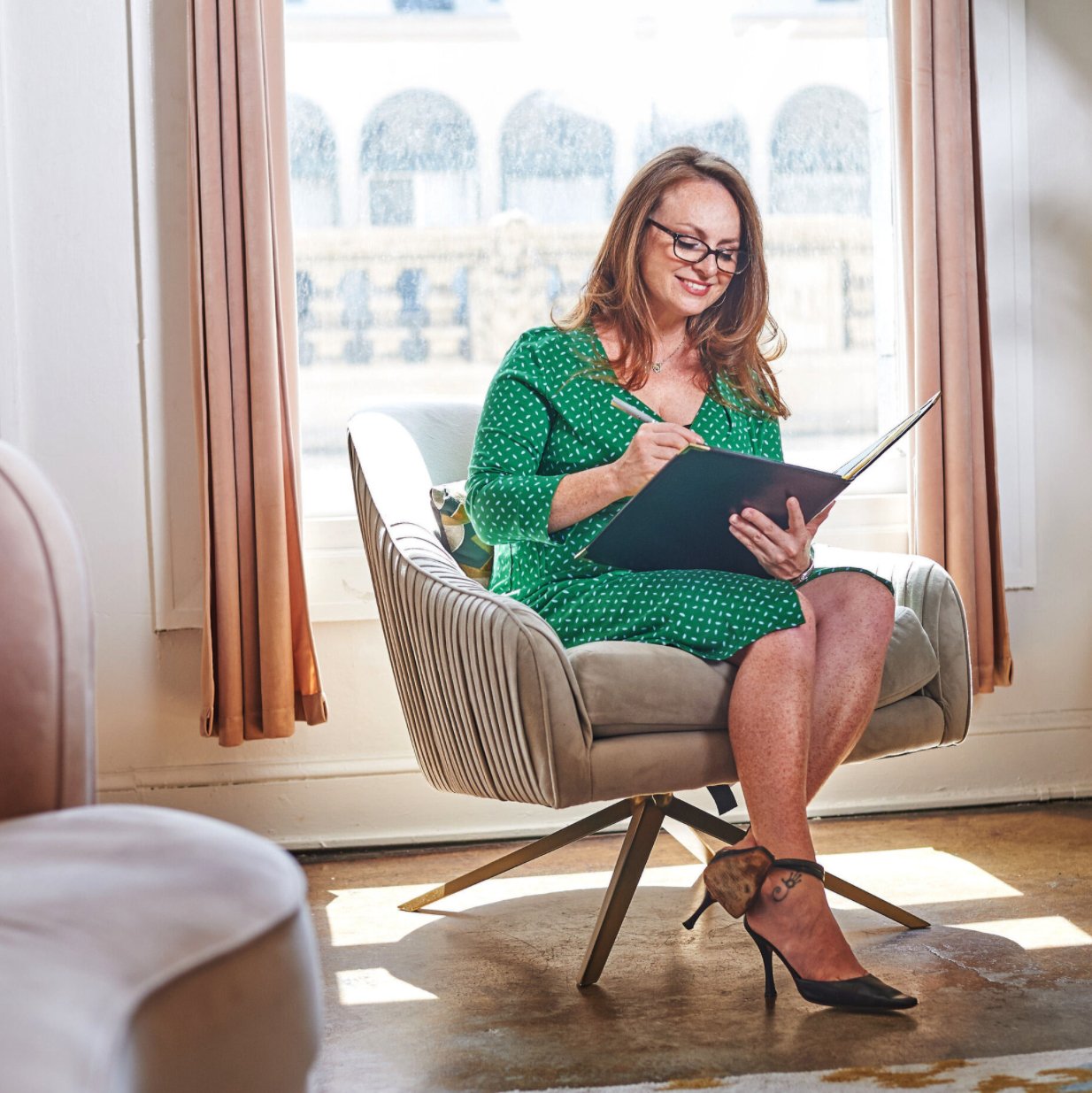

Hi, I’m the founder of Human Amplified. I’m Brandi Fleck, a recognized communications and interviewing expert, a writer, an artist, and a private practice, certified trauma-informed life coach and Reiki healer. No matter how you interact with me, I help you tell and change your story so you can feel more like yourself. So welcome!
Find More on the Blog
Topic
- ADHD
- AI
- Atlanta
- Black and BIPOC
- DIY
- FAQ
- LGBTQIA plus
- Los Angeles
- Nashville
- Seattle
- St Louis
- St. Louis
- UFOS/UAPs/ETs
- abuse
- accountability
- addiction and recovery
- adoption
- affirmations
- afterlife
- altered state
- angels
- animals
- anxiety management
- art
- astrology
- atlanta
- attachment
- awakening
- beauty
- behind the scenes
- being human
- body image
- body work
- boundaries
- brandi fleck
- breathwork
- bullying
- burn out
- burnout
- cancer
- career
- caretaking
- chakras
- channeled
- clarity-dive
- clarity-practice
- clarity-primer
- clean products
- coach
- codependency
Recent Blog Posts
Visit the Full Podcast Audio Archive

Affiliate