What People Reveal When You Really Listen
Interview By Brandi Fleck
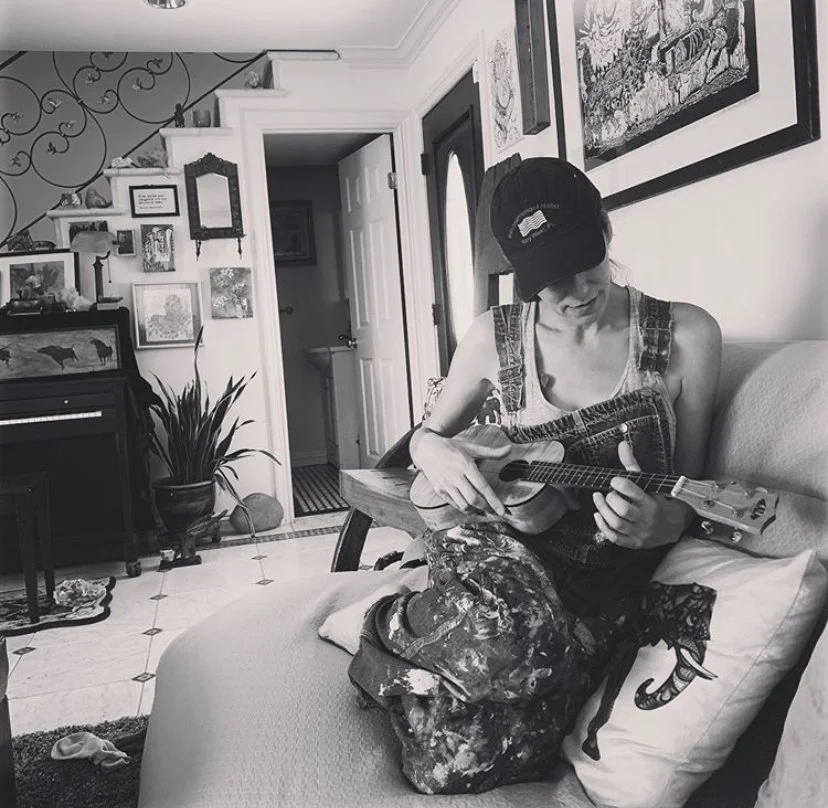
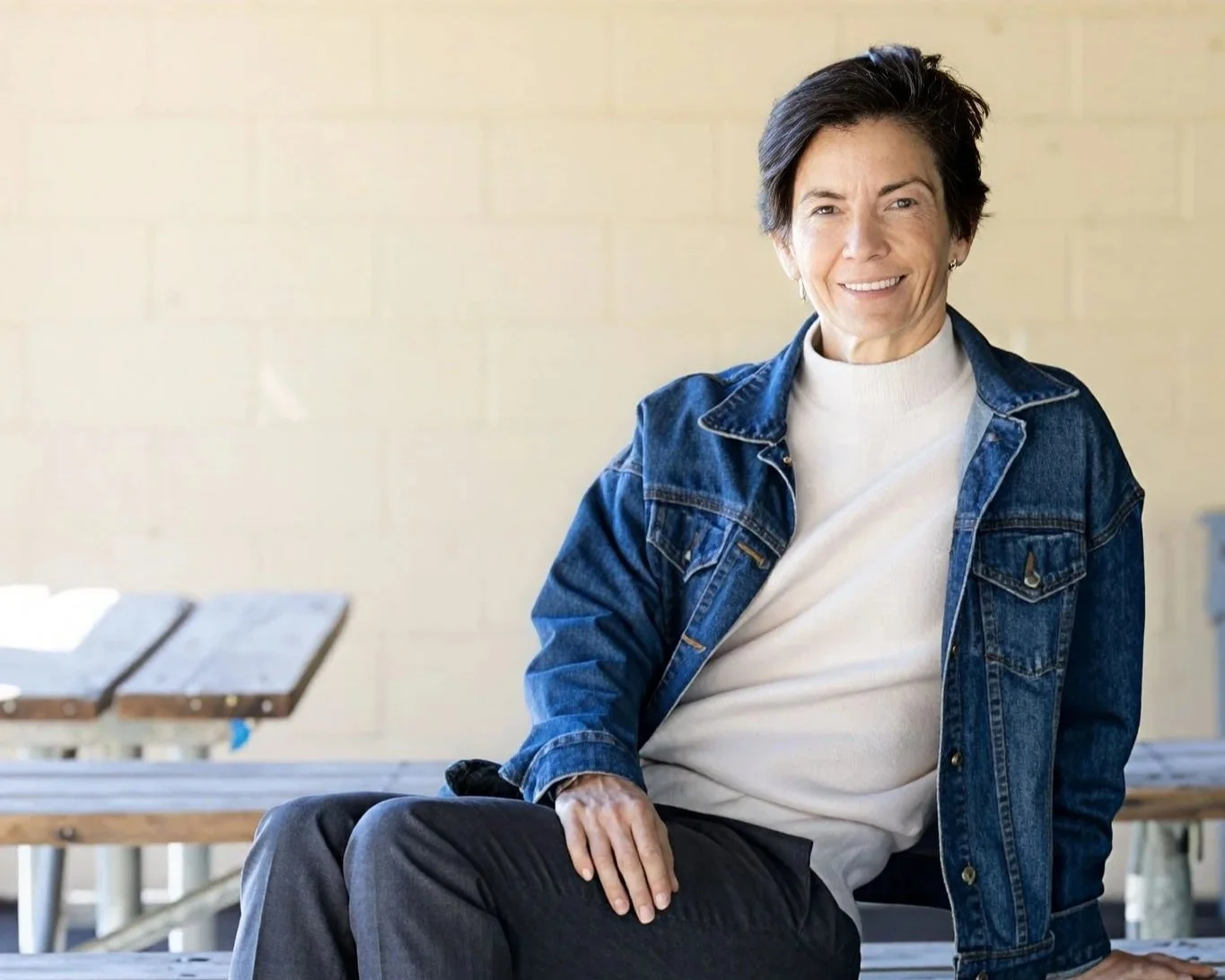
Susan Ruth shares how storytelling, curiosity, and genuine listening can help people feel seen, bridge differences, and create deeper human connection.
Long before launching the Hey Human podcast, Susan Ruth built her career around storytelling.
As a songwriter, artist, and creative entrepreneur, she spent years exploring what motivates people, what shapes their beliefs, and why some conversations bring us closer while others drive us further apart.
In this conversation, Susan reflects on the importance of being heard, what she learned from interviewing hundreds of guests with radically different perspectives, and why curiosity is often more powerful than judgment.
We also discuss creativity, identity, human connection, and the surprising ways a single conversation can challenge assumptions and create meaningful change.
Listen to Susan Ruth’s Interview
Watch Susan Ruth’s Interview
Finding Your Voice and Being Heard
Susan Ruth: My name is Susan Ruth. I am a human. I operate in the world as a part of the whole. I'm stepping into that next phase. I have lived my life telling stories.
Brandi Fleck: Susan Ruth began her career as a performing artist and songwriter in Seattle, Washington, where she garnered multiple performance and writing awards for her albums How to Say Goodbye and Surfacing to Breathe, and she served on the NARAS Board of Governors as Songwriter Governor. In 2006, she moved to Nashville, Tennessee, penning songs in multiple genres including pop, country, rock, AC, and Eurodance for artists such as Reba, Lonestar, Erin O'Shea, and The Union, among others.
In 2014, she released her album All I Ever Wanted Was Everything. Susan's songs have been featured in motion pictures including Life on the Line and Afterlife, as well as MTV's Road Rules and The Real World.
In July of 2016, Susan founded and began hosting the purpose-driven Hey Human podcast. Her podcast has since gained momentum and worldwide attention for its open-minded conversations ranging in topics from science, technology, religion, art, economics, and politics to humanism, philosophy, gender, and race.
In 2018, Susan received the 2018 Valerie J. Hoffman Award for her work with the show. She's also an accomplished abstract painter, a recent graduate of the acclaimed Conservatory program at The Second City in Los Angeles.
Susan is currently writing sketch comedy as well as feature films in comedy and thriller genres. Susan has paneled on topics of creativity, crowdfunding, empowerment, communication, independent music, story, humanism, adversity, and finding one's voice for organizations or projects such as Act Like a Girl, New Millennium Music Conference, FemMusic, Union College, the Seattle Film Summit, the Tennessee Higher Education Initiative, Music Helps, Rad Pujol's Family Foundation, and Sunrise Children's Services.
So impressive.
While Susan has a presence in Nashville, she's currently living in Los Angeles, and I cannot wait for you to hear from her.
Support this show by purchasing from our new line of merch at HumanAmplified.com. With a nod to '90s nostalgia and a focus on elements of our laughing skull, this first batch of designs celebrates the release of the Human Amplified Podcast Season 3, running from January to May of 2021, with new episodes dropping weekly on Tuesdays.
From mugs to hats to shirts, stickers, and premium adjustable face masks, you'll be able to practically incorporate a piece of unique gritty artwork into your everyday life. All artwork was designed by me, Brandi, with you in mind. I got super picky and tested out each product too. I can say with certainty that I love the quality, available colors, comfort, sizes, cuts, and details down to every last stitch of embroidery.
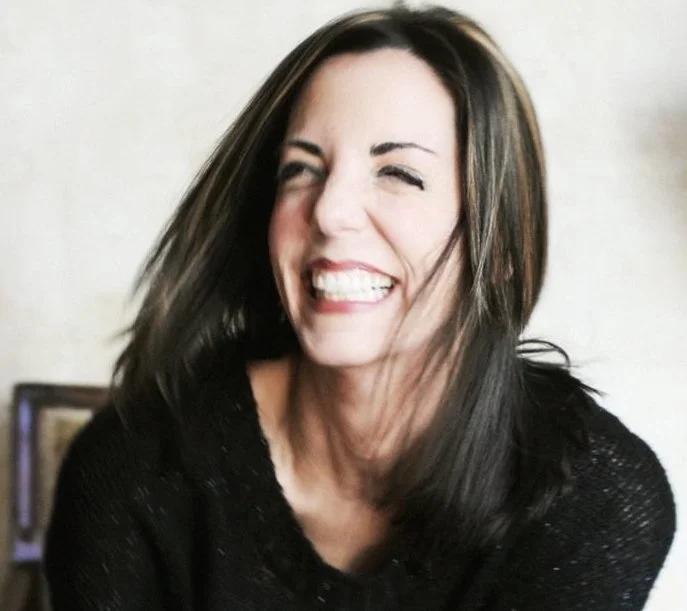
Susan Ruth: My name is Susan Ruth. I am a human. I was raised in the greater Seattle area, lived in Nashville for 13 years, do work all over everywhere, travel all over the place, although that's a little more tough right now. Los Angeles and Nashville are my two stomping grounds.
I am a professional songwriter, an abstract painter, a podcaster (Hey Human podcast), a writer of essays and poetry. I do comedy writing. I just finished Conservatory 1 through 5 at The Second City, which is really exciting. I'm dipping my toe into acting and certainly am a producer of film, TV, that kind of thing. That's the phase I'm stepping into next. Not leaving any of the other phases behind, but carrying all this luggage with me moving forward.
Brandi Fleck: Yeah. What does that next phase look like for you?
Susan Ruth: Film and television. Finishing up a screenplay. I've got a couple television shows in the works and development, partnering with a fantastic woman, Jessica Walter. She and I are attacking this together. It's very exciting. It's a little bit still under the lid, but certainly everyone will know when we're ready to step into those roles officially with the money behind us and, you know, how it goes.
Brandi Fleck: Yeah, yeah. That's awesome.
Susan Ruth: But certainly the creative part is ongoing. The writing of the projects is happening now.
Brandi Fleck: Yeah. Okay. Yeah. Well, that's all very cool. I feel like you have such a rich, interesting creative life. I would love it for our listeners to just get to know you. I'd like to do a quick 10-question rapid fire.
Susan Ruth: Let's do it.
Brandi Fleck: Okay. First question. Favorite movie?
Susan Ruth: Oh God. The Princess Bride comes to mind.
Brandi Fleck: Favorite song?
Susan Ruth: Impossible, but the first song that popped into my head was "The River" by Joni Mitchell.
Brandi Fleck: Biggest hot-topic issue that gets you worked up?
Susan Ruth: Presidency.
Brandi Fleck: Biggest driving pet peeve?
Susan Ruth: Rude drivers who speed up when you're trying to get in a lane when they clearly weren't trying to be there in the first place. I think that's rude.
Brandi Fleck: Cats or dogs?
Susan Ruth: Dogs. But I like cats too. Dogs, and bats, and jellyfish, and lions.
Brandi Fleck: How tall are you?
Susan Ruth: A little under 6'1".
Brandi Fleck: Indoors or outdoors?
Susan Ruth: Oh, both. Can't answer.
Brandi Fleck: Okay. Depends.
Susan Ruth: Depends.
Brandi Fleck: Best instrument to play?
Susan Ruth: I wish I was better at it, but the piano. Although I play both guitar and piano, sort of. Not great. Good enough for government work, as they say. But I wish I was sensational on the piano. That would be incredible.
Brandi Fleck: Best city you've lived in?
Susan Ruth: Los Angeles, I really love. New York is super fun, and Chicago is the greatest city in the world if it didn't have a winter that was 10 months long.
I'm answering far too many answers for each question, but what are you gonna do?
Brandi Fleck: It's totally okay.
Susan Ruth: Oh, and Santorini. Santorini, Greece, is the most beautiful place I've ever been in my life, and I've been a lot of places. It is like a movie set. It's so sensationally beautiful.
Brandi Fleck: Awesome. Favorite food?
Susan Ruth: I love Thai food, honestly. So good. It's like a hug from the inside.
Brandi Fleck: That's awesome.
All right, so now I just want to jump into the fact that, to me, you're an example of an amplified human. Somebody who's not afraid to put yourself out there. What advice would you have for our listeners about being seen and heard in general?
Susan Ruth: Sure. Firstly, thank you. That's a very nice compliment.
For me, the biggest thing is take the leap, because the worst anyone can tell you is no, and that's really not that traumatic, honestly.
I've received far more nos than yeses in my life, but you have to just keep picking yourself up. I've had some really terrible things happen. Financial things, people stabbing me in the back, all the things that come along with being out in the world.
The trick is, of course, to know that that's not on you. That's on them.
The biggest thing is I have had so many people try to tell me how to do things. How I should be with my songwriting. How I should be with my publishing. How I should... "Well, you don't know this, so you can't do this."
All those things belong to the people saying them. They don't belong to me.
I say this all the time. You are the master of you. Not your parents, not your lovers, not your friends, not your siblings, not your boss.
You get to decide what is right for you. You have full dominion, and nobody gets to write your story. You're writing it. You're the author of you.
To me, that's the biggest thing.
Brandi Fleck: That's awesome. I love that. It sort of gave me chills. I'm like, yeah, okay.
Susan Ruth: It must be true. I always say that if you get the chills, that means it's true.
Brandi Fleck: Yeah.
So speaking of being heard, I recently saw a video you posted of going through your past-life regression, and I thought it was so interesting what you said about being heard. Can you sort of recount that for us a little bit and just tell us how that was for you?
Susan Ruth: The past-life regression was such a trip. Rachel Kiz did it, and she's sensational.
I didn't really know what to expect. I've done it now with her a couple times, both on Zoom and in real life.
She's not telling you where to go. You're telling her all the places you're seeing and doing.
In that particular instance that you're talking about, I saw myself as this little girl. I knew that because I was a girl. The village was full of people that were more important than I was, and it made me very sad.
I felt like I had things to say and stories to tell and ideas, like most 13-year-olds, a wealth of information and creativity. I knew that nobody would listen to me, and it made me so sad.
It was wild because my present self, sitting in this room doing this experience, was crying because I was feeling the sadness of this little girl.
It didn't belong to me. It belonged to her. But I knew that she was me.
It was really a trip.
I think it's such a good example of... I have lived my life telling stories. I tell my stories, whether it's in conversation or at dinner parties, or in the paintings I paint, or the songs I write, or now the scripts I write, or even in the performances when I do improv.
You're telling a story. In this world, it seems like the art of speaking is a lost art. The art of storytelling is close to being a lost art.
Every time we lose an old person, we lose all those stories, right? With the podcast, that's why I love recording other people's stories. I think it's so important.
I can see why that little girl... It's interesting that somewhere in a land far, far away, when I was this little girl in this village whose life was cut short, I wanted to tell stories, and now I'm still wanting to tell stories.
I suppose there is a lifetime thread for everything. I don't know if that answers your question, but...
Brandi Fleck: Well, it does. And what's interesting about it is...
Brandi Fleck: That life, you weren't being heard, but now you are. What do you think about that?
Susan Ruth: I suppose that's growth or stepping into one's power.
Youth Empowerment and the Importance of Being Heard
I'm sure a lot of teenagers feel just that. They don't have power, and they don't have dominion. That really starts from such a young age. Like, "Go hug your Uncle Bob," or "Go do this thing that you don't want to do," and the dominion of your own body is taken from you, right?
On a lot of levels. They seem innocuous and no big deal, but I think that does set a precedent to feel like, "I have to do what other people tell me because that's just the way it is."
So you're already kind of shut down.
I think teenagers, a lot of times, do feel that feeling of nobody's listening to them. They're not being heard. What a wealth of knowledge.
If you don't think that young people have that ability, then just type into Google "young inventors" and have your hair blown back by how amazing it is, right? Or storytellers, or philanthropists, you know, 11-year-old philanthropists and stuff.
I really have this thing about young kids and old people. It's just such a wealth of information and power that is largely ignored.
We're scared of old people because we don't want to grow old, and we don't give young people a voice because we don't think they have something of value to share.
Such a bummer.
Brandi Fleck: Oh yeah. That's true.
I wonder if that's because once we become an adult, do you think we forget that we had that information when we were that age? Or we just don't trust it, or it's conditioned out of us? Why do you think that is?
Susan Ruth: I'm gonna go with yes for all of that. Exactly what you just said.
Conditioned out of us because of a lifetime of not being heard. We think that our voice doesn't matter. For certain genders or sexualities or groups, they're told their voice doesn't matter.
There's so many levels to it.
Brandi Fleck: Yeah.
Susan Ruth: I say fight back. Speak up.
Brandi Fleck: Yeah, speak up. Speak out. Hey, so what would you say is the most powerful thing you've ever created?
Building a Purpose-Driven Podcast
Susan Ruth: This podcast. Hey Human podcast.
I've written songs that I really am proud of that have been cut by artists, or some just sit in a pile collecting dust that will maybe never be recorded. But I'm glad that they entered into the sphere of being instead of unbeing.
But the podcast, that body of work, I'm really proud of it. I'm really, really proud of it.
It had a learning curve when I started it. It's four and a half years old now. When I started it, I didn't know what I was doing. I just jumped in.
I didn't know anything about sound equipment. I didn't know anything about the recording process. I mean, I knew how to record songs, but I just kept with it.
I pushed through it. You can hear in the first year that the content's there, but the sound quality might not be there. But I kept going because that's what you do.
I learned, and I'm so proud of that show.
Brandi Fleck: Awesome.
Susan Ruth: And I keep doing it, and it keeps expanding, and it's exciting because you have a podcast.
Brandi Fleck: Yeah, yeah.
Well, hey, let's talk about Hey Human for a minute. Why did you start it, and what has kept you going for those four years? I think that's really impressive because it's a lot of work.
Susan Ruth: It's a lot of work. It came to be, and I've told the story a few times, so people forgive me if you've heard it.
I was in Nashville. I was driving, and one of the big shootings happened. I think it was the Pulse nightclub because it fits up with the timeline of when I started the show.
There were so many of these types of shootings that it's hard to keep track of everything.
Brandi Fleck: Yeah.
Susan Ruth: I was on the phone with my dad. My parents were there in Seattle. I was crying. I was sobbing, really. I was almost hysterical.
I couldn't understand how it was that humans treat each other like that. Where's the disconnect that I can look at you and see something so abhorrent or different that I'm willing to take your life for it?
It's mind-boggling to me and so sad. I was crying, and my dad was trying to calm me down. I said, "I'm starting to give up on humanity. I just don't know what to do. We've lost our way so much."
He said, "You have to look for the good. You can't give up."
I'm sure I scared him because I was like, "There's nothing worth living for." I was very dramatic, but rightly so. There was a great loss of life.
I went home, and I thought about it. I had this really intense experience at the grocery store, which was where I was headed, and it reminded me how beautiful people are.
I got home. It was like a kiss from God for a second, if you believe in those kinds of things. In my sorrow—it actually chokes me up thinking about it—in my sorrow, I was reminded that, no, in fact, there is much more beauty than darkness.
You just have to remember that.
I went home and thought about how I could show humanity that we're all connected somehow, even in our most different, even in our worst moments.
That's when this was born. Hey Human was born.
Brandi Fleck: Awesome. Yeah, a mass shooting also inspired me to start a podcast.
Susan Ruth: Oh my gosh.
Brandi Fleck: It was the one in Vegas, though.
Susan Ruth: Oh yeah.
Brandi Fleck: So it totally makes sense to me. What was your grocery store experience? What was that kiss from God?
Susan Ruth: I was still sobbing when I walked in the store, and I had to keep it together because, you know, you've got to go into Kroger.
I was just picking up a few things for dinner. I got a box of macaroni and cheese, a sweet potato, and I think a kombucha or something.
I got into the checkout line, and there was a guy in front of me, this older Black guy. When I say older, I mean he probably was pushing 80.
Oh, and I had a packet of tuna fish.
He looks at my little pile. He looks at me, and he smiles. He says, "Is that for dinner?"
I said, "Yeah."
He said, "Sweet potato, huh?"
I said, "Yeah."
He said, "I love sweet potatoes."
I said, "I love them too."
There was something in his eyes.
Then he looked at me and said, "It's gonna be all right, sister. It's gonna be all right."
Which makes me want to cry right now.
Brandi Fleck: Yeah.
Susan Ruth: I just looked at him. It was like he saw right through me.

I had calmed down by the time I was walking through the store, so maybe it was a little blotchy face, but there was just this moment.
It was beautiful.
Brandi Fleck: Yeah. That's awesome.
I'm like, yeah. Yeah. Okay.
Susan Ruth: And that's the thing. I think we are so hurried and rushed, and we forget to look each other in the eye.
What I mean by that is to feel empathy. Empathy. Empathy. Empathy.
Looking at another person and seeing our whole lives intertwined, really.
Brandi Fleck: Yeah.
So in doing your podcast, have you found any answers over the course of the last four years in regards to the disconnect? What's going on?
Susan Ruth: Listening. That's pretty much the bottom line.
Human Connection, Empathy, and Listening Skills
I think people are waiting for their turn to talk. I think there are a lot of people who feel they don't know how to touch their own pain. Since they can't touch their own pain, they lash out at others.
When people are waiting to be able to say something instead of listening, there's a lot lost in translation.
Through this podcast, I've certainly developed better listening skills, but I've also realized that no matter how different one of my guests might be from myself, I see myself in them in some way or another.
Look, there are a lot of roads to take, and we go toward the places where we feel loved and accepted and needed.
For a lot of us, those might be dark places because even in darkness we might find connection. So I'm trying to shine some light in those places.
Brandi Fleck: You've had over 200 guests. What episode are you on now?
Susan Ruth: I feel like this week is going to be about 232. I don't know. Somewhere in there. I'm pushing in that direction.
Yeah, maybe it's 232. That seems right.
Brandi Fleck: By the time this airs, you'll be even further along for sure.
Out of all of those guests, could you put a finger on one who has left the biggest impression in your own life?
Conversations About Racism, Bias, and Human Behavior
Susan Ruth: I interviewed a Grand Dragon in the KKK. It was in the very beginning of the show.
Brandi Fleck: Oh, damn.
Susan Ruth: It's episode 30.
I went to his house. I was really nervous, and everyone around me thought I was an insane person.
What was really interesting is that I listened to what he had to say. I allowed for the space, but I held my ground because I know who I am. I didn't have to raise my voice. I didn't have to say, "You can't say that," or, "That's insane."
I just asked questions.
"Why do you think that way?"
"Where do you think that comes from?"
"How do you feel about that?"
Then I would offer up scenarios like, "What if this happened?" or "Did you know about this?"
In the beginning of the episode, he's very "n-word, n-word, n-word," and by the end he completely stopped saying that and says "African American," which I thought was an interesting change.
But what was even more fascinating was a couple weeks after that, he sent me this email. It was a list of Black inventors, and he said, "This can't possibly be real, right?"
Because, you know, he's super racist. I said, "Well, just by eyeballing this, a couple of these for sure. But you know what? Let me just research it."
I didn't say, "Of course it's real."
I said, "I'm going to research it, and I'll get back to you."
For whatever reason, he trusted me. He said, "I don't trust the internet, but you're going to tell me the truth."
Kind of baffling. There were, I can't remember now, 10, 15, 20 people on this list, and I wrote up a little synopsis of every single person, either whether they reinvented the wheel and made it better or if they came up with something completely on their own.
I wrote it all out. For example, the woman who invented a certain type of laser eye surgery did so because her mom was going blind. Or the guy that invented the first stoplight out of necessity.
All these really wonderful contributions to society.
I sent it to him, and he responded with just three words. He said, "That's so cool." Okay, so this person who thought that there was no way anyone of color could invent, create, be a, you know what I mean?
Suddenly he's now like, "Oh wait, there's something there." I think that turn and that tiny little bit of growth was because of that conversation.
Brandi Fleck: Yeah.
I mean, I had bona fide arguments with my friends about interviewing him, saying, "You can't give him a voice."
Susan Ruth: I said, "I'm not giving him a voice. I'm shining a light on him."
I would argue that everyone—and I talk about this in the preamble of the show—I think everyone has racism. We all are guilty of it.
Whether it's holding our purse a little closer when someone is walking by us or whatever it is, everybody's got it.
Here's the thing that was really interesting too.
One of my best friends called me up after the show aired and said, "I've got some soul-searching to do."
This was one of my friends who was like, "I'm not racist. Everybody's not racist."
I said, "I don't agree, and I'm gonna show you why."
The other thing too is that we want to put all of our monsters in closets and back corners and shadow places, and they're our neighbors and our grocery store clerks and our uncles and our aunts and our parents and our sisters.
You know what I mean?
This behavior, as we now can see years later, it's everyday people feel this way.
Brandi Fleck: Yeah.
Susan Ruth: My friend called me up after it aired and she said, "I have some soul-searching to do."
I said, "Why is that?"
She said, "Because he said a couple things that I've thought myself."
I thought, "Oh my God. I thought the same things that a Grand Dragon in the KKK has thought."
I said, "Right there is why I did the episode."
Brandi Fleck: Wow. That's mind-boggling. I really love what you said about how you're shining a light on certain issues because I've oftentimes wondered, "Should I edit this out? Should I not air something that I just vehemently disagree with?"
At the end of the day, I've aired the stuff because I was like, "No, I'm going to go ahead and air it."
But it's so difficult to make those decisions. That's awesome, and it's inspirational.
Susan Ruth: That's the reason why I don't do ads on my show, too. I don't begrudge anyone making money off their thing. That's fine.
But I didn't want to be beholden to any advertiser saying, "Oh, you can't do that," or "You have to pull this or we'll pull sponsorship."
Everything I do is donation-based, or if people want to buy merch or something, that's great too.
But I don't do ads because I just don't want to have to answer to anybody. I think these conversations are hard, but they have to be had.
Otherwise, people just happily, blindly go along with the idea that things don't happen, that doesn't happen anymore, that's not a thing anymore. It's really easy to feel that way when you're not in the group.
Whichever group it is. Men are like, "I don't mansplain," and every woman's like, "I'm sorry, what?"
People of color are like, "Racism is a thing," and white people are like, "I'm not racist. Racism isn't a thing." Do you know what I mean?
It's important to shine a light on all of it. My foibles too. I've not known things, and I've said things and thought, "Oh, well maybe that's not right."
Not in a racist way, but just in an "I don't know things" way.
I'm not trying to be smarter than my guest. I want to learn along with everybody listening too.
I do know some stuff, which makes it easier to have conversations, but I'm not trying to outsmart anyone.
Brandi Fleck: Okay, well that's awesome. Let's shift gears into singing and songwriting for a little bit.
Can you describe what being a singer-songwriter living in Nashville is like, and how is that different from L.A.?
Susan Ruth: Firstly, I have to say Nashville is a masterclass. I will say it until I drop dead.
It's a masterclass in songwriting. If anybody wants to learn the craft of songwriting, that's the place to do it.
Now, the landscape has changed over the decade that I've been writing there, but definitely some of the best songwriters in the world are there, and in Sweden. Not to say they're not in other places too, but you get what I'm saying.
Brandi Fleck: Yeah.
Susan Ruth: Honestly, it's really just perseverance. I'm not going to lie. It's hard. It's hard to not give up. It has to be in every essence of your being. I've had friends quit, and I've said, "How did you do that? What is your secret? This is brutal."
You could liken professional songwriting to being in an abusive relationship.
Just when it's pummeled you to near exhaustion and almost death, then it brings you flowers and candy and says, "Oh, you got a cut," or "This big huge writer wants to write with you."
Then you're like, "Oh, okay. I'm back. I'm back in the ring. Hit me again."
That's sort of weird, but I would say that any creative experiences that in any field. To some extent, I'm sure it happens in the business world as well.
I can't imagine Wall Street is a walk in the park. I don't know that there's a difference between that. Everyone brings their own experience to the table.
For me, to have a sweeping answer about the difference between Nashville and L.A., I love Los Angeles.
I love the vibe. I love the weather. I love the creativity. I feel like Nashville is more of, "We do this one thing."
There's other music that's on the fringe, but really it's a country music town. There's no better songwriting lesson than learning to write an excellent country song because it's very specific.
It's a tight three-and-a-half-minute, three-minute movie. At least it was. I think now pop has implemented so much that it's kind of changed a little bit. But for the most part, I would say that's true.
In Los Angeles, you can write anything. It doesn't matter. I've gone into rooms here and written little ditties. I've written pop stuff. I've written rock stuff. I've written what would be considered emo, I guess, if that was still a thing.
I think there's less limitation, perhaps. To that end, when I was in Nashville, I wrote what I felt.
I tried writing what I didn't feel to fit into the mold, and I was not happy. I did that at the beginning. I think that's a process people go through.
They get to Nashville, they have a certain style and a certain sound, and then they learn very quickly that Nashville has a particular desire of you, a want of you.
You try and adhere to that, and then you go and crank out some crap.
Then you walk through that fire and come out the other end and go, "You know what? I'm gonna take the things I've learned, but put it to who I am."
Then the quality of song goes back up again.
I feel like maybe everyone in Nashville has that year or two of learning Nashville, of crap, having not-great songs because you think you're trying to be something, and it comes off as disingenuous.
The one thing I say all the time about songwriting is be truthful.
Just be truthful.
People know when you're faking it.
Brandi Fleck: Okay.
Susan Ruth: So is it possible to still be yourself and fit that into what Nashville's looking for? I say yes. But that's my personality. It may not work for other people, but I say yes.
Brandi Fleck: Okay. Yeah.
And some people really in Nashville do the Nashville sound, like a Luke Laird, for example.
Susan Ruth: He figured it out really quickly and can crank it out.
But he also has the benefit of being Luke Laird, so it doesn't matter what he puts out.
Or an Ashley Gorley.
Some people, once they've reached a level of success, and I would say that for any artist or writer, then they get to just kind of do their thing, and nobody really thinks twice because it's them.
Brandi Fleck: Yeah. Yeah.
Okay. Was songwriting your first creative love?
Susan Ruth: Singing was first.
Brandi Fleck: Singing was first. Okay.
Susan Ruth: And poetry.
But singing for sure.
I didn't start painting until late in life.
Brandi Fleck: Oh, okay.
So it was a natural evolution of just things you were adding into your creative...
Susan Ruth: Correct.
Brandi Fleck: ...field, for lack of a better word.
Susan Ruth: Although they're all connected.
Brandi Fleck: Let's talk about your fine art for a minute. The painting. How is that process different for you from creating music, or if it's not, how is it related?
What is that relationship like?
Creative Process Behind Songwriting and Painting
Susan Ruth: It's a good question. For me, the structure of songwriting has more of a regimented flow to it. I have an understanding of the rules. You have to know the rules so you can break them, obviously.
I have an understanding of the structure and the rules when I'm going in. I'm primarily a lyricist and a melody writer.
As I said before, I can play guitar and piano, but people may throw fruit and vegetables at me, so I try and leave that to the big people that know how to play their instruments better.
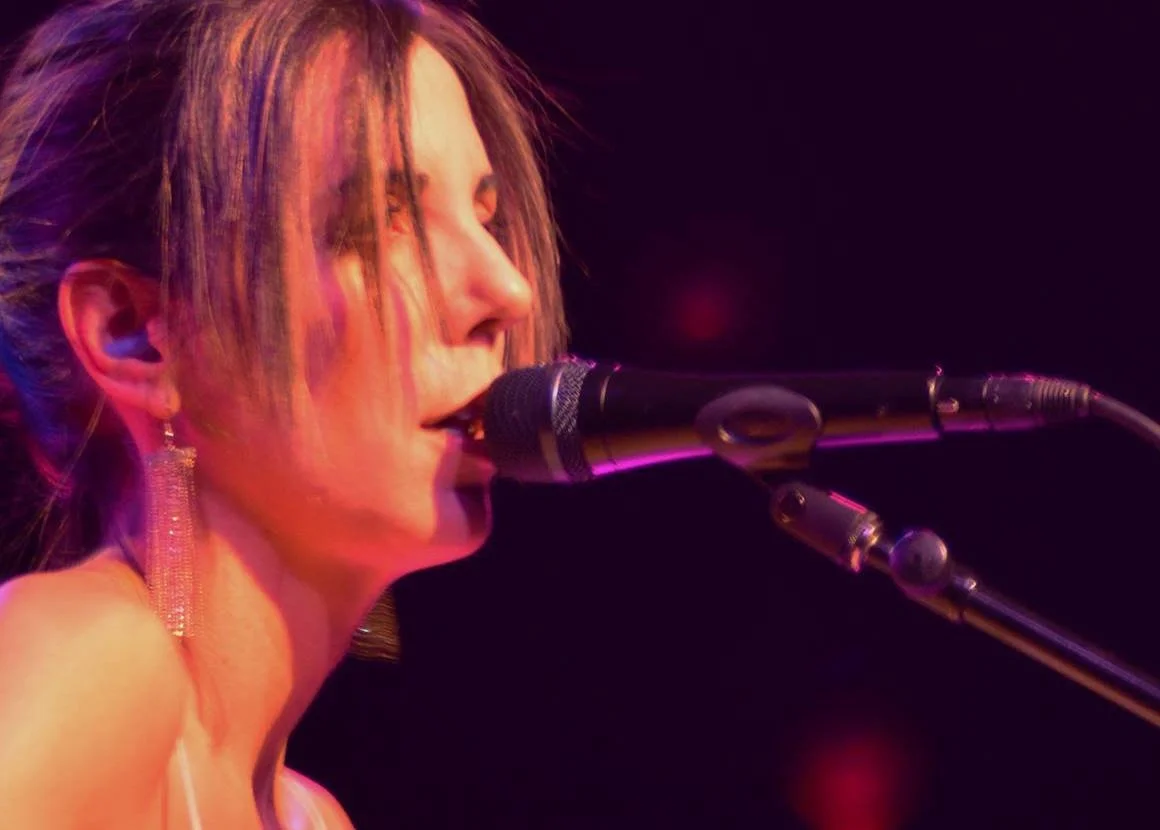
I love words. That's my forte.
With painting, I have zero expectation. I go in with a blank canvas. I didn't study art. I didn't get an MFA or anything like that.
I look at my canvas and just start putting paint on it. Eventually I start seeing things, and those things turn into what the final project is.
I think for a lot of painters, they do smaller paintings of an idea and then they make it a little bit bigger. They suss it out and figure it out. I don't know if abstract artists do that as much, but I know realists do.
I do not. I just kind of go for it, and it's very freeing. I check my brain at the door. I think all humans have a natural understanding of light and color, unless maybe they're colorblind and then that's a whole other thing.
Knowing that the sky is up and the ground is down, and what colors naturally work well or are dissonant. Like in music, when something is dissonant, it's still pleasing for some weird reason. It's the reason why ASMR videos are so popular.
There's that sort of dissonance in art as well.
I just kind of go for it. That's a very long-winded answer to your question.
Brandi Fleck: No, that's totally good.
When you're writing a song, do you just go for it, or do you have something in mind that you're going to build out first?
Nashville Songwriting and the Music Industry
Susan Ruth: In Los Angeles, I would say it's a "go for it."
In Nashville, it's a "something in mind."
Brandi Fleck: Okay.
Susan Ruth: In Nashville, when I walk in a room, I have titles. I have song ideas. I may have portions of songs.
In Los Angeles, that might be the case, but more often than not it's a "let's just see what happens" kind of thing. In my experience. I don't know that that's everyone's experience, but that's mine.
Brandi Fleck: Sure.
So you're able to adapt pretty easily.
Susan Ruth: Yeah. Certainly.
I've written songs and had cuts in lots of different genres: pop, R&B, rock, Americana, country, obviously. I haven't ever had a rap cut, and I haven't ever had a true blues cut. I've done R&B, but yeah.
Brandi Fleck: Okay.
Susan Ruth: And I've never written an opera, but I love opera.
Brandi Fleck: Awesome. Okay, I'm going to shift gears again.
I saw your post the other day about all these statistics and things that people don't think about with COVID-19, and it looked like you got it back before we knew it was even here.
Susan Ruth: Yeah.
Brandi Fleck: Would you be interested in talking about that and telling us about your experience?
Living With Long COVID and Recovery Challenges
Susan Ruth: Sure. I spiked a super high fever. I threw up all day long, and the fever went away. It came out of nowhere.
Then I slept eight days straight. No food. Barely drinking.
My roommate went and got Gatorade, and I kind of sipped on that a little bit, but really, I've never slept so much in my life.
I couldn't get up out of bed. Then it just sort of lifted. I was able to eat a little something about eight or nine days out, but I was still so tired, and the tiredness lasted for another week or two.
I ended up with two spikes of fever in that initial eight days. I had one spike and then it went away, and then a couple days later it spiked again just out of nowhere.
What's weird is that when I'm sick, and I had the swine flu in Nashville way back in 2007, even at my sickest then, I was still walking around the house.
I was miserable, but I was up and around and stuff. I couldn't even watch TV. Luckily, I had a podcast episode in queue so I could just post that, but that took all my energy to even do that little bit of work.
It was nuts, man.
Brandi Fleck: How did you even know that you had it?
Susan Ruth: I didn't then.
Brandi Fleck: Okay.
Susan Ruth: I didn't then.
I don't think anybody did.
I talked to more people in places like New York and Los Angeles. I think it started coming through in September of the previous year.
Brandi Fleck: Oh wow.
Did your roommate end up getting it?
Susan Ruth: Yeah. She got hit worse.
She was so, so sick and was down for quite a long time. It took a long time to get rid of the cough afterward.
I'm not kidding. When I got sick and was throwing up, I basically opened my door and said, "Stay away from me."
I never opened my door again other than to get the Gatorade she left at my door.
I never went into the rest of the house. I stayed in my room the whole time. I never got out of my bed.
Brandi Fleck: Was there ever a moment when you were like, "I'm going to die. I need to go to the hospital"?
Susan Ruth: I did think that a couple times. But like most of us, I was stubborn.
I was like, "I'll just wait it out another..."
Here's the interesting thing. Now they know to get people to sleep on their stomachs in the hospital, but that's a natural sleep position for me.
I was sleeping on my stomach the whole time. Between that and just sleeping straight through. Maybe in a way, not knowing at the time. I think your brain, if it doesn't know you might have contracted a deadly disease, is not going to have that mindset.
If you have the mindset of, "I'm just gonna get through this," you get through it. That's a very layman's-terms way of putting it, but I do think mind over matter sometimes.
Brandi Fleck: Yeah.
Susan Ruth: There's a great book called Healing and the Mind from way back when that talks about that stuff a lot. A positive attitude really helps a great deal.
I am dealing with lung issues. They are getting better, but man, it felt like an elephant was sitting on my chest for six months.
I was having to do eight, nine, ten puffs on my inhaler that they prescribed to deal with it. Now I think I'm down to, if I'm lucky, four puffs a day. Some days I'm able to go without it at all, which is great.
But I never in my life. I mean, I would run. I could run upstairs. I was having issues, especially back in March. Walking up the stairs was winding me.
I'm fit. That's not normal for me.
Brandi Fleck: Okay.
So you weren't on an inhaler before, right? And now it's just a thing you have to do?
Susan Ruth: Yes.
Brandi Fleck: Does that impact your singing?
Susan Ruth: I wasn't able to sing this whole time. It's just now coming back, which is kind of scary. I was like, "Well, I guess my singing career is over."
Brandi Fleck: Okay.
Well hey, where can people find all of your stuff?
Susan Ruth: Oh my gosh. Okay. So many places.
HeyHumanPodcast.com is on all the podcast places, obviously. I just set up a website, so it's there too.
HeyHumanPodcast.com. Hey Human Podcast on Facebook and Instagram.
Then my personal account, Susan Ruthism, S-U-S-A-N R-U-T-H-I-S-M, is on Facebook, Instagram, and Twitter.
I try to keep all the content different on all of these different platforms. On my Facebook, I try and do a lot of arts and science and interesting people things. On Hey Human, I focus mostly on interesting people things.
On the Hey Human Podcast Instagram, I try and focus on people in history, or if somebody wins a Nobel Priz. Especially a woman because I think it's important to be like, "Guess what? Women are smart too. Surprise."
Then on Twitter, I'm more political.
Brandi Fleck: As is Twitter.
Susan Ruth: Yes. And then SusanRuth.com is music, art, and acting stuff.
On iTunes you can find my music, and on Spotify.
But iTunes is better because you might actually download the whole album. That's under Susan Ruth. You can really find me all over the place if you Google me, I suppose.
Brandi Fleck: Awesome. Can people buy your artwork?
Susan Ruth: Yes. One hundred percent.
If you go to SusanRuth.com, you can see a whole lot of my artwork there. I'm not great about always posting stuff up, but certainly. I post on the socials here and there for newer pieces.
Absolutely, you can reach out to me. Info@SusanRuth.com will find me.
Brandi Fleck: Awesome.
Well, thank you so much.
Susan Ruth: Thank you.
Brandi Fleck: It's been an absolute pleasure having you on the show.
Susan Ruth: It has been a pleasure for me. Thanks for asking me. That tickles me. I think, "Oh, you know, I'm just in my little corner doing my little thing."
But it's always fun when somebody says, "Hey, I notice you." It's cool.
Brandi Fleck: For sure. Thank you so much.
Join the conversation!
Feel free to share your own experience and let me know if you have any questions in the comments.
Related Posts









Hi, I’m the founder of Human Amplified. I’m Brandi Fleck, a recognized communications and interviewing expert, a writer, an artist, and a private practice, certified trauma-informed life coach and Reiki healer. No matter how you interact with me, I help you tell and change your story so you can feel more like yourself. So welcome!
Find More on the Blog
Topic
- ADHD
- AI
- Atlanta
- Black and BIPOC
- DIY
- FAQ
- LGBTQIA plus
- Los Angeles
- Nashville
- Seattle
- St Louis
- St. Louis
- UFOS/UAPs/ETs
- abuse
- accountability
- addiction and recovery
- adoption
- affirmations
- afterlife
- altered state
- angels
- animals
- anxiety management
- art
- astrology
- atlanta
- attachment
- awakening
- beauty
- behind the scenes
- being human
- body image
- body work
- boundaries
- brandi fleck
- breathwork
- bullying
- burn out
- burnout
- cancer
- career
- caretaking
- chakras
- channeled
- clarity-dive
- clarity-practice
- clarity-primer
- clean products
- coach
- codependency
Recent Blog Posts
Visit the Full Podcast Audio Archive

Affiliate