
Adoption and the Search for Your Identity
Interview By Brandi Fleck
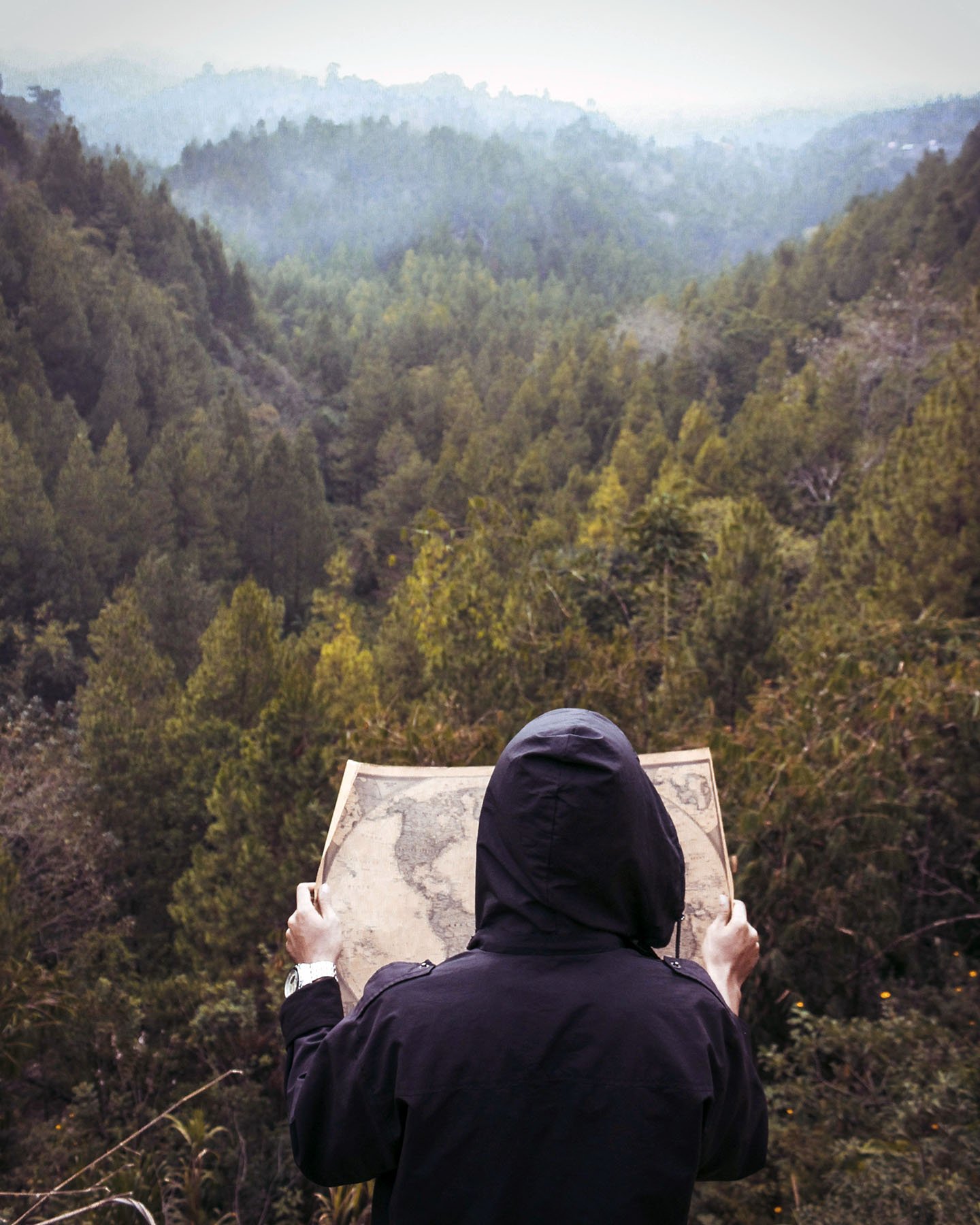
Jason O'Donnell shares how reconnecting with his biological family transformed a lifelong search for identity and challenged everything he thought he knew about where he came from.
Who are you?
It's a simple question when adoption isn't part of your story.
For Jason O'Donnell, growing up adopted never left him feeling like something was missing. But years later, reconnecting with his biological family challenged assumptions he'd carried for decades and revealed that identity isn't nearly as straightforward as a family tree.
The answers Jason found weren't the ones he expected. Instead of bringing his story to a close, they opened the door to bigger questions about identity, family, and where we find our sense of belonging.
Listen to Jason O'Donnell’s Interview
Watch Jason O’Donnell’s Interview
How Adoption Shapes Identity From the Very Beginning
Brandi Fleck: For the last two weeks, we heard the amazing adoption journey of a couple with twins who persevered for years until they brought their third son home. You can check out that story at humanamplified.com/blog/bring-adopted-child-home.
This week, we're getting insight from the other perspective: that of an adopted son.
Today's guest, Jason O'Donnell, has such a positive perspective about being adopted that he was lucky to have extra love. I feel so privileged that he decided to share his adoption story and some of his life's journey with you and me.
Jason grew up in California with Midwestern parents who relocated prior to his birth. He now lives with his wife and cats in Oregon. He is a successful content strategist, entrepreneurial whiskey distiller and tasting organizer, and has extensive experience with medieval historic reenactment.
I met Jason through a friend while at a writing conference in Portland, Oregon. The three of us shared drinks under the wet sidewalks of Portland in a speakeasy called Pepe Le Moko, and we got to know one another, where I learned of Jason's rich distilling identity.
In this episode, we continue that discussion, plus learn how it connects to adoption and how you can use cooking and flavors to enhance your own identity. Gastronomy is a very strong interest of Jason's, so let's hear more about his experiences, and you'll definitely learn something about yourself in this episode through his detailing of his own introspection and philosophies on identity.
Brandi Fleck: Hi, Jason. Welcome to the show.
Jason O'Donnell: Well, thank you for having me, Brandi. It's a pleasure to be here.
Brandi Fleck: Yeah, I'm really excited to have you here today because, since I've gotten to know you, I feel like you have a really rich journey that you've been on, and I just can't wait to dive into some of it and explore it.
I'd love to take a look at your life in the present and go back to the beginning, where your search for identity started.
With that in mind, how are you doing, and what is your life like today?
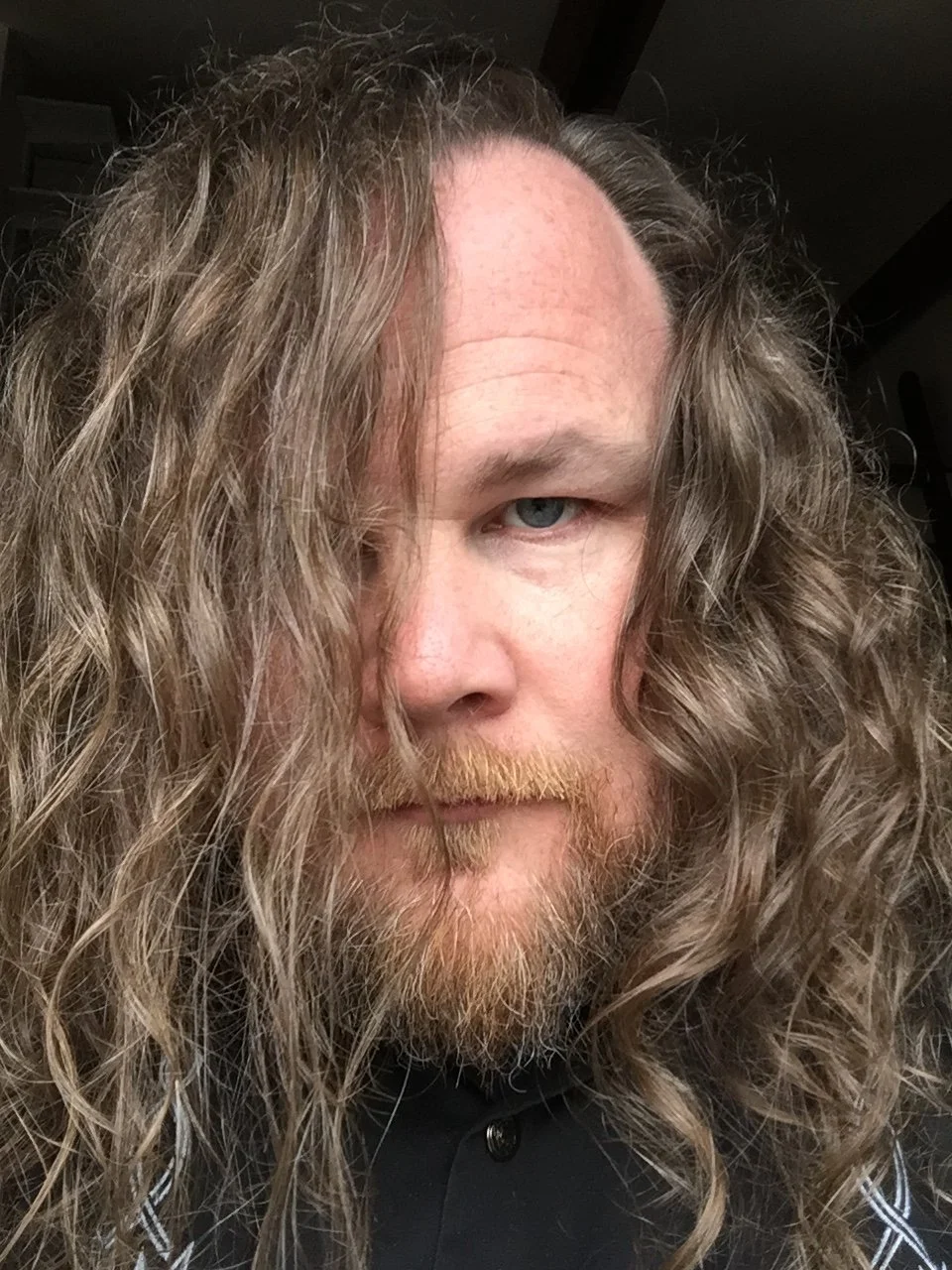
Jason O'Donnell: I'm doing well. Living, learning, loving, laughing, struggling, surviving, succeeding. It really is a crazy ride, this life that we all live, right?
In a more concrete realm, my day-to-day life consists of just too many conference calls. I'm constantly on calls for my day job, doing strategy and planning, making sure those ideas are executed to help drive transformation within my day job's organization.
And in my business, it's been busy, but it's keeping me off the streets and out of trouble, so they say.
Brandi Fleck: Sure, totally.
So, with all that in mind, how do you approach life?
Jason O'Donnell: I try to approach life with an eye to learning as much as I can.
Often I try things on my own, but in attempting to learn from my mistakes, I like to talk with others, like you, of course. Through these conversations, I try to understand different perspectives and ways of looking at the world.
I also like to approach life as a collection of interesting experiences and learn by doing.
Brandi Fleck: Okay, that's really cool, and I'm glad you're talking to me today.
You have talked to me before, and you've told me a little bit about impostor syndrome. So I want to transition into that and talk about when you have felt that in your life and why you think it shows itself.
Jason O'Donnell: Absolutely. It's an interesting concept that I only recently learned about in the past few years and realized that it applied to such a large portion of my life.
I've really struggled with impostor syndrome pretty much from day one. I constantly try on new hats, figuratively, to see if they fit.
This really manifested in both my career as well as my hobbies. As I jump from interest to interest, I build a large amount of experiences that I draw on as data points to help me figure out who I am.
That sense of being an impostor, that soon I'll be figured out for the faker I am, stays with me for quite a while while I try every hat on. It's generally a phase that tends to dissipate once I become adept or more confident in my new job or new hobby, but it never really vanishes for me.
I really believe it stems from those continued attempts to understand who I am by trying on those different hats as a way to figure out my identity.
Brandi Fleck: Okay.
I've felt impostor syndrome before in life, and I know other people, mainly creative types or intellectual folks, who just don't feel like they're really doing what they can do.
It's interesting to me because you don't seem like a faker at anything to me. Why do you think you feel like you're faking?
Jason O'Donnell: Well, I discovered the concept of impostor syndrome at Write the Docs, where a number of technical writers tend to congregate at a conference.
It was one of those consistent themes that popped up over the course of a few different conferences over the years, enough so that I really saw it as almost an invasive theme throughout the tech writers.
It's really something that I've struggled with and worked on once I finally had words to identify what it was and realized how I'd been dealing with this my entire life.
The fact that I think I can come off as confident when I need to is simply a way for me to mask that feeling of being a faker, that feeling of impostor syndrome. Even though I'm dealing with it on the inside, I don't want to really show it on the outside.
Brandi Fleck: Right.
So I wonder if it has anything to do with your adoption story. Let's dive right into that. Tell us about what happened and why you were adopted.
Jason O'Donnell: Absolutely. I think it does all connect in the grand scheme of things.
I was actually adopted from before my birth. My birth mother was very young, 16, and obviously not in a position to really care for me at the time. My adoptive mother and birth mother shared an obstetrician.
He's the one who put them in contact with each other, and they worked out a private adoption negotiated prior to my birth. So when I was released from the hospital, I actually went home directly with my adoptive parents right from day one.
I never really directly asked my birth mother why she decided to place me for adoption because her reasons, to me, are both relatively obvious and a bit irrelevant to me as a person. I'm curious, but mainly from an academic and intellectual perspective.
Her answers to that question, while critically important to her, of course, really bear little impact on how I live my life and who I am. It's just a simple fact of who I am. I'm adopted.
Now, that said, she hadn't really disclosed my birth to my birth father. So when I was around a year old, there was a paternity case where he sued for custody. In fact, I believe it was a precedent-setting case in Orange County as the first paternity case of its kind.
Brandi Fleck: Wow.
Jason O'Donnell: Ultimately, the courts decided to allow my adoptive parents to retain their legal custody without disruption to my early life, my early living conditions. So, from my perspective, the courts really made the right call, as I didn't have any disruption within my life because of an adoption. It was simply, from day one, just a part of who I am.
Brandi Fleck: Okay. That is good to hear that you think the courts made the right call, honestly.
Growing Up Adopted Without Feeling Different
So, how did being adopted impact you growing up? I know you said there was no disruption, but what did it do in terms of your identity?
Jason O'Donnell: Oh, absolutely. It definitely impacted me, even though it's been that way from day one. Of course, you can't get away from that impact, right?
In hindsight, being what it is, I think my adoption really gave me the privilege of more opportunity and allowed me to explore many more things than I perhaps may have otherwise had access to.
While I always knew I was adopted, and my parents were 100% open with me from even before I was old enough to understand what it meant, it was never really a monumental realization for me but, like I've said, just a fact of life that didn't feel different to me from any other child's life.
Brandi Fleck: Sure. Just something like how some kids have one parent or two, one sibling, none, many, two mothers, two fathers. Being adopted just meant I had another set of biological parents whom I'd not yet met.
Jason O'Donnell: Okay. I want to point out here that I've never really felt any sense of a hole in my life, like I wasn't complete or anything like that. Rather, it was always the opposite. It was as though I had more in my life because of my adoption, that somehow I lucked out and had even more loving and caring people than most.
Brandi Fleck: That is a really great perspective. Love breeds more love, and I'm glad to hear you were surrounded by it.
So, what is a home to you, and how has your idea of home and feeling at home been impacted?
Jason O'Donnell: Well, because I've always known my adoption, home has really just been the place where I grew up, where my parents raised me, where I returned to for holidays. My parents are still in the same house that they've been in since 1971.
Brandi Fleck: So awesome.
Jason O'Donnell: Home really hasn't changed from my understanding of it from the beginning.
Of course, there's the more esoteric sense, right? Home has a number of meanings to me there, depending on context. Once I left home for college and got married, the idea of home changed to include my first apartment with my wife and every other residence we've moved into since.
While I default to the structures, home to me really is where I'm comfortable, where I feel safe, and, of course, wherever my wife is with me.
Then, of course, in a larger sense, home is also my chosen family.
Brandi Fleck: Sure. What do you mean by chosen family?
Jason O'Donnell: Chosen family is one of those terms that I've adopted, primarily because of my adoption. I realized at an early age family doesn't have to be simply who you were born to. That, of course, is family for many, not all.
But in the larger sense, I realized effectively from day one that I had the ability to choose my family. My family chose me. I had that choice as well, to choose my family.
So for me, chosen family is anyone in my life who breaks through that barrier, that wall, that façade that we all put up, gets close, and really helps you grow and shows love.
Brandi Fleck: Yeah, awesome. So you have many friends whom you consider family then?
Jason O'Donnell: I have some friends I choose as family.
I have a broad scope of people in my life who I consider friends. I consider myself very, very lucky to have a lot of friends.
I have a small subset of friends who are absolutely family to me as well.
Brandi Fleck: Gotcha.
Okay. So can you describe your parents for us, and how have they helped shape you as a person and support you through life? Sort of describe their impact.
Jason O'Donnell: Absolutely.
My adoptive parents are really the people that I consider my parents. Again, because I've known them since day one, I haven't known any other parents. So when I speak of my parents, it's generally my adoptive parents.
They're really a wonderful mix of both right- and left-brained people.
My mom is a retired elementary school teacher. She has a master's in special education.
My dad is a retired advertising and public relations artist who owned his own agency and actually got into the business through drawing comics early in the '50s.
Brandi Fleck: Wow.
Jason O'Donnell: My mom, of course, was excellent with my schooling and always pushed me to try more, do better, and learn as much as I could, while my dad stretched my more creative side and encouraged exploration of the arts.
I think I really received a well-balanced education from them both because of that, and I believe that's helped me become more of a well-rounded individual when I stepped out on my own. That helped me to really continue my learning even decades after I left.
Brandi Fleck: Gotcha.
Jason O'Donnell: Of course, I also find this to be a great study in the impact of nature versus nurture.
After having met some of my biologically related family, I think what I used to consider traits I may have picked up from my adoptive parents were actually genetic or biologic imprints that my adoptive parents were simply well suited to encourage and nurture, to further build rather than stifle.
Like my love of photography. My skill in photography, I think, is a prime example of that, as I often credited my dad for my eye. But after having met my biological mom and half sister, I quickly realized that there's a deep shared trait there between the three of us.
I have no doubt that that's somehow ingrained in our DNA, that my artist adoptive father was really able to help guide, teach, encourage, and grow that trait even more, but that it was always there to begin with.
Brandi Fleck: That is very interesting. I'm sure we will dive into nature versus nurture a little more as we go, but I want to ask you: Did you take your adoptive surname? I assume you took it as a baby, since you left the hospital with your adoptive parents, who you consider your parents, obviously.
Absolutely. But did it ever take a while to actually come into that name on your own, in your mind, as opposed to when it was officially your name?
Jason O'Donnell: Not really. I've always been an O'Donnell. It's not like I had a choice, really, since my adoptive name is the only name that was ever on my birth certificate.
While I was known as Baby Moe in the hospital in the time between my birth and the certificate being typed up, since then I've always been Jason O'Donnell from the day I left the hospital.
So I really never had that crisis of choice that I think some adopted children have. That idea that there's a change, that they were one person and now they're someone else. I never had to deal with that because it was just, from day one.
Brandi Fleck: Great.

So I believe that a person can identify with and own a specific culture or way of life, even if it's not, as you would say, biologically imprinted through DNA. What are your thoughts on this, and how has it manifested in your life?
Jason O'Donnell: I absolutely agree with you. I think a person can identify with and own a specific culture without it being biologically imprinted or ingrained.
Because I was raised as an O'Donnell, I took on my parents' history as my own, really by virtue of not knowing any better. My relatives have always been my relatives, adoptive or otherwise. So it was just natural for me to adopt their culture and way of life.
Again, not like it was really a choice for me. It was just simply how I'd been raised from day one.
Sure. As I grew and learned, I discovered what adoption was, what it meant, and I realized I did have the ability to choose, or at least investigate, to see what culture fit and made sense for me.
Given my complexion and adopted name, it was really easy for me to identify with the Irish culture and the heritage of my dad's grandparents. Now, mind you, my parents were both Midwest-raised and generations away from any immigration, so the culture in which I was raised was very much Midwesterners who moved to California in the '60s type culture, very disconnected from true Irish tradition.
But I still felt a pull to the history of Ireland and the romance of what being Irish appeared to me to be. It was something, as a young child, I could hold onto that really gave me a bit more of a sense of connection to my roots that was still generic enough to work for my adoptive roots and biologic roots, or so I thought.
It was a great idea until I met my birth mom when I was about 38 and mentioned the Irish heritage, which was an amusing, rude awakening for me.
Brandi Fleck: Okay, so tell us why that was a rude awakening.
Jason O'Donnell: I think it was the second or third day of hanging out with my birth mom when I went to visit her about nine years ago. I casually mentioned the fact that I could pull off the Irish heritage thing since, well, I looked the part, and it was even easier since O'Donnell and Moran, her name, are both good Irish names.
She looked at me and laughed a bit and said, "Oh, oh, oh no. We're from the French side of the name."
That stopped me dead in my tracks and completely changed my understanding of my biological heritage that I'd always simply assumed was Irish based on, well, bad, incomplete research on my part.
I've thought a lot about it since, and it was actually a great catalyst for me to let go of my need to identify with something in the past to root me. Instead, it actually allowed me to let go of that heritage as a defining part of my identity and really look at what identity is and what defines me.
It was a freeing realization, if you will, that felt like I was no longer locked into one perspective, but that a door had opened to a whole new way of thinking about identity.
What Identity Really Means and Why It Continues to Change
Brandi Fleck: What is identity, since we're talking about it?
Jason O'Donnell: Identity is a very difficult thing to encapsulate.
Some people choose identity to mean what they do for a living. Other people identify identity as how they live, where they live, or the culture that surrounds them.
For me, it's a very complex mix of everything above, and then including how you think about life, how you think about your impact on your surroundings, your impact on people around you, and how you can be the person you want to be.
It's a very, very complex idea, and one that I've not fully baked in my own head yet.
Brandi Fleck: Gotcha.
I really like that you said, "How you can be the person that you want to be," because I think a lot of times in our society and the way things are set up, people feel like they have to be certain ways or they have to do certain things that don't really fit with them. Then, when you live like that, it's not a fulfilling existence.
I feel like you're onto something, is what I'm saying. I like it.
Jason O'Donnell: Yeah.
Obviously, from my perspective of identity, it's much more of an inside-out view. There is, of course, the outside-in view, which takes all of that external stimuli to tell you who you are versus you telling others who you are.
I think there's conflict that can arise from that if the two don't reconcile well. If people around you are telling you or seeing you as an identity that you don't see in yourself, there's a lot of great conversation to be had in that space, I think.
Brandi Fleck: For sure.
Can you take us through the emotions of uncovering the aspects of your identity when you found out that you had French heritage as opposed to being fully Irish?
Jason O'Donnell: It was, in the moment, an emotional shock, a spiritual kick to the head, to quote a line from Grosse Pointe Blank.
It definitely paused me. It gave me a good reason to really stop and think about how I'd been thinking about things prior, to really kind of reset my perspective.
In the moment, it was a bit of a humorous joke simply because the French and Irish often have not seen eye to eye in cliched stereotypes, of course.
So it was kind of a pause to say, "Oh, this thing I'd made fun of previously is now something that's more deeply ingrained in my being than I'd ever thought possible."
It really helped me step back and break a stereotype, step back and look at things from another perspective and say, "Oh, I've been kind of a jerk. I need to embrace this because I have no choice. It is part of me."
Of course, after that, it became a running joke at the distillery because I'd been diving so deeply into whiskeys and the Irish heritage side of that, that when I came back and was like, "Oh yeah, I'm French," they were like, "What?" It shifted things a bit.
Brandi Fleck: Gotcha.
Okay, well I would love to jump into that, but you had mentioned meeting your biological... you said, what, nine years ago thereabouts?
Jason O'Donnell: Yeah.
Reconnecting With Biological Family Later in Life
Brandi Fleck: Okay. So how did you end up meeting your biological family, and who did you meet?
Jason O'Donnell: It actually starts even earlier, when I first had contact with my birth mom. That was around the early 2000s.
We met because I found her via the Classmates website, and from that we emailed back and forth a few times. I think it became too much for her to deal with at the time, and our communication kind of dried up.
Brandi Fleck: Okay.
Jason O'Donnell: Fast forward to about 2009, and I'd found a forum question on Ancestry.com that was such a specific question that I knew I was one of maybe three people in the world who could actually answer it.
Without thinking, without knowing who was behind the username, I answered it. I basically said, "Hey, I think I can help you with what you're looking for. Let me know."
It turned out to be my half sister, who I'd known about since around 2000, but I wasn't entirely certain if she knew about me. So I encouraged her to talk to her mom before we continued the conversation, where I hadn't yet revealed who I was.
That conversation led to some renewed communication between my birth mom and me.
About a year later, my half sister came out to Oregon to visit, and we quickly, and by quickly I mean within the first 30 minutes, fell into a very comfortable brother-sister routine, almost as if we'd grown up together.
About a year later, my wife and I flew out to Colorado to visit my half sister and to meet my birth mom. We had about maybe three or four days together and, again, quickly fell into a very familiar repartee with both my half sister and my mom.
We've remained in contact ever since, and both my wife and I now consider them both my sister and my mom, great friends as well as family.
Brandi Fleck: That is awesome.
So I just have to say really quick that back around 2002, I also found long-lost family members on Classmates.com, so that's a crazy coincidence.
You mentioned the question on Ancestry. Do you mind if I ask what that question was?
Jason O'Donnell: It was a very innocuous question, I think, to anyone else reading it.
It was my half sister looking for information surrounding my birth father's name and family. She knew some very sparse details, and bBecause of the court records and all of that, I had quite a bit of information that she was looking for that could help her build out her ancestral tree. She's deep into genealogy, so it would have really helped her build out that branch.
But again, it was so innocuous and so sparsely detailed that, as I read it, I knew it was me and maybe two other people who could actually answer it, given the amount of information.
Brandi Fleck: Sure. Okay, and so she is your half sister from your...
Jason O'Donnell: From my mother's side.
Brandi Fleck: Your mother's side.
Why Cooking and Food Culture Connect Us to Our Humanity
Okay, Jason, so now I want to talk about gastronomy with you.
Before starting this podcast, I asked you what being human means to you, and this is your answer. You said, and I quote:
"I was recently watching a Netflix documentary series, Cooked, by Michael Pollan, in which he noted that cooking is what separates us from animals. No other animal on Earth cooks their food. So aside from our ability to be empathetic and use tools, I like that gastronomy is one of the big indicators of humanity."
So, do you still believe that, and is that still your answer?
Jason O'Donnell: Absolutely.
Of course, that's from a more scientific or fact-based perspective. I also like that empathy, our ability for reason, and spiritual endeavors are less concrete indicators of humanity as well.
But I still come back to the simplicity of cooking our food as a key indicator of what differentiates us as human.
Brandi Fleck: Awesome. That is very awesome.
I know that you mentioned being at the distillery earlier when you were talking about the joke between your French and Irish heritage.
How Whiskey Distilling Became Part of Personal Identity
You've mentioned to me in the past that distilling whiskey felt like part of your core identity, and that's sort of an Irish thing. So much about gastronomy and fine food preparation can be attributed to the French.
Tell me your thoughts on how your adopted Irish and biological French heritage blend through your experience with gastronomy and/or distilling.
Jason O'Donnell: Definitely.
I have a sense that, and to touch back on something I mentioned earlier as well, the genetic predisposition has a huge hand in my love for cuisine.
I can't say with any accuracy if my biological French side has any hand in that, but I do feel like there can be a tenuous connection or argument to be made there.
It's been a long-running amusement for my adoptive parents. My mom will tell you forthright that she doesn't really enjoy cooking.
While she always had homemade dinners for us as children, they were never fancy fare, but very Midwestern traditional fare that kind of did the job.
So when I began showing an interest in being more adventurous in my meals, having been exposed to some traditional Indian fare by a friend's mom in junior high school, as well as others just by virtue of sleepovers with other friends, we all wondered, my adoptive family and I, where that desire, or even ability, to be open to vastly different flavor profiles came from, as it was obvious it wasn't a nurtured trait at home.
Perhaps it is indeed genetic, or perhaps I was simply being precocious, but in either case it launched me into a world of adventurous eating.
Of course, the Irish side, as you mentioned, was much easier. It's a bit more obvious, as the Irish have a long and kind of sullied history with whiskey.
I was first drawn to it simply because of that direct historical connection of the Irish to whiskey and wanted to discover for myself what it meant in both a larger cultural context as well as for me as an individual.
Would this really be something that removed me from the heritage, or would I enjoy it as much as my adopted heritage tells me I likely will?
So I quickly found a love for the spirit and discovered a whole new world of gastronomy through the subtle differences in distilled spirits, as well as wine.
So again, some classic French snobbery likely coming into play there. But my love for learning really drove that continued desire.
I found that spirits, wine, and cuisine all had a near limitless boundary of knowledge to gather, and I quickly fell down that rabbit hole hard and fast.
Years later, I discovered through the contacts I'd made in the industries that I had the opportunity to open my own distillery and take everything that I'd learned and be able to put it into practical application to create my own expressions in whiskey.
It was also a great way for me to honor my adopted heritage while updating it to begin defining my own identity by way of the flavor profiles in the whiskey that my business partner and I produced.
Brandi Fleck: Having senses stimulated through food and drink and flavor and smells, or making things that stimulate our senses, what does that do for you as a person, and why is that important?
Jason O'Donnell: Smells, flavors, experiences... they're all ways for history to come alive.
Sometimes these things trigger nostalgic memories from the past. Other times they bring to life the history of a culture far separated from our own in a way that provides a more accessible way to experience the impact of traveling to many different regions that may be out of our limits for fiscal, even political, reasons.
I find, like travel, broadening our palates helps me fight racism.
The more I can engage with other cultures, the more I learn, the more I understand and can empathize.
Food and drink is a great starting point for that. Plus, I get to discover some really amazing flavors that I'd never encountered if not for being open to new experiences through food and drink.
Brandi Fleck: I love that. That is some good stuff there.
Jason, you have a love for whiskey and have experienced making a recipe that is historic in nature.
Jason O'Donnell: Yes.
How Historic Reenactment Helped Shape Personal Identity
Brandi Fleck: You've also mentioned some entrepreneurial experience surrounding that. So can you tell us the story of Three Drunken Celts, including how The Society for Creative Anachronism, or the SCA as we tend to shorten it, was born out of the Society for Creative Anachronism reenactment group worldwide, in this case predominantly located in Southern California at the time.
The Three Drunken Celts was really a catalyst for the past 20 years of my life.
It started out as two friends who wanted to throw a whiskey party at one of our annual medieval reenactment, or medieval recreation, war events.
I thought it sounded like a fun idea and a good way to learn more about whiskey, so I asked them if I could help plan and run it.
That was in 1999. That's where the Three Drunken Celts were born.
From there, for the next 10 months, we each bought a bottle of whiskey every month until the next event.
So at our first tasting, or really party, we had a total of 34 different whiskeys on the table, and we really used it as a learning event.
We organized the bottles according to our logic at the time. We had around 120 attendees over the course of the night, and the Three Drunken Celts just kind of took on a life of its own after that.
People wanted to be part of it again the next year, and so it's gone for the past 19 years now, with our latest tasting last October having about 130 distinct bottles show up and well over 300 people filtering in to enjoy, imbibe, and, more importantly, learn.
Over the course of being involved in these tastings, parties, and whatnot, we're really more focused on two things: the people and the whiskeys.
It really is an excuse for us at this point to meet new people and make new friends, but secondarily we do a ton of learning along the way.
Because we're part of that recreation organization, we also have a love for research and understanding the history of things, and that's where the historic spirit I released in 2015 came from.
One of my best friends and the Three Drunken Celts godfather, the guy with the idea, had found a recipe that documented a pre-Victorian predecessor to what we now know as whiskey.
Brandi Fleck: Wow.
Jason O'Donnell: It bears no resemblance to whiskey as we know it today, but it really is the evolutionary predecessor.
For years it had been a purely academic undertaking until about a year into owning the distillery, when it just dawned on me that, hey, I could do what we all love doing.
I can take a bit of history and recreate it to learn how it was made and what it tasted like.
So I worked with my co-owner as well as my Three Drunken Celts co-founder to bring this historic spirit back from the forgotten ledgers of history.
It's a spirit that hadn't been commercially distilled since likely around the early 1700s, if not prior.
For me, it was the culmination of heritage, history, research, and, more importantly, hands-on experimentation to bring back something that had been forgotten and to understand through the flavor profile.
Jason O'Donnell: What our ancestors may have been tasting.
Brandi Fleck: So what did it taste like?
Jason O'Donnell: Because of the particular recipe, it is heavy on saffron added post-distillation, so it has a really deep, rich note of saffron.
Prior to distillation, it's infused with a lot of anise, cardamom, coriander, nutmeg. There's a lot of deep, rich spices that go into it as well, very similar to an aquavit, but flavored and colored with saffron post-distillation.
So it has this vibrant yellow color to it as well, almost neon. It's a very striking spirit, and honestly it has a flavor profile all its own. It is unlike any spirit I've tasted.
About the most similar you can get to would be aquavit or possibly absinthe.
Brandi Fleck: Okay, very interesting.
So just to be clear, though, your distillery is separate from Three Drunken Celts, and Three Drunken Celts is still alive and well. This is still happening?
Jason O'Donnell: Yeah. Yes, the Three Drunken Celts are still alive and well.
We've tried to kill the party, I think, every year for the past 18 years, and it just keeps on living.
It really is one of those great things that grew out of our hands. The forefathers, the three of us, still take a leadership role, but all of our parties have really started to run themselves for the most part. We just get to guide direction and vision.
The distillery, unfortunately, we shut down about a year ago. We lost our lease, and through the difficulties of permitting and the capital investment needed to make a move and effectively restart, my business partner and I opted to shut down for the time being as we reevaluate and look for future investors to help us get back on our feet and take everything we learned from the first five years and do a much better job toward success after that.
Brandi Fleck: Gotcha.
Okay, so historic reenactment. You mentioned it, and I would love to know, and I think our listeners might want to know, how this plays into identity.
Does the SCA provide a reprieve for you from this search for identity that has sort of been a theme in your life?
Jason O'Donnell: Quite the contrary.
Playing in the SCA really helped me continue my search for identity to even deeper levels.
The base premise that you adopt a persona in the SCA really allowed me to more readily try on hats of identity with more ease and less commitment to them if they didn't fit.
By pure virtue of the fact that we're effectively playing dress-up, it allowed me to return to the more childlike search for identity but do it in adulthood.
In playing as we do, I was able to meet a much broader spectrum of people than I'd otherwise be around, people from all cultures, walks of life, socioeconomic and political backgrounds.
Playing in the SCA gave me a much broader view of people and allowed me to build some amazing relationships that drove my life in those unexpected directions and really helped me find other identities to try on along the way.
Brandi Fleck: Gotcha.
How to Find Your Identity Through Curiosity and New Experiences
So we've talked about how the SCA played into your identity. How did distilling play into your core identity?
Jason O'Donnell: Distilling was another way for me to put on a hat and try my hand at something to see if it fit.
What I found is that I had a decent skill for the art and could see marked improvements as I learned even more.
Distilling as an industry has so much room to learn that achieving mastery is near impossible. There really are only a small handful of true master distillers.
Because of that broad and deep scope of things to learn, and the fact that I came to it after about a decade of research and consumer-side learning, I didn't feel as much of the impostor syndrome as I have in other roles.
I was able to create distilled spirits and subsequently sell those bottles to fans of other distilleries also. That helped me assuage that impostor syndrome feeling as well.
There's really nothing that I've experienced that can equate to selling a product that you created from scratch to groups of people clamoring to get their hands on it, and even the looks of enjoyment as they taste your creation and come back for more.
Distilling always will remain as part of my identity now, even though I'm not actively involved in the industry as a distiller anymore. Though, of course, like I said, hopefully we'll have the opportunity in the future to reopen.
Because identity for me now is much more about the knowledge I obtain and how I share that knowledge with others. In the case of distilling, it was five hard-working years of pure learning that absolutely infused itself as a facet of my core identity now.
Brandi Fleck: Gotcha.
So that all makes sense. It's all sort of coming together for my understanding, at least, hopefully for the listeners too, is that your identity, even if you've tried on these different hats and things of that nature, really, the core of it is the knowledge you obtain, like you said, and how you share it with others.
Is that an accurate summary?
Jason O'Donnell: I think today that is absolutely an accurate summary. We'll see what tomorrow brings.
Brandi Fleck: Gotcha.
Okay, so who are you as a person today, right now?
Jason O'Donnell: I really consider myself a bit of a jack of all trades, master of none.
As a person, I've realized my search for identity isn't one that really has an endpoint. There is no time when my identity will be a single, solidified thing.
It's the journey that really has proven to matter to me at this point.
My identity today is purely contextual. Depending on who you are, what our relationship requires me to be at the time.
Some days my identity is, like today, the adopted child, where I can perhaps help others understand what being adopted means.
Other days I may be the distiller with knowledge of the process and effects of fermentation and how copper causes reactions to create particular flavor profiles to help you either create your own or perhaps understand what you're tasting at a shared drink at a bar.
Or maybe my identity is that of the content strategist, my day job, to help guide the direction of what our clients need to make them successful with our products or services.
Or maybe my identity is simply a complex person of varied heritages, a mut...
Jason O'Donnell: ...that simply wants to learn about the world around him, tries to see things from different perspectives, and understand them to better build his own sense of the world.
Identity is definitely something I believe is fluid.
Brandi Fleck: So I think that there are a lot of great takeaways there for anyone who is maybe struggling with their own search for identity.
So, for those folks finding themselves wanting to learn who they truly are, what advice do you have?
Jason O'Donnell: Well, the one thing that helped me was the realization that I'd never have that single answer.
Like you mentioned, the fluidity. There is no one answer. It will change over the course of time.
So my advice is to keep struggling, keep learning, keep asking questions, keep trying on those different hats. Keep the ones that fit. Move on from the ones that don't. Know when to let go of those that just aren't working for you, and continually search out knowledge.
Your life will only benefit from the diversity of the new experiences and flavors.
And stop dining out as much. Cook more. You'll find your humanity in the dishes you create in your own kitchen as you bring other cultures into your own.
That's my big advice.
Brandi Fleck: I love it. Bring other cultures into your own by cooking. Those flavor profiles help you travel. You said that earlier.
Jason, thank you. Thank you so much for coming on the show today. This has been a really informative episode, and I really appreciate it.
Jason O'Donnell: Well, thank you, Brandi. It's been my pleasure and my honor, truly.
Brandi Fleck: You guys, what a great discussion.
I feel like I say that every week, but every week I come away from these having learned so much more about life and other people's perspectives. Jason's is a perspective that I think we can really take from and just soak in that positivity.
Remember that there are definitely good things to think about when you're searching for your own identity and when you are realizing who you are as your true self.
Join the conversation!
Feel free to share your own experience and let me know if you have any questions in the comments.
Related Posts






Hi, I’m the founder of Human Amplified. I’m Brandi Fleck, a recognized communications and interviewing expert, a writer, an artist, and a private practice, certified trauma-informed life coach and Reiki healer. No matter how you interact with me, I help you tell and change your story so you can feel more like yourself. So welcome!
Find More on the Blog
Topic
- ADHD
- AI
- Atlanta
- Black and BIPOC
- DIY
- FAQ
- LGBTQIA plus
- Los Angeles
- Nashville
- Seattle
- St Louis
- St. Louis
- UFOS/UAPs/ETs
- abuse
- accountability
- addiction and recovery
- adoption
- affirmations
- afterlife
- altered state
- angels
- animals
- anxiety management
- art
- astrology
- atlanta
- attachment
- awakening
- beauty
- behind the scenes
- being human
- body image
- body work
- boundaries
- brandi fleck
- breathwork
- bullying
- burn out
- burnout
- cancer
- career
- caretaking
- chakras
- channeled
- clarity-dive
- clarity-practice
- clarity-primer
- clean products
- coach
- codependency
Recent Blog Posts
Visit the Full Podcast Audio Archive

Affiliate


What if remembering you’re a starseed isn’t about escaping your humanity, but embracing it more deeply? As you explore where your soul may have come from, there are a few important truths that can keep you grounded, embodied, connected, and fully present for the human life you’re here to experience.