The Long-Term Effects of Being Adopted
Interview By Brandi Fleck
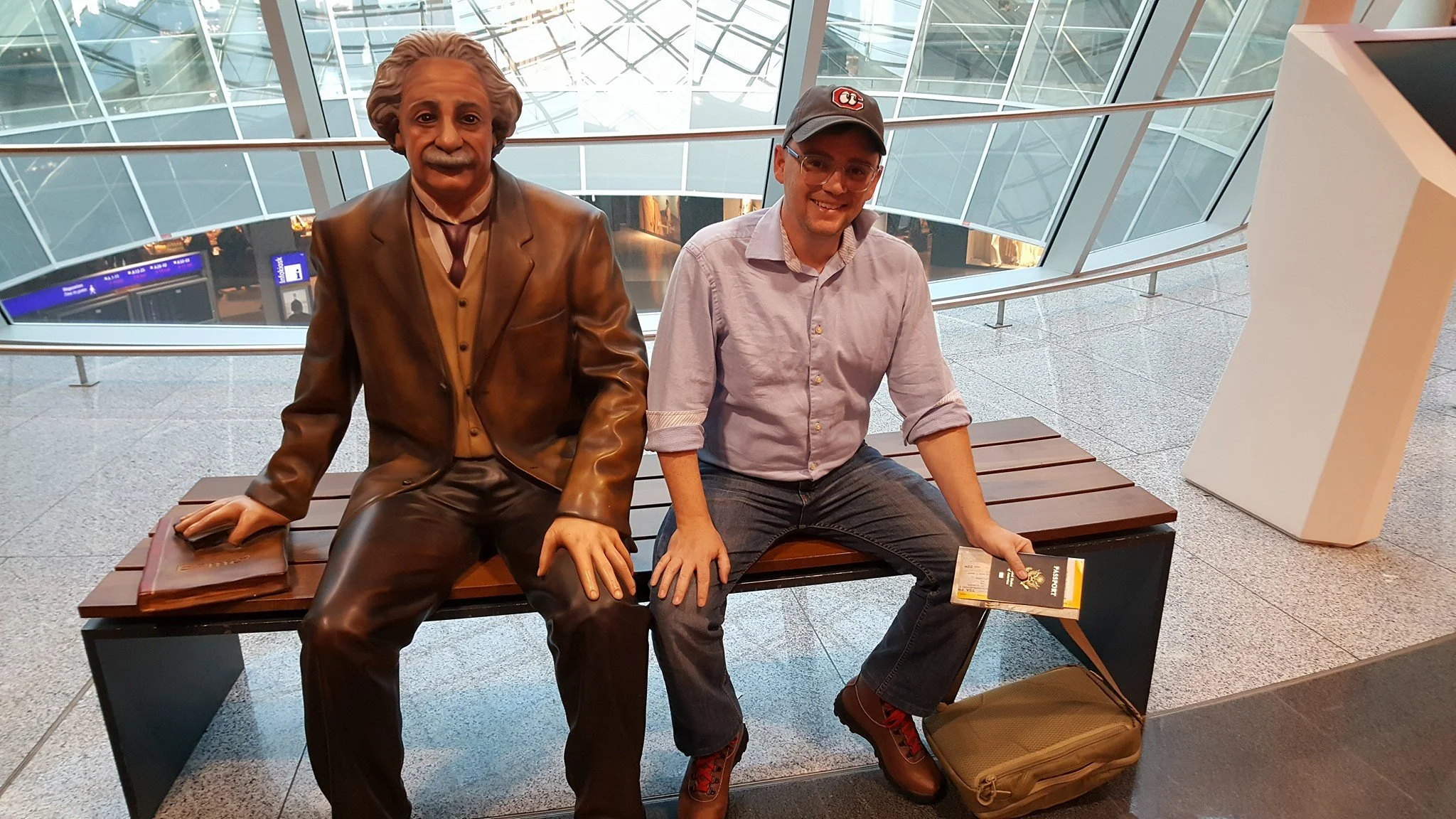
Mike Hutchinson shares his closed adoption story, the search for his biological family, and how adoption shaped his identity, relationships, marriage, and understanding of human connection.
At five years old, Mike Hutchinson learned a lesson that would unknowingly shape the rest of his life: relationships can disappear.
What followed was decades of wrestling with questions many adoptees know well. Who am I? Where did I come from? Why was I given away? And how do those questions affect the way I connect with other people?
Mike shares the reality of growing up in a closed adoption, the emotional impact of searching for his biological family, and the surprising journey that followed when he finally found them. Along the way, we explore attachment, rejection, masculinity, marriage, resilience, and what adoption can teach all of us about belonging.
Whether you've been touched by adoption personally or are simply interested in how our earliest relationships shape who we become, Mike's story offers a thoughtful look at identity, connection, and the lifelong search to understand ourselves.
Listen to Mike Hutchinson’s Interview
Watch Mike Hutchinson’s Interview
Growing Up Adopted and Learning What Rejection Means
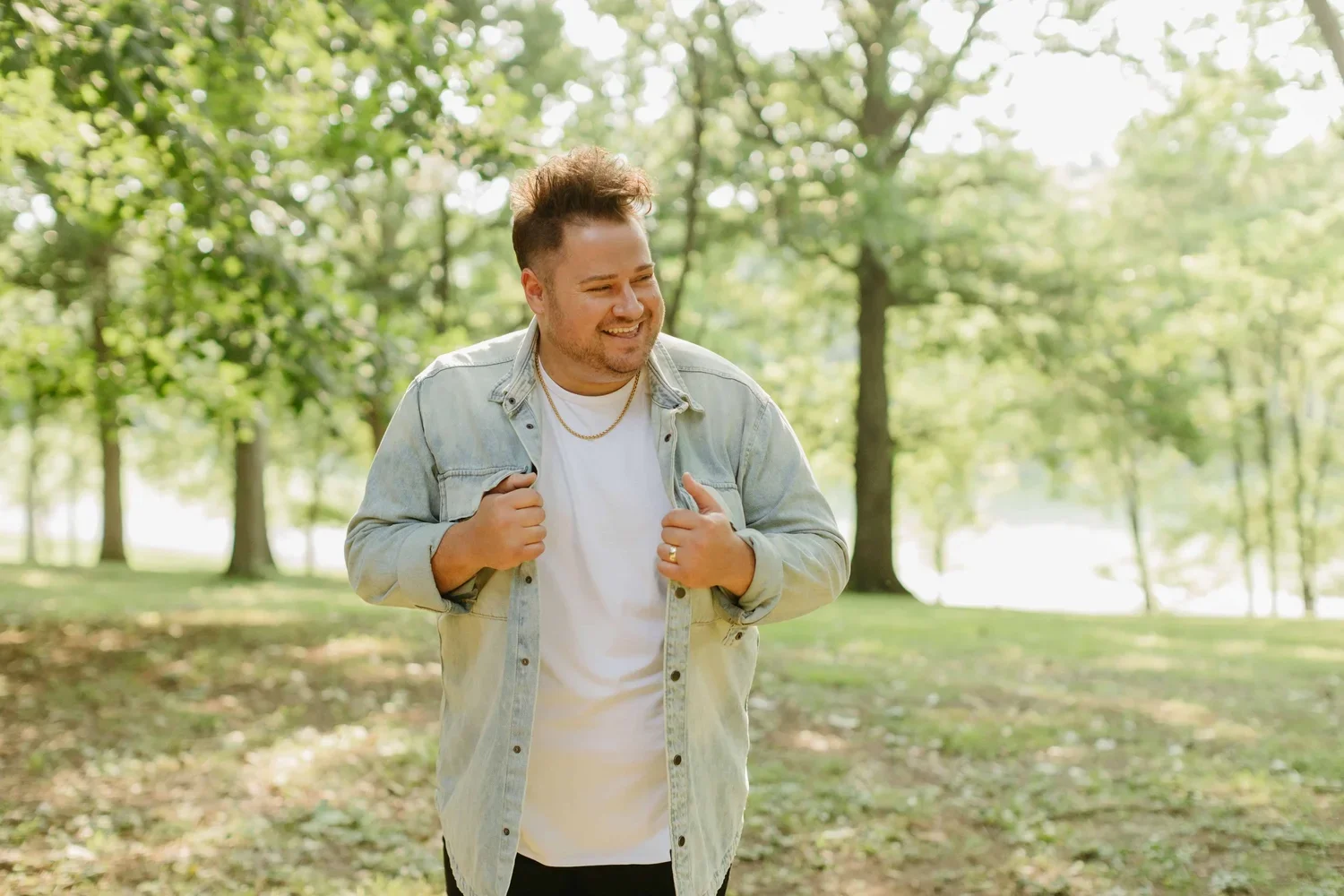
Mike Hutchinson: I am Mike Hutchinson. I'm a husband. I'm a son. I'm a preacher.
Choosing to place me for adoption was a good decision. My adoptive parents, my relationship with them is good. There was this missing piece.
And there's this voice on the other end that says, "Is this Michael?"
I'm like, "Yeah."
"Michael, I think I'm your mom."
You have to relish every one, no matter how tiny it is.
Brandi Fleck: I really think learning from adoptees about how they form connections with non-biological parents is a great way to learn about human connection in general, the impacts of having it, not having it, and how to form it, even in impossibly trying circumstances while navigating trauma and strong negative emotions.
That's why we're talking to adoptee Mike Hutchinson today. He's a preacher, husband, son, avid reader, podcast host of The True Presbyterian, and a returning guest to Human Amplified.
On the surface of this episode, Hutch takes us through his closed adoption story and what it was like meeting his biological family. Underneath, we really explore the interconnectedness of relationships, the impact of relationships on identity and emotions, and how they influence other relationships and life path choices.
Through this, we specifically discuss fear, struggling with rejection, bullying, finding ways to connect when differences are aplenty, and, in the absence of a biological connection, healing from abandonment, fork-in-the-road moments, and the importance of your support system.
Through all this, several interesting points jump out at me.
The first one is issues around fear and rejection seem to have rippled out from one defining moment Hutch had when he was five years old, which sparked the realization that he was given away by someone. This pivotal moment demonstrates the power of our words in relationships.
Secondly, one theme that arises throughout is how masculinity and femininity play a role in those connections, at least the connections in Hutch's life and his experience of adoption and maintaining relationships.
Thirdly, a subtle yet important takeaway from this episode is the importance of timing. Timing is everything, so see if you can catch how timing helped Hutch's success in reuniting with his biological family and how he met his wife.
I always enjoy hearing Hutch's personality come through in his storytelling. He laughs a lot while we talk and is generous with immersive details, so I know you'll enjoy it too.
Be sure to tune in on this Thursday, as we'll have a special bonus episode that resulted as an extension of exploring the masculine and feminine roles that came up in today's episode.
In this bonus, Hutch gets real about his experience of and perspective on masculinity, his feelings on toxic masculinity and the zeitgeist, society's misunderstanding of certain male behaviors, and how he believes that's impacting men and the role of men.
Whether you agree with him or not, this bonus will take you on an intellectual ride as Hutch analyzes being a man and opens up his inner emotional world.
I would love to share with you some positive feedback that I just got this morning. I opened my email to this message. It said:
"Hey Brandi,
I've recently subscribed to your blog and podcast updates and, first of all, wanted to say thank you for all the work you're doing and sharing these stories. It's amazing and pretty inspirational.
I've read your ebook three times now and taken away different things each time. I found it interesting in episode one of your podcast you mentioned that we all need to be connected, and then years later, when you've compiled your book, connection ended up being the key takeaway again from other people's quotes.
I'm currently on my own journey of defining and unlocking a human-centric mindset, which I've come to see as enabling fellow humans to flourish, and your journey has had a great influence on mine.
So thank you again."
You guys, this kind of feedback is so special to me, and it helps me keep going in providing the information that we're providing and telling the stories we're telling.
So please make sure you subscribe to the Human Amplified newsletter, subscribe to the podcast, and download the What It Means to Be Human ebook at HumanAmplified.com. There's a button at the top of the homepage that will take you to where you can download it.
It's free right now, but won't be forever, and I want to make sure you get your copy so that you can experience what this excited listener and reader and member of the Human Amplified community experienced.
And if he gives me permission, I will share his name on socials and the Human Amplified website.
Now let's hear from Hutch.
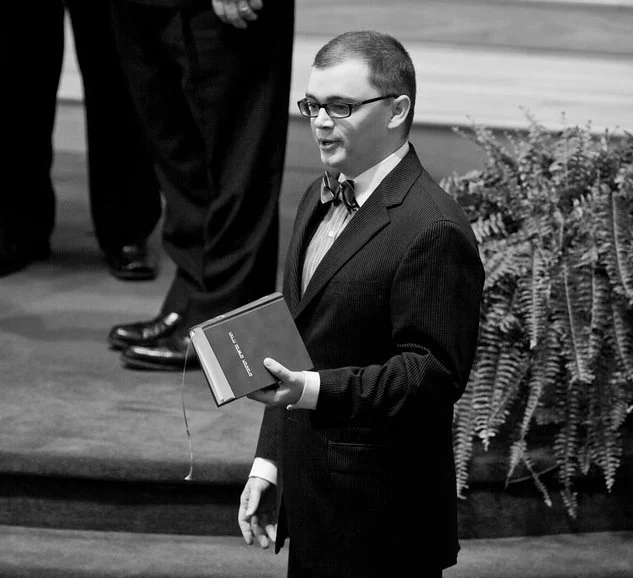
Mike Hutchinson: I am a student of Reformed theology, and if you want to know more about that, you can listen to my previous episodes with Brandi because we delved into that fairly deeply.
I'm a podcast host, as Brandi just mentioned. I'm the host of The True Presbyterian.
I'm also a ministerial candidate in the Presbyterian Church. I'm a husband. I'm a son. I'm a preacher. I am an inveterate reader.
I'm also the assistant editor for the forthcoming Complete Works of John Flavel that's being published by the Banner of Truth Trust. And I have an unhealthy obsession with my lawn. So that's who I am.
Brandi Fleck: I didn't know you were editing. That's really cool.
Mike Hutchinson: Yeah, it's been an interesting job. We're trying to republish the first edition of Flavel's works, and that's meant that we're having to work with a lot of Greek and Latin. So I've been doing all of the translating for the Greek and Latin that's in those five volumes.
Brandi Fleck: Very cool. Very cool.
Well, hey, let's dive into your life story over the next hour and sort of explore all the ins and outs of your humanity.
I know we've started talking about your lawn and some of the things that you do for fun, but you mentioned that you were adopted.
So, taking as long as you need, can you just tell us how your life started and then how it evolved through your childhood?
Mike Hutchinson: Sure. You've only got an hour, so I will try and truncate things a little bit.
Okay, so I was born in Columbia, South Carolina.
I would find out the whole story of that much later, but I was placed for adoption with what was then the South Carolina Children's Bureau. Now it is the Department of Social Services or something like that. I don't remember exactly what that department is called.
So I was placed with them, and then my adoptive parents, who for the rest of this interview I will simply refer to as my parents for the sake of everyone who's listening trying to keep that straight, got a phone call.
They had been interested in adopting another child. I have an older sister that they adopted in 1976. She and I are not biologically related.
Things just moved really fast on their end. They had only very recently reached out to the Children's Bureau and said, "Hey, we are interested in adopting another child."
So I was adopted pretty quickly by the Hutchinsons, and they have their own story, obviously, about how they came to a place of adopting children.
My mom wasn't able to have kids, and so that was what led to the adoption process for them.
I am cursed with the fact that I have a fairly strong memory. My memory goes all the way back to about two years old, so there's some little stuff in there that I remember from early in my childhood.
It was a pretty happy household for the most part, but the first incident that drove home for me what it meant to be adopted, beyond just "I didn't grow in Mommy's belly," was when I was about five years old.
My parents never hid from me that I was adopted. That was something that I always knew, which is a credit to them because I was adopted in an era when parents were sometimes still encouraged not to tell their children that they were adopted, or if they did, to tell them that their biological family was dead.
So that was never hidden from me, that I was adopted.
But I can remember being about four, maybe five, and I do not know what else was going on in my mother's life that particular day. So I want to try and shield her from some of the possible blow here.
But I can remember that she had made me, I think, a big glass of red Kool-Aid, which was just the best thing ever. I was trying to walk into the living room with it, and I spilled it. It just went everywhere.
I can remember very clearly my mom totally losing her cool and saying, "If you don't straighten out, we'll take you back where we got you."
That was when it came home in a really experiential way that being adopted means that you were given up by someone.
That leads to all sorts of effects, sort of ripples that show up. For me, it was always connected with the idea that there must have been something wrong with me, or I must have done something wrong that led to my biological family giving me away.
That also led to the realization that whatever song it is that somebody's playing, you need to figure it out fast so that you can dance to it, or else they're going to leave or reject you.
That was the first moment in my life where it came home that there was very much a dark side to adoption that sometimes I think is very much overlooked.
Why Closed Adoptions Leave So Many Questions Unanswered
Although I don't know what the experience is for adoptees now because the process has changed so much, and there are so many more open adoptions and those sorts of things. But for me, as somebody who came from a closed adoption, for your listeners, let me explain that because they might not be familiar with that language.
A closed adoption is what was the norm in most of the United States starting in the 20th century, where the record of your adoption was sealed.
That happened as a process. Originally, the birth certificate and everything else was available to basically anyone who asked for it. Then they sealed the records from the biological family so that they weren't able to interfere with your placement with a new family.
Later, an additional layer of security, you might say, was added, and it was sealed from the adoptive family as well, but the child continued to have access to that information.
Then eventually it was sealed to everyone. All of the parties in the adoption triad, biological family, adoptive family, and child, were unable to access those records.
That long process actually is more recent than most people know.
For South Carolina, where I was born, records weren't totally closed to all parties of the triad until 1963. That's a very recent thing.
There's also a dark history there that most people are unaware of.
A lot of that came from the influence of Georgia Tann, who was the head of the Tennessee Children's Home here in the state of Tennessee, where I now live. It was not a state home, despite its name.
Georgia Tann was a terrible human being, and there's an excellent book that was written about her a few years ago called The Baby Thief.
What she was doing was horrific. She had an entire stable of people that she was bribing in and around Memphis and that area, where she was paying off doctors, nurses, police, milkmen.
A woman from a difficult background, whether that be poverty or some other situation, would go and have a child, and they would so dope her up that she wasn't entirely aware of what was happening around her.
When she came out of the fog of that anesthesia, she would be told that her child died. Then that child would, in turn, be effectively sold to Georgia Tann, who in turn sold those children to adoptive families.
That was extremely prevalent in Tennessee, and a lot of people whose names you would know were actually children who were stolen by Georgia Tann.
If you're familiar with the book or the movie Mommie Dearest, with Joan Crawford, her daughter was adopted through Georgia Tann.
If you're familiar with the wrestler Ric Flair, Ric Flair was one of the children who was stolen by Georgia Tann.
Brandi Fleck: Wow.
Mike Hutchinson: But Georgia Tann's influence spread throughout the U.S. She was very much seen as the preeminent expert on adoption in the United States, and that was a big part of what led to closing records in a lot of states where they had never been closed before.
Precisely because Tann had to have those records closed, because if she hadn't, people would have figured out what was going on.
As I said, she was a horrible human being.
My background was that I grew up in a closed adoption where I didn't know anything about my biological family. I didn't know anything about the situation into which I was born.
Now open adoptions are much more common, where the adoptive family has some sort of relationship or communication with the biological mother or the biological parents. Obviously each situation is different as to how much contact there is.
But at least in my life, it was very much a sort of black hole that no one knew what was there.
That had some interesting effects too because you don't ever really know who you are or where you came from.
I've described the experience of coming out of a closed adoption as a little bit like going to the bookstore, buying a book that looks really interesting, something that you want to read, and then you open the book to start reading and the book starts in chapter three.
There's this whole backstory there that you don't know and that you can't know because it's not part of the book.
That was my experience.
In addition to that, I had a relatively good childhood.
I was wildly excited as a kid to learn how to read. I can remember coming home from school and telling my mom, "Mommy, I figured it out. I know how to read."
That was really important to me. It turned me into a kid who just read constantly.
My teachers were totally freaked out by me as a kid because everybody else was running around the playground or doing all sorts of stuff, and I was sitting over in the corner of the playground with a Hardy Boys book, just as happy as a pig in mud.
That was who I was as a kid. I'm really, really awful at math and learned that very young, which actually led to a good bit of friction with my father because my dad is a savant when it comes to mathematics.
Dad's one of those people that you can give two seven-digit numbers, and he can add, subtract, multiply, or divide them in his head faster than you can put the first one into a calculator.
He was never able to understand why I was awful at math. He would say, "I struggled so much with history and English in school, and you're so good at it. I just don't understand why you can't do math."
And I'm like, "Because it doesn't make sense."
I'm the guy that's 40 years old and still has to use his fingers for a certain amount of addition and subtraction.
When people ask me about that, I always point out to them, "Hey, I went to public school in South Carolina. How much can you really ask from me?"
Brandi Fleck: Okay, I hear you.
Mike Hutchinson: I think the highest we ever got while I was in school was South Carolina made it to number 47 out of the 50 states.
Brandi Fleck: Okay.
Mike Hutchinson: I think they were 48 when I was there.
Brandi Fleck: Yeah.
Mike Hutchinson: I think we made a step up toward the end of my experience when I was in high school. It was terrible.
I'm a pretty small guy. I only stand 5'4". Because of that, I got beat up a lot in elementary school.
Again, that was one of those things that was really interesting in my relationship with my parents because my dad's a big guy. My dad stands 6'1". He's got forearms like two-by-fours and hands like catcher's mitts.
He never experienced that in school. He was never bullied. He never experienced getting beat up or any of that.
Dad really didn't know how to wrap his head around what I was experiencing.
But he enrolled me in martial arts when I was in second or third grade. I can't remember which.
There were two rules at home.
You're learning how to protect yourself, so if you start a fight at school, when you come home it's not going to go well. You're going to get your butt busted.
On the other hand, if somebody starts a fight with you, you finish it.
I was grateful in a lot of ways that I had a father that was very understanding in that, to say, "Look, I understand that you've got teachers and an assistant principal, but they're not intervening."
One of my grandfather's sayings that I got directly from him and that was handed down to me through my father was that every bully is a coward, and the fastest way to prove it is to punch him in the mouth.
I was given permission from my own family to say, "Look, you're learning how to stand up for yourself, and we expect you to. If nobody else intervenes, it's now on you."
From that point forward, I got deeply involved in martial arts. It became a little bit of an obsession.
I've studied everything from American freestyle karate to the really traditional Okinawan styles of karate. I went on and got a black belt in Aikido, studied boxing, done some Brazilian jiu-jitsu, taught combatives in the Army and outside of the Army, and taught women's self-protection over the years.
I do say self-protection, not self-defense. There's an important distinction there.
Ladies, if you're listening to this, defense implies that something was done to you and now you're having to respond. Self-protection is active.
That's you taking the necessary steps from the outset to be protecting yourself, being aware of your surroundings and those sorts of things.
When I was in the Army, I actually made extra money by working the door at a club in upstate New York near where I was posted.
It was really, really bad. It was so bad that the folks who were there as bouncers actually referred to the place as the Stab and Jab.
Brandi Fleck: Oh no.
Mike Hutchinson: The reason that I stopped working there when I was in the Army is that the division commanding general actually banned all soldiers from going to that club. It was that bad.
It was not uncommon for you to mop up blood at the end of the night at that place.
All of these years of spending time in the dojo and everything else, two weeks of working for the Stab and Jab was more of an education than all of my years studying for black belts and everything else. That was far more educational.
Brandi Fleck: Do you do that stuff now?
Mike Hutchinson: I haven't in a long time. I still occasionally will teach a little bit when people ask me to.
The larger issue, and this ties into some stuff later, is that I got hit in the head a lot.
Allow me to reiterate that. I got hit in the head a lot.
I stopped counting the number of concussions that I've had after 17. I've been hit a whole bunch.
One of the downstream effects of that is that I started suffering from spontaneous cerebrospinal fluid leaks.
If I ever get hit in the head again and I get hit hard, best-case scenario is not real good, and worst-case scenario is it could conceivably kill me.
I have to be really careful about protecting my head from blows.
I can't do the things that I used to really love doing when I was a child, when I was a teenager, and when I was in my twenties because I can't afford to anymore.
Brandi Fleck: Okay.
Mike Hutchinson: So, yeah, I can't really do that now.
But I started playing trumpet in the middle school band when I was in sixth grade. I totally fell in love with that instrument.
I wound up joining the marching band in eighth grade, like everybody did at my high school if you were part of the band program.
That led to me learning a great deal of discipline in addition to what I had picked up from my martial arts background.
Our band director was brilliant at what he did. But if you've ever been part of a band, you know that band directors have a tendency to be complete tyrants, and they tend to have temper problems. That was true of my band director.
You learned a good bit of discipline from him, but I fell in love with the horn and actually discovered that I was really quite good at it, which was, in some way, shocking to me because there was no musical ability in my family.
My dad likes to joke that he has a hard time playing the stereo. So I got a double dose of musical ability.
I was first chair in region band competitions for all five years that I took part. I was first chair in all-state band every other year. I won five consecutive Outstanding Performance Awards.
I fell in love with music when I was a teenager, and then that led to me learning how to play guitar.
I got my first guitar when I was 15. I got it for Christmas, went into my bedroom with it, sat down, and started trying to figure out how to play it.
My parents left because they had to go visit somebody, and they came back six and a half hours later, and I was still sitting in the exact same spot on the end of my bed trying to figure this instrument out.
I played that night until literally my fingers bled. I split the nail bed on two of the fingers on my left hand.
Brandi Fleck: Oh wow.
Mike Hutchinson: That became a very real obsession.
I started playing guitar, played in a couple of bands when I was in high school, and played in a couple of bands while I was in the Army.
The other side of my childhood was being in church every time the doors were open.
I grew up in the more fundamentalist wing of the Southern Baptist Convention, so if the doors were open, we were there, or I was there anyway.
Sunday morning, Sunday night, Monday night young folks meeting, Wednesday night prayer meeting, Friday night fellowship, Saturday night youth service. We were there for all of it.
All of those became important points on my compass and began to direct things for me.
My childhood was really a combination of being constantly wary that I was going to be given away again, that I was going to be rejected again, a whole lot of violence, especially when I was

in middle school and high school, and a consuming love for music that has stayed with me to this day.
Brandi Fleck: Wow. There's a lot to unpack there, and I'm going to methodically go through some of these points that you made in terms of relationships with God and your family.
What I'm hearing you say is maybe you didn't have a lot in common with your family. Did you feel like an outsider, or how did you end up relating to your parents when you didn't have that biological connection?
Mike Hutchinson: With my dad in particular, it was through music.
Now, my dad wasn't able to play an instrument. Dad's never been able to play an instrument. But the best memories that I have of my dad are all related to music.
We would take trips to visit his family in Hamlet, North Carolina, or to visit my mom's parents down in Waycross, Georgia.
Dad had a constant stream of cassette tapes that were going into the radio the whole time we were traveling.
All of my best memories of my dad are us listening to the Charlie Daniels Band. "Ain't No Ramblers Anymore" was one of our favorites. Or listening to Lynyrd Skynyrd, or listening to Johnny Cash, or basically listening to anything that you can think of.
My taste in music was very much formed by my father and my parents.
To give you the context, my mom and dad got married when they were in high school. They were going into their senior year when they got married.
When they started high school, there was this crazy new thing that came out on the radio called rock and roll.
My parents were teenagers when the rock explosion happened.
Sitting next to my desk right now, I've got a box that's almost three feet tall that's all of my parents' 45 RPM singles from when they were kids.
I've got first editions in there of Chuck Berry, Johnny Cash, Jerry Lee Lewis, Fats Domino, and Elvis Presley.
I've got some Elvis Presley albums in there that will never see the light of day because I don't ever want to play them because I know what they're worth.
My dad was always into music but didn't have any musical ability.
If you went into my parents' 33⅓ collection, you could always spot the albums from my mom because it was like Lynyrd Skynyrd, Johnny Cash, Waylon Jennings, Willie Nelson, ABBA.
It just really stuck out and didn't belong.
My mother's taste in music did not influence me at all.
But for my mom, there's always a connection with Mom. Whether it's adoptive mom or biological mom, that connection is there from the very outset.
My mom and I have always been really close.
My mom is a big reader. My dad is not.
My dad very much struggles to read. Even in his writing, he struggles. His writing looks very much like, and this is not meant as an insult, this is actually a technical term, what you would call infantile printing.
He's not able to write real well. He's not able to read real well.
But my mom is a very avid reader, as was my grandmother.
Through them, I got this love of reading.
Through my dad and my grandfather, I got a love of trains because Granddaddy was a conductor and an engineer for Seaboard Air Line Railroad. Granddaddy retired the year that I was born.
A lot of my connection with my dad and with my grandfather and the other men in the family came very much through what we did, which, to be fair, is very normal for men.
Much of what it means to be masculine is something that is learned from other men, whereas it's not so much the case for women.
Women just kind of are feminine. Masculinity is something you almost have to be initiated into.
A lot of my relationship with my dad and the way that we connected came from listening to music and doing things together.
Changing blades on the lawn mower. Learning how to use power tools, which is always fun.
Most of our experiences, the joke in our family is that you're not really a Hutchinson man until you've gone out and started a project that was really simple.
I remember one project in particular. We were trying to change the spigot on our well house, and before any of us knew what had happened, basically every tool we owned was in the lawn. We were tearing the well house down to rebuild it.
That's a Hutchinson thing. You start a small project, and it turns into something else entirely.
Learning how to run a chainsaw. Those were the areas where I really connected with my father.
Brandi Fleck: Okay. Would you say that you have good relationships with them now?
Mike Hutchinson: Sure.
That's not an easy question to answer.
Brandi Fleck: Okay.
Mike Hutchinson: I know we'll talk about this later, but I would go on to find my biological family later in life, and that has had effects on my relationships with my parents that, on the one hand, I expected, and on the other hand, I kind of didn't.
My relationship with them is good.I would say, for the most part, that would be the fairest categorization of my parents and our relationship.
Brandi Fleck: Let's go ahead and dive into that journey with your biological parents.
How did you meet? How did you find them? What happened there?
Looking for Family: The Search for Biological Parents
Mike Hutchinson: There came a point when I was in my early twenties where I was seeing a counselor on a pretty regular basis.
I had been diagnosed with bipolar previously and seemed like we had that fairly under control, but there was a lot of stuff in my life that just felt like it was flying apart at the seams.
I was encouraged to go see this guy, actually by my pastor at the time, whose wife was adopted.
He said, "I'm obviously an outsider. You take or leave my advice, but it seems to me like a lot of what you're dealing with is directly related to being adopted, and so you should probably talk with someone about that."
So I did. One of the things that came out of that for me was realizing that I did have a really deep desire to find my biological family.
But by the same token, there's this real fear that goes together with trying to find your biological family.
It's not an unmitigated good because, on the one hand, you could find your biological family and that could go really well. Or you could find your biological family and be rejected again.
Or, worst-case scenario, you could find your biological family, be rejected again by them, and then it destroys your relationship with your adoptive parents. That's another rejection on top of a very profound rejection, on top of perhaps the most profound rejection that there can be.
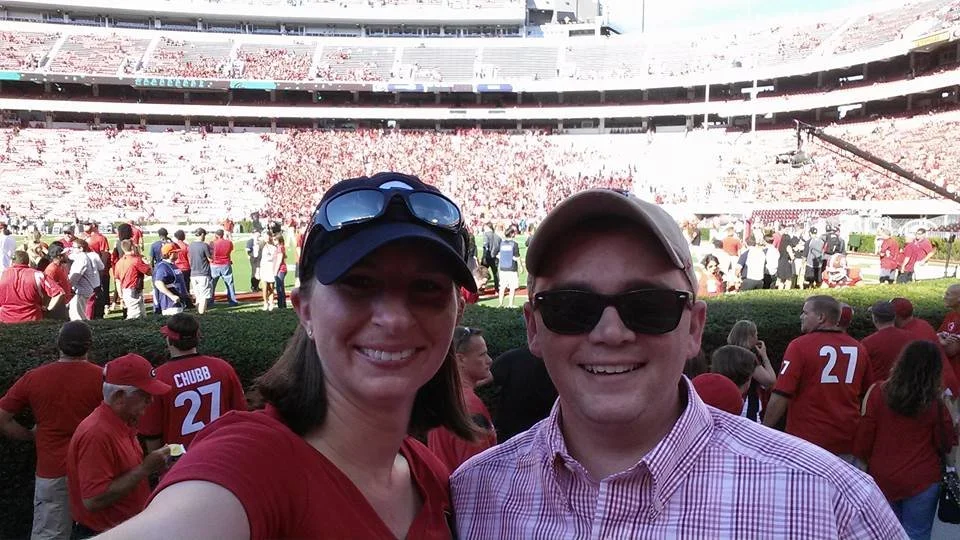
I struggled with that for a long time. When my wife and I were dating, we had a conversation fairly early on about this being one of the things that I would like to do, but I was also reticent to do it.
In South Carolina, because it was a closed adoption, you have to ask for what's called your non-identifying information, which is basically your adoption file that they go through with a Sharpie and black out all of the information that could possibly be used to identify your biological family.
It looks like you're getting one of those redacted documents from the CIA about who really killed Kennedy. I often joke that my identity was a state secret because of the way they treated my adoption.
But they wanted you to pay for that. They wanted you to pay like 25 bucks to get your non-ID info, and that made me so angry.
It's like, wait a minute. That's not yours. That's mine. If you stole my car from me, I wouldn't come and pay you money to get my car back from you. You're a thief. You don't get my money and my car.
That's my file. I shouldn't have to pay you money to get that back. Eventually, my wife prevailed upon me.
"Dude, it's 25 bucks."
Which was hard for me to do. That was really difficult because I felt like I was capitulating to the man. I was giving them my money for this.
I've got a fairly strong libertarian streak, so that was a tough pill to swallow. We had been married about two years before I finally sucked it up and paid the money for my non-identifying information.
That was so eye-opening to read because, once again, it was like there was this door to this secret world that I had found, and it just got thrown open.
I had a plan for how I was going to try and use this information. I don't want to reveal too much in the event that there is somebody from a state adoption agency who's a listener of your podcast and this is their job, to redact this sort of thing.
But I will simply say that there was something they missed, and that was enough to start putting puzzle pieces together.
Okay, there's a little information here, there's a little information there, and there's a little information there. Then there was this missing piece that I discovered by accident in the file.
I've got it now. I've got names now. I know who these people are. I signed up for a website called G's Adoption Registry.
There are people there, these wonderful people who are called search angels.
What they do is give of their time and their experience and their knowledge to help you find your biological family, and they don't charge you a penny for it.
I put all of the information that I had up on G's website where their search angels could work with it. I figured it was going to be days before I heard back.
So I waited about two days and then checked the email address that I had used to sign up for the site, and within hours they had found my family.
Brandi Fleck: Wow.
Mike Hutchinson: It was that quick. But I had more information than a lot of other people have in that situation because I locked into information that the redactors had overlooked.
Brandi Fleck: Okay. How did you hear about that website?
Mike Hutchinson: Google. Google is your friend. Dr. Google knows all.
That led to me finding them on Facebook, which has to be the best thing ever for children who are trying to find their biological family.
My wife would tell you she remembers coming home from work, and I was standing in our kitchen at the bar top that we had with my laptop open and my brother's Facebook profile open, looking at his pictures and just totally freaked out by the fact that there was somebody else on the planet walking around with my nose.
When I was in middle school, the cool thing to do was to go hang out at the mall. I don't know if teenagers still do that.
I would go hang out with my friends at the mall, but they would want to walk laps, and I would sit in the middle of the food court and watch people come in and out and wonder, "Okay, that guy kind of has my eyebrows," or "That lady kind of has my chin."
It was a constant looking for someone who looked like me because I didn't look much like my dad or my mom.
I looked a lot like my grandfather, which is actually really spooky. If you put a picture of him in his uniform during World War II next to a picture of me when I was in the Army, we look frighteningly alike.
But I never had that person at home who looked like me. I was looking for that, and then all of a sudden there's this person out there who looks a lot like me. That was so strange.
I couldn't find current contact information for any of them, so I thought, okay, let me do a little more digging and maybe I can figure out a back door so that I can get in touch with them.
I noticed that on my mother's Facebook page there was a guy who repeatedly referred to her as "sis," so clearly some sort of relation there, who posted a lot.
I went to his profile and started looking through pictures there because I was obsessed with trying to figure out who I looked like.
I noticed that there were ten numbers that showed up as the first comment on every photo that he had. It was always his comment. It took me a while to wrap my head around what it was. It was his phone number.
By some fluke of him uploading photos from his phone, Facebook was attaching his phone number to every photo.
Brandi Fleck: Yeah.
Mike Hutchinson: Complete crazy. It gets much weirder. The phone number was local. This guy lived less than a mile from us.
Brandi Fleck: Wait. In Chattanooga?
Mike Hutchinson: No, in Greenville, South Carolina. He lived less than a mile away. We were still living in Greenville then.
Mike Hutchinson: It's like, "Oh. Oh. Oh, okay."
Because then that's a whole other can of worms. Now I've really got to figure this out.
One of the things that I very much struggled with when I was considering contacting my biological family was this sense of what right do I have to walk back into this person's life and potentially destroy it?
There are a lot of women who have given children away for adoption and have never told anyone and have gone on to have a very normal life.
They have a husband. They have other kids. But there's this secret that they've kept very close, and no one knows.
I want to get ahold of this woman, but I don't know if this man knows that she gave a child up for adoption or not.
How am I going to do that without exploding her relationship with who I thought was her brother? I decided to smudge the truth a little bit and just say, "Hey, I'm looking into my family history."
True. "I discovered that my dad might have worked at this company in Columbia. I think your sister's husband worked there."
All of which is true. "I think that he might have known my dad."
He was my dad. I didn't tell him that part. "I'd really appreciate it if you'd get me in touch with your sister Julie so that I can talk with her and maybe she can help me work some stuff out with family history."
He said, "Yeah, I'd be happy to pass your phone number along, and they can call you."
I was on pins and needles at that point for the rest of that night. I did not sleep a wink. I had to go in and take classes the next day at seminary. I'm trying to listen to a lecture on Biblical Hebrew while constantly checking my phone.
They haven't called yet. They haven't called yet. Just panicking. I asked my wife, "How long do I wait for this guy to get back with me?"
She was like, "You need to give him at least a couple of days." I can't do that. It's just not possible. I'm going to lose my mind.
But I sucked it up for 24 whole hours and then called him again. He answered the phone, and I said, "Hey, just wondered if you were able to get in touch with Julie."
He was like, "You know what? I haven't. I was planning on calling her tomorrow, so I'll go ahead and do that."
The next day I drove to classes that afternoon at GPTS, where I was in seminary at the time, and didn't hear from him.
I was like, "Great. I guess they're just not going to call me back."
Maybe I was too oblique in what I was really looking for. That evening I decided to call this gentleman back and just give it one last shot. I called him and said, "Hey, look, I just wondered if you were able to get in touch with Julie."
He said, "Yeah, actually I was. She and her husband are really freaked out that you found them on the internet and that you were able to find me. I don't want you to ever call me again because you're basically a psycho stalker."
I was just like, "Oh. Uh-oh."
Now I'm between a literal rock and a hard place. I want to find these people, but I'm trying to protect her.
Now I've got to decide what's more important. Is finding her more important, or is protecting her more important? I made a snap decision and went, "You know what, Arlie, let me tell you why I'm really calling."
I laid out everything that I knew about my biological mom and my biological dad from the non-ID info. "That's my biological mom and dad, and they gave me up for adoption in 1980. Does that sound like your sister?"
What Happened When I Found My Birth Mother
There was just dead silence on the end of the line for about 15 seconds, which felt like my whole life.
I felt like I was going to grow a beard. My hair would hit my shoulders. It felt like an eternity. Then he said, "I'll call you right back," and hung up the phone. I was like, "Oh God, what did I do?"
His reaction made it clear he did not know. I was like, "What did I just do? Have I destroyed her relationship with this person?" I think it was 15 minutes later my phone rang. I answered it, and there's this voice on the other end that says, "Is this Michael?"
I was like, "Yeah."
"Michael, I think I'm your mom."
It was my biological mother. We worked through what I knew, and it was clear that she was the right person. Everything matched. We talked that night for about an hour.
Then my younger sister called me, and we talked for about 35 minutes. Then my older brother called me, and we wound up talking for about three and a half hours. Then it became just a parade of phone calls from cousins and everything else.
Brandi Fleck: Oh my gosh.
Mike Hutchinson: We learned that my biological parents had been in an on-again, off-again relationship. They were not in a real good place in 1980. They had had my older brother together.
They were broken up. My mom got pregnant with me. They got back together briefly while they were trying to figure out what they were going to do about her being pregnant and gave me up for adoption.
They broke up again briefly and then got back together, got married, and had my younger sister two years later.
In a lot of ways, it was my adoption that triggered their marriage and that relationship becoming much more stable.
Brandi Fleck: Wow.
Mike Hutchinson: It was kind of amazing to learn. That was also really hard to learn. Because it was like, okay, I've got an older brother that you kept, and I've got a younger sister that you kept. I didn't think I could have been that bad.
Brandi Fleck: Golly.
Mike Hutchinson: Fortunately, I had worked out most of my issues with adoption by the time that I found them, and I'm really grateful for that. I found them when I was 32 years old.
Brandi Fleck: Okay.
Mike Hutchinson: If I had found them when I was 25, that would have been a very different relationship because I was very angry. I've got a great relationship with my brother.
I have a pretty good relationship with my sister. I have a good relationship with my mom. I have an okay relationship with my dad. There are some issues there.
Brandi Fleck: The guy on the phone that you called, was that your uncle?
Mike Hutchinson: It turned out that it was her foster brother. My mom has a fairly terrible backstory of her own. She was raised in an extremely unstable environment with a mother who was bipolar and completely unregulated.
Even at a very young age, before what happened later, she was in and out of foster care. Things seemed to be better. She and her sister were living back with her mom in Greenville.
Apparently that's where the family is from, at least most recently. She was in elementary school and came home from school and found her mother dead of a self-inflicted gunshot wound in the bathroom.
She wound up spending a lot of her middle school and high school years in and out of foster care, getting bumped from one family to the next. There's some sexual abuse in her background and stuff that's really pretty bad.
Brandi Fleck: Yeah.
Mike Hutchinson: That was difficult to learn. When I say difficult for her, I mean it was difficult for me to learn about her.
If you sit down and talk to my mom, it's really clear after about 20 minutes that she's what I call a blinking genius, which means she's someone who's insanely intelligent, but it's not obvious the first time you talk to her.
Then you get 30 minutes into the conversation and you're like, "Okay, wait a minute. There's a lot of intellectual horsepower under that hood."
Brandi Fleck: Yeah.
Mike Hutchinson: But she never had the stability to be able to use it. She was never able to go on to college. She was never able to do any of those things.
She's got the intellectual horsepower to have a PhD. There's just no question. She is extremely intelligent.
Brandi Fleck: Yeah. Where do you get it from?
Mike Hutchinson: I would like to think. That goes back to the old debate, right? Nurture versus nature.
My answer to that is that it's a false choice. It's both. In her case, she had it by nature. She was extremely intelligent.
But she never had the environment that was able to protect that gift and let it blossom. I did. That changed my perspective on some things.
It made me look back at my own adoption and go, "You know what? I'm actually really grateful that I was adopted now."
Brandi Fleck: Okay.
Mike Hutchinson: Because that gave me the stability that my mother never had. That gave me a greater possibility for success in ways that she was never given.
Brandi Fleck: You talked about your biological siblings, but I want to know, how's your relationship with your adoptive sister?
Is it closer? Is it different than your other siblings? How is that?
How Reuniting With Biological Family Changed Existing Relationships
Mike Hutchinson: My sister that I grew up with and I are two very different people. We've never been really close.
That disappointed her in a lot of ways. I think she wanted a much closer relationship with me. I have always felt, in every environment I've ever been in, like an outsider looking in.
I am also very much an introvert, and I am a deeply private person. The ability to have that relationship with her just wasn't there. She was also a bit of a wild child when she was in high school, whereas I was not.
But I paid for all of her mistakes between the ages of 13 and 17. That led to a very difficult relationship between she and me. Because she was out, she wasn't where she told my parents she was going to be, or she was doing something she shouldn't have been doing.
The result was that my parents locked me down because they didn't want me doing that when I was the same age she was when she was doing it.
Brandi Fleck: Okay.
Mike Hutchinson: I can remember helping her sneak back into the house through a window and that sort of thing. Things were a little better after I got out of the Army, but not a lot.
Then, when I found my biological family, that really fractured the relationship with my sister because she felt like it was extremely disrespectful for me to find them while my parents were still alive and that it was an insult to them.
Brandi Fleck: I wonder if that's a little, I don't know your family, obviously, but I wonder if she wishes she could find her family and that sort of hurt her too.
Mike Hutchinson: I know Angie's feelings on that well enough to be able to say that if she finds her family, that'd be nice, and if she doesn't, it would be okay too. But she feels very strongly about not finding them while Mom and Dad are still alive.
Brandi Fleck: Okay.
Mike Hutchinson: I can't speak to how adoption affected her because that's, I wanted to make sure that I had enough time to observe and see if the crazy came up.
The only thing that came up was your sort of garden-variety female neurosis, so I felt like, okay, this is a fairly safe thing.
Brandi Fleck: I could say the same thing about men, right?
I want to know, though, what's a garden-variety female neurosis? Give me an example.
Mike Hutchinson: Obsession with, "Do I look okay in this outfit?" or "Am I getting fat? Can't eat this. I can't eat that."
I'm like, "Look, baby, of all the things that you need to worry about, those aren't anywhere on the list." Just sort of garden-variety stuff that women tend to get hung up on.
Brandi Fleck: Yeah.
Mike Hutchinson: In the same way that there's garden-variety stuff that men get hung up on.
Brandi Fleck: Sure.
Mike Hutchinson: Am I making enough money? And all the things that come together with status and image and those sorts of things for men.
But she was normal. She was shockingly normal. There was a night where we were at the coffee shop, and she and her sister had ridden there together. Her sister wanted to go home. She wanted to stay.
She was like, "Would anybody be willing to give me a lift home?" I don't think the "m" in home was out of her mouth before my hand was up.
I was like, "Yeah, I'll give you a ride." She was living in this apartment complex.
We parked in a parking spot, and she went to get out, and I was getting out too. She was like, "I can get to the apartment by myself."
I was like, "Yeah, but I was raised in the South to be a gentleman, and so I'm going to walk you, who are a lady, to your door. You're not walking down there by yourself."
We got to the door, and she was like, "Thank you so much."
I was like, "Hey, if your schedule will permit, I'd really like to take you out for dinner this coming week."
She's like, "Yeah, sure." She goes inside.
What you need to know is that those of us who were all kind of friends and knew each other at the coffee shop would regularly get together for dinner anyway.
She thinks that's what I'm asking when I say this. She closes the door, and I'm standing on the other side of the door going, "I'm pretty sure she doesn't realize I just asked her on a date." I got home.
I would find out much later that when she closed the door, she got about three steps into her apartment and went, "Wait a minute. I think he just asked me on a date." I sent her a Facebook message.
"Just to clarify, I was asking you on a date. Look, if that changes your answer, no hard feelings, but I just wanted to be really clear about what you're getting into."
We went on our first date. We went to a little park in Pineville and walked and talked theology and talked about our lives and goals and what we wanted.
That went really well. Our second date was a double date at a barbecue joint in Charlotte. Then our third date, I decided I was going to take her to Asheville.
The deal that we had agreed on when we started this was three dates. We'll do three dates, and at the end of that, if there's something there, we should know. If this clearly isn't going to work, we should know that too.
On the third date, we went up to Asheville and had an absolute blast. I took her down the Blue Ridge Parkway and took her around downtown Asheville, which is the hippie center of the Southeast.
That was just an absolute blast. Driving home, I asked her, "So, have we got a fourth date or what?"
She said yes. We dated a little while longer, and then about six months in we got engaged. About six months after that, we got married.
Brandi Fleck: Awesome.
Brandi Fleck: And here you are 10 years later.
Mike Hutchinson: Yeah. We got married, moved to a new city, and started seminary all in the space of about 10 days. That was a really stressful beginning to a marriage.
Brandi Fleck: Yeah.
Mike Hutchinson: I believe I said in the previous episode that if I had that to do over again, I would do that very differently.
But yeah, she's been very supportive. Her work and what she does for a living have made me going to seminary and everything else possible. She has been, under God, the primary reason for most of my success, if not all of it.
The Surprising Effects of Adoption on Marriage and Attachment
I contributed something to that too. I learned the languages. But beyond that, it was mostly her.
Brandi Fleck: All right. All right.
Well, hey, how did your adoption and your attachment style based on being adopted impact your marriage?
Mike Hutchinson: That's a good question.It has not made things easy in a lot of ways because I am a very emotionally closed-off person.
I was closer to my grandfather than I was to anybody else in my family.
When my grandfather died, if you had nothing to go on but what you saw, you would think that it hadn't affected me at all just because I'm not an emotionally demonstrative person to start with.
Beyond that, I'm also, as I said, really private.
That's been a source of friction in some ways because she doesn't see a lot of my emotion.
Even in our marriage, I'm always kind of watching for the rejection to come.
It's always there in the back of my head.
When's the shoe going to drop?
When's the hammer going to come down?
When is she going to walk away because she realizes that I'm just not worth the effort or the time or whatever it may be, that there's some fatal flaw?
That's been difficult.
Of course, like every relationship and every marriage, sometimes it's more difficult than others.
That has been a hurdle.
Brandi Fleck: Okay. What meaning has been brought to your life through the circumstances that you've lived through?
Do you think that meaning would be there without the specific struggles and triumphs you've had?
Why Trauma Can Create Compassion Instead of Bitterness
Mike Hutchinson: I think that a lot of what I've dealt with has made me a more compassionate person.
It's made me a more compassionate person when talking with women who are pregnant and have no idea what to do next.
To say, "Look, adoption is a good decision."
Believe me, I understand how hard that decision is because I'm the result of that decision.
I've talked to my mother. I know how hard that was for her.
Look, there is no judgment here. I am never going to come to you and say, "What a terrible person you were for giving your baby up."
God knows that is not the case. You made the best decision you could. No judgment from me on that at all, and nothing but compassion. I think it's made me more sensitive to bullies and abuse.
One thing that I absolutely will not put up with is a bully. One thing that I cannot stand is an abuser, especially in the church and especially behind a pulpit. God knows we've got plenty of them. They're all over the place.
I hope that I'm growing in kindness and compassion there too, but if I had my way, we'd take them all out in the swamp, tie them to a stump, and leave them.
That's what we'd do with them. I can't bear it. I can't stand to see women abused. I can't stand to see children abused. I can't stand to see animals abused.
Before someone says, "Oh, there's the proof he's a misogynist," no, I'm not comparing women to children or animals.
I'm just saying generally that I can't stand to see somebody in a helpless situation being mistreated. I can't take it. I wouldn't be the person that I am without those experiences. I would like to think that I have gotten more good out of it than I've gotten bad.
But I guess we've got to wait and see the rest of the trajectory of my life before we can say that for sure. The triumphs have been few but meaningful.
One of the things that I've taken from that, and from talking with other people who have been through their own lives and listening to some of the people who have come on your podcast, because I am a subscriber and I do download your episodes and listen to them is that misery is the norm.
Difficulty is the norm. That makes those moments of success and those moments of happiness, when you can identify them, so much more meaningful.
That means that you have to relish every win, no matter how tiny it is. I just cheer for every small win. You're dealing with catastrophic depression. You feel like you can't get out of bed.
Getting out of bed and making it to the couch? I don't even care if you put on your pajamas. You won. Take it.
Maybe you get out of your pajamas next week. When that happens, cheer for that win too. Your life is made up of misery mixed with small wins. If you're not real careful, you can let the misery overwhelm you. The solution that I found to that is celebrate the small successes.
Make yourself just a little tiny, minuscule bit better tomorrow than you were today. It could be something super small. It could be moving that spoon that you left in the sink for two weeks finally into the dishwasher. Pick your battles. When you win, celebrate like mad.
Brandi Fleck: Yeah. I hope that's what I've taken away from this. Well, Hutch, thank you so much for coming on the show. As always, it has been an absolute pleasure.
Mike Hutchinson: Thank you, really, for having me back. I appreciate it.
Join the conversation!
Feel free to share your own experience and let me know if you have any questions in the comments.
Related Posts



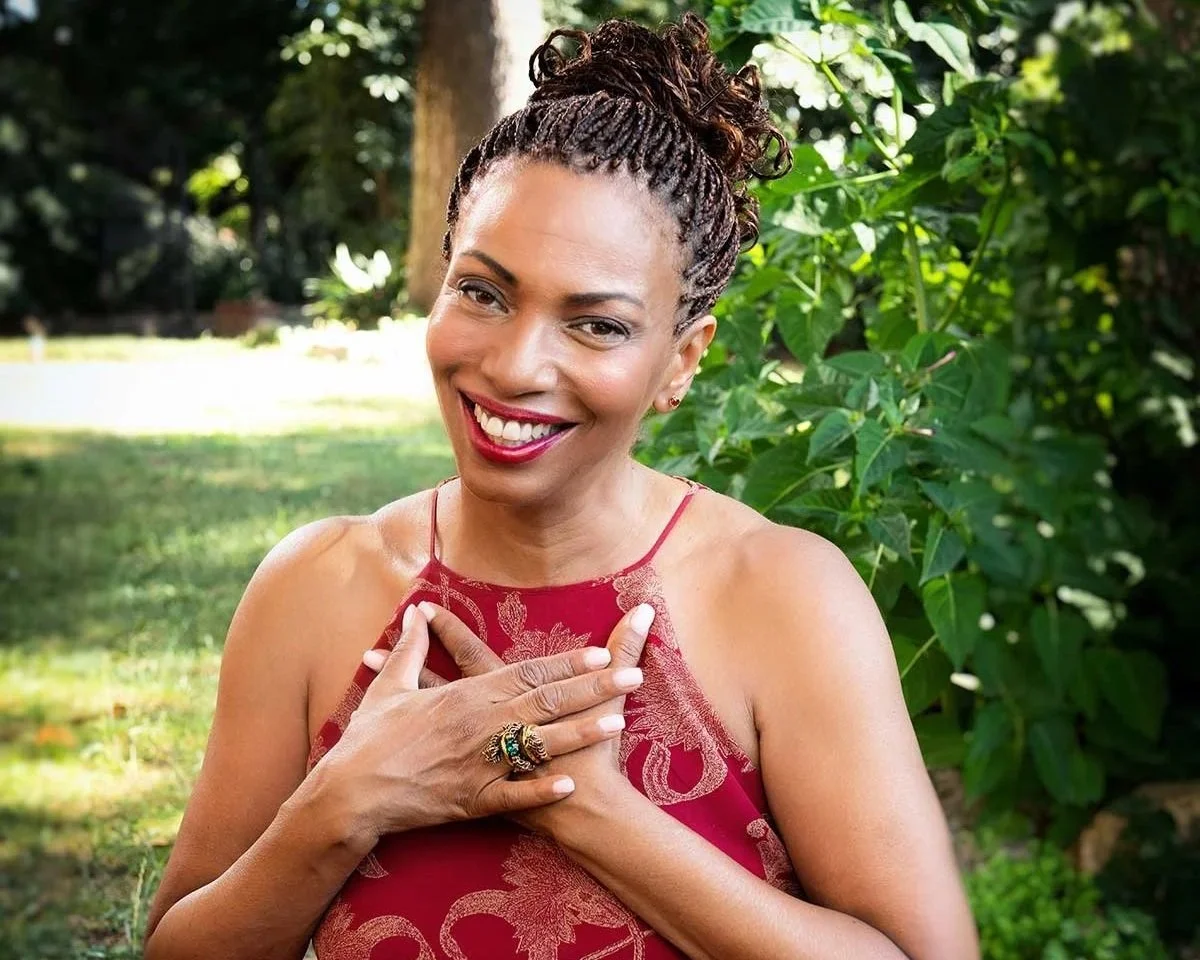

Hi, I’m the founder of Human Amplified. I’m Brandi Fleck, a recognized communications and interviewing expert, a writer, an artist, and a private practice, certified trauma-informed life coach and Reiki healer. No matter how you interact with me, I help you tell and change your story so you can feel more like yourself. So welcome!
Find More on the Blog
Topic
- ADHD
- AI
- Atlanta
- Black and BIPOC
- DIY
- FAQ
- LGBTQIA plus
- Los Angeles
- Nashville
- Seattle
- St Louis
- St. Louis
- UFOS/UAPs/ETs
- abuse
- accountability
- addiction and recovery
- adoption
- affirmations
- afterlife
- altered state
- angels
- animals
- anxiety management
- art
- astrology
- atlanta
- attachment
- awakening
- beauty
- behind the scenes
- being human
- body image
- body work
- boundaries
- brandi fleck
- breathwork
- bullying
- burn out
- burnout
- cancer
- career
- caretaking
- chakras
- channeled
- clarity-dive
- clarity-practice
- clarity-primer
- clean products
- coach
- codependency
Recent Blog Posts
Visit the Full Podcast Audio Archive

Affiliate