Redefining Relationships Through Polyamory
Interview By Brandi Fleck
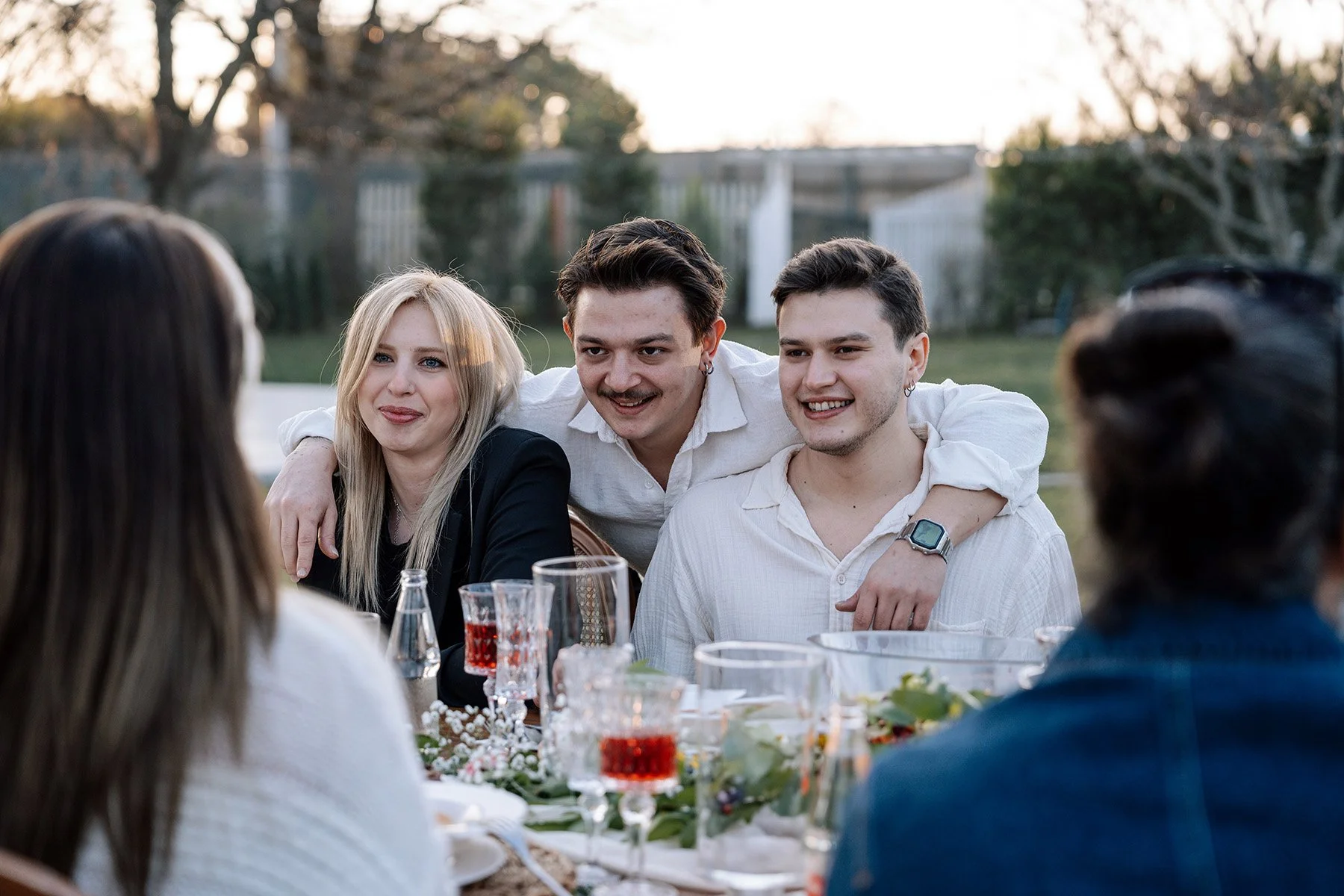
James Hughey shares how opening a long-term relationship challenged his ideas about love, jealousy, communication, and commitment, offering an honest look at how polyamory works in everyday life.
What happens when one relationship no longer meets every emotional or physical need, but the love remains? For James Hughey and his longtime partner, the answer wasn't ending the relationship. It was redefining it.
James shares what it looked like to open a 12-year relationship, navigate jealousy through honesty, build new boundaries together, and embrace polyamory with intention rather than impulse.
Their story isn't a blueprint for how relationships should look. It's an invitation to question the assumptions we inherit about love, commitment, and what it means to choose one another every day.
Listen to James Hughey’s Interview
Watch James Hughey’s Interview
Understanding Polyamory and How It Works
Brandi Fleck: Last week, we talked to Crystal Barker, a mom who has biological children, stepchildren, foster children, and mentors children in need.
This week's guest, James Hughey, manages a comic book store, sings in an industrial band called All of Her Twitch, is a self-proclaimed nihilist and professional nerd, and co-hosts the Nerd Cult Underground podcast where James is affectionately known as Field Mouse. The podcast focuses on comic book-related news and media.
Despite James' affinity for comics and all nerd-related things, he's here today to talk about relationships. That's because he recently transitioned from monogamy to polyamory, which he's going to educate us all about: how he got into it, how his primary partner feels about it, how he opened up to his family and his primary partner's family, and how he views marriage and secondary relationships.
We talk about what he wants out of relationships and how it's all going for him, and we also try to work out some of the terminology for those who may not know.
Polyamory means James and his partners can be, and may be, involved with more than one romantic partner simultaneously. It's a departure from mainstream culture, and honestly, some people I've talked to who are polyamorous wish to remain anonymous for fear of judgment in their careers and in other public arenas. So if that tells you anything about polyamory, it's that people don't always react nicely to it.
James agreed to share his story and small pieces of his partners' stories that overlap with his experience of the relationships, and his partners also gave permission to use their first names.
The main takeaway from this episode is that we're all human. We're all making choices every day that impact our happiness, well-being, and quality of life, and those choices can be different for everybody. Our humanity manifests itself in so many different ways, and relationships are one area where it's fun to explore that humanity in. So stay tuned to hear what James has to say about polyamory.
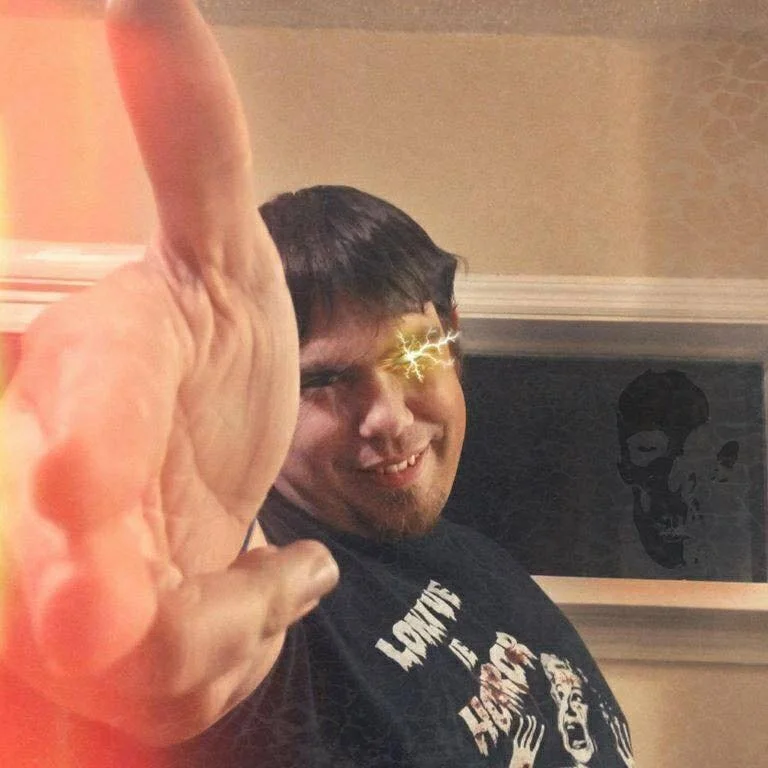
Brandi Fleck: Hi, James. Welcome to the show. How are you doing today?
James Hughey: Hello. I'm doing pretty good. How about yourself?
Brandi Fleck: I'm doing really well, and I'm so excited to have you here.
James Hughey: Thank you.
Brandi Fleck: For our listeners' sake, we knew each other in high school. We haven't hung out in a long time, but we've kept in touch on Facebook, and you've recently decided to become polyamorous in a mostly monogamous world, correct?
And that's what this episode is about. Before we dive into that, can you tell us a little bit about yourself? What do you do for a living? You have a podcast that you help with, so I'd love to hear about all that.
James Hughey: Yeah. I'm what I like to refer to as a professional nerd. I work in a comic book shop in Donaldson. I do have a podcast called Nerd Cult Underground, which is mostly comic book-related, but we've kind of expanded to do more nerdy stuff. I'm also an industrial musician.
Brandi Fleck: Wonderful. That's awesome. Real quick, do you play gigs around, and where can people find your music?
James Hughey: I have not played any gigs in a while. When I do, it's around town. You can find my music either at allofhertwitch.com or allofhermusic.com.
Brandi Fleck: We'll definitely list that stuff in the show notes for the listeners.
James Hughey: Thank you.
Brandi Fleck: We'd love to get to know you a little bit better. Tell us how you approach life in general, and what is the most important thing in life to you?
James Hughey: I try to approach life in a sort of nonchalant way. I try to live by the creeds of Bill Hicks, where I don't really take life super seriously because it's all just a ride. I just kind of come at it from that angle, where I try not to worry about things. It's not always successful, but I do my best.
Brandi Fleck: Sure. Yeah. What's the most important thing to you in life?
James Hughey: Music, for sure. Music has been there with me since middle school, and really before that, but I didn't let it into my heart, as people say, until middle school. I was actually just listening to some new music that I bought today right before you called.
Brandi Fleck: Oh, awesome. Why are you who you are today?
James Hughey: My life has been, without getting into too many details, kind of a mishmash of struggles. It's just been struggles of me trying to find my way through things and still be a decent person. I may have faltered a few times in life, but I feel like I'm doing pretty good right now in those respects. Like most people, it's just been trials and tribulations and lessons learned and trying to evolve.
Brandi Fleck: Sure. How would you characterize who you are today? How would you describe yourself?
James Hughey: I tend to tell people that I'm a nihilist, a professional nerd. I don't really know. I'm not entirely sure who I am at this moment other than just somebody trying not to live a life of misery.
Brandi Fleck: Gotcha. Okay. So, for those who don't know, can you explain what polyamory is?
James Hughey: Polyamory is...
James Hughey: Polyamory is essentially my wife and I both are allowed other partners. We can date other people or be sexually active with other people, depending on what the situation calls for, as long as there's communication. We've got some ground rules that we've set up, but that's what it is: us being allowed to date outside of our relationship.
Relationship Boundaries That Make Polyamory Work
Brandi Fleck: Okay. You mentioned ground rules, so that makes me think of ethics. Can you speak a little bit about relationship ethics and how that applies to you and your relationships?
James Hughey: In every relationship that I've been in, things always kind of fell apart whenever there wasn't any communication or any trust. The ground rules we have set up now are basic ground rules, like don't fool around in front of each other, don't brag about stuff like that. The rules have changed as we figured out what we're actually comfortable with.
Everybody has those rules in their relationships, even monogamous relationships. Sometimes the rules in monogamous relationships are as serious and well-known as, "Hey, don't start drooling over that guy's abs," or, "Don't go home with..." Some people won't even let you chat with people online who are of the opposite sex, or even the same sex I've seen in some instances.
I feel like, in polyamorous relationships, at least in mine, because everybody's different, the rules are a lot looser than they have been in my monogamous relationships.
Brandi Fleck: So you said you were married. How long have you been married?
James Hughey: I'm not technically married.
Brandi Fleck: Okay.
James Hughey: I've been with Britney for probably about 12 years now.
Brandi Fleck: Okay.
James Hughey: I started calling her my wife really out of laziness. I proposed to her probably 10 years ago, and she accepted the proposal, but we've never gotten around to taking the vows or doing anything legal. It's expensive.
Now, after 12 years or so, we don't really see the point because we have a house together and share bills and stuff. The only thing we don't have is the government recognizing it, so we just don't really understand it. It feels more like a business decision now as to whether or not one of us needs the other person's insurance.
I started calling her my wife because "wife" has fewer syllables than "girlfriend" and "fiancée" combined. I learned that if you tell somebody in public, "Oh, that's my fiancée," they start asking you, "Well, when are you getting married? What was the proposal?" Everyone wants to know about your fiancée, but nobody cares about your wife.
So I do it so people don't ask me questions. I'm super romantic like that.
Brandi Fleck: Well, hey, whatever works.
So I guess it's safe to say that she's your primary partner?
James Hughey: Yes.
Primary Partners, Secondary Partners, and Metas
Brandi Fleck: What is the difference between a primary partner and a secondary partner? Is that what you would call it?
James Hughey: I think so. I had to Google all the terms when I started seeing them once I started finding the communities surrounding polyamory. I actually asked somebody, and they told me to go to a site.
The primary, I guess, is the main... I have been told that you can have more than one primary. I guess it's the difference between your boyfriend or girlfriend and, say, a booty call or a friend with benefits or something a lot less serious.
She's my main, and there's a girl that I'm sort of dating named Jazz. We don't get to see each other as much.
Brandi Fleck: With the person you're dating, does she know your primary partner?
James Hughey: She's met her, yeah.
Brandi Fleck: Okay.
James Hughey: I guess the term for that is "meta." They haven't hung out. She does hang out with her other meta because her primary has another girlfriend as well.
Brandi Fleck: Okay. So the meta is your main relationship, but they would be meta to your other relationships because they're not actually in relationships. Is that right?
James Hughey: Right.
Brandi Fleck: Okay.
James Hughey: Your partner's meta would be your primary, or your husband or your wife, or whatever. It's kind of like in-laws, I suppose. That's the term for if your partner has another partner, then that partner is your meta.
Brandi Fleck: Okay. So how many secondary partners have you had at one time, or would you be allowed to have, or want to have at one time?
James Hughey: That's kind of a hard question to answer because of some drama that happened. In a manner of speaking, I had two other partners at the same time, or I suppose three if you're including Britney.
The first one, which was my first partner outside of Britney, didn't work out for reasons that I'd rather not get into.
Right now, I have the two. I don't see myself wanting to do more than three because even that would be really hard. The same reason I don't get to hang out with my other partner very often is because scheduling is just such a bitch.
That's the thing I've seen even on the groups that I follow. That always seems to be the biggest problem with polyamory, scheduling. You've got to have your life, plus spend time with your partner, and now you have another partner to spend time with, and they technically might have other partners to spend time with.
Opening a Relationship After 12 Years Together
Brandi Fleck: So what is your goal of having multiple partners? For example, would you potentially want more than one spouse, or is it just to have fun? What are you looking for?
James Hughey: It all depends. Britney and I have been together for 12 years, and we're very much alike. That doesn't really do us any favors in that we both have depression. If one of us gets depressed, the other one just kind of becomes depressed because of that, and we don't help each other.
Britney eventually evolved into a semi-asexual person. This is where things are going to get a little TMI, I guess, or graphic, if you will, but I suppose that's the point of the show.
She kind of became semi-asexual and gradually stopped having sex with me. It became once a month, to once every other month, to never. We went a whole year without being intimate with each other.
That's fine, I don't hold that against her. That's just the way her chemistry is. Everyone is the way they are. Our relationship wasn't based on sex, but I still kind of had those types of needs.
Because of my depression and the various things that I grew up dealing with, I get abandonment issues. I start feeling like, "Oh, she doesn't want to sleep with me because I'm ugly," or "I'm fat," or whatever my brain's telling me that day.
Brandi Fleck: Sure.
James Hughey: She does, she's not really into me. Even though I know that's not true, I still tell myself that it is.
That's kind of what got us into talking about having a polyamorous relationship, which first was just an open relationship but evolved into a polyamorous relationship.
It's just having someone there who can fulfill those needs and make me feel like I'm wanted, or attractive, or sexually appealing, or whatever.
That's kind of been my goal, which, for the most part, has been achieved. Depression never completely goes away.
Brandi Fleck: You touched on this a little bit with how your relationship evolved from an open relationship into a polyamorous relationship, but I'm wondering, how did it even come up for you? Did you approach your partner, or did she approach you? How did that happen?
James Hughey: If I remember correctly, it kind of just happened in a natural conversation where various times we would talk about what people are now referring to as "the list" of celebrities that you'd sleep with.
I don't remember what brought it up exactly, but she told me once that she wouldn't be upset if I had cheated on her.
I didn't really know how to deal with that because I have no intentions of cheating on her. I've been cheated on a lot, and I've never wanted to be that guy. The temptation has been there, but I've just never really wanted to go for it.
She told me that she wouldn't care. At some point, we talked about it for years before we decided, "Okay, we're in an open relationship."
It was years after that before we actually had other partners start showing up. It just kind of came out of those conversations.
Brandi Fleck: Okay. This might be a little out of place, but what is your view on marriage? If somebody came along that was worthy of being another primary, would you do it?
James Hughey: I would. I'm from the mixture of Georgia and Middle Tennessee, so I kind of have those Southern values still etched into me.
Ultimately, I think marriage, like I said before, is kind of a business decision, but it's still a neat idea.
We had planned this big wedding that never took place. I would still do it. Every once in a while, I think to myself, "We might have some extra money this weekend. Maybe we'll just run out to the courthouse and do it and make her parents happy."
So yeah, I'd still do it. I don't have anything against marriage. I just don't think it's as big a deal as everybody makes it out to be.
Brandi Fleck: Gotcha. We've already established that your primary partner also practices polyamory. How is it going, and how long have you guys been polyamorous now?
James Hughey: It's going well. We've been polyamorous for a few years, but it's only been this year that other partners have started showing up.
Mainly because she wasn't interested for a while. Now she's starting to see some potential other partners out there, and she's starting to feel comfortable that whenever she talks to me about it, I'll either kind of egg her on or give her somebody to listen to.
I don't get jealous, which is a big part of it.
At first, it was difficult to find a partner because one of her rules was that she just didn't want to hear about it.
As a guy in this world, it was just awful because if I came to you and said, "Hey, do you want to hook up? My girlfriend is totally okay with it. Just don't tell her," you can't believe that. That sounds like the scummiest thing you'd ever hear.
Brandi Fleck: Sure.
James Hughey: So it was hard for me to figure out how I was supposed to convince somebody that, yes, it's totally okay to do this. My girlfriend doesn't mind.
I was talking to one girl who was interested in getting together and hooking up. She knew that I'd been dating Britney, and she asked, "What does Britney think?"
I said, "Britney doesn't care. She just doesn't want to see it."
I said, "If you want to, you can message her."
She was like, "Oh, that's just weird."
So that didn't work out.

How Polyamorous Dating Actually Works
Brandi Fleck: Gotcha. So how do you meet people then?
James Hughey: So far, it's just been luck.
I met Jazz through OkCupid. Nothing really happened. We sent a couple of messages to each other, and nothing happened there.
Then a friend of mine told me about an open relationship/polyam group on Facebook. She got me in there, and I posted a greeting. They had a spot for me to do that.
Jazz messaged me there and said, "You seem familiar."
I said, "We were just talking to each other on OkCupid."
So we kind of kicked off from there, found out we worked close together, and wanted to hang out.
There's another girl on there who's one of my customers. She's shown interest in me, and we might start hanging out or something.
It's really just been luck.
Brandi Fleck: Well, that's cool, though.
James Hughey: Yeah.
Brandi Fleck: That's really cool that there are outlets, places that are dedicated so you're talking to like-minded people.
James Hughey: Yeah.
Managing Jealousy Through Trust and Communication
Brandi Fleck: A second ago, you mentioned how you don't get jealous. I would definitely love to know how you don't get jealous and how you keep jealousy at bay on either side.
James Hughey: It's weird. I would say half of the girls that I've dated cheated on me, and that made me to be jealous.
My jealousy also kind of led toward them cheating on me. When I think about it logically, there was something that I was not providing them, and I was kind of driving them away with my jealousy. Then somebody else came and gave it to them.
What really hurts is the betrayal and the dishonesty.
When all that's gone, when it's like, "Okay..." because that was something we were worried about.
Now that we're together and we know, there is no betrayal. There is no dishonesty. There's no going behind each other's backs. It's, "Hey, I'm going to be hanging out with this person tonight."
"Okay, cool. I'll see you tomorrow."
For whatever reason, that just let it all go.
We accepted that me spending time with other girls is not an act of not wanting to be with Britney, and vice versa.
Brandi Fleck: Gotcha. So it just kind of went away.
James Hughey: Which is what I've really liked about polyamory. There is no fear of that sort of thing.
I still get a little jealous of little things, like, "Hey, you talked a little bit more highly of him than you did of me this week."
Like I said, I have those abandonment issues, and I'm just kind of a jealous person, but it's not nearly as bad as it was with my exes, where it was, "Hey, you're sleeping with this person. Let's have a huge argument about it."
Brandi Fleck: Gotcha. Okay. I like what you said about if you take away the betrayal aspect of it, it sort of just takes care of it. That's pretty cool.
Can you give us some examples of how you approach people that you want to date? What do you say to them? Or if somebody approaches you that wants to date you, what do they say to you? How does that work?
James Hughey: On the Facebook group, we all just kind of do it like any other one.
There was a girl that I went on one date with and met for coffee one other time. We decided we didn't have anything in common.
I just approached her and said, "Hey, I think you're cute. I would like to take you out for dinner sometime. I do have a girlfriend, but we are polyamorous."
I just kind of spelled it out for her. In my mind, it's not the most poetic thing, but I find, especially nowadays, sometimes people like it better when you just lay it all on the table.
Here's the facts, I'm not trying to take you back to my place. Let's just go out once and see what happens. I have a girlfriend. No pressure.
Brandi Fleck: Gotcha.
James Hughey: It was nice. She even decided she wanted to be polyamorous after that because she was monogamous at first.
We went out and had a nice time, and then we met up for coffee. Like I said, we just had different opinions on the world. She's a vegan and very passionate about the issues surrounding that. While I respect that, I don't share those same passions.
It happens. There were no hard feelings between either of us.
Brandi Fleck: Gotcha. Well, that's really cool, too. It's interesting. I guess what I'm getting from this is that it doesn't matter to you if someone is monogamous or not, right? If you're attracted to them or there's chemistry and you want to get to know them better, you're going to put it all out there, and what happens, happens.
James Hughey: Right.
Brandi Fleck: Okay, cool.
James Hughey: That's the thing. We're getting into a world where we're starting to push past all of these social boundaries that we've set for ourselves.
One of them is that you can be someone who only wants to date one person, but you're okay if they date other people. So you're monogamous, but they're polyamorous. It's all about the communication and the trust and the honesty.
There are those kinds of guys out there that'll just go up to girls and be like, "Hey, I'm polyamorous, but I don't want you dating anybody else." That's not the same thing. That's an issue of control, and it's all about the decisions you make for yourself.
Brandi Fleck: Gotcha. Interesting. I hadn't thought about the topic of control, so I was just sort of taking that all in.
Have you run across any women who have wanted you not to date anyone else since becoming polyamorous?
James Hughey: No. I haven't run across that many to begin with. I've pretty much touched on the four potential prospects.
I've talked to some girls that would have been interested in me if I was monogamous, but that's about as far as it goes. Nobody's tried to say, "I need you to break up with her to be with me."
Brandi Fleck: Gotcha. Okay. Well, that's good.
For some more fun details, can you tell us a few stories of good dates you've been on since you've become polyamorous?
I know you told us one about coffee, but that one didn't work out. What are some of the really fun ones you've had?
James Hughey: Well, I haven't had that many.
I find it fun. At least I think it's a funny story that my secondary, on our first quote-unquote date. We talked about getting together and going out, and ultimately she said, "You know what? I'd really rather not go out. I'm not really into being around a lot of people and being social. I'd prefer if we just get together and cuddle and watch a movie."
I said, "You know what? That actually sounds fantastic. I'd love to just cuddle and watch a movie."
So she came over, and I said, "What movie do you want to watch?"
She said, "I don't care. Just pick something."
So I put in Beavis and Butt-Head Do America.
I thought that would be funny. I was like, "If you can't cuddle with me and watch Beavis and Butt-Head Do America, then this isn't going to work out."
Brandi Fleck: Awesome.
James Hughey: She thought it was funny.
Brandi Fleck: So how has that relationship progressed? Do you go out and do things, or do you primarily hang out at home? What are some of the things you have in common?
James Hughey: We primarily hang out at home right now. We have in common various tastes in movies and music and stuff like that.
We haven't been able to spend a whole lot of time together because her schedule's so busy. She's got kids, she has her job, I've got my job, and then her primary takes up time.
We try to schedule at least once a week, but a lot of times those end up backfiring. We were supposed to hang out today, but her job's overworking her, so she's just really worn out. She was like, "I just need to go to bed."
I was like, "All right."
It hasn't progressed very far, but we're doing our best.
Brandi Fleck: Yeah, for sure.
Is there anything that I haven't asked you about the rules, the relationships, or just polyamory in general that you think our listeners should know?
James Hughey: I would say that polyamory is a lot like any other relationship.
You can cheat on somebody in polyamory. That's something people question.
Like I said, if I started dating somebody and wasn't telling Britney about it or was lying to her about what I'm doing, then that's cheating. That's breaking the rules.
Brandi Fleck: Gotcha.
James Hughey: It's just like that. There are some bad people out there that can take advantage of you, just like any other relationship. You just have multiple people.
Which is also the good thing. Multiple people gives you multiple shoulders to cry on.
I have some friends out in Knoxville who kind of have a whole household that's just a polyamorous relationship where they all live together. Three of them are actually in a band together.
I've asked the singer of the band before, "Man, how do you manage this with kids?"
My bass player has a daughter, so half the time she can't practice, and we've had to kind of stop playing out because of it. I'm not trying to point fingers at her, but she's busy. She's a mom.
So I asked him, "How do you manage this with kids?"
He goes, "Well, it helps to have two people that still live with you that don't go on tour."
Brandi Fleck: Gotcha.
James Hughey: Those are the relationships I think are really neat, and I think it'd be cool to have that sort of relationship.
Britney is not at all interested in that, though. She doesn't want kids around her, and she kind of likes having her own space.
Brandi Fleck: Gotcha. That seems like one of those frequently asked questions.
Considering a Polyamorous Relationship
For anyone who thinks this sounds interesting or is something they'd like to try, what advice do you have for them?
James Hughey: I'd say, if you have a partner, make sure you talk about it a lot before you get into it.
Go slow. Look for Facebook groups. I've joined internet groups, but I'm also just not the most social person.
It wasn't until I got into the Facebook group that I started to see how other people are dealing with stuff like that.
See if there's a Facebook group in your area. See if anyone you know is in it.
I'd say just make a post that says, "Hey, is anybody polyamorous? Come holler at me and tell me what's good around town."
I know it's not quite, I don't want to compare it to coming out of the closet, but it is one of those things where it can be nerve-wracking to let people know that you're polyamorous.
For me, saying we were polyamorous, I was more scared of what Britney's parents would think because my parents, like I said, have known for a while about various things about me that they don't agree with, and they tend to just kind of roll their eyes or look the other way or whatever they do.
But I didn't want her parents to think that I was doing anything to hurt her. That might not be the best thing to do, to just come out on Facebook and say, "Hey, I want to be polyamorous."
Just do some research, talk to your significant other, and give it a shot. It works wonders. I can understand why it's not for everybody, but it does feel good.
Brandi Fleck: Gotcha.
The Stigma Around Polyamory
You brought up a good point about being open about it because I know there's still a stigma.
Would you say there's still a stigma in our society about it, and have you had to deal with anybody reacting negatively toward you?
James Hughey: I have a little bit. Not super negatively.
Like I said, that's why I don't want to compare it to coming out of the closet for the LGBTQ community because no one's going to come after you about it. No one gets violent with you about it.
But depending on how far you go, they just might because there are still polygamy ranches and stuff like that, what people have called cults. I don't know enough about what they were doing, but that sort of thing crossed my mind when I got into it.
I've told some people, "Yeah, I've got more than one girlfriend," and they just kind of look at me weird and they're like, "Okay, whatever."
I've used it just because people were irritating me, bitching about their wives or whatever. I was playing a video game online, and this guy was like, "Oh, my girlfriend is just such a bitch all the time," blah, blah, blah.
I said, "Hey, I've got two girlfriends, and neither of them are bitches. I don't know. I just can't relate to you, my friend."
It was just one of those things.
Brandi Fleck: Yeah, that's awesome.
James Hughey: Sorry. That's really the only time. I don't talk about it unless it's fluid in conversation or something like that where someone's just kind of getting on my nerves and I want to piss them off.
Brandi Fleck: Gotcha. Well, I feel like these are some amazing experiences, and I feel like it's a really brave choice for you and your partners to talk about it and admit that it works for you.
I just want to thank you so much for giving us some information about it.
I have one more question that I ask everybody on the show, and that is: What does being human mean to you?
James Hughey: I thought about this on the way to work this morning. I claim to be a nihilist, so I don't give a whole lot of thought to the human condition.
What it should be is that we're all good to each other. Live by the Golden Rule. Be excellent to one another and party on.
Don't panic. Those are rules that I think we should all live by to make us all better humans.
Brandi Fleck: Well, that's a really good answer. I like that.
James Hughey: I do my best.
Brandi Fleck: Okay. Well, James, thank you so much for coming on the show today. It was an absolute pleasure.
James Hughey: You're very welcome, Brandi. Always a pleasure to talk to you again.
Brandi Fleck: You guys, isn't James just so awesome?
He is such a great example of doing what he believes is right for himself and his relationships, for his own well-being, regardless of what mainstream culture promotes and what mainstream culture says he should do.
That takes a lot of courage and communication, two really important attributes of our humanity.
Join the conversation!
Feel free to share your own experience and let me know if you have any questions in the comments.
Related Posts













Hi, I’m the founder of Human Amplified. I’m Brandi Fleck, a recognized communications and interviewing expert, a writer, an artist, and a private practice, certified trauma-informed life coach and Reiki healer. No matter how you interact with me, I help you tell and change your story so you can feel more like yourself. So welcome!
Find More on the Blog
Topic
- ADHD
- AI
- Atlanta
- Black and BIPOC
- DIY
- FAQ
- LGBTQIA plus
- Los Angeles
- Nashville
- Seattle
- St Louis
- St. Louis
- UFOS/UAPs/ETs
- abuse
- accountability
- addiction and recovery
- adoption
- affirmations
- afterlife
- altered state
- angels
- animals
- anxiety management
- art
- astrology
- atlanta
- attachment
- awakening
- beauty
- behind the scenes
- being human
- body image
- body work
- boundaries
- brandi fleck
- breathwork
- bullying
- burn out
- burnout
- cancer
- career
- caretaking
- chakras
- channeled
- clarity-dive
- clarity-practice
- clarity-primer
- clean products
- coach
- codependency
Recent Blog Posts

Visit the Full Podcast Audio Archive

Affiliate